A business phone number is the number your customers see, call and remember, and unlike a personal mobile number it can ring a whole team, follow people across devices and exist in a country where you have no office. Choosing the wrong one costs you answered calls. This guide covers the main types, how to decide between them, how to set one up and the mistakes worth avoiding.
What a business phone number actually is
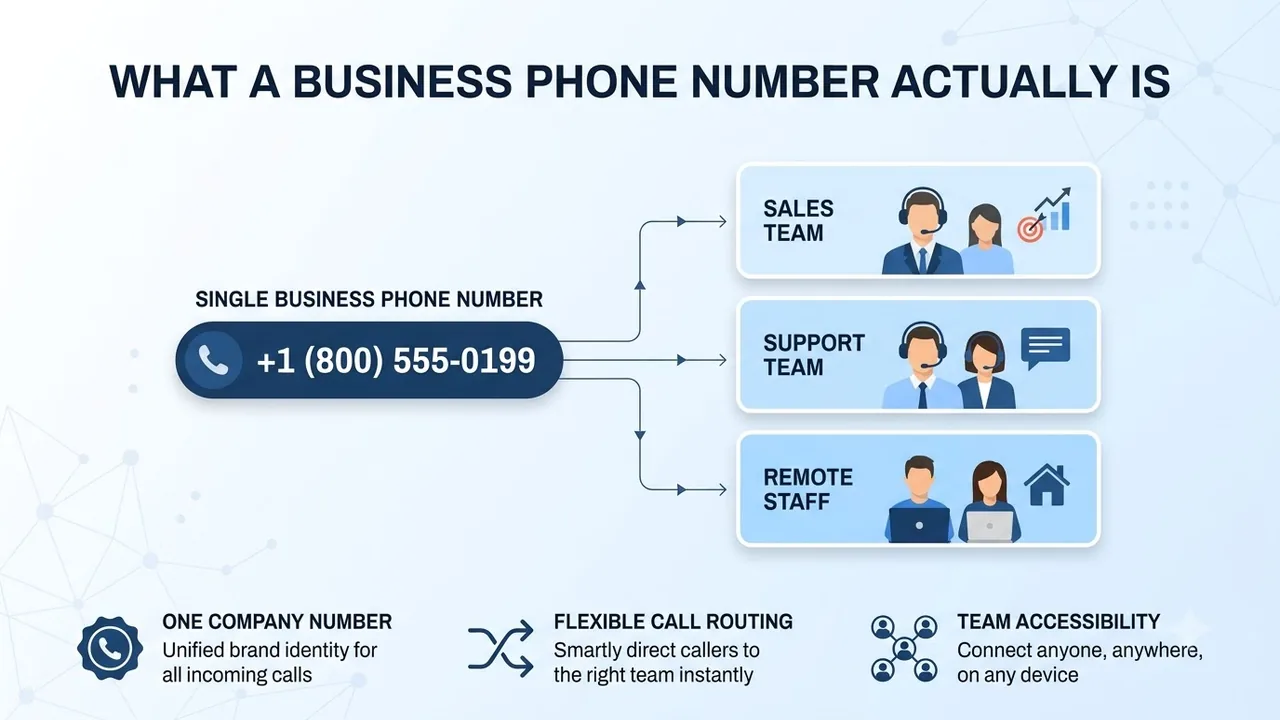
A business phone number belongs to the company, not to a person or a handset. Calls to it can reach a desk phone, a computer app, a mobile phone or a shared queue, and the person answering can change without the number changing. That is the difference between a business line and a personal SIM with a second contact saved in it.
The practical benefits show up quickly. Customers always reach the same number even when staff turn over. Calls can be routed by time of day or by team. Several people can share one number without handing out personal mobiles, and the company keeps the number if someone leaves.
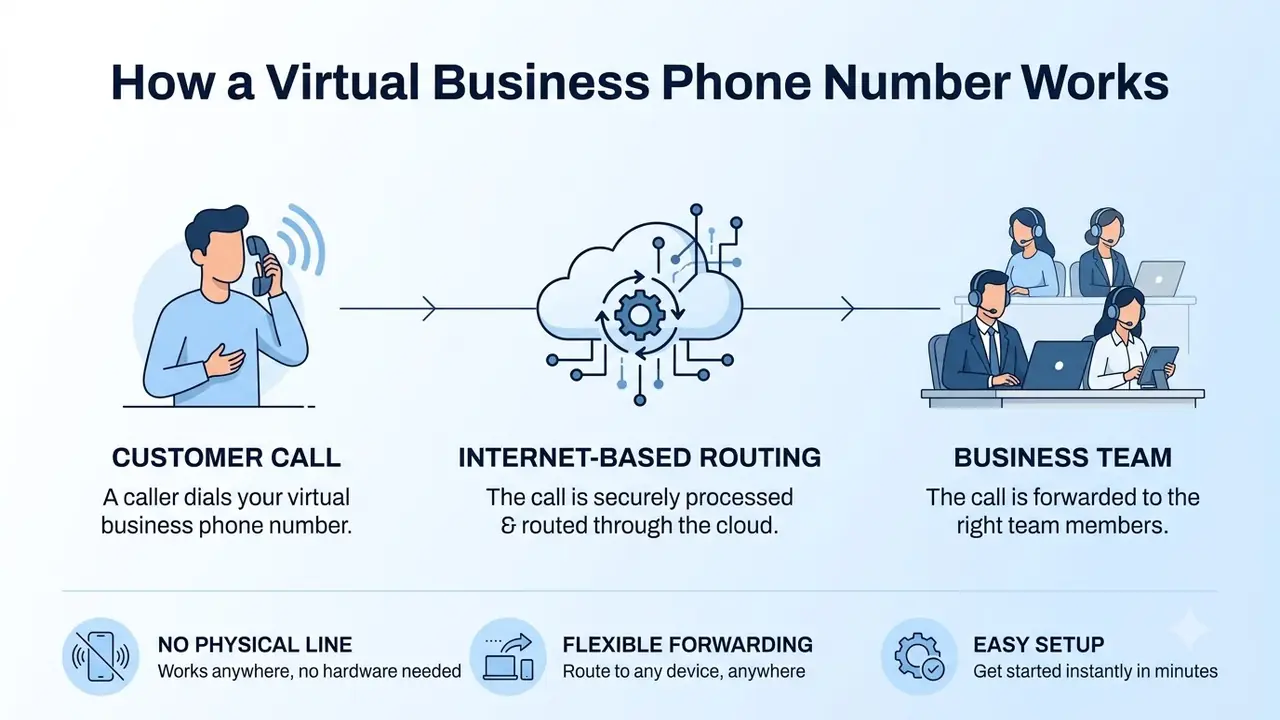
Most modern business numbers are virtual, which means they are not tied to a physical phone line or a location. Calls and texts travel over the internet to whichever device or team you choose.
Types of business phone number
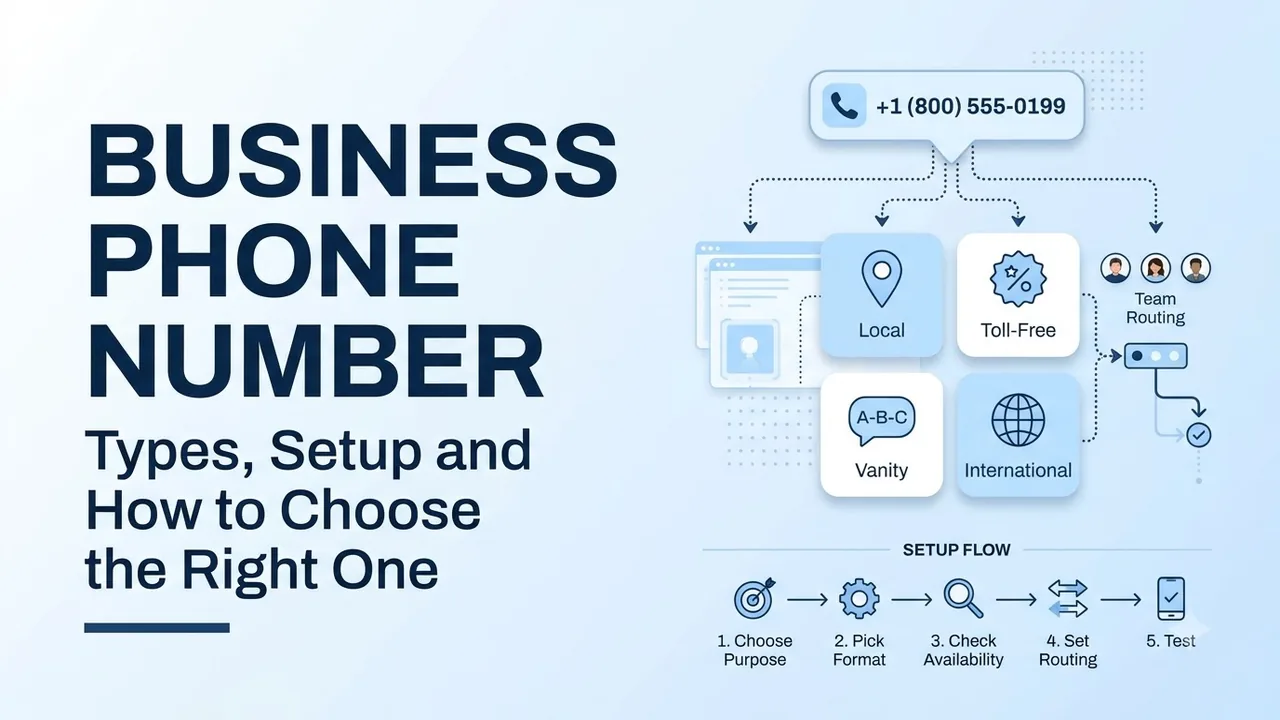
Four formats cover almost every need. Each sends a different signal to the person looking at their caller ID.
| Type | What it looks like | Best for | Watch out for |
|---|---|---|---|
| Local | A familiar area code or city prefix | Service businesses and local outreach | Ties the brand to one place |
| Toll-free | A prefix such as 800, 888 or 877 | National support and sales lines | Can read as a call center to some customers |
| Vanity | Digits that spell a word | Memorable marketing numbers | Availability depends on the number you want |
| International | A country code such as +44 or +61 | Selling or supporting customers abroad | Rules and verification vary by country |
Many companies end up using more than one. A toll-free number can sit on national advertising while each office or market keeps a local number of its own.
How a virtual business phone number works
A virtual number replaces the old model of installing a physical line. You choose a number online, decide where its calls should go and start using it, with no phone line installation and no hardware to buy. Calls can be forwarded to any device, team or IVR menu, and you can change that routing later from a dashboard.
Rozper's virtual phone numbers work this way, with example markets including the United States, the United Kingdom, Australia, Singapore, Spain and India. Availability and requirements vary by country, and some countries ask for extra verification before a number goes live. Rozper offers local numbers in many countries on its business phone system, so a team can test a new market with a local number before committing to an office or a legal entity there.
A number also does not need to be one per company. Some teams give each client or campaign a dedicated number so that calls can be tracked separately from day one.
Choosing a business phone number: local or toll-free
The most common decision is between a local number and a toll-free one. The answer depends on who is calling and what they expect.
A local number works best when customers value nearness: a home services firm, a clinic, a law practice or a sales team calling a specific city. A familiar prefix can feel safer to the person receiving the call than an unknown one. A toll-free number suits a business that serves customers in many regions, where no single area code would fit. Calls to it are free for the caller, and Rozper lists toll-free prefixes including 800, 888 and 877.
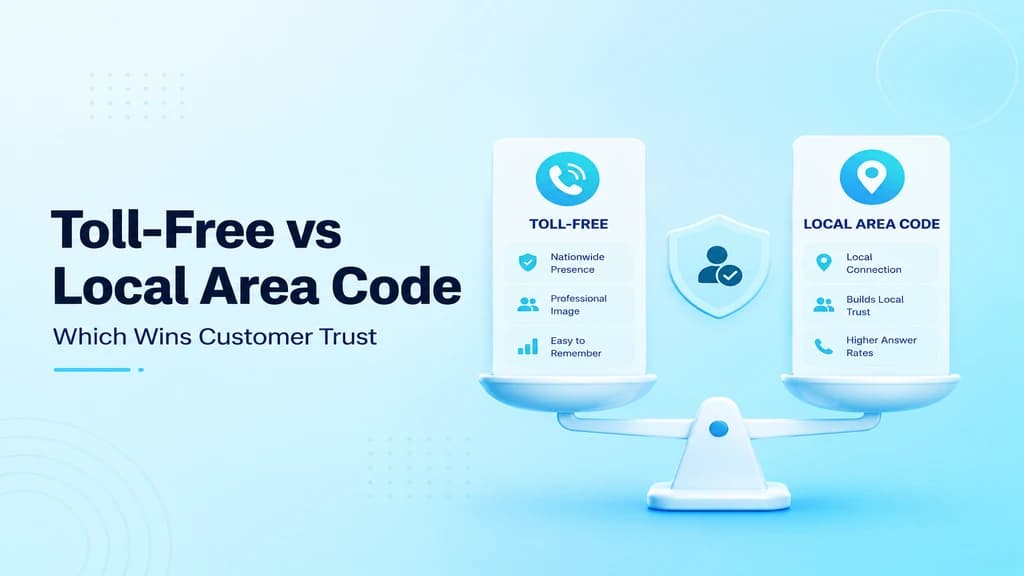
If you are still unsure, our guide to toll-free vs. local area code numbers compares what each format signals and when pairing both makes sense. The short version is to match the number to your customers, then test it against the other format if you can.
How to get a business phone number in five steps
Setting up a business phone number takes less time than most teams expect, as long as the decisions are made in the right order.
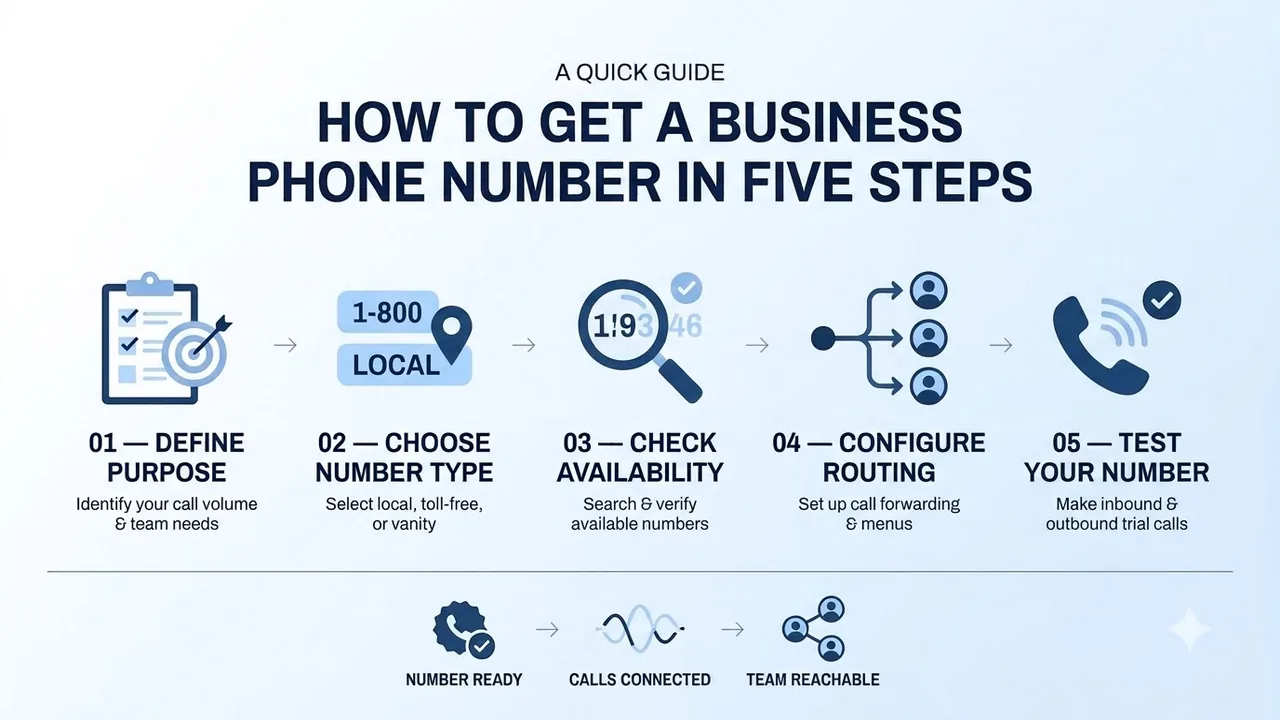
- Decide what the number is for. Sales, support, a single office or a whole brand each point to a different type.
- Pick the format. Choose local, toll-free, vanity or international based on who will be calling.
- Check availability. Confirm the number or area code exists in the market you want, and ask about any verification requirements.
- Set the routing. Decide whether calls ring a person, a team, an IVR menu or a mobile app, and what happens after hours.
- Test before you publish it. Call the number from outside your network, from a mobile and a landline, and check that the caller ID and routing behave as expected.
When you record or share international numbers, write them in the standard format defined by the ITU-T E.164 recommendation: a plus sign, the country code and the number, with no spaces or punctuation required. It keeps contact lists, CRMs and dialers consistent across countries.
Keeping your existing number
Many businesses already have a number customers know, and changing it is rarely worth the cost. Number porting moves it to a new provider while it stays yours. The process usually means submitting a letter of authorization, waiting for the current carrier to confirm and then the number transferring across.
Timing depends on the carrier and the number type. Rozper's toll-free page puts a typical US toll-free port at one to two weeks. Whatever the provider, start the request early and keep your old service active until the number has moved, so no call falls into a gap.
Mistakes that cost you calls
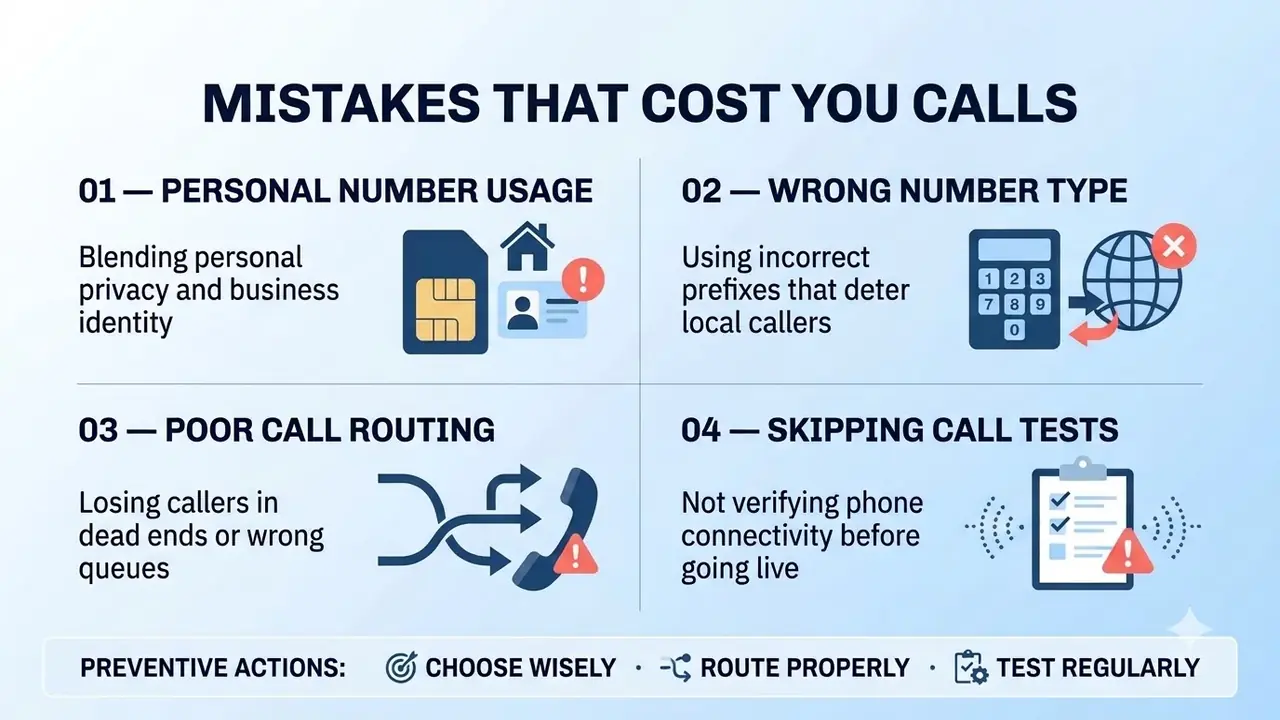
- Using a personal mobile as the business line. The number leaves with the person, and no one else can answer it.
- Choosing a number for the brand instead of the caller. A prefix that looks impressive but feels foreign gets ignored.
- Skipping the routing plan. A number with no after-hours handling sends callers to a voicemail nobody checks.
- Forgetting international formats. Numbers saved without country codes break dialers and CRMs the moment you expand.
- Never testing from outside. What rings fine on your desk can fail from another network or carrier.
- Changing numbers too often. Every change resets the trust customers have built with the old one.
Conclusion
A good business phone number belongs to the company, reaches the right person on any device and matches what your customers expect to see. Pick the type for the caller, set the routing before you publish the number and test it from the outside.
Keep the numbers customers already know, add new ones as you enter new markets and treat every business phone number as part of the brand. Small decisions made once tend to pay off in answered calls for years.
FAQs
What is a business phone number?
A business phone number is a number that belongs to a company rather than to one person or device. Calls to it can ring a desk phone, an app or a whole team, and the number stays the same when staff change.
Can I get a business phone number without a physical phone line?
Yes. A virtual number is set up online with no phone line installation and no hardware, and its calls travel over the internet to the device or team you choose.
Can I keep my current number when I switch providers?
Usually, through number porting. It involves a letter of authorization and confirmation from your current carrier, and timing depends on the carrier and number type, so start early and keep your old service running until the move is complete.
Is a local or toll-free business phone number better?
Neither is better on its own. Local numbers tend to work for businesses that serve a specific area, while toll-free numbers suit companies with customers spread across many regions. Many businesses use both.
Can one business phone number ring several people?
Yes. Calls can be forwarded to any device, team or IVR menu, so several people can answer the same number without sharing a personal mobile.