Introduction
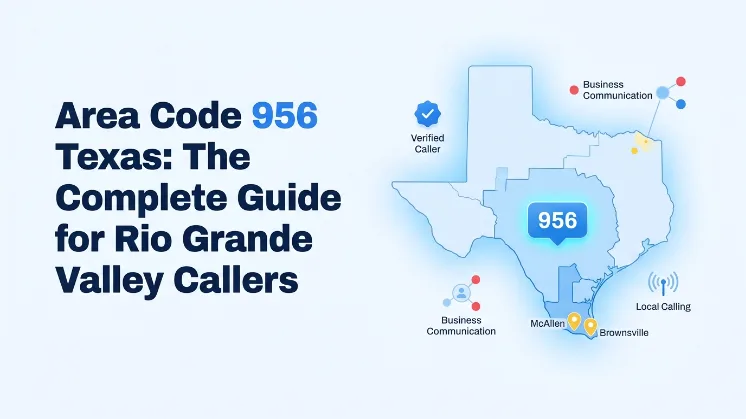
Area code 956 covers the Rio Grande Valley and Laredo, one of the most bilingual and trade-dependent regions anywhere in the country, and that reality shapes how a local number should actually be used here. If your business is deciding whether a number in this area code fits your customers, the language and cross-border trade patterns matter as much as the map of covered counties. This article walks through where 956 actually reaches, why it exists as a distinct code from the rest of South Texas, and what it really takes to earn trust in a market built on two languages and constant cross-border movement. By the end, you will know how to choose, set up, and protect a 956 number so it works the way this specific market actually operates.
Key Takeaways:
- Area code 956 covers the Rio Grande Valley and Laredo, an eight-county region with one of the highest Hispanic populations of any Texas area code.
- The region's economy runs on cross-border trade with Mexico, so bilingual call handling matters more here than in almost any other Texas market.
- A local 956 number can meaningfully raise answer rates, but only if the calling experience actually matches the region's bilingual reality.
- Setup now takes minutes through a cloud phone provider instead of the days a traditional carrier once required.
Where Area Code 956 Actually Covers
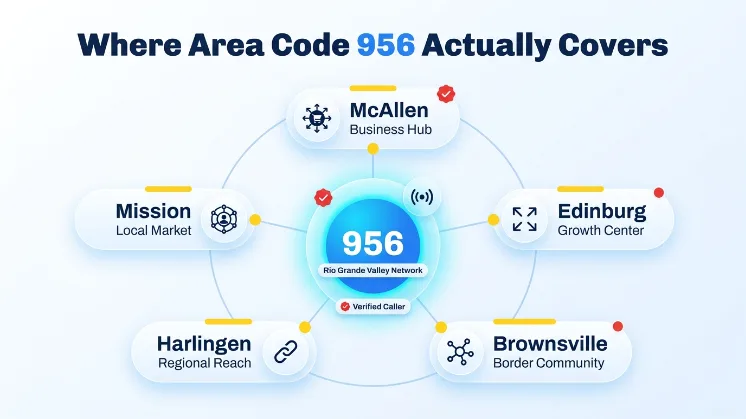
Area code 956 covers the southernmost tip of the state, spanning eight counties: Cameron, Hidalgo, Starr, Willacy, Webb, Zapata, Jim Hogg, and La Salle. It reaches roughly 60 cities, including McAllen, Brownsville, Harlingen, Edinburg, and Laredo.
- Hidalgo and Cameron Counties: McAllen, Brownsville, Harlingen, Edinburg
- Webb and Zapata Counties: Laredo, Zapata
- Starr and Willacy Counties: Rio Grande City, Raymondville
- Jim Hogg and La Salle Counties: smaller rural border communities
This entire region sits directly along the Texas-Mexico border, bordering the Mexican states of Tamaulipas and Nuevo León. Laredo alone handles more inbound trade traffic than almost any other land port in the United States.
That trade volume shapes the whole economy behind the 956 area code. Logistics companies, customs brokers, produce distributors, and manufacturers all route business through this corridor daily, which means a huge share of the calls made and received here are directly tied to cross-border commerce rather than purely local errands.
Born From the Same 1997 Split That Reshaped South Texas
Area code 956 was created on May 25, 1997, when regulators split it away from area code 210 to relieve pressure on San Antonio's numbering plan as South Texas grew. Unlike splits that carved a growing suburb away from an established city, this one created an entirely distinct region built around the Rio Grande Valley and Laredo rather than any single metro core.
That distinction matters because area code 956 has never needed an overlay the way many faster-growing Texas codes have. Industry projections suggest number exhaustion could arrive by the late 2020s, which means businesses that want a specific, easy-to-remember prefix have a narrowing window before a second code gets layered on top of this one too.
Compared to codes like 830 or 940, which cover wildly different sub-markets under one set of prefixes, this region has stayed relatively unified. The Rio Grande Valley and Laredo differ in size, but they share the same bilingual, trade-driven character, which is part of why this code has avoided the fragmentation problems other large Texas regions run into.
Why This Border Market Runs on Two Languages, Not One
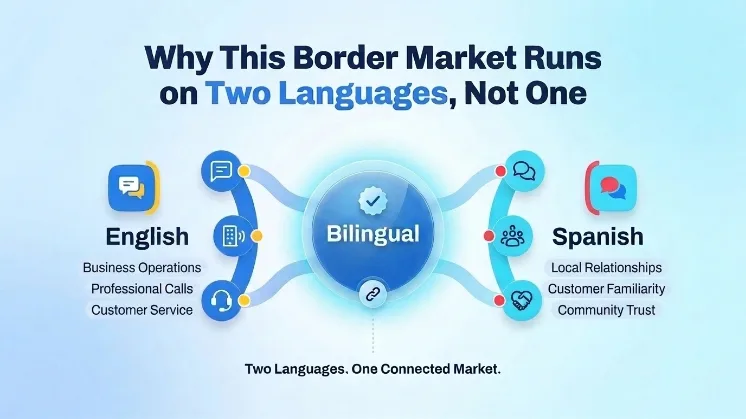
Roughly nine out of ten residents across the region covered by area code 956 identify as Hispanic or Latino, and daily business here regularly moves between English and Spanish depending on the customer. Most generic area code guides skip this fact entirely, even though it shapes almost every calling decision a business makes.
- Offer bilingual call handling, not just a local number — a familiar area code gets the call answered, but the conversation still has to match the customer's preferred language.
- Expect cross-border customer bases — many callers split time or business between the U.S. side and Mexico, so international dialing patterns show up constantly.
- Match your greeting to the market — a Spanish-first or bilingual greeting builds more trust here than an English-only script that ignores the region's makeup.
- Plan for trade-driven call spikes — logistics and agriculture businesses see seasonal volume tied to harvests and cross-border shipping schedules.
Getting the language and cultural fit right does more for trust in this market than the specific prefix on the caller ID ever will. Rozper's call routing tools can send calls to bilingual agents automatically based on the number dialed, which removes the guesswork from matching language to caller.
Does a Local 956 Number Raise Answer Rates in a Cross-Border Market?
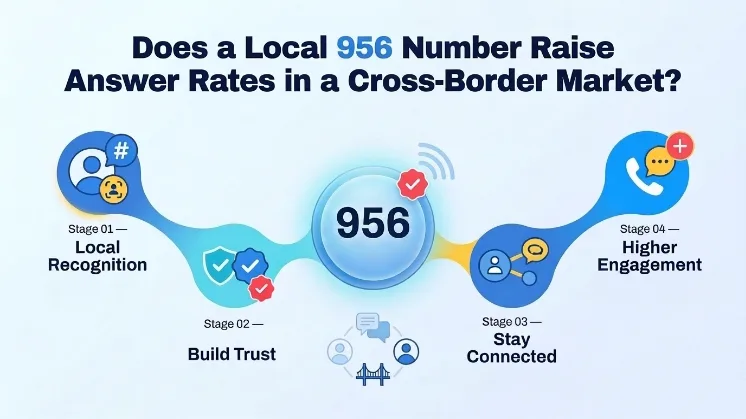
Yes, and the effect compounds when the call itself matches local expectations. A recognized area code 956 number gets picked up more often than an unfamiliar one, just like anywhere else in the state, but the advantage grows sharply when the language on the call matches the customer too.
- Recipients answer more readily when the area code matches their own tightly-knit border community.
- Bilingual greetings and support noticeably reduce hang-ups compared to English-only scripts in this specific market.
- Logistics, agriculture, and trade businesses calling cross-border partners see the strongest benefit from a locally recognized line.
- The advantage narrows for businesses that treat this market the same as any other English-speaking Texas region.
Businesses that pair a local 956 number with genuinely bilingual service consistently outperform those that only solve half the trust equation. A recognized prefix earns the first few seconds of attention, but the conversation itself is what decides whether that call turns into a real relationship.
A Scenario: A Logistics Company Adds Bilingual Support to Its Laredo Line
Picture a freight forwarding company based in Houston trying to build relationships with shippers moving goods through Laredo's port of entry. Calls from a Houston number went unanswered more often than expected, and even when picked up, English-only agents struggled with callers who preferred to conduct business in Spanish. After adding a dedicated area code 956 line staffed with bilingual agents, both answer rates and deal follow-through improved within the first month.
This pattern shows up constantly in industries tied to cross-border trade — logistics, agriculture, and manufacturing all depend on this kind of dual-language trust building. Rozper's call routing tools let a company route 956 calls straight to bilingual agents automatically, so language matching happens without the customer ever having to ask for it.
The same setup scales beyond a single Laredo line. A company handling calls from both the Rio Grande Valley and Laredo can route each local number to the agents and language mix that fits its specific customer base, without building separate systems for each city.
Setting Up a 956 Number Without Losing Caller Trust
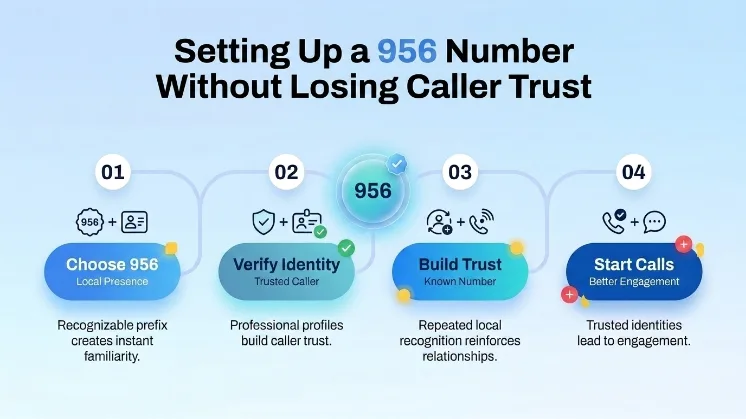
Claiming the number is the easy part. The habits around language, scheduling, and caller reputation determine whether that local presence actually earns trust in this market.
Same-Day Setup Steps
- Pick a cloud phone provider with Rio Grande Valley and Laredo provisioning.
- Search available 956 prefixes and reserve one before the region's inventory tightens further.
- Connect the number to your existing phone, app, or desk system.
- Set a bilingual greeting and route calls to agents fluent in the customer's preferred language.
Protecting Your Caller Reputation
A number is only as trustworthy as the pattern behind it. High call volume without spam registry registration can get a legitimate 956 number flagged, and that risk climbs during seasonal trade spikes when call volume jumps quickly. Check the spoofing guidance if a call ever looks suspicious, and register outbound numbers with STIR/SHAKEN-compliant providers so your own calls don't get mistakenly flagged either.
Conclusion
Area code 956 gives businesses a genuine local presence across the Rio Grande Valley and Laredo, one of the most bilingual and trade-dependent regions in the country. The 1997 split from area code 210 explains why this region has its own distinct code, but the practical decision comes down to matching your calling experience to a market built on two languages and constant cross-border movement. A local 956 number can meaningfully improve answer rates here, provided it's backed by bilingual service and honest, consistent calling habits. Treating this market like any other English-speaking region is the fastest way to waste the trust a local number is supposed to build.
If your business serves customers across this border region, start by pairing your number with real bilingual support, not just a familiar area code. Rozper's call routing and monitoring tools make it easy to route 956 calls to the right language and the right agent while keeping every line trustworthy as volume grows. Confirm prefix availability soon, since regional projections suggest this code won't stay uncrowded forever. From there, the only step left is making sure the experience behind the number actually fits the market you're calling into.
FAQs
What cities does area code 956 cover?
Area code 956 covers roughly 60 cities across eight counties, including McAllen, Brownsville, Harlingen, Edinburg, and Laredo. It spans the entire Rio Grande Valley along with the Laredo border crossing.
Where is area code 956 located?
It covers the southernmost tip of Texas, bordering the Mexican states of Tamaulipas and Nuevo León. The region includes both the Rio Grande Valley and the separate Laredo border market to the west.
When was area code 956 created?
It was created on May 25, 1997, as a split from area code 210 to relieve pressure on San Antonio's numbering plan. It has operated as its own distinct code ever since, without needing an overlay so far.
How do I get a 956 phone number for my business?
Sign up with a cloud phone provider that offers Rio Grande Valley and Laredo provisioning, then search and reserve an available 956 prefix. Most numbers connect to your existing phone or app the same day.
Is a call from a 956 area code safe to answer?
Answering is safe, but any area code, including 956, can be spoofed by scammers. Call back a published business number if a request involves money or sensitive information.
What time zone does area code 956 use?
The entire 956 region runs on Central Time, following the same daylight saving shifts as the rest of South Texas. This matters when scheduling calls with contacts elsewhere in the country.
Does a 956 number cost more than other Texas area codes?
No, pricing depends on your provider's plan rather than which area code you choose. Most cloud phone platforms charge the same rate for 956 numbers as any other local number.
Do I need bilingual support to succeed with a 956 number?
Not strictly, but it makes a significant difference in a region where most residents are bilingual or Spanish-dominant. Pairing a local number with bilingual service consistently outperforms an English-only setup in this specific market.