Introduction
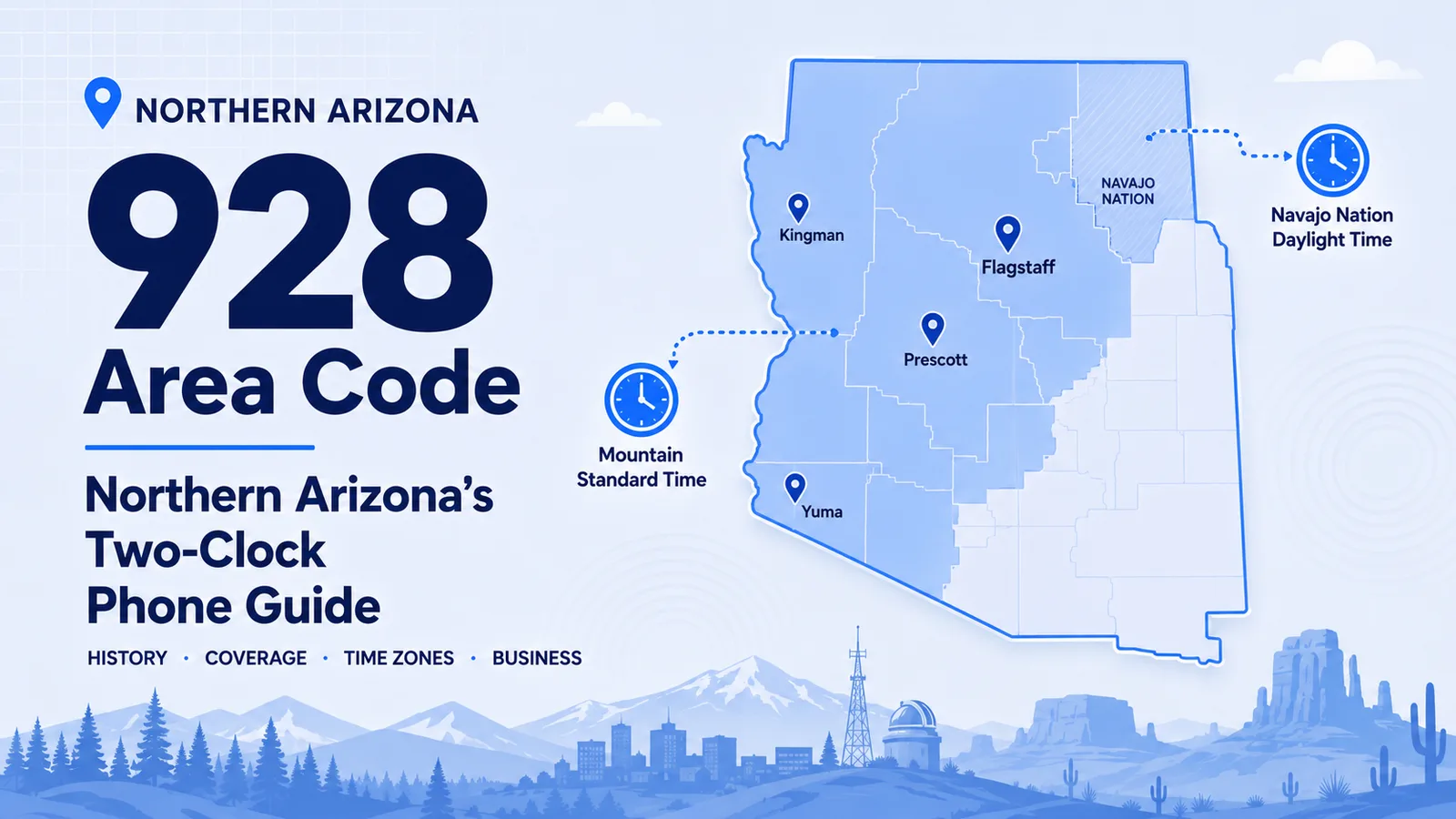
The 928 area code covers the northern, eastern, and western reaches of Arizona, and it hides a scheduling quirk most guides never explain. This matters because one part of this territory changes its clocks twice a year while the rest never does. In this guide, you'll learn which cities and counties the code reaches, why that time split exists, and what a local 928 number signals to callers today. Keep reading, because the reason two clocks can tick differently under one area code is the detail every generic guide skips.
Key Takeaways:
- The 928 area code covers 13 counties across northern, eastern, and western Arizona, split from area code 520 in 2001.
- The Navajo Nation, inside the 928 region, observes Daylight Saving Time even though the rest of Arizona never does.
- Tourism, mining, and retiree communities drive steady demand for local 928 business numbers.
- Scam reports tied to spoofed 928 numbers keep climbing in 2026, led by fake tax relief and auto warranty calls.
Thirteen Counties, One Prefix: Where the 928 Area Code Reaches
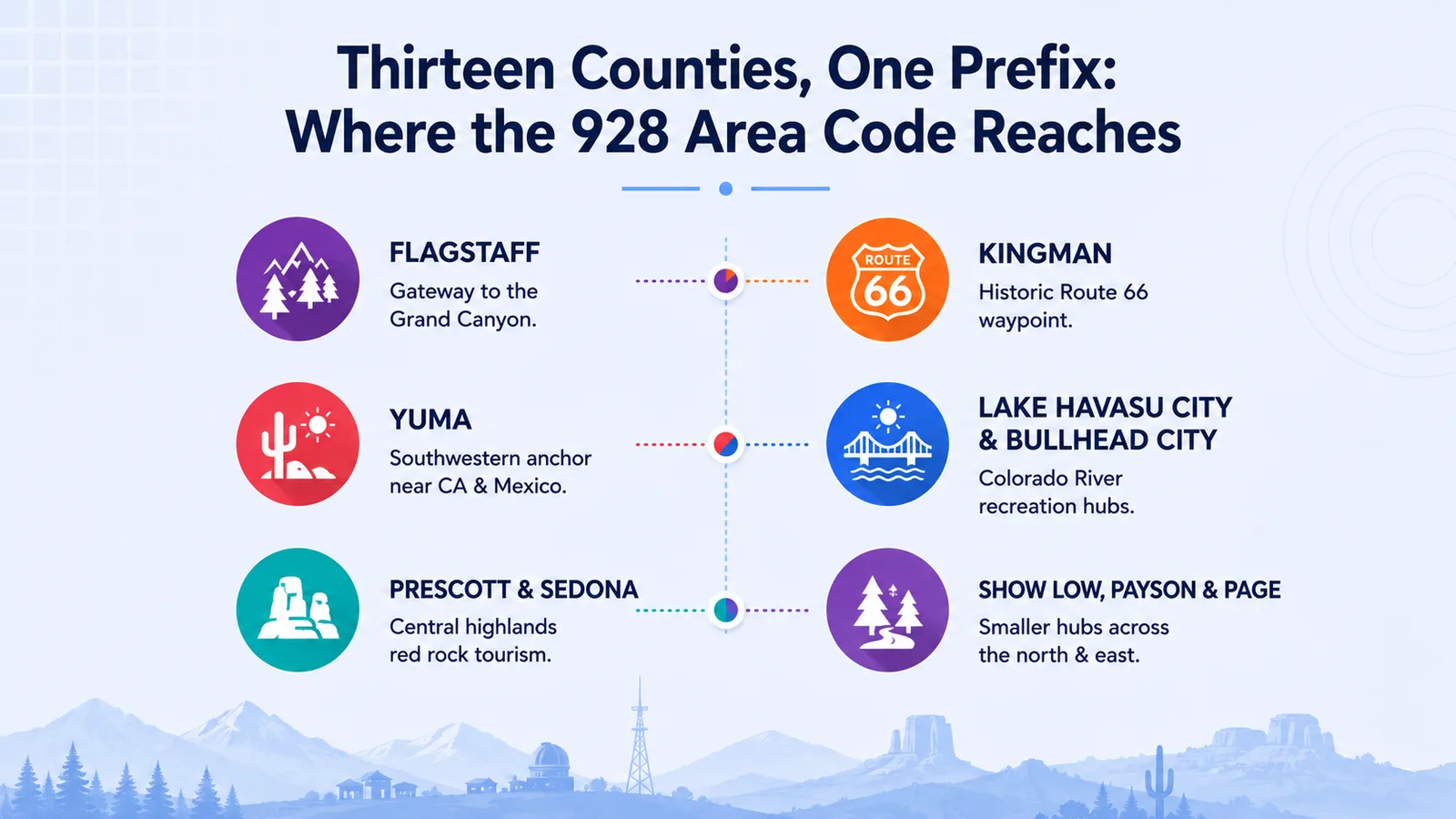
The 928 area code stretches across nearly two-thirds of Arizona's land area, even though it holds a small share of the state's population. Flagstaff anchors the northern end, Yuma anchors the southwest, and the territory wraps around the Phoenix and Tucson metro codes on three sides. Coverage spans 13 counties, reaching far more small towns than any single list can fully capture.
- Flagstaff — the largest city, gateway to the Grand Canyon.
- Yuma — the southwestern anchor near the California and Mexico borders.
- Prescott and Sedona — central highlands known for red rock tourism.
- Lake Havasu City and Bullhead City — Colorado River retirement and recreation hubs.
- Kingman — a historic Route 66 waypoint in the northwest.
- Show Low, Payson, and Page — smaller hubs spread across the eastern and northern reaches.
Few other prefixes in the Southwest pair this much desert, canyon, and forest terrain under one set of ten digits, which is part of why so many small towns share the same code without ever feeling crowded.
From 520 Split to Standalone Code: The Story Behind 928
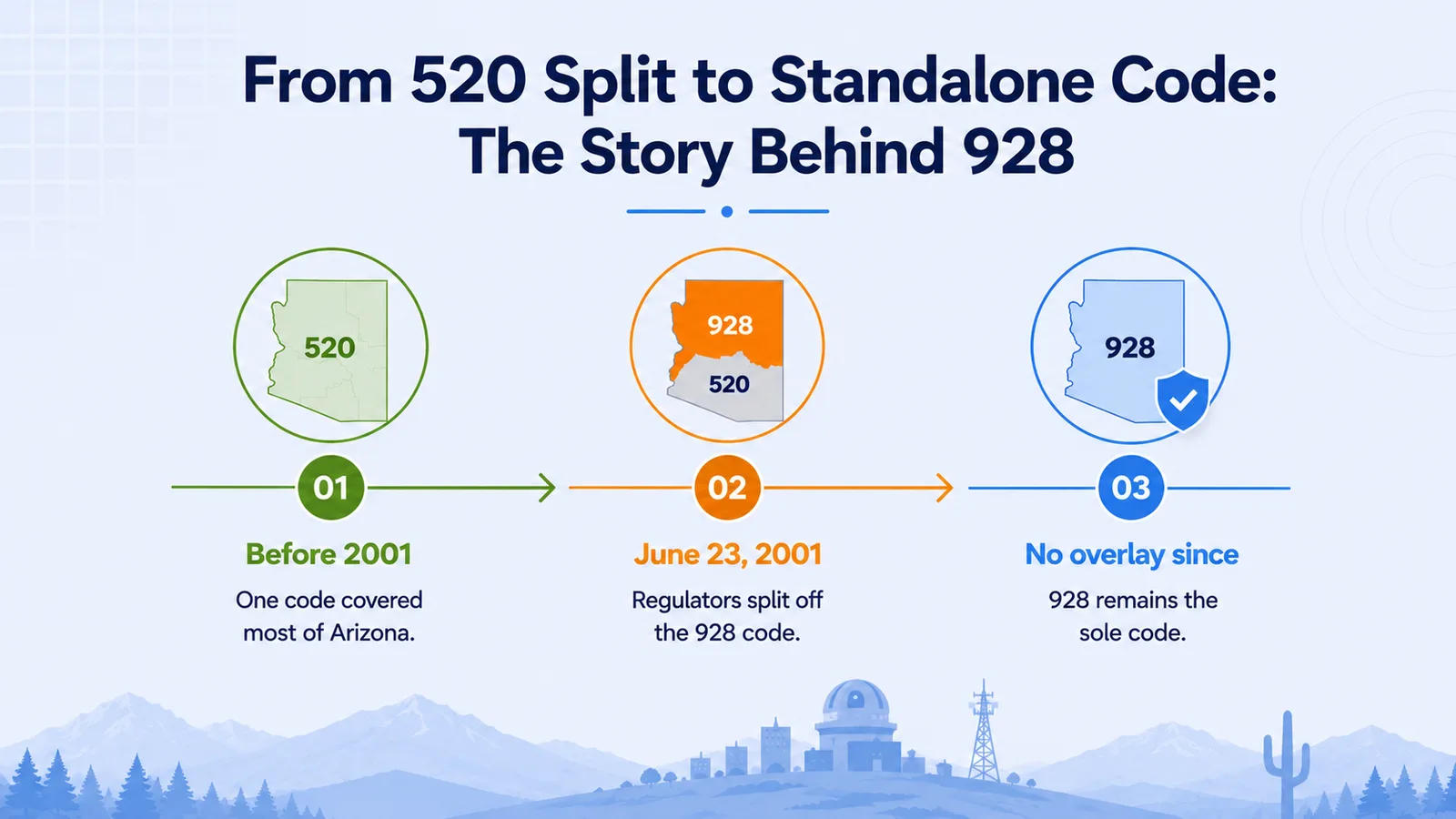
Arizona's 520 area code once covered Tucson, Yuma, and Flagstaff together, until growth in all three cities drained the available numbers fast.
- Before 2001 — one shared code covered southern, eastern, and northern Arizona outside Phoenix.
- June 23, 2001 — regulators split off the 928 area code to cover the northern, eastern, and western regions on their own.
- No overlay since — this prefix remains the sole code for its 13-county territory more than two decades later.
That split kept Tucson's growing 520 numbers intact while giving the rest of rural Arizona room to grow under area code 928. More than two decades later, that same boundary still defines how callers and businesses read a local number across the region.
One Area Code, Two Clocks: The Daylight-Saving Quirk Inside 928
Arizona is one of the only states that skips Daylight Saving Time, but the 928 area code contains a real exception most residents outside the region never learn about. That exception creates a genuine scheduling trap for businesses calling across the territory.
Most of Arizona: Mountain Standard Time, Always
Outside tribal land, the entire 928 region stays on Mountain Standard Time year-round, never springing forward or falling back.
The Navajo Nation: The Lone Exception
The Navajo Nation, which stretches across the northeastern part of the 928 territory, observes Daylight Saving Time just like most of the country.
The Hopi Reservation: An Island Inside the Exception
The Hopi Reservation sits surrounded by Navajo land but follows Arizona's no-DST rule, creating a time "island" inside the island. Twice a year, a driver crossing these borders can pass through three different clock rules without ever leaving the same 928 territory.
Canyons, Copper, and Casinos: The Industries Behind Every 928 Call
Northern and western Arizona run on an economy built around landscape and leisure, and that shapes who actually answers a 928 area code call. Tourism, historic mining towns, and tribal-run casinos all depend on out-of-area visitors and vendors reaching them by phone.
- Grand Canyon and Sedona tourism draw millions of visitors through Flagstaff and Prescott every year.
- Historic copper and mining towns like Bisbee-era operations shaped the region's early economy.
- Tribal casinos across Navajo, Hualapai, and other reservation lands anchor local employment.
- Lake Havasu City and Bullhead City host large retiree and seasonal-resident populations.
- Route 66 nostalgia tourism keeps small towns like Kingman and Seligman on the map for road trippers.
A vendor calling with a 928 area code number reads as genuinely local to this tourism and retiree economy, not a call center somewhere else entirely. That local read matters most during peak tourist season, when response speed can decide whether a booking or repair request goes to a competitor instead.
928 vs. 520, 623, and 602: Picking the Right Arizona Code
Businesses expanding into Arizona often assume one code covers the whole state, and that mistake costs them credibility with local callers fast.
520 — Tucson and the South
The 520 area code is the code 928 split from in 2001, and it now stays focused tightly on greater Tucson and its nearby suburbs.
602, 623, and 480 — Phoenix Metro
These dense urban codes serve the entire Valley of the Sun; see the 602 area code for details on that separate, much denser market.
928 — Everywhere Else
This is the rural, tourism-heavy, and tribal-land territory ringing both metro cores, covering more square miles than the other three Arizona codes combined.
Recognizing that 928 is Arizona's rural and tribal-land code, not a Phoenix or Tucson number, helps any business set the right local expectations before it dials.
Is That 928 Call Real? What Scam Reports Show in 2026
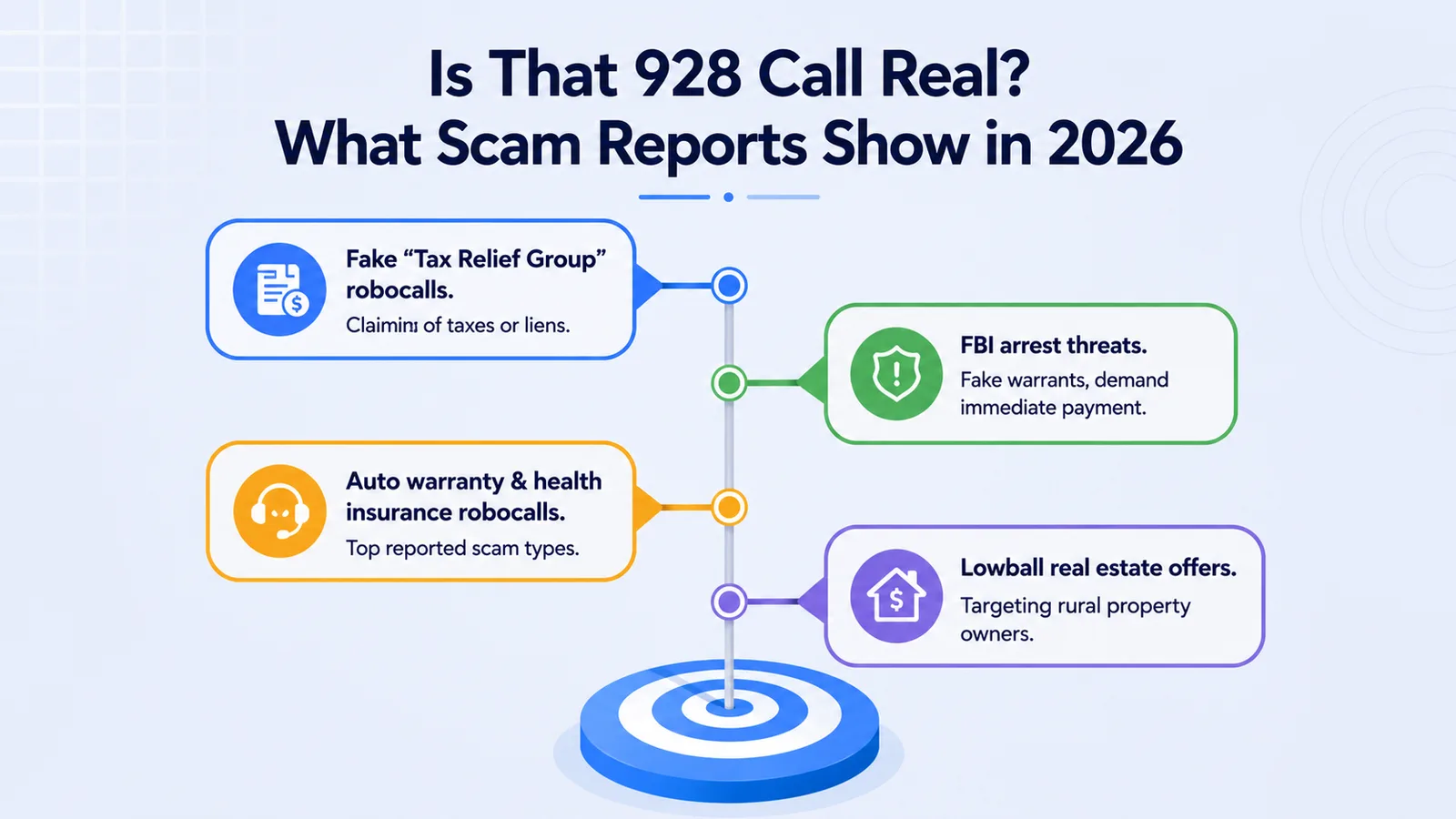
The 928 area code is legitimate, but scammers spoof it constantly, and auto warranty and health insurance robocalls top the complaint list in 2026. Caller ID "neighbor spoofing" makes an out-of-state scam call look like it's coming from a familiar local number, since spoofed area code 928 numbers can mimic almost any city inside the territory.
- Fake "Tax Relief Group" robocalls claiming unfiled taxes, liens, or wage garnishments.
- FBI arrest threats demanding immediate payment to avoid a fake warrant.
- Auto warranty and health insurance robocalls, the two most-reported categories tied to 928.
- Lowball real estate offers targeting owners of unlisted rural properties.
Report suspicious 928 calls directly through guidelines, and never confirm personal details to a caller you didn't contact first. Saving legitimate local contacts under their real business name also makes it far easier to spot an impostor call at a glance.
Getting a 928 Business Number in Five Steps
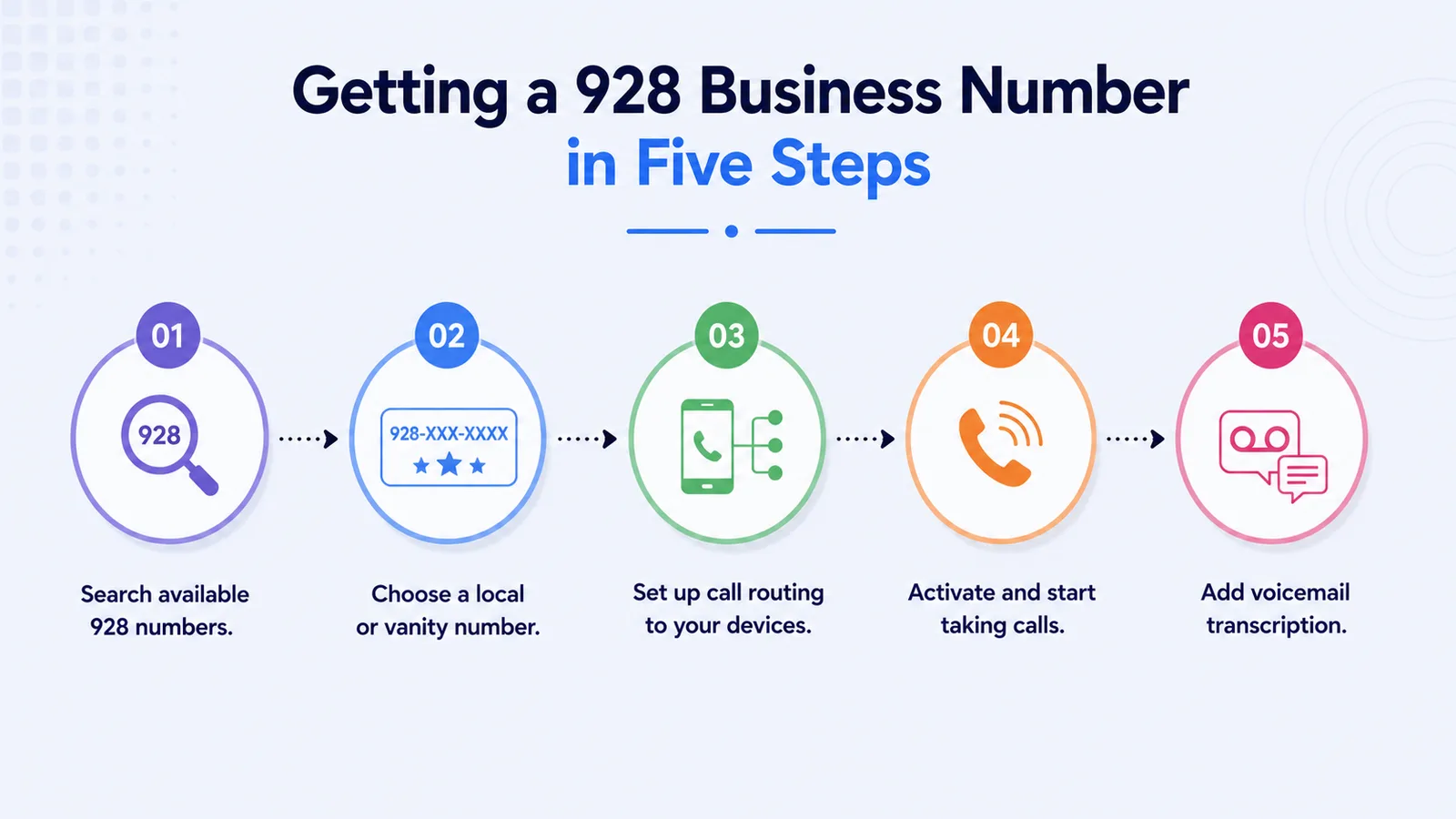
Setting up a 928 area code number takes far less time than most business owners expect, even without an office anywhere in Arizona. The whole process usually finishes in one sitting online.
- Search a virtual number provider's inventory for available 928 numbers.
- Choose a standard local number or a memorable vanity option.
- Set up call routing to a mobile phone, softphone, or existing office system.
- Activate the line and start taking calls from northern and western Arizona customers.
- Add voicemail transcription so nothing gets lost across the region's time split.
- Confirm call routing works correctly against both Mountain Standard Time and the Navajo Nation's daylight-saving schedule.
Rozper handles that setup with a real support team instead of an automated maze, which matters when a business is unfamiliar with a territory that spans two clocks. That human backup, paired with a 99.999% uptime guarantee, gives growing teams confidence their new line will simply work. Teams already running calls across 150+ countries can add a 928 number to the same account without juggling a separate provider.
Conclusion
The 928 area code covers a huge, varied stretch of Arizona, from Grand Canyon tourism towns to Colorado River retirement communities. It split from area code 520 in 2001 and has run without an overlay since, giving it a clean identity across 13 counties. Its most unusual feature is the Navajo Nation's daylight-saving split, a detail that trips up callers who assume all of Arizona shares one clock. Knowing both the geography and the time-zone quirk helps any business or resident read a 928 call correctly.
Northern and western Arizona's tourism and retiree economy keeps growing, and phone demand across the region will keep climbing with it. A local number is a small step that pays off in trust, especially for businesses courting Flagstaff, Yuma, or Lake Havasu customers. Rozper makes claiming that presence simple, without requiring an office anywhere near the Grand Canyon. Take the next step and see how a real Arizona number fits into your own calling strategy.
FAQs
What cities fall under 928?
The 928 area code covers Flagstaff, Yuma, Prescott, Sedona, Kingman, and Lake Havasu City, among 107 other cities. It spans 13 counties across northern, eastern, and western Arizona.
Where exactly does area code 928 apply?
It applies to the parts of Arizona outside the Phoenix and Tucson metro areas, wrapping around both from the north, east, and west. Major hubs include Flagstaff, Yuma, and the Colorado River cities.
When did the 928 prefix launch?
Area code 928 launched on June 23, 2001, after splitting from area code 520. Growth in Tucson, Yuma, and Flagstaff had exhausted the numbers available under the shared code.
How do I dial a 928 number correctly?
All calls within Arizona require 10-digit dialing, even for local calls in the same city. From outside the state, dial 1 plus the area code and number.
Is a call from 928 safe to answer?
The prefix itself is legitimate, but scammers spoof 928 numbers often through neighbor spoofing. Auto warranty and fake tax relief calls top the complaint list, so verify unexpected callers independently.
What time zone does 928 fall under?
Most of the region stays on Mountain Standard Time year-round with no Daylight Saving Time. The Navajo Nation inside the same area code observes Daylight Saving Time instead.
How much does a 928 area code number cost for a business?
Costs vary by provider, but most virtual number plans bundle a local 928 number into a monthly subscription rather than charging separately. Rozper offers custom pricing based on call volume and team size.
Why does the Navajo Nation follow different clock rules than the rest of 928?
The Navajo Nation operates under its own tribal government, which independently chose to observe Daylight Saving Time. That makes the 928 area code Arizona residents share one of the few U.S. regions where a single prefix straddles two different clock rules at once.