Introduction
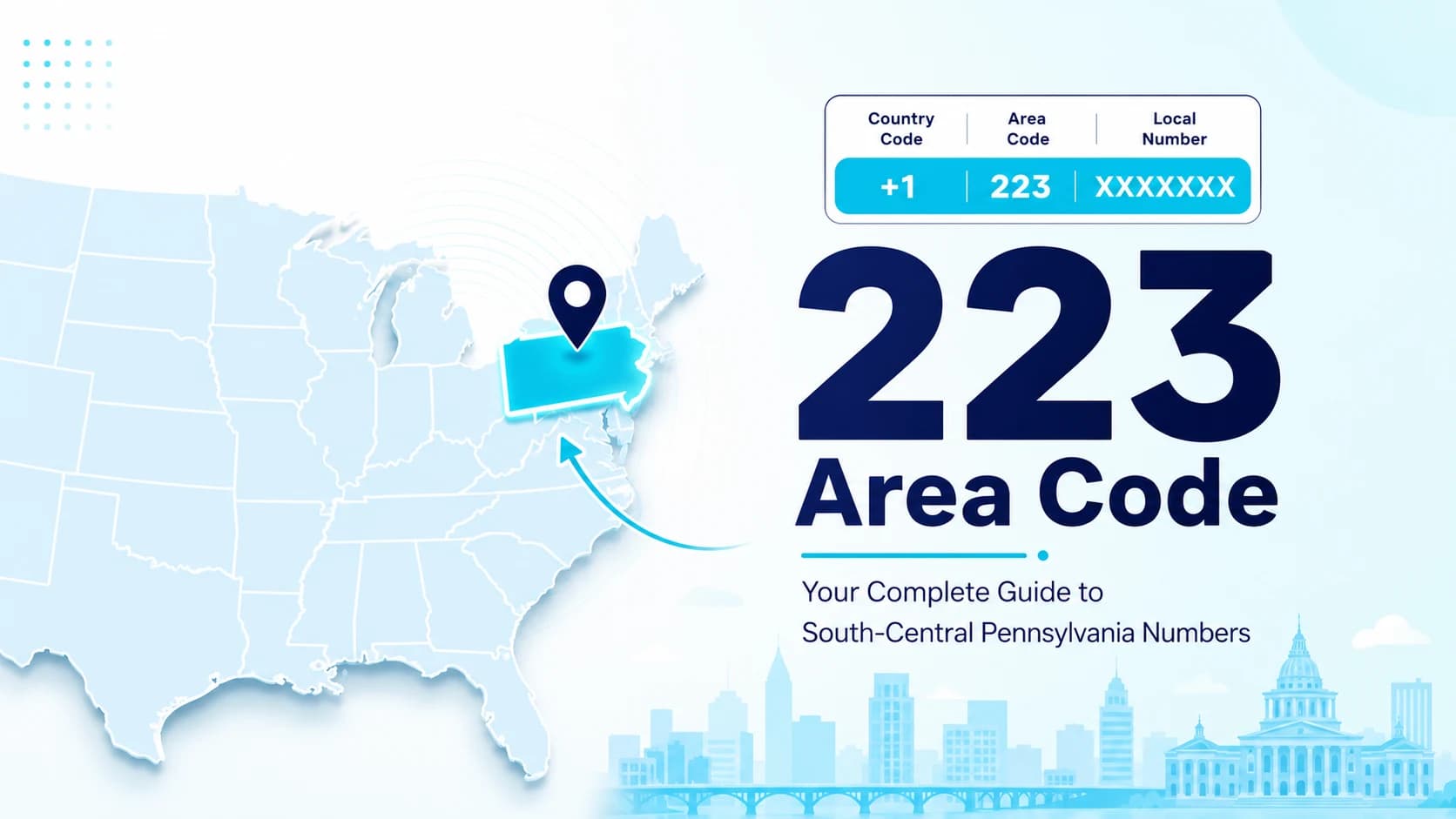
A call from a 223 area code number almost always traces back to south-central Pennsylvania, a region built around the state capital and a cluster of historic river towns. This prefix didn't come from splitting an existing territory — it's a numbering overlay layered onto the older 717 area code that had served the region for decades, added once its supply of fresh numbers ran thin. This guide walks through the geography, the overlay backstory, the practical numbering details, and how to get a matching number without a lengthy installation process.
What Is the 223 Area Code?
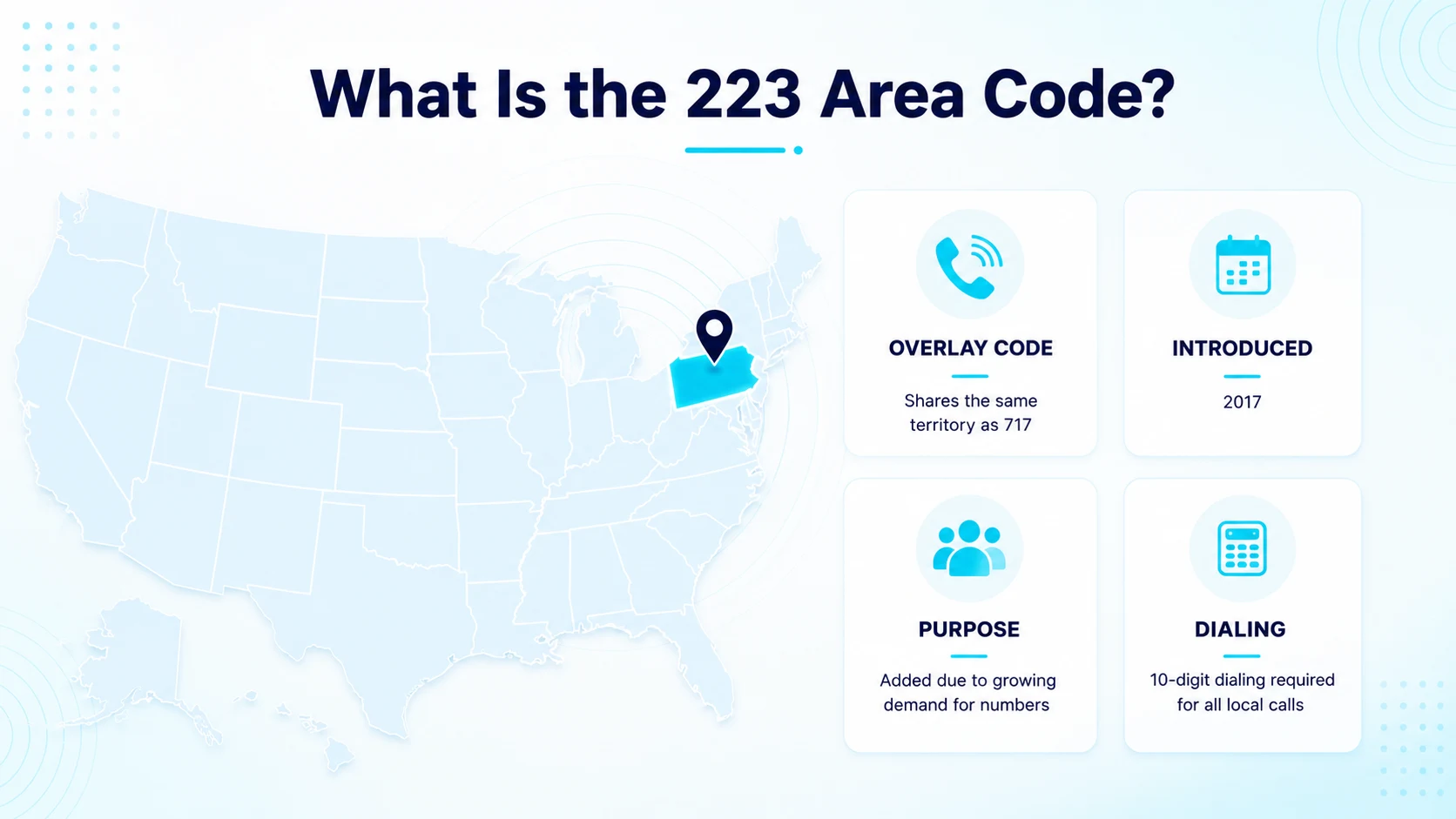
The 223 area code is an overlay code, meaning it shares the exact same service territory as an existing prefix rather than replacing or splitting it. Regulators introduced it in 2017 once projections showed the original code covering south-central Pennsylvania would run short on numbers. Instead of redrawing county boundaries, the state added a second numbering pool onto the same footprint — so every local call in the region now requires all ten digits to connect.
Where Is the 223 Area Code Located?
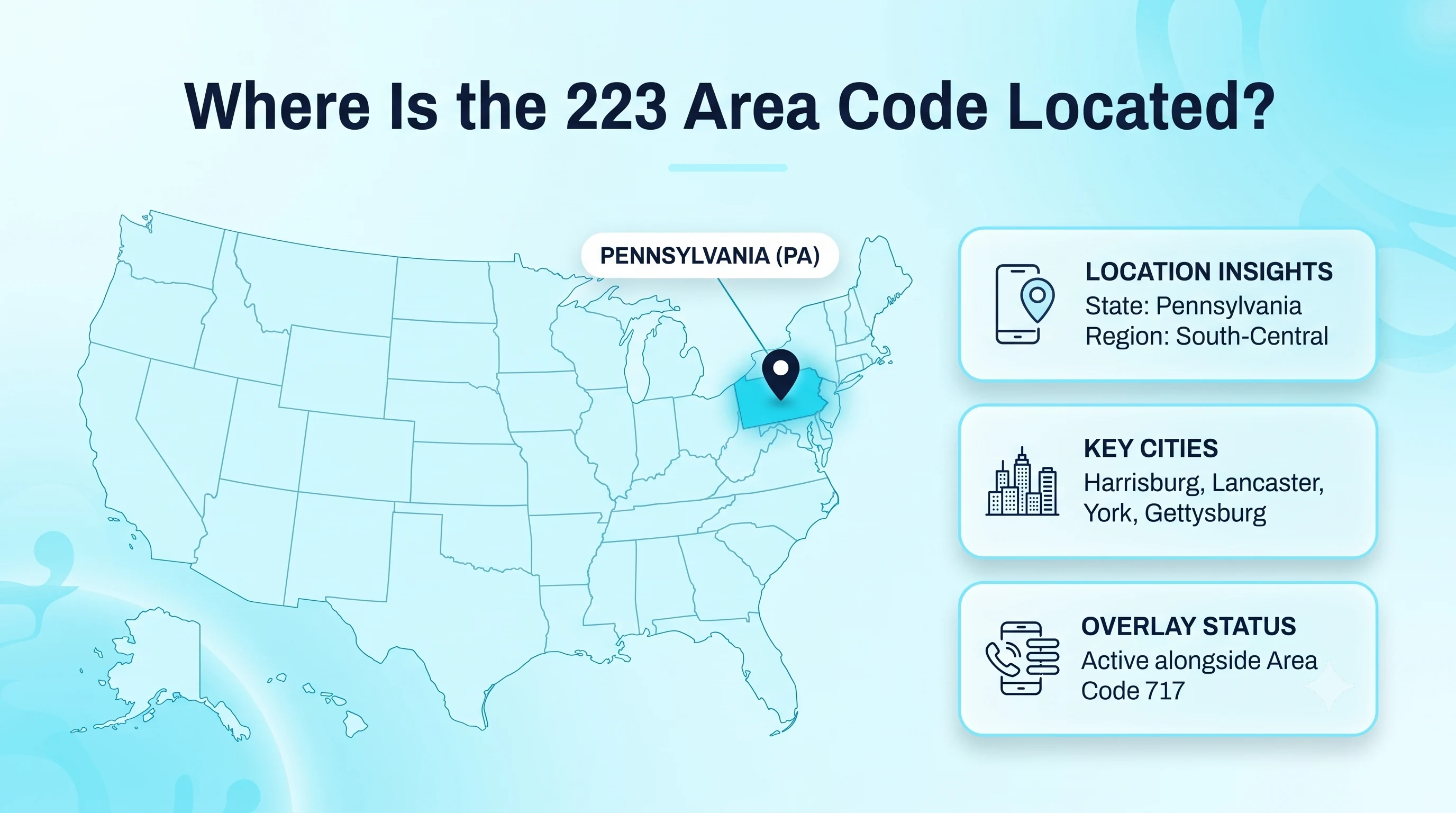
Geographically, the 223 area code covers a compact but densely populated stretch of south-central Pennsylvania, anchored by the state capital and radiating out through several historic counties. It's one of the more commercially active service areas in the state, home to government offices, manufacturing operations, and a steady stream of tourism tied to the region's Revolutionary and Civil War history. Communities served by area code 223 include:
- Harrisburg — Pennsylvania's state capital and a major government employment hub
- Lancaster — known for its Amish Country tourism and manufacturing base
- York — a manufacturing town with a growing downtown business district
- Lebanon — a smaller industrial city anchoring its own county
- Gettysburg — a historic destination with a year-round tourism economy
- Carlisle, Chambersburg, and Hanover — established commercial centers serving their surrounding counties
Because this footprint blends a capital city with several mid-sized manufacturing and tourism towns, a 223 number can represent anything from a state government contractor to a small Amish Country bed-and-breakfast — all under the same regional prefix. A single caller ID connects a furniture workshop outside Lancaster to a bed-and-breakfast near Gettysburg's battlefields and a government vendor in downtown Harrisburg.
223 Area Code at a Glance
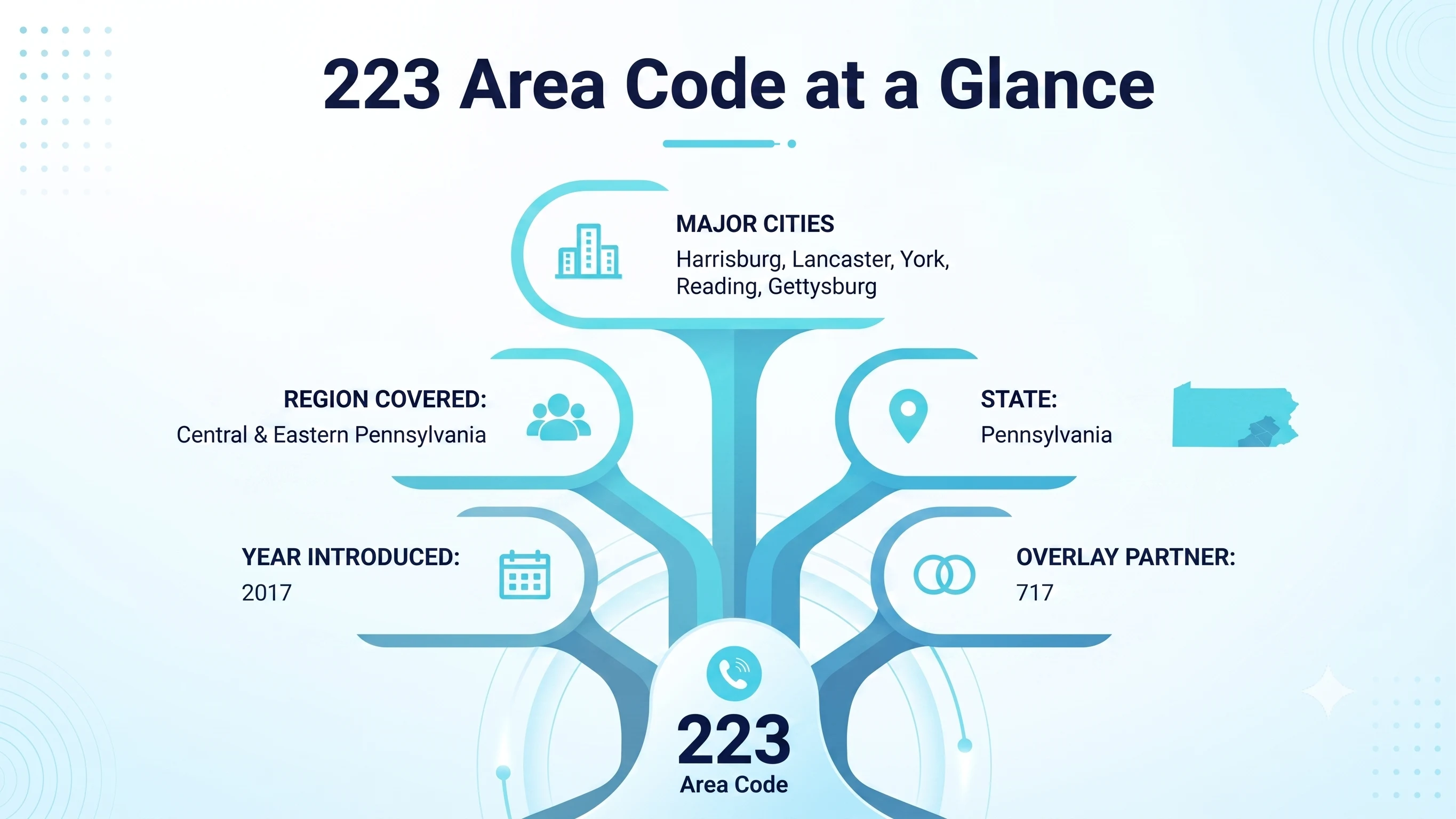
Here's a quick reference for the numbering plan details covering this part of Pennsylvania:
| Detail | Information |
|---|---|
| State | Pennsylvania |
| Region covered | South-Central Pennsylvania |
| Year introduced | 2017 |
| Time zone | Eastern Time (ET) |
| Overlay partner | 717 (shares identical territory) |
| Major cities | Harrisburg, Lancaster, York, Lebanon, Gettysburg |
| Counties served | Dauphin, Lancaster, York, Lebanon, Cumberland, Adams |
| Numbering type | Overlay NPA (North American Numbering Plan) |
Because this is an overlay rather than a geographic split, a new phone line in the same building could be assigned either 717 or area code 223 depending purely on activation date, not on the exact street address.
The Overlay History of the 223 Area Code
South-central Pennsylvania ran on a single area code for decades before growth around Harrisburg, Lancaster, and York ate into the number supply. By the mid-2010s, regulators projected the original prefix would run out, and Pennsylvania — like the 570 area code region in the northeast — opted for an overlay instead of a split. The new code went live in 2017, layering onto the existing 717 area code footprint; existing 717 customers kept their numbers, and new lines could be assigned either prefix.
Why Businesses Choose the 223 Area Code
A local number still shapes how a business gets perceived, even in an overlay region where two prefixes share identical territory. Customers rarely check which code a business uses — what registers is whether the prefix matches the community they recognize, and that familiarity can shorten the gap between a first call and a booking. Business owners across the region cite a few consistent reasons for wanting a 223 line:
- It signals genuine local presence to customers across Harrisburg, Lancaster, York, and the surrounding counties
- It builds instant familiarity with callers who already recognize the prefix from daily life
- It supports regional marketing that references the local Pennsylvania community by name
- It keeps a business memorable for residents who still associate the prefix with home
Numbering assignments like this one fall under FCC oversight, which coordinates area code administration and helps prevent conflicts across the country. That level of oversight is part of why a number from area code 223 remains a dependable, well-regulated choice for any business setting up a presence in the region.
Rozper makes activating a 223 area code number straightforward — no physical office in Pennsylvania required, no waiting on a technician for a line installation. Rozper is one option worth considering here, maintaining 99.999% uptime and coverage in 150+ countries so a single platform can serve both your local Harrisburg line and any international operations.
How to Get a Business Phone Number from Rozper
Rozper provisions local, international, and toll-free numbers across 150+ countries, backed by 99.999% uptime and CRM-ready integrations with Salesforce, HubSpot, and Zoho. Support comes from a real 24/7 team rather than a bot tree, which matters most the day a routing rule needs fixing fast. Getting a matching 223 area code number set up takes only a handful of steps.
- Visit rozper.com and start a no-pressure conversation about your goals.
- Share your business email and a bit about your call volume and markets.
- Get a custom quote — the plan isn't fixed, so you only pay for what you use.
- Choose your number type: local, international, toll-free, or a second number for privacy.
- Pick your country or area code from the 150+ countries in coverage, including 223.
- Set up call forwarding, call recording, and CRM integration with the onboarding team.
- Port your existing number over with minimal disruption and start taking calls.
A Second Number Instead of a New Line
Not every business needs a full second phone system just to test a market. A second number tied to the same device keeps a personal line separate from a business one, or lets a company trial a 223 area code presence before committing to a bigger local push. This approach works well for consultants and small teams who want south-central Pennsylvania credibility without provisioning a whole new desk phone setup. It's a smaller step than a full number change, and it can always scale into a larger deployment once call volume justifies it.
Setting Up Call Routing for a Growing Pennsylvania Team
A single 223 number rarely stays a single line for long once a business starts booking real volume. Modern cloud systems let one number ring several devices at once, or hand off automatically to a different team member after a set number of rings. Teams calling into the same south-central Pennsylvania footprint, whether the target is Harrisburg or Lancaster, can route every inbound call through one shared queue instead of juggling separate lines. The same setup carries over cleanly for teams also fielding calls from nearby regions like the 570 area code, since every inbound number can carry its own tag inside a CRM dashboard regardless of which prefix it came in on.
Common Misconceptions About the 223 Area Code
Some assume an overlay code like 223 is somehow newer or less legitimate than 717, but it carries the same standing under the same numbering plan — the only difference is which pool a specific line was drawn from. Porting is another common mix-up: most carriers let a business keep its existing digits while switching providers, so confirming porting support before signing anything avoids a needless renumbering headache. A final myth worth retiring is that overlay codes cost more to call — 223 and 717 both bill at standard local and long-distance rates, with no premium attached to either one.
Conclusion
This overlay prefix represents a newer chapter in Pennsylvania's phone numbering story — not a territory split, but a second numbering pool built to keep south-central Pennsylvania supplied with fresh numbers as it kept growing. From Harrisburg's government offices to Gettysburg's tourism economy, the area it reaches is varied, historic, and still expanding. For a company building genuine local credibility there, a matching phone number remains one of the fastest, simplest signals of legitimacy — no physical office or lengthy installation wait required. That process is still governed by the same federal numbering oversight that oversees how overlay codes like this one get assigned across the country.
FAQs
Is the 223 area code still active?
Yes, it has been active and in regular use since 2017. It was never retired, and it continues to serve new phone lines across south-central Pennsylvania alongside its overlay partner, the 717 area code.
What cities use the 223 area code?
Harrisburg, Lancaster, York, Lebanon, Gettysburg, and Carlisle are among the larger cities. Smaller communities across several surrounding counties also fall within this service area.
Is 223 a toll-free area code?
No, it's a standard geographic overlay code, not a toll-free prefix. Calls to and from these numbers are billed like any other regional call in Pennsylvania.
Can I get a 223 number if I don't live in Pennsylvania?
Yes. Virtual phone providers like Rozper let businesses and individuals anywhere activate a local Pennsylvania number without needing a physical address in the state.
What time zone does the 223 area code use?
The entire region operates on Eastern Time, matching the rest of Pennsylvania and the broader Mid-Atlantic corridor it sits within.
Is a 223 area code number safe to answer or call back?
Yes, it's a standard geographic overlay prefix, not a premium-rate or international scam code. As with any area code, individual callers can still attempt scams, so normal caller-ID caution still applies.
Do I need to dial 10 digits for local calls in this region?
Yes, because south-central Pennsylvania uses an overlay plan, every local call requires the full ten-digit number. This applies even when calling a neighbor with the same three-digit prefix.
How do I get a business phone number from Rozper for this area code?
Visit rozper.com, share your business email and call volume, and get a custom quote for your number. The Rozper team provisions the number, sets up CRM integration, and ports your existing digits if needed.