Introduction
When an unfamiliar call lights up your screen with a 435 area code, it is easy to wonder which corner of Utah it is coming from. While the busy Salt Lake City metro grabs most of the attention, this three-digit prefix quietly serves the small towns, national-park gateways, and mountain communities that sit well beyond the Wasatch Front. Most guides stop at the basic 1997 split date without explaining why this code still has decades of numbering capacity left. This guide walks through where the code lands on the map, how it came to be, and how any business can claim one even without setting foot in Utah. By the end, you will understand exactly why a rural Utah phone number still carries weight with buyers across the state.
Key Takeaways:
- The 435 area code covers roughly 90% of Utah's land area while serving a small share of the state's population.
- It split from 801 on September 21, 1997, and current projections show it will not run out of numbers until 2041.
- A local number still boosts answer rates, since most shoppers favor businesses that look local.
- Cloud phone platforms let any business activate a matching number without an office in Utah.
What Is the 435 Area Code?
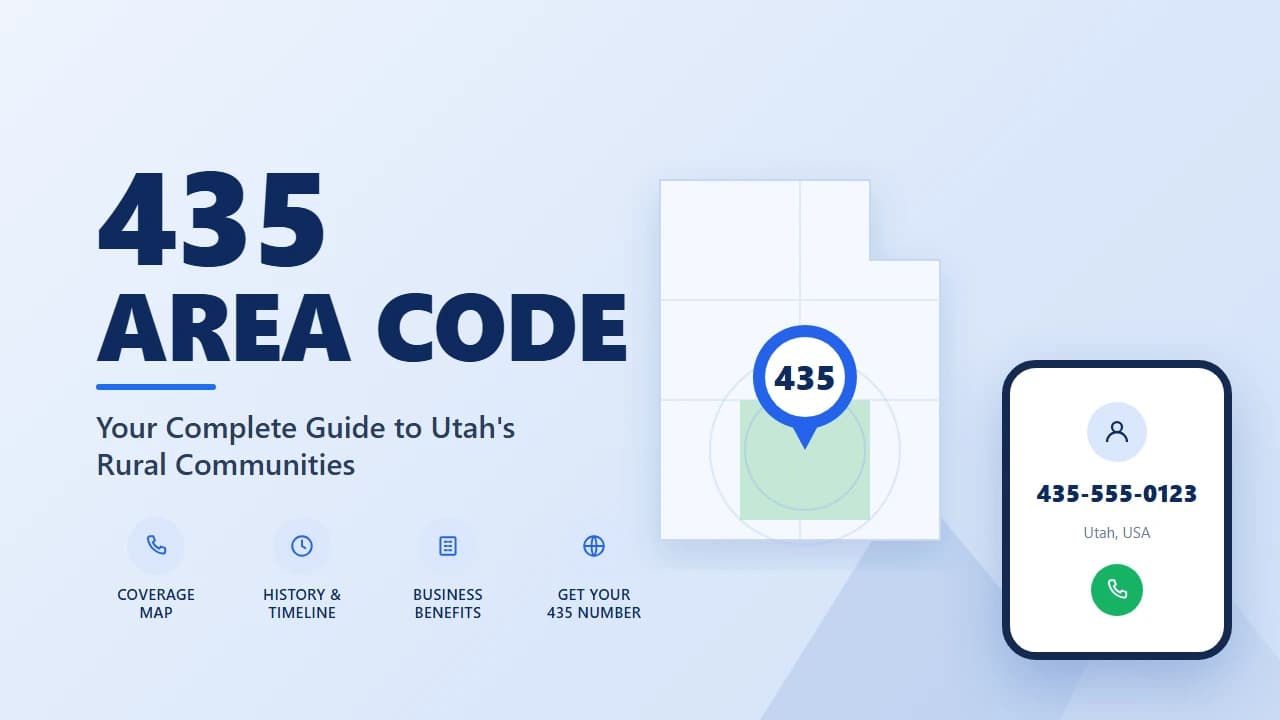
The 435 area code covers nearly all of Utah outside the Salt Lake City metro. Regulators created it on September 21, 1997, splitting it away from the original 801 code to free up numbering capacity as the state's population climbed. Unlike an overlay, this was a true geographic split: everything inside the Wasatch Front kept 801, while the vast rural remainder of the state received the new prefix, which today stands as the only geographic code serving small-town and rural Utah.
Where Is the 435 Area Code Located?
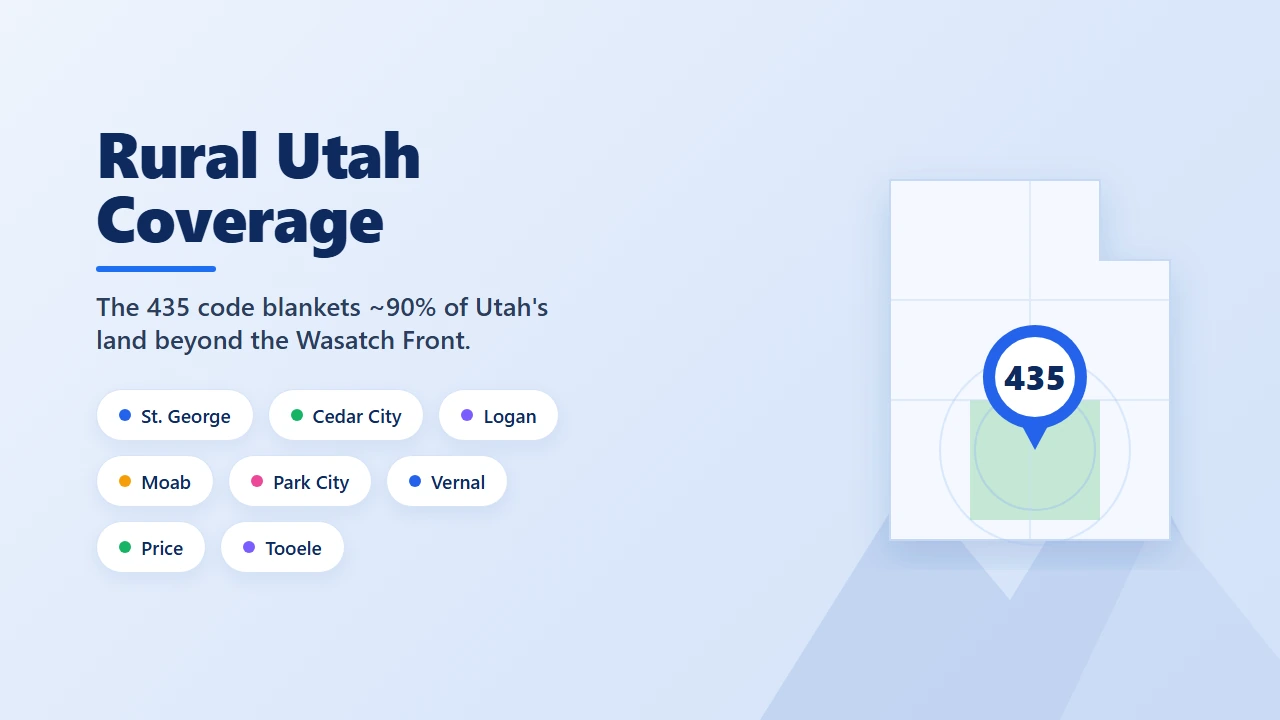
The 435 area code covers roughly 90% of Utah's land area while holding only a fraction of its people. Cities and towns served include St. George, Cedar City, Logan, Moab, Park City, Vernal, Price, Tooele, Richfield, and Heber City, along with countless smaller communities in between. Because the territory is so spread out, a matching number in this range signals a connection to Utah's outdoor, tourism, and small-business economy rather than the corporate identity tied to the capital. That geographic split, rather than an overlay, is also why this prefix behaves differently from its Salt Lake City counterparts.
435 by the Numbers
A few figures put the scale of this prefix in perspective. It is one of the most thinly populated area codes in the entire country, despite covering the vast majority of Utah's land mass. The 435 area code has been in continuous service since 1997, making it nearly three decades old, and current projections show the supply will not exhaust until 2041. That kind of runway is rare among American area codes and reflects just how much room a geographic split can create when population density stays low. Compare that to metro codes that exhaust within a decade or two of launch, and the difference in planning horizon becomes obvious for any business weighing a long-term local number strategy.
Why 435 Has Decades of Runway Left
Most guides treat an area code's history as finished the day it launches, but the numbering story for 435 is really about what happens next. A four-decade gap between the 1997 split and the projected 2041 exhaustion date means rural Utah businesses can count on this prefix staying stable for the foreseeable future. That stability stands in sharp contrast to the Salt Lake City metro, where explosive growth already forced a second overlay code onto the same territory within a decade of the original split.
What That Stability Means for Local Businesses
A number that is not at risk of forced renumbering or a surprise overlay is one less thing for a small business to plan around. Companies building a long-term local identity around this prefix can do so with real confidence that the number itself will not change out from under them, and that confidence matters more in tourism and hospitality, where a phone number often appears on years of printed signage, business cards, and vehicle wraps that would be costly to reprint after a forced change.
Why the 435 Area Code Still Matters for Businesses
Local phone numbers still shape whether people decide to pick up. Most consumers are more likely to answer a call that shares their own regional prefix, and roughly 60% of shoppers prefer doing business with a company that looks local. Outbound sales teams dialing with a local 435 number tend to see stronger pickup rates, and in tourism-driven towns where seasonal demand swings hard, that extra bit of trust on the first ring can be the difference between a booked reservation and a missed one. A rural Utah phone number carries that trust signal well before a customer ever hears a human voice.
Which Industries Benefit Most
Outdoor recreation businesses, guide services, and short-term rental operators see some of the clearest gains, since travelers actively avoid answering calls from unfamiliar out-of-state numbers while booking a trip. Contractors, clinics, and real estate agents across small-town Utah report similar patterns, particularly for appointment reminders that need a real response. Even a fully remote team selling into St. George or Moab can borrow this local credibility without renting a single square foot of office space. Seasonal businesses in particular benefit from this flexibility, since staffing often shifts between peak and off-peak months while the phone number itself stays constant for returning customers.
How to Get a Business Phone Number from Rozper
Rozper provisions local, international, and toll-free numbers across 150+ countries, backed by 99.999% uptime and CRM-ready integrations with Salesforce, HubSpot, and Zoho. Support comes from a real 24/7 team rather than a bot tree, which matters most on the day a routing rule needs fixing fast. Getting a matching number set up takes only a handful of steps.
- Visit the website and start a no-pressure conversation about your goals.
- Share your business email and a bit about your call volume and markets.
- Get a custom quote — the plan is not fixed, so you only pay for what you use.
- Choose your number type: local, international, toll-free, or a second number for privacy.
- Pick your country or area code from the 150+ countries in coverage, including 435.
- Set up call forwarding, call recording, and CRM integration with the onboarding team.
- Port your existing number over with minimal disruption and start taking calls.
A Second Number Instead of a New Line
Not every business needs a full second phone system just to test a market. A second number tied to the same device keeps a personal line separate from a business one, or lets a company trial a rural Utah phone number before committing to a bigger local push. This approach works particularly well for consultants and small teams who want a 435 presence without provisioning a whole new desk phone setup. It is a smaller step than a full number change, and it can always scale into a larger deployment once call volume justifies it.
Setting Up Call Routing for a Growing Rural Utah Team
A single 435 number rarely stays a single line for long once a business starts booking real volume across multiple towns. Modern cloud systems let one number ring several devices at once, or hand off to a different team member automatically after a set number of rings. Sales teams working both the rural market and the capital, whether the prospect sits in 435 territory or under the 385 area code overlay, can route every inbound call through one shared queue instead of juggling separate lines. That setup also makes it far easier to track which marketing channel actually drove the call, since every inbound number can carry its own tag inside a CRM dashboard. Teams covering multiple towns across the 435 territory can extend the same approach further, assigning a distinct routed number to each region without maintaining separate physical phone lines for every location.
Common Misconceptions Worth Clearing Up
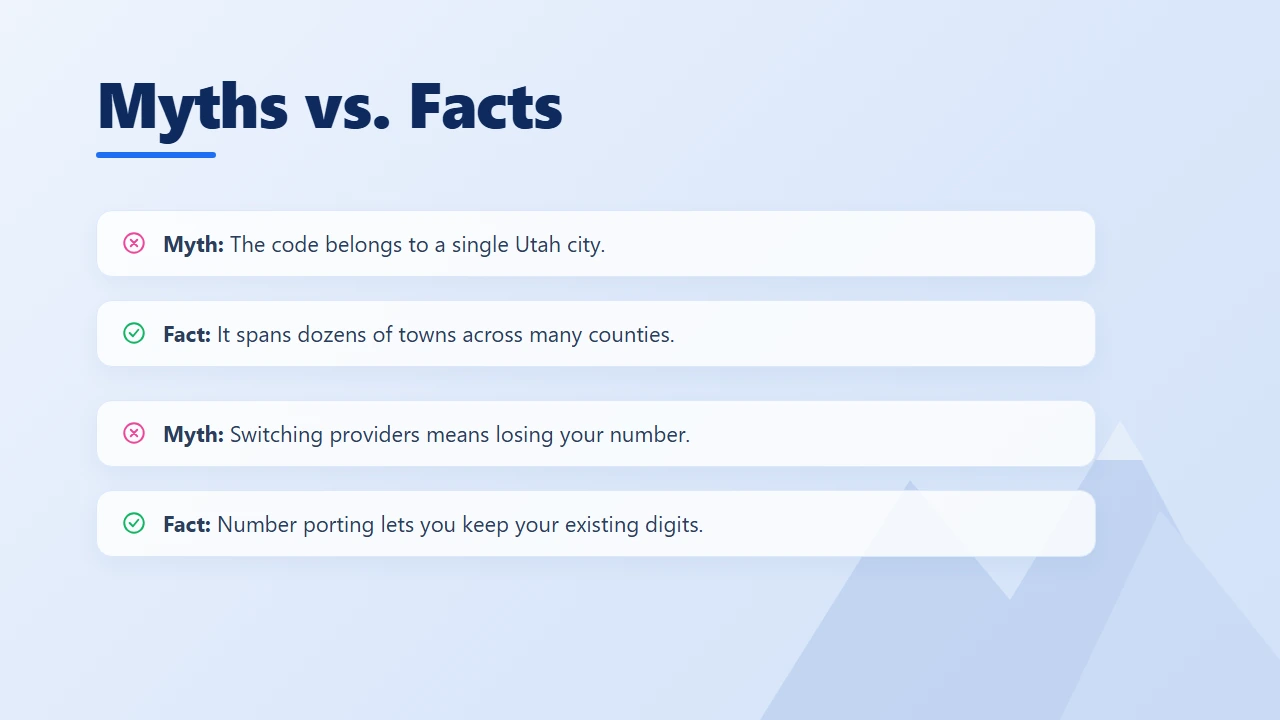
A frequent assumption is that the 435 area code belongs to one specific city, but it spans dozens of towns across many counties and thousands of square miles. A number here is not less established than a metro line — it simply reflects a 1997 assignment made to relieve capacity, one with far more runway left than most people expect. According to Wikipedia's numbering history, the region remains one of the most thinly populated area codes in the country, and current projections show it will not exhaust until 2041. Porting is another common mix-up: most modern carriers let a business keep its existing digits while switching providers, so confirming porting support before signing anything avoids a needless renumbering headache.
435 vs. Nearby Utah Area Codes
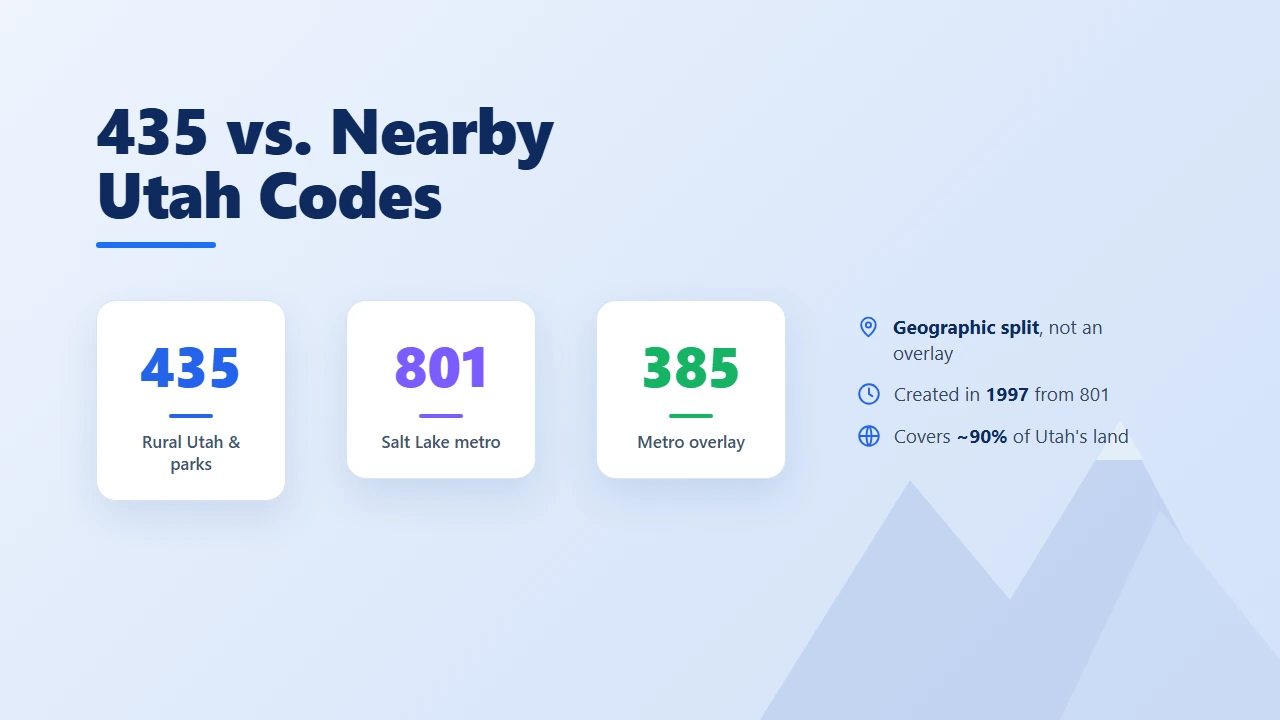
Utah's numbering map is simpler than many states'. The rural prefix sits alongside the metro codes that blanket greater Salt Lake City, and the dividing line is geographic rather than an overlay: the capital region uses its own prefixes while nearly everything beyond it falls under this single rural code. Neither situation signals a better or newer part of the state — see our guide to the 801 area code for how the metro prefixes serve the densely populated Wasatch Front instead.
Conclusion
This Utah prefix is more than a random string of digits on a caller ID. It is a marker of a rural identity that stretches across national parks, ski towns, ranch land, and desert gateways most of the state's population never sees up close. Whether you are tracing a missed call or planning a local presence, understanding the history and long runway behind those three digits puts you ahead of nearly everyone who dials them. That decades-long stability is exactly what makes this prefix such a dependable foundation for a rural business identity.
As rural Utah keeps drawing new residents and visitors, expect this prefix to remain a steady fixture of daily communication for years to come. A rural Utah phone number is one of the simplest ways to signal that reach before a customer even picks up. Rozper can activate a matching number in minutes, without requiring a single square foot of Utah office space. Start the conversation whenever the timing works for your team.
FAQs
What cities does the 435 area code cover?
It covers most of rural Utah, including St. George, Cedar City, Logan, Moab, Park City, Vernal, and Price. These towns sit outside the Salt Lake City metro across a huge stretch of the state.
Is 435 a toll-free or premium prefix?
No, it is a standard geographic prefix for Utah, not a toll-free code like 800 or 888. Calls to and from this prefix are billed at normal local or long-distance rates.
Can I get a matching number if I don't live in Utah?
Yes, cloud phone providers let you request and route a number tied to that region. Setup takes minutes regardless of where you physically live or operate your business.
Why does rural Utah have its own separate area code?
Population growth in the 1990s exhausted the original statewide 801 numbering pool. Regulators split off 435 in 1997 to serve the areas beyond the Salt Lake City metro.
Will the 435 area code ever run out of numbers?
Current projections show it will not exhaust until 2041, giving it a long runway. That timeline reflects how lightly populated this vast rural territory remains.
What time zone does the 435 area code use?
The entire 435 region sits in the U.S. Mountain Time Zone year-round. It observes daylight saving time from March through November, same as the rest of Utah.
Is a 435 area code number safe to answer or call back?
Yes, it is a standard geographic prefix, not a premium-rate or international scam code. As with any area code, individual callers can still attempt scams, so normal caller-ID caution still applies.
How do I get a business phone number from Rozper for this area code?
Visit rozper.com, share your business email and call volume, and get a custom quote for your number. The team provisions the number, sets up CRM integration, and ports your existing digits if needed.