Introduction
If your phone just flashed a call from the 336 area code, you are looking at a fully legitimate North Carolina number, not a fake or invented prefix. This one matters because it has anchored one of the state's busiest regions for nearly three decades. This guide breaks down exactly where the 336 area code reaches, why regulators created it, and how to tell a genuine local call from a spoofed one. Stick around, and you will know precisely what to expect the next time this prefix shows up on your screen.
Key Takeaways:
- The 336 area code is a real, NANP-compliant code created in North Carolina in 1997, not a scam prefix.
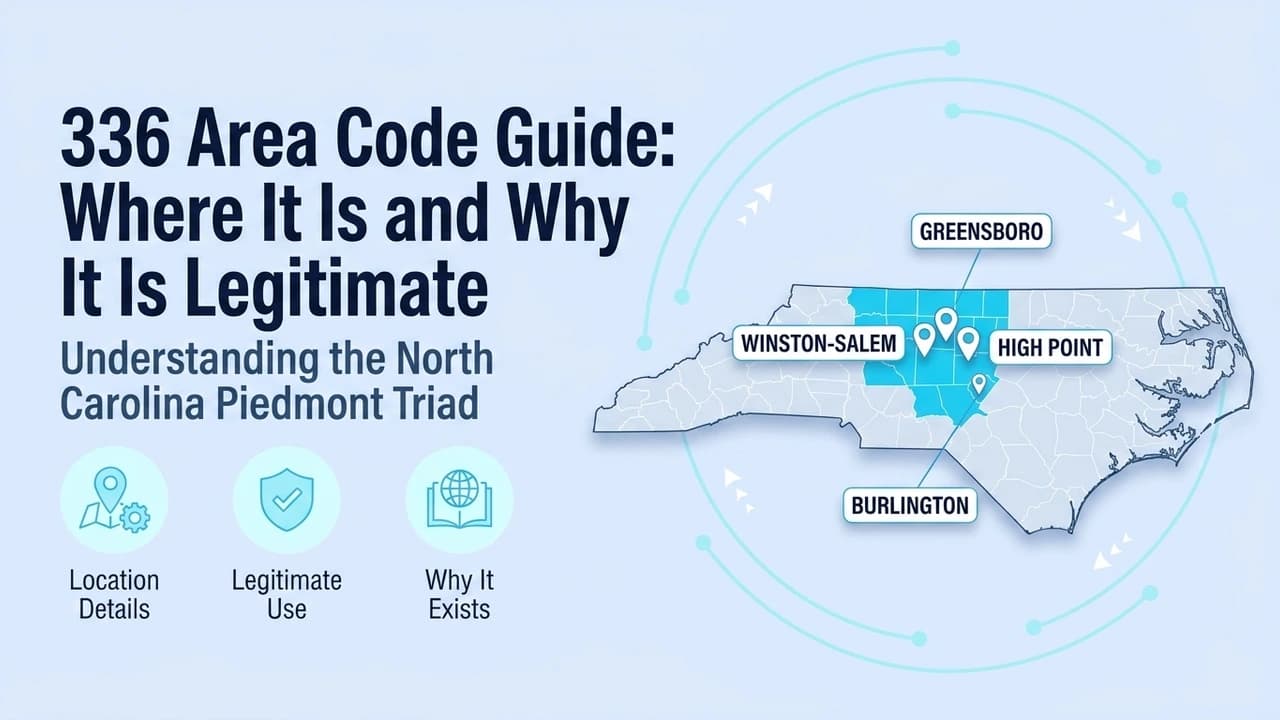
- Area code 336 North Carolina covers the Piedmont Triad, including Greensboro, Winston-Salem, and High Point.
- A newer overlay, 743, now shares the same territory, so ten-digit dialing is mandatory across the region.
- A suspicious 336 call is far more likely to be a spoofed number than proof the area code itself is fake.
336 Has Anchored the Piedmont Triad Since 1997
Most people assume an unfamiliar three-digit prefix is automatically suspicious, especially after years of scam-call headlines. The 336 area code breaks that assumption completely, because regulators created it through a documented split rather than anything invented or spoofed, and its entire history is a matter of public record stretching back nearly three decades.
- Area code 336 North Carolina went into service on December 15, 1997, following a formal regulatory relief filing.
- It was split away from the 910 region once Greensboro, Winston-Salem, and High Point outgrew their shared number supply.
- Every carrier database, reverse lookup tool, and public numbering record confirms the 336 area code as valid and assignable.
- Unlike an invented sequence, this code has a documented activation date, a public filing history, and an assigned carrier region behind it.
- The 336 area code follows every North American Numbering Plan rule that a fabricated prefix like 104 or 108 never could.
The Format Test That Confirms 336 Is a Genuine Area Code
Every legitimate area code in the United States and Canada follows one unbending format, and the 336 area code satisfies it completely, unlike the fake prefixes that fail the same test. Knowing this one rule gives any reader a fast way to sanity-check an unfamiliar prefix before assuming the worst, no matter where the call claims to originate.
The Digit Every Area Code Must Start With
The North American Numbering Plan requires every area code to begin with a digit from 2 through 9, and 336 meets that requirement without exception. This is the same rule that instantly disqualifies invented sequences like 104 or 109 from ever becoming real, and 336 clears it on the first digit alone.
Why Regulators Approved This Specific Split
Regulators only create a new code after documented exhaustion data shows the existing supply is running low, and 910's numbers across the Piedmont Triad were approaching that point well before 1997. The 336 area code exists today because regulators followed that exact process, filing, reviewing, and activating it on a public schedule that anyone can still look up, the same way every legitimate area code in the country comes to exist.
How the 336 Split Was Carved Out of 910
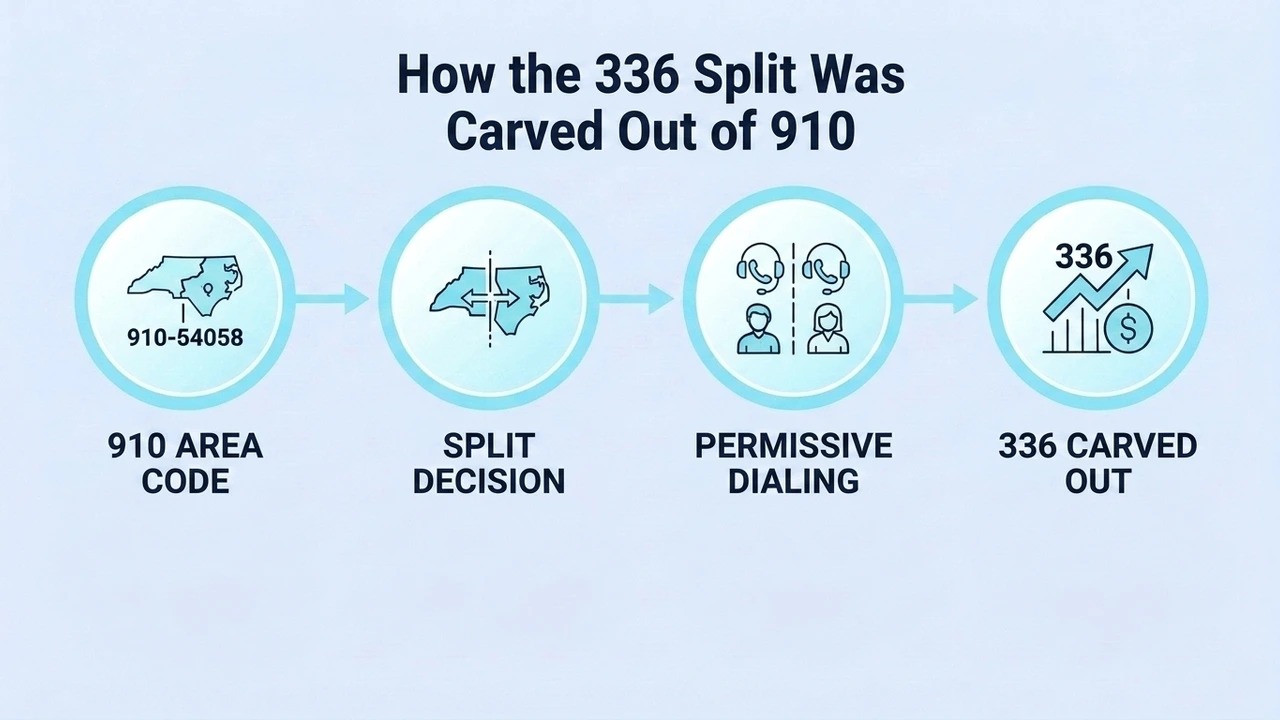
A large share of the confusion around the 336 area code comes from not knowing how a split actually gets built, since it works differently from the overlays many residents hear about today. A split reassigns an entire region to a new code, while an overlay simply layers a second code on top.
- Regulators identified that 910's number supply across the Piedmont Triad was approaching exhaustion.
- Regulators proposed a full split rather than an overlay, since 336 predates the overlay-first approach used later.
- The proposal went through a public comment period before final approval from state and federal regulators.
- The 336 area code was formally activated on December 15, 1997, taking over the Piedmont Triad from 910.
- Every existing customer in the new 336 territory received a permanent, unchanged number under the new code.
- Carriers updated their routing tables and public listings so the 336 area code appeared correctly in every directory almost immediately.
Where 336 Reaches From Greensboro to Burlington
Understanding the geography makes the 336 area code far less mysterious than a random unfamiliar prefix, since it maps precisely onto one of North Carolina's most recognizable regional corridors, one that most residents already picture the moment they hear it named and one businesses have built entire marketing campaigns around.
Cities and Counties Covered
Area code 336 North Carolina now serves Greensboro, Winston-Salem, High Point, and Burlington, spanning the heart of the Piedmont Triad and its surrounding counties.
Why Ten-Digit Dialing Matters Here
Because 336 now shares its territory with the newer 743 overlay, every local call in the region requires the full ten digits, including the area code, even between two neighbors on the same street. This is standard practice anywhere an overlay exists, and it is the single biggest everyday change residents notice once a second code arrives. Businesses printing phone numbers on signage, invoices, or vehicles across the Piedmont Triad had to update those materials to include the full ten digits once the overlay activated.
Why 336 Later Got Its Own Overlay in 743
The 336 area code eventually ran into the same growth pressure that first split it away from 910, and understanding why regulators responded with an overlay this time helps explain the region's full numbering history.
- Continued growth across Greensboro, Winston-Salem, and High Point pushed 336's own supply toward exhaustion decades later.
- Regulators chose an overlay for 743 instead of another split, so no existing 336 customer would need to change numbers.
- Both 336 and 743 now carry equal legitimacy, unlike a fabricated prefix that has never gone through either process.
- Mandatory ten-digit dialing rolled out the same day the 743 overlay activated across the shared territory.
- Reverse lookup tools and carrier databases confirm both codes instantly, something a fabricated prefix could never pass.
5 Checks Before You Trust an Unfamiliar 336 Call
A short verification habit beats guessing every time an unusual prefix shows up on your screen, even when the area code itself, like 336, is entirely legitimate. This question comes up often enough among residents unfamiliar with the region's two codes that it is worth a quick, repeatable routine you can run through in under a minute, whether the call claims to be local or not.
- Confirm the full ten-digit number rather than judging legitimacy from the area code alone.
- Search the number in a trusted reverse lookup tool to see if it matches a known business or resident.
- Remember that a real area code like 336 does not guarantee every individual caller is trustworthy.
- Check whether the caller can verify their identity through a callback to a published, official number.
- Report a confirmed spoofed number through the guidelines for consumer complaints.
Keeping Business Caller ID Clear When Choosing a 336 Number
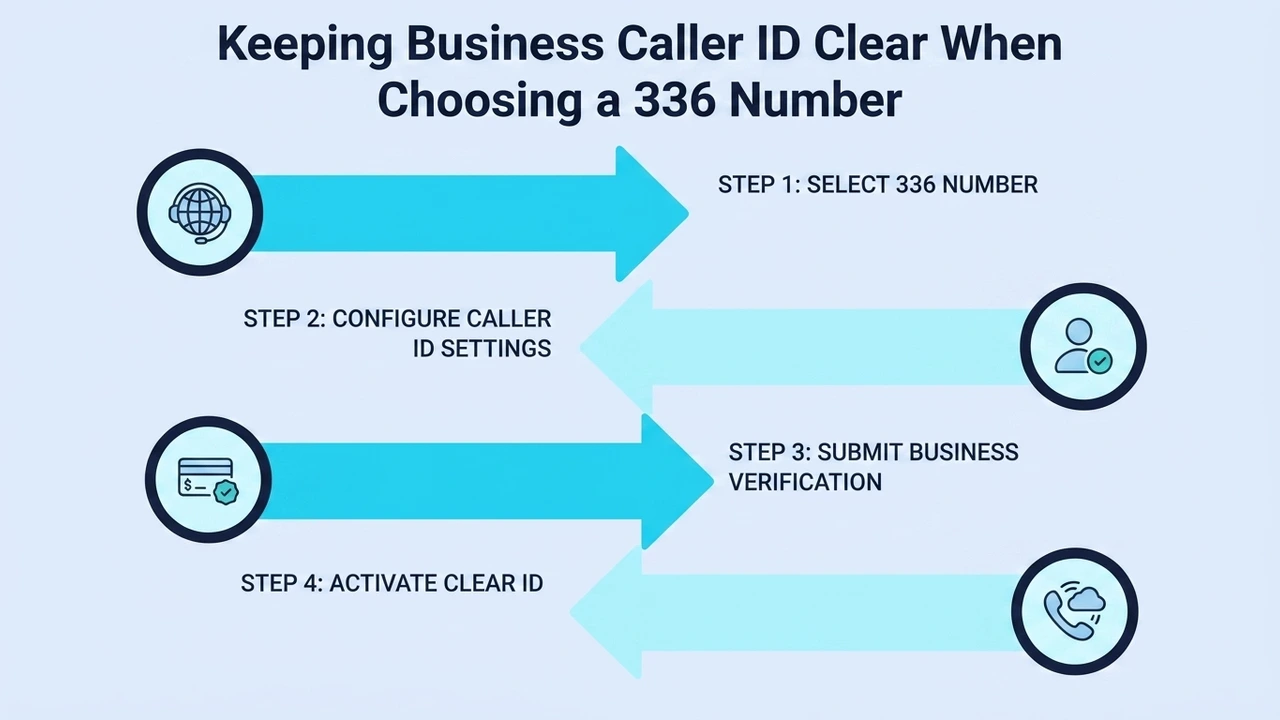
Businesses expanding into the Piedmont Triad face a real decision here, not a scam concern: choosing a recognizable local presence without confusing customers who might see either 336 or 743 on their screen. Rozper helps growing teams navigate exactly this kind of regional numbering choice, since picking the wrong-looking prefix can still cost answered calls even when the number itself is completely legitimate, especially for a sales or support team calling out at scale.
- Provision outbound lines through a carrier that issues real, NANP-compliant numbers in the exact region you serve.
- Use STIR/SHAKEN-authenticated calling so your caller ID never gets flagged as suspicious by the receiving carrier.
- Choose local presence numbers in either area code 336 North Carolina or its 743 overlay, since both carry equal legitimacy today.
- Rozper configures every business number so it always matches a real, assignable NANP region, never a stray or spoofed sequence.
Rozper customers get this regional accuracy built into their outbound calling by default, which keeps every number they dial looking as legitimate as area code 336 North Carolina itself, whether the team is five people or five hundred, and no matter how many regions they operate across.
Conclusion
The 336 area code is exactly what a legitimate NANP split looks like, anchoring Greensboro, Winston-Salem, and High Point since 1997 under a documented, publicly filed relief plan. Comparing it against fabricated prefixes that fail the same first-digit rule shows exactly how much real regulatory process backs a genuine regional code. Most suspicion around 336 traces back to general scam-call fatigue rather than anything wrong with the code itself. Rozper builds that same regional clarity into every number it provisions, so your business never sends a confusing caller ID by accident, and unfamiliar prefixes like 336 stop raising questions starting today.
FAQs
Is 336 a real area code in North Carolina?
Yes, area code 336 North Carolina is a fully legitimate code created through a regulatory split in 1997. It follows every North American Numbering Plan rule that a fabricated prefix could never meet.
Where does the 336 area code cover?
It covers the Piedmont Triad, including Greensboro, Winston-Salem, High Point, and Burlington. The newer 743 overlay now shares the identical territory.
Why does my caller ID sometimes look suspicious even with a 336 number?
A legitimate area code does not stop spoofing software from faking a 336 number on purpose. Always verify the full ten-digit number rather than judging by the prefix alone.
Does calling a 336 number cost more than calling 743?
No, area code 336 North Carolina carries standard regional rates like any other assigned code sharing the same overlay. Ten-digit dialing applies to every local call in the region.
Can businesses get a 336 number for their Piedmont Triad presence?
Yes, carriers issuing NANP-compliant numbers can provision either 336 or 743 for a genuine regional presence. Rozper configures business numbers to match the exact region a company serves.