Introduction
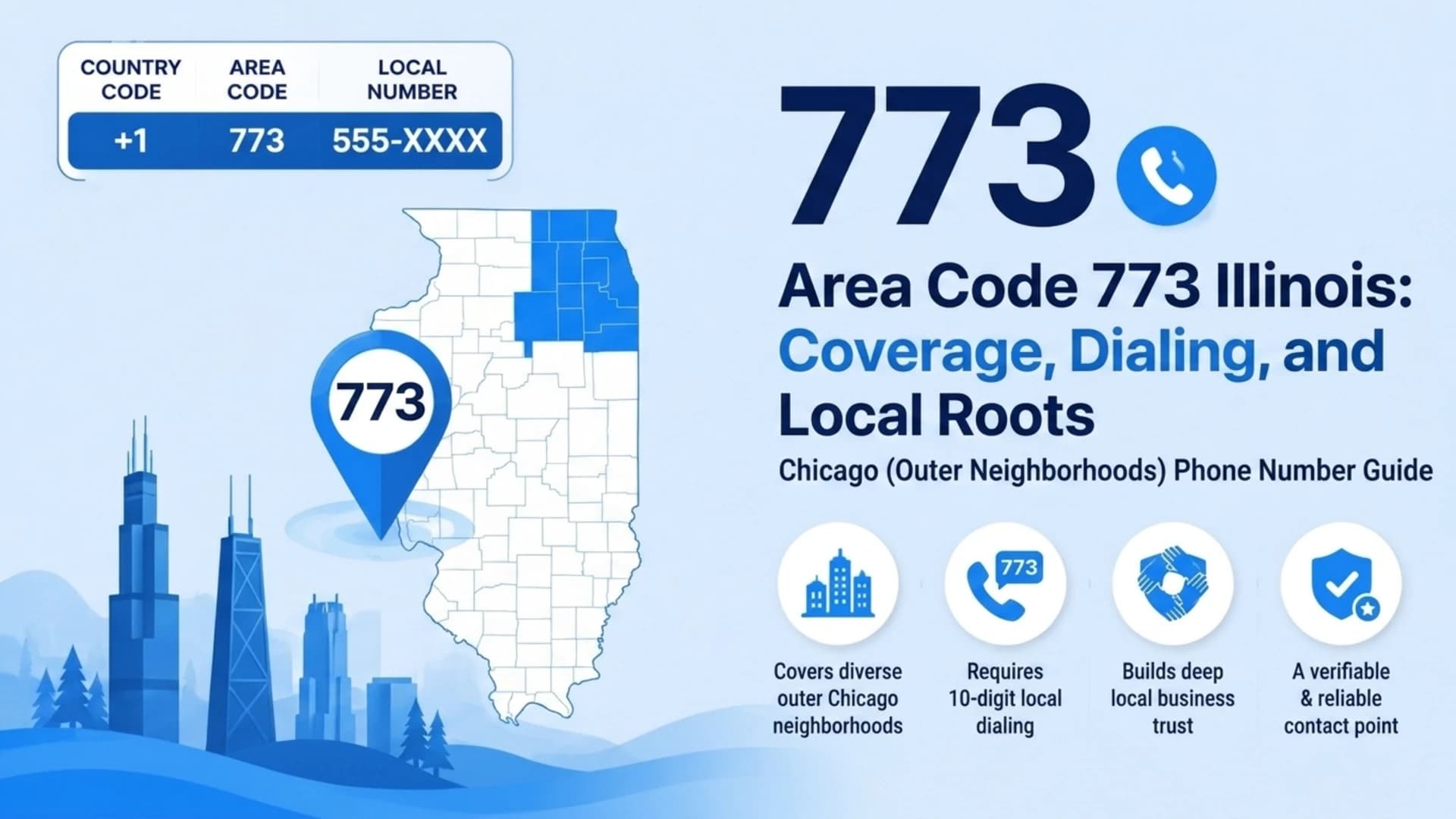
The 773 area code wraps around nearly all of Chicago outside the downtown Loop. Knowing how it works helps you dial correctly, choose a local number, and understand the city's overlay setup. This guide covers where 773 sits, why it split from 312 in 1996, which neighborhoods it reaches, scam awareness, and how ten-digit dialing works. A 773 line marks you as a real Chicago neighbor, not just a downtown address.
Key Takeaways:
- 773 covers Chicago's North, West, and South Sides, wrapping around the 312 downtown core.
- It split from 312 on October 12, 1996, to meet the city's fast-growing demand for numbers.
- The 872 overlay arrived in 2009, so ten-digit dialing is now required on every call.
- A 773 number signals authentic neighborhood roots in areas like Lincoln Park, Logan Square, and Hyde Park.
773 Wraps Around Chicago's Neighborhoods, Not the Loop
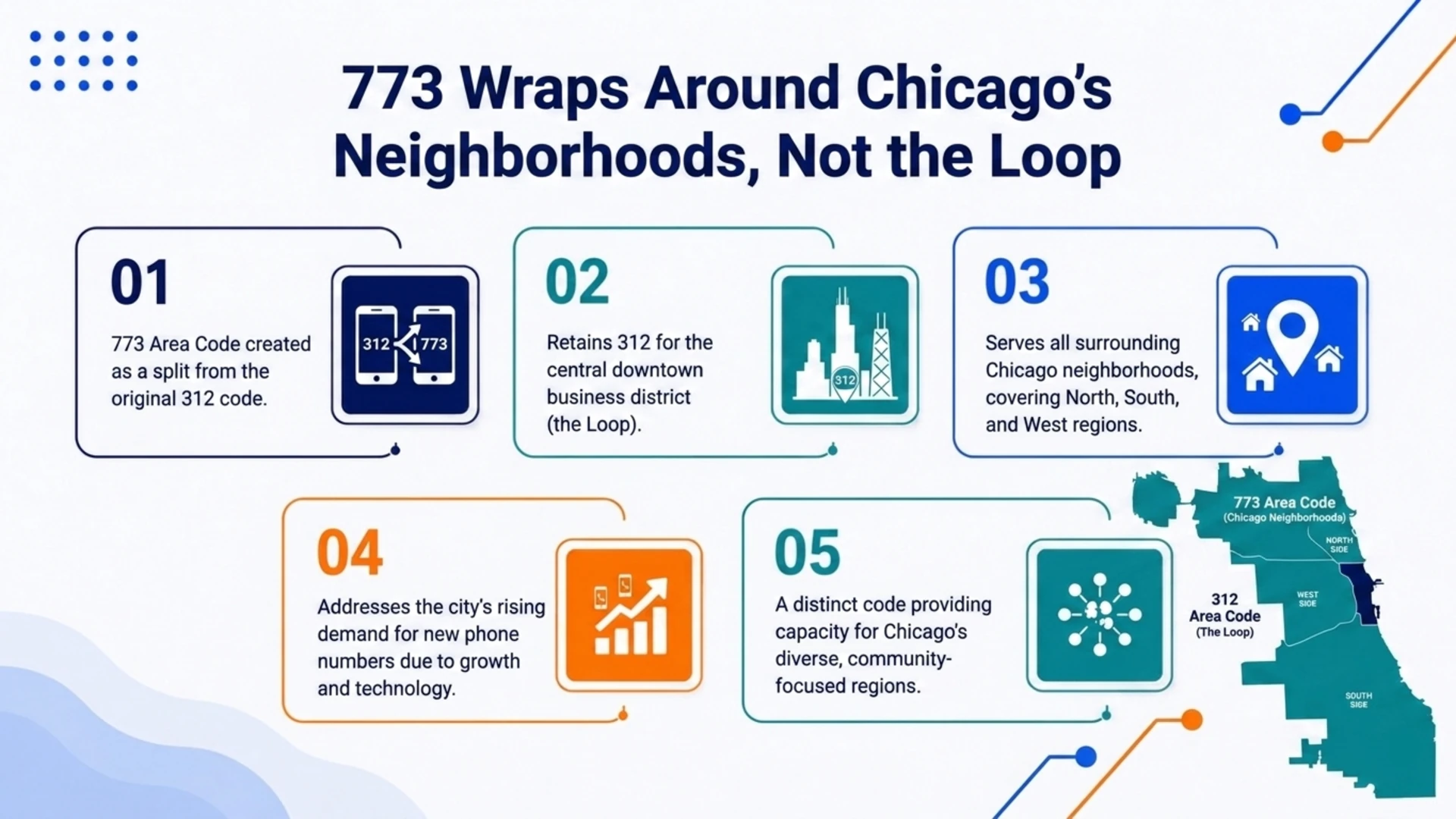
This region forms a ring around downtown, covering the neighborhoods where most Chicagoans actually live. While 312 holds the central Loop and business district, 773 claims the North, West, and South Sides. It reaches from the Lake Michigan lakefront all the way to the western edges of the city. Every mile of it sits in Central Time.
Think of the city as a target: 312 is the small bullseye downtown, and 773 is the wide ring around it. That ring holds the vast majority of the city's homes, corner shops, and community businesses, stretching for miles in every direction. This is the code most residents carry every day.
- Anchored around the neighborhoods encircling the downtown Loop.
- Covers the North Side, West Side, and South Side alike.
- Shares the city with 312 downtown and the 872 overlay citywide.
- Every number in this territory sits inside the Central Time Zone.
The Split That Defined Two Chicagos
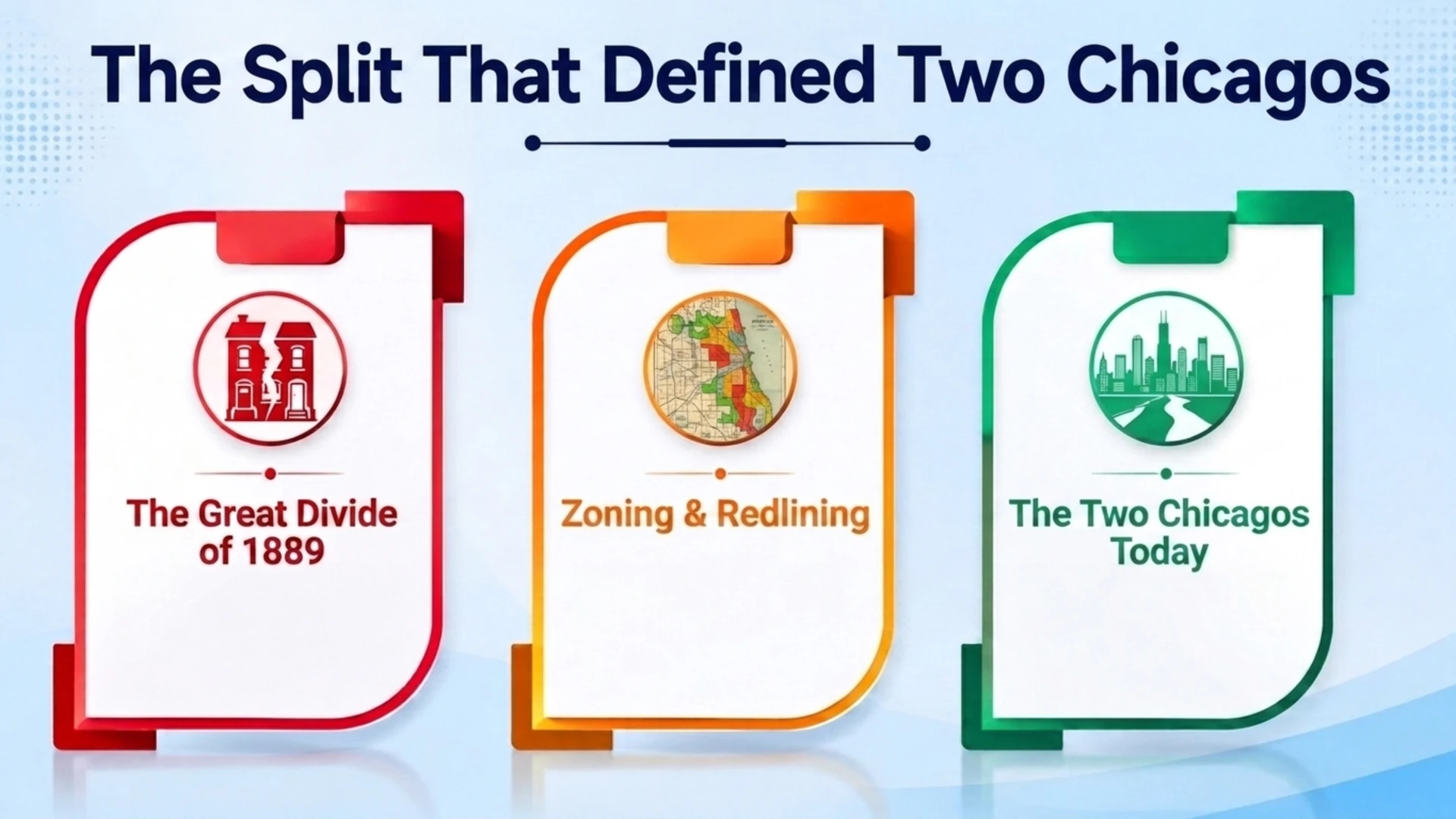
For decades, 312 covered all of Chicago on its own. By the mid-1990s, cell phones, fax lines, and pagers drained the supply, so on October 12, 1996, the city split off 773 for the neighborhoods. That single move reshaped how Chicagoans identify their part of town.
At the time, splitting the map was the standard fix for a crowded numbering plan. The new code absorbed the bulk of the city almost overnight. Millions of residents kept living where they were, but their phones now told a new story about which part of Chicago they truly called home.
The split left 312 with the Loop and the central business core. A 773 number, by contrast, came to mean the residential heart of the city. When numbers ran low again, the city stopped splitting and added the 872 overlay in 2009. That overlay covers 312 and 773 together, letting everyone keep their existing numbers.
Which Chicago Neighborhoods Pick Up a 773 Call
Dial into this territory and you could be reaching dozens of distinct neighborhoods. Every number here ties back to one of these communities, spread across three sides of the city. Each side carries its own distinct character, yet all of them proudly share the same code.
- Lincoln Park and Lakeview along the North Side lakefront.
- Logan Square and Wicker Park on the trendy Northwest Side.
- Hyde Park and Bronzeville on the South Side.
- Pilsen and Englewood among the vibrant West and South Side communities.
The 872 Overlay Myth: Your 773 Number Isn't Going Anywhere
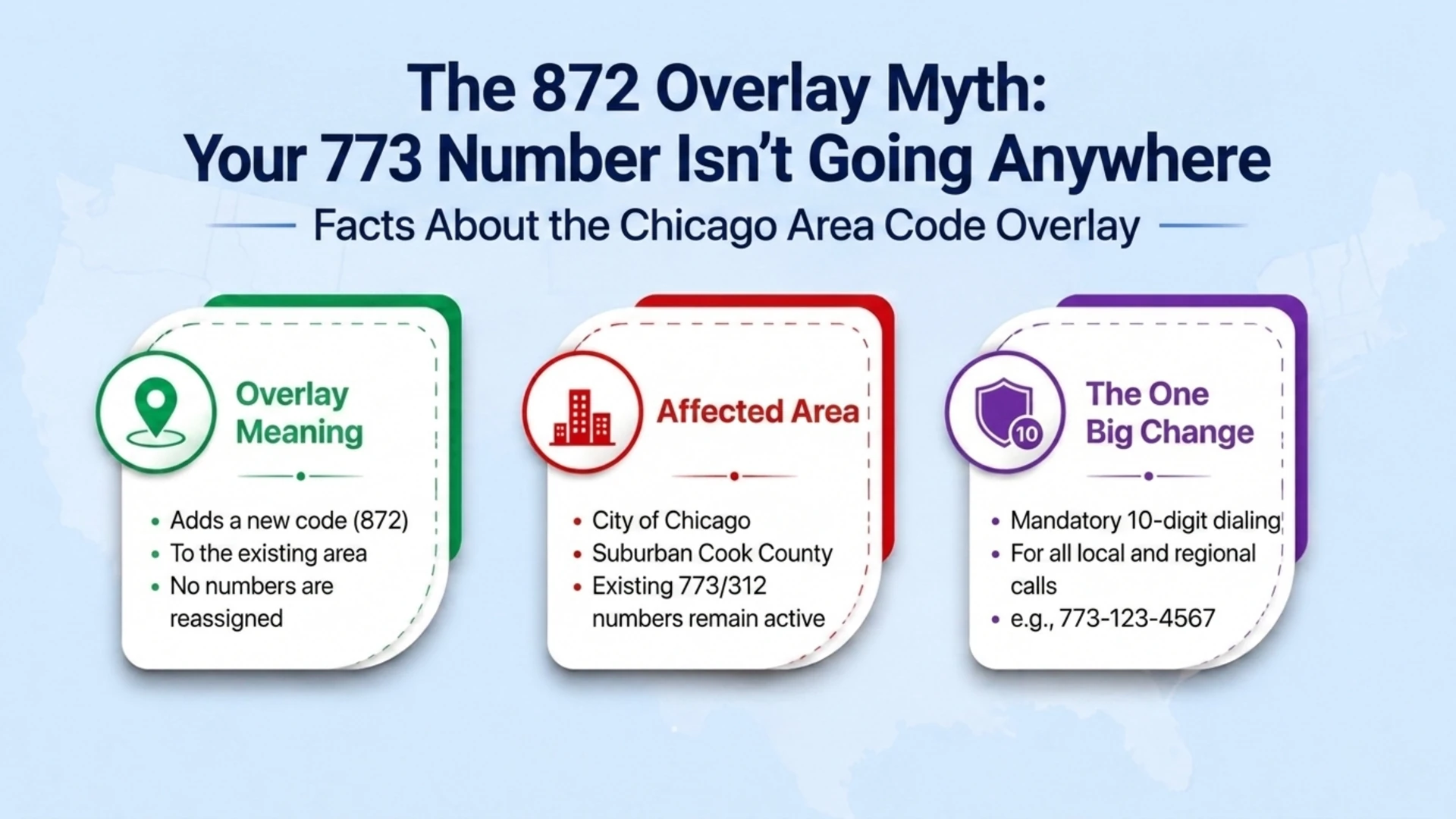
A common worry is that the 872 overlay somehow replaces or weakens 773. It does not. The overlay simply shares the same city, so the coverage footprint stays exactly where it has always been. What changed is the dialing habit, since every local call now needs all ten digits. Seven-digit dialing simply no longer reaches the person you are trying to call.
Regulators approved an overlay instead of another split so nobody had to change their number. New lines may receive an 872 code, while existing 773 numbers stay untouched.
- Dial the full area code, 773 or 872, before every number.
- Add the seven-digit local number, for ten digits total.
- For long-distance calls, place a leading 1 in front of those ten digits.
- Save every contact in ten-digit form so calls and texts always connect.
Is a 773 Area Code Call a Scam?
This is a real, actively assigned area code serving one of the largest residential populations of any US city — most calls showing a 773 prefix are completely legitimate. Its familiarity is exactly why scammers target it, though: a local-looking number gets answered far more often than an out-of-state one.
- Neighbor spoofing: Scammers use caller ID spoofing to display a 773 number that looks like it's calling from your own block, even when the call originates nowhere near Chicago.
- Utility shutoff threats: Callers posing as ComEd or Peoples Gas claim an unpaid bill will cut off service within the hour unless you pay immediately by gift card or wire transfer. Real utilities send written notice first and never demand a single untraceable payment method.
- City building-violation calls: Callers claiming to represent city inspectors threaten fines for code violations and ask for payment over the phone — legitimate city fines are never collected this way.
- One-ring callback scams: A call that rings once and disconnects is designed to bait a callback to a premium-rate number.
If an unexpected 773 call pressures you for immediate payment or personal information, hang up and call the organization back using a number from its official website or bill.
312 vs 773: Which Chicago Code Sounds More Local
Since both codes belong to Chicago, people ask which one sounds more local. The honest answer depends on the impression you want, and for many businesses a 773 number signals real neighborhood roots. A 312 line leans corporate and downtown, while a 773 line feels like the block.
A 312 number reads as central, established, and business-focused. It suits firms that want a polished, corporate-downtown image. A 773 number, by contrast, reads as authentic and community-based, which builds trust with local customers — a real advantage for neighborhood-facing businesses like clinics, contractors, real estate agents, and retail.
Why a 773 Business Phone Number Works for Your Brand
Higher Answer Rates in the Neighborhoods
Residents are more likely to pick up a call from a number that matches their own part of the city. For businesses serving Lincoln Park, Logan Square, Hyde Park, or any of the dozens of neighborhoods in this territory, a 773 number reads as one of their own — not a call center dialing in from elsewhere.
Local Credibility Without a Storefront on Every Block
A virtual 773 number lets a business route calls to any device, anywhere, while still presenting a genuinely local identity to callers in that specific part of Chicago. You don't need a physical location in Pilsen to sound like you belong there.
A Natural Fit for Community-Facing Industries
Home services, healthcare providers, real estate agents, and local retail all benefit disproportionately from a 773 number's neighborhood association — these are businesses whose customers actively prefer working with someone local, not a downtown firm or an out-of-state call center.
How to Get a Local 773 Business Number
- Choose a VoIP provider with confirmed 773 inventory — not every provider stocks numbers for every Chicago prefix.
- Browse available numbers and pick a standard or vanity option for the specific neighborhood block you want to signal.
- Set up call routing to a mobile phone, desktop softphone, call queue, or IVR menu.
- Port an existing number if you already hold a 773 line elsewhere — your digits and customer relationships carry over.
- Enable SMS on the line so customers can text as well as call.
Rozper provisions 773 numbers with 99.999% uptime and coverage across 150+ countries, so the same platform can serve a single Chicago neighborhood line or a much larger multi-market phone setup.
Conclusion
The 773 area code is far more than a set of digits on a map. It has defined Chicago's neighborhoods since it split from 312 in 1996, wrapping the North, West, and South Sides. The 872 overlay shares that same ground, so a 773 line stays fully local while ten-digit dialing keeps every call clean.
The smart next step is deciding how you want your own Chicago line to sound and work. Whether you value the neighborhood feel of 773 or the downtown polish of 312, the right platform makes setup quick and dependable. Rozper helps you claim a local line and route every call to the right person without technical headaches.
FAQs
What area does the 773 area code cover?
It covers most of Chicago outside the downtown Loop. That includes the North Side, West Side, and South Side neighborhoods.
Where is the 773 area code located?
It sits in Chicago, wrapping around the central 312 district. Neighborhoods include Lincoln Park, Logan Square, and Hyde Park.
When was the 773 area code created?
It went into service on October 12, 1996. The city split it from 312 to add more numbers.
How do I dial a 773 number?
Always dial all ten digits, the area code plus the local number. Add a leading 1 only for long-distance calls.
Is a 773 area code call a scam?
The 773 prefix itself is legitimate and officially assigned. Its high familiarity makes it a target for caller ID spoofing, utility-shutoff threats, and fake city-violation calls. Legitimate organizations never demand immediate payment or personal information over an unsolicited call.
What time zone does the 773 area code use?
The entire region runs on Central Time. It follows the same clock and daylight saving schedule as the rest of Chicago.
How much does a 773 phone line cost?
Pricing depends on the provider and plan you choose. Many platforms offer a free trial so you can test before paying.
Does a 773 number sound more local than 312?
For neighborhood businesses, 773 often feels more rooted than downtown 312. Both are fully local Chicago codes, so the choice is about image.