Introduction
The 314 area code once covered the entire eastern third of Missouri, and this guide explains exactly how much smaller its footprint has become since then. That shrinking history matters because it explains why a 314 number now signals something very specific about where a business actually sits. You'll learn which St. Louis neighborhoods still carry this prefix, why it split twice, and what the newer 557 overlay changed about how everyone there dials a call. Understanding that full arc gives you context most callers never bother to look up.
Key Takeaways:
- The 314 area code now covers only the City of St. Louis and a small ring of inner suburbs, down from the entire eastern third of Missouri in 1947.
- Two splits, in 1996 and 1999, carved off the 573 and 636 area codes from the original 314 territory.
- The 557 overlay went live on August 12, 2022, making ten-digit dialing mandatory for every call in the region.
- Businesses can activate a genuine 314 area code number through Rozper without leasing office space in St. Louis.
St. Louis City's Home Turf: What's Left of the 314 Area Code
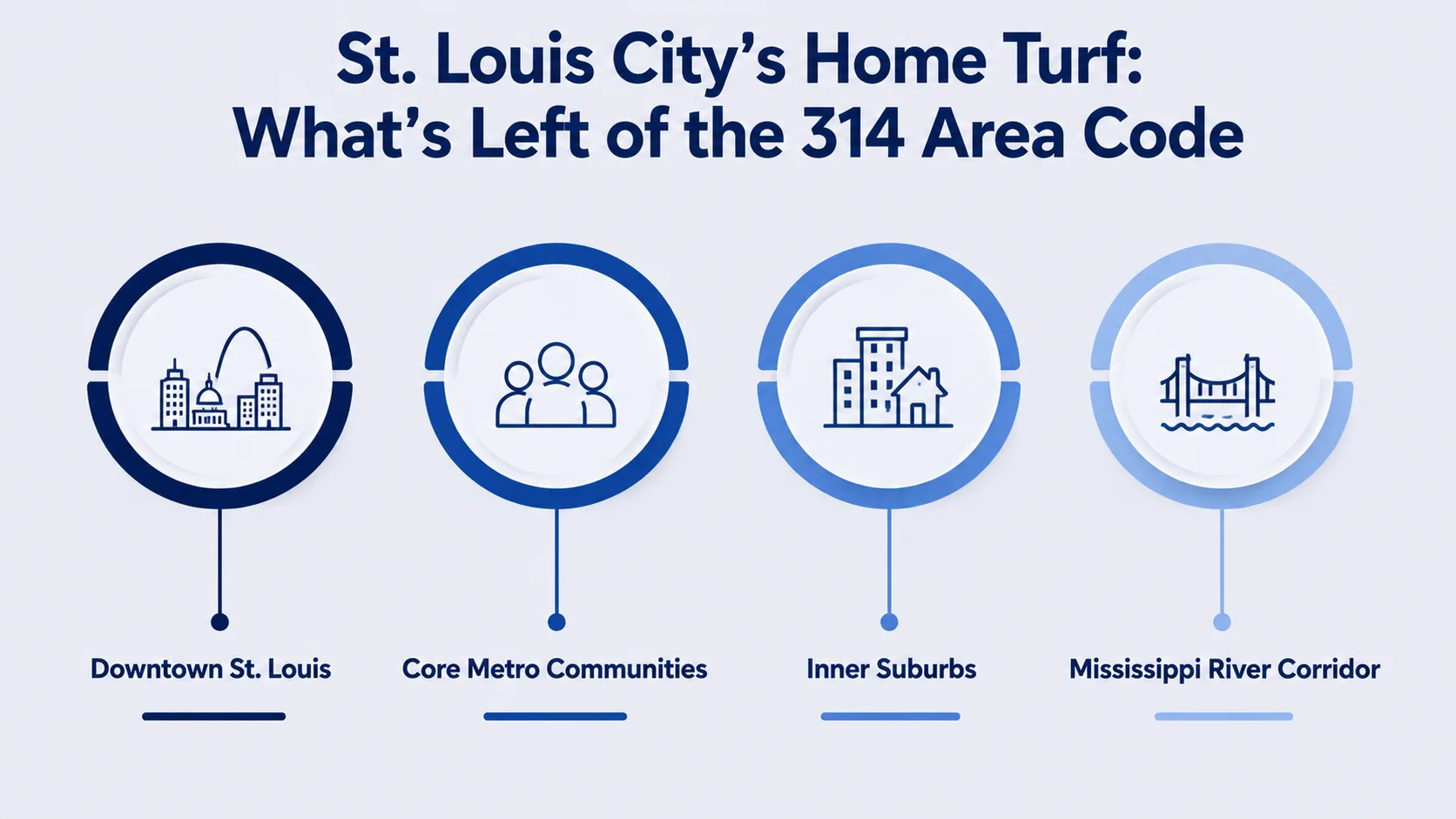
After decades of splits, the 314 area code now covers a compact footprint centered on the City of St. Louis itself, rather than the sprawling eastern Missouri region it once served. It's one of the smallest geographic areas any original 1947 area code still covers anywhere in the country, a shrinkage most callers never realize happened at all. That contraction is exactly why the 314 area code feels almost boutique compared with sprawling newer prefixes covering dozens of counties elsewhere in the state.
- St. Louis — the city proper, the historic core of the entire numbering region
- Clayton — the St. Louis County seat and a major office and legal hub
- University City and Webster Groves — dense, walkable inner-ring suburbs
- Ferguson, Florissant, and Hazelwood — established St. Louis County communities
- Kirkwood, Jennings, and Bridgeton — rounding out the inner-ring footprint
From One Region to Ten Cities: How 314 Shrank Twice
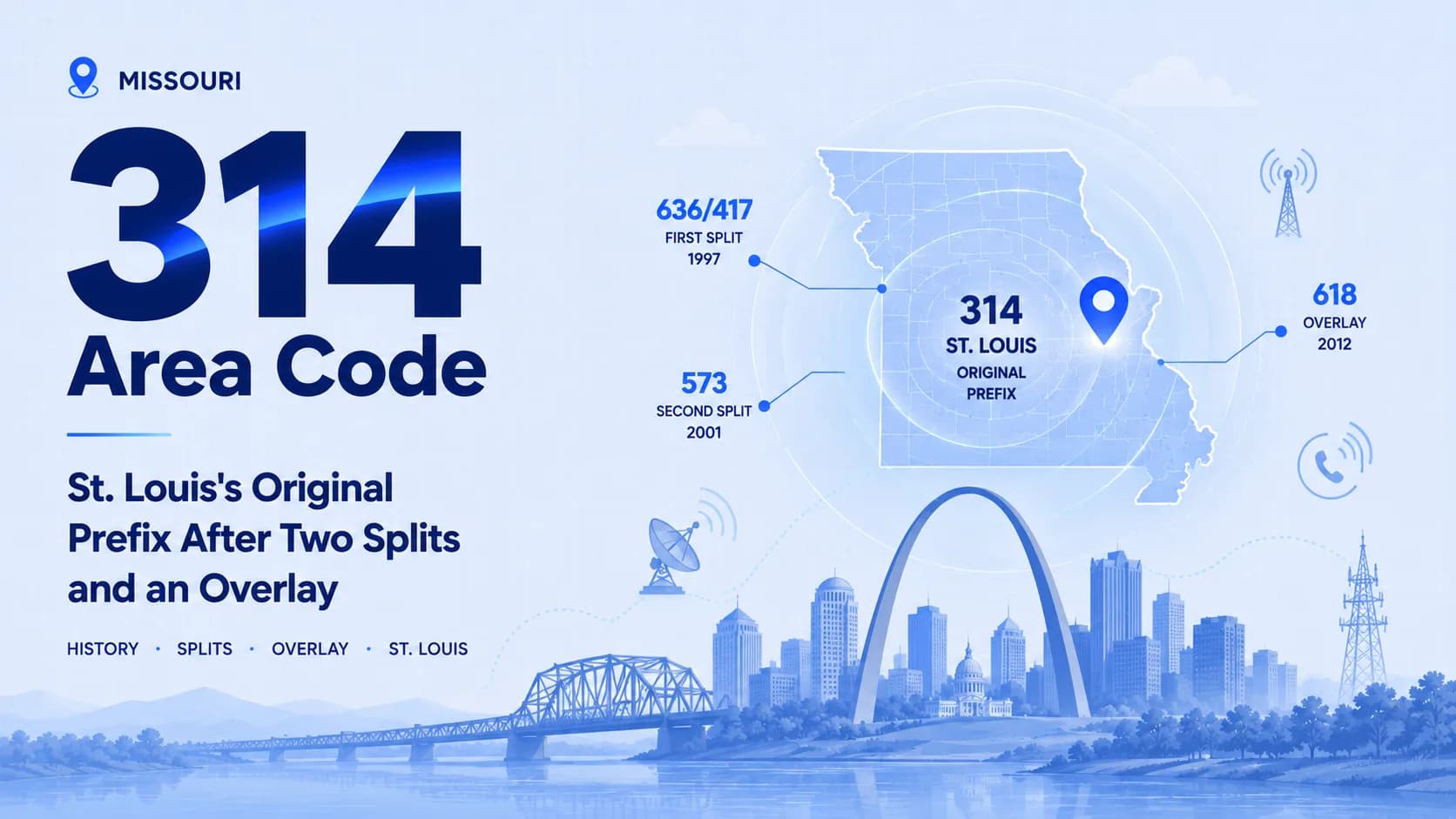
The 314 area code was one of Missouri's two original prefixes in 1947, alongside 816, much like the 218 area code was for northern Minnesota, and for nearly fifty years it covered every phone number in the eastern third of the state. Explosive growth in the 1990s changed that fast.
The 1996 Split
Central and southeastern Missouri broke away first, forming the 573 area code and leaving 314 to cover only the St. Louis metro area and its surrounding counties.
The 1999 Split
Three years later, the outer St. Louis suburbs split off again into the 636 area code, shrinking the 314 area code down to the city itself and its closest inner-ring neighbors.
Does the 557 Overlay Mean My 314 Number Will Change?
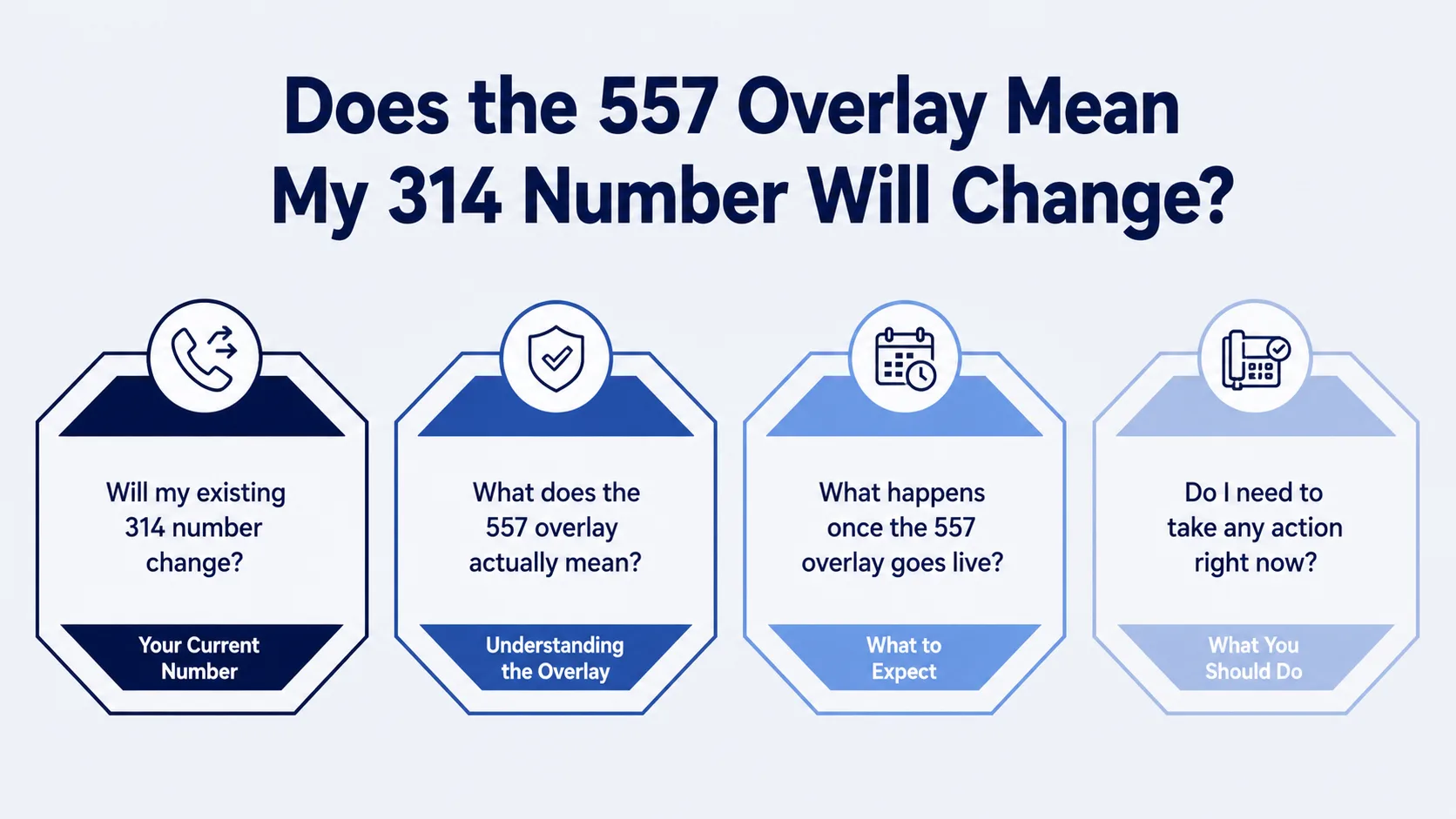
No, and this is the question that confuses the most callers. When the region's number supply ran low again in 2022, regulators chose an overlay instead of a third geographic split, layering the new 557 area code directly on top of the existing 314 footprint. Every phone that already carried a 314 area code number kept it exactly as it was. Only newly issued lines started receiving 557 instead. The one real change was to dialing behavior: since August 12, 2022, every local call in the region requires all ten digits, even a call between two neighbors on the same block.
314 Versus 557: What Actually Changes for a New Line
An overlay sounds bigger than it actually is once you see what it does and doesn't touch for someone getting a new number today.
| What changes | What stays the same |
|---|---|
| New lines may be issued a 557 number instead of 314 | Existing 314 area code numbers never change or expire |
| Every local call needs all ten digits | The physical coverage area stays identical |
| A business can no longer count on getting 314 specifically | Both codes share the same St. Louis rate centers |
Unlike the 417 area code further south, which has never needed a second code, St. Louis simply outgrew its original number supply faster.
A Clayton Law Firm That Nearly Lost a Referral Over One Digit
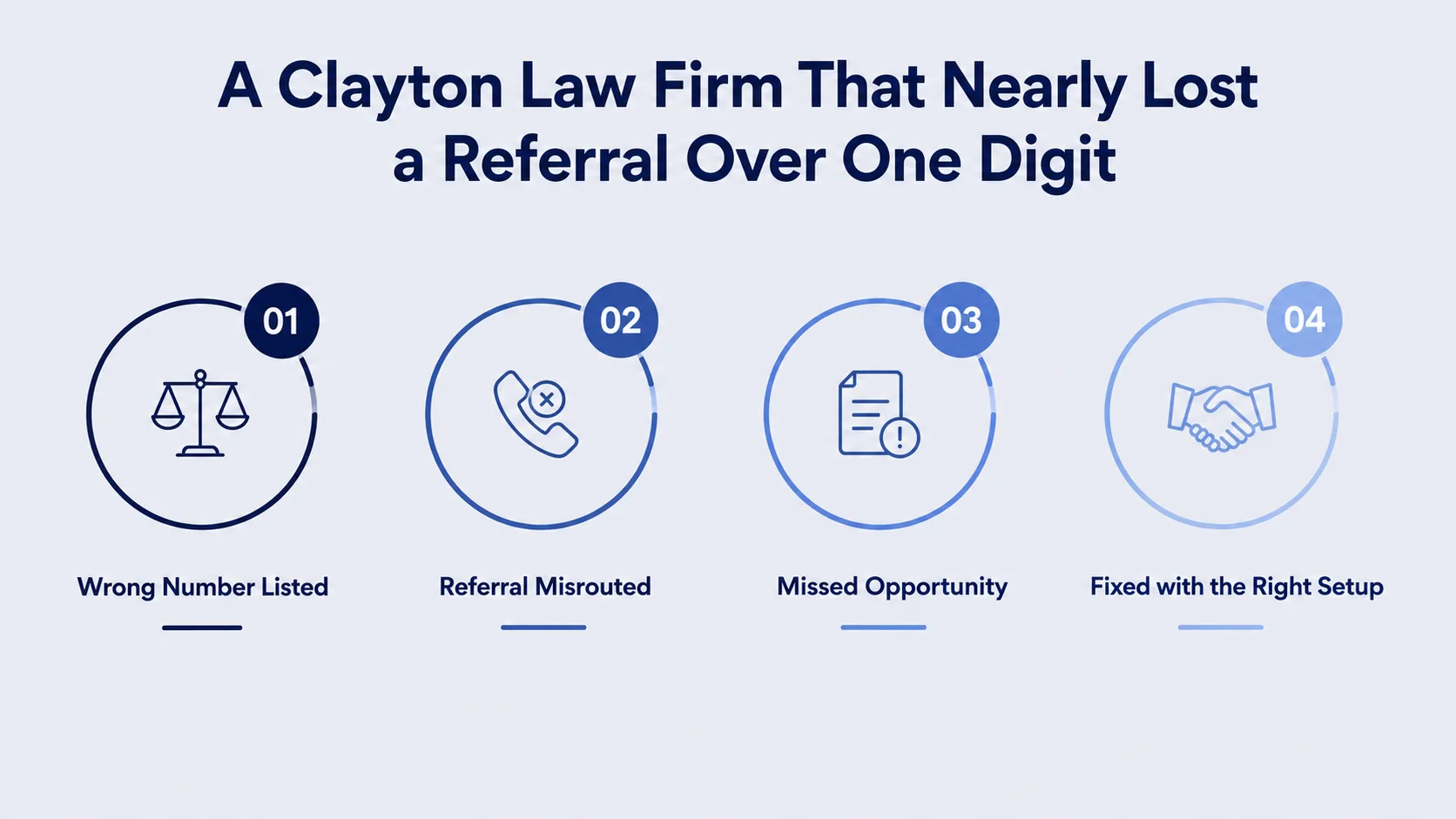
A small Clayton law firm kept referring callers back to their old seven-digit habit for months after the 557 overlay went live, since most of their clients had called the same number the same way for years. One referral call from a partner firm across town failed silently instead of ringing through, and the missed connection almost cost them a signed client. The firm only caught the pattern after two more calls failed the same way in one week.
- Seven-digit habits break silently, with no error message telling the caller what went wrong
- Referral partners and repeat clients are the most likely to still be dialing the old way
- The fix took one internal memo reminding staff and vendors to always dial all ten digits
- Firms using autodialers or CRM click-to-call tools needed to confirm those tools included the area code by default
Setting Up a St. Louis Presence Without a Downtown Lease
A business chasing St. Louis City or Clayton customers doesn't need a physical desk in either place to sound like it belongs there. The setup is the same repeatable process regardless of where a team actually sits, and it works whether the goal is a single office line or numbers spread across several inner-ring suburbs.
- Request a 314 area code number specifically, since new lines can otherwise default to the 557 overlay.
- Route every call to your existing sales or support team, wherever they're physically based.
- Set voicemail and hours around Central Time expectations for the St. Louis market.
- Track call volume by number to see which St. Louis neighborhoods are actually converting.
Rozper can activate a working 314 line inside a free trial, fully routed before the first call ever comes in.
The Old Dialing Habit That Still Trips Up St. Louis Callers
Plenty of long-time St. Louis residents grew up dialing seven digits for any local call, and that habit doesn't disappear just because the rules changed in 2022. It tends to surface at the worst possible moment, usually on a call that actually mattered.
- Dropping the area code on a local call now triggers a recorded message instead of a connection
- The habit is most common among callers who've had the same 314 number for decades
- Businesses using auto-dialers or click-to-call tools need to confirm those tools send all ten digits
- The fix costs nothing — it just takes a few missed calls before the new habit sticks
Why a Compact Area Code Still Signals Something in St. Louis
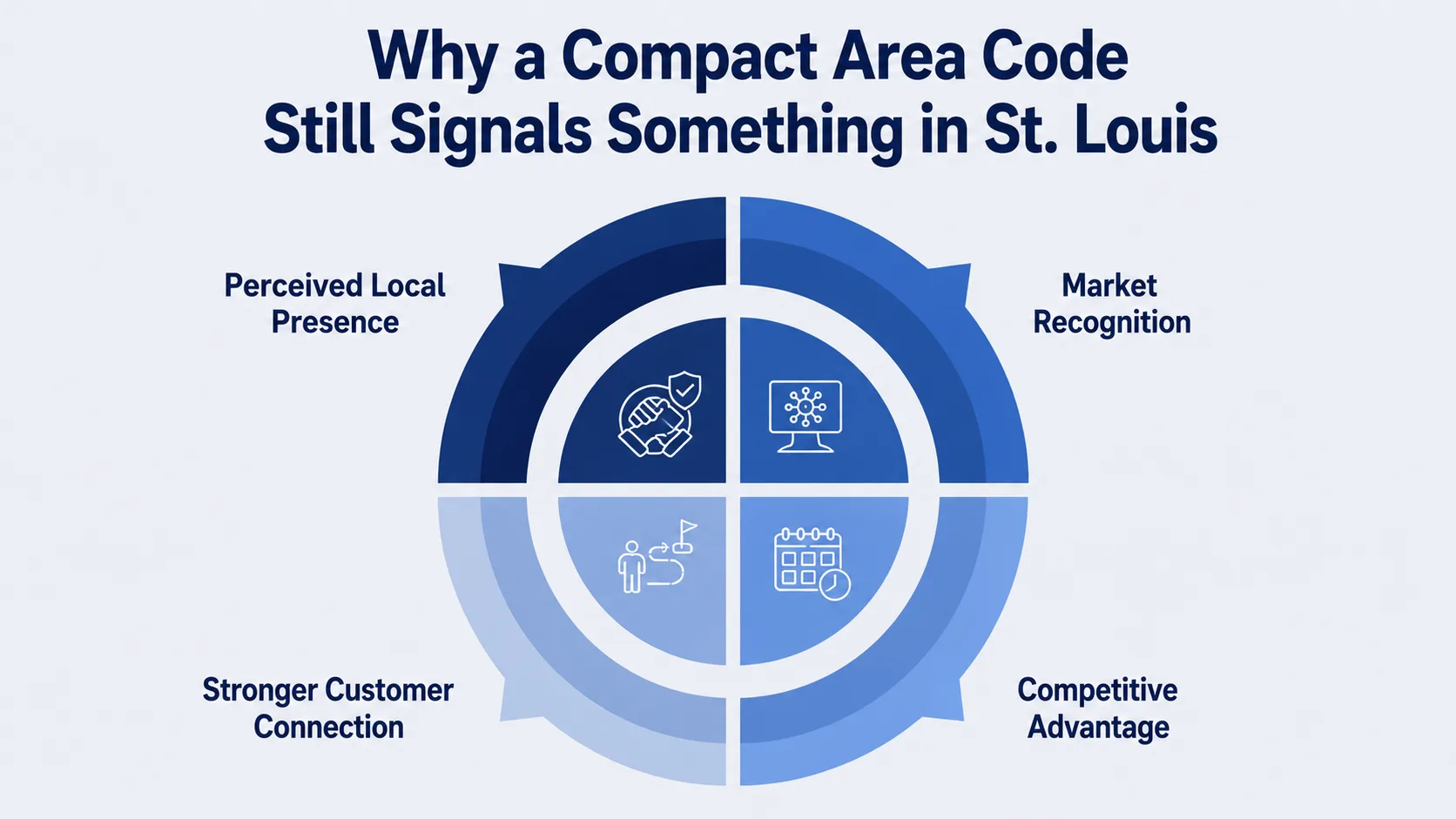
Most guides treat 314 as just another three-digit prefix, but its shrinking footprint actually tells a useful story about the region itself, one that most directory sites never bother explaining to the people searching for it.
A Marker of the Urban Core
Because 314 now covers only the city and its closest suburbs, a 314 area code number reads as genuinely urban St. Louis, distinct from the 636 suburbs further out or the 573 territory to the south. That distinction matters to customers who care whether a business is truly local to the city.
Built for a City That Was Already Major in 1947
314 was one of only a handful of area codes assigned to a major metro in the original 1947 numbering plan, a priority reserved for the country's largest population centers at the time. That history still shapes how compact this prefix remains today, a detail confirmed in the numbering plan history NANPA keeps on file.
Conclusion
The 314 area code has gone from covering the entire eastern third of Missouri to a tight footprint centered on the City of St. Louis and a handful of inner-ring suburbs like Clayton, Kirkwood, and University City. Two splits, in 1996 and 1999, and the 557 overlay added in 2022 explain exactly how that shrinking happened without ever forcing an existing customer to change their number. Understanding that history means you'll never mistake the overlay for a replacement or wonder why a 314 number carries a little extra weight in St. Louis. That clarity is worth having whether you're screening a call or planning where your business shows up on the map.
St. Louis keeps growing along its urban core even as its area code footprint keeps shrinking, and getting a genuine local number now is the simplest way to claim a piece of that identity. Rozper sets up a working 314 area code line in minutes, fully routed to whatever team already answers your calls. Take the next step and see how fast a real St. Louis presence comes together.
FAQs
Where is the 314 area code located?
The 314 area code covers the City of St. Louis and a ring of inner suburbs, including Clayton, Kirkwood, and University City. It no longer reaches the outer suburbs or the rest of eastern Missouri.
When was the 314 area code created?
It was one of Missouri's two original area codes, assigned in 1947 alongside 816, before later splits carved off 573 and 636.
What is the 557 overlay, and does it replace 314?
The 557 overlay started on August 12, 2022, adding number capacity over the same territory. It does not replace 314 — existing numbers stay exactly the same.
Do I need to dial ten digits for a local St. Louis call now?
Yes. Since the 557 overlay began, every local call in the 314 region requires the full area code, even between neighbors.
Is a call from the 314 area code likely to be a scam?
Not inherently. Most 314 calls come from real St. Louis residents and businesses, though any area code can be spoofed by robocallers.
Can I get a 314 number without living in Missouri?
Yes. Rozper lets you activate a genuine local 314 number remotely, with calls routed to your existing team.
What time zone does the 314 area code use?
The entire 314 region runs on Central Time, the same zone used across the rest of Missouri.
How much does a local 314 number cost with Rozper?
Cost depends on your chosen plan and expected call volume, and you can see exact pricing during a free trial before committing.