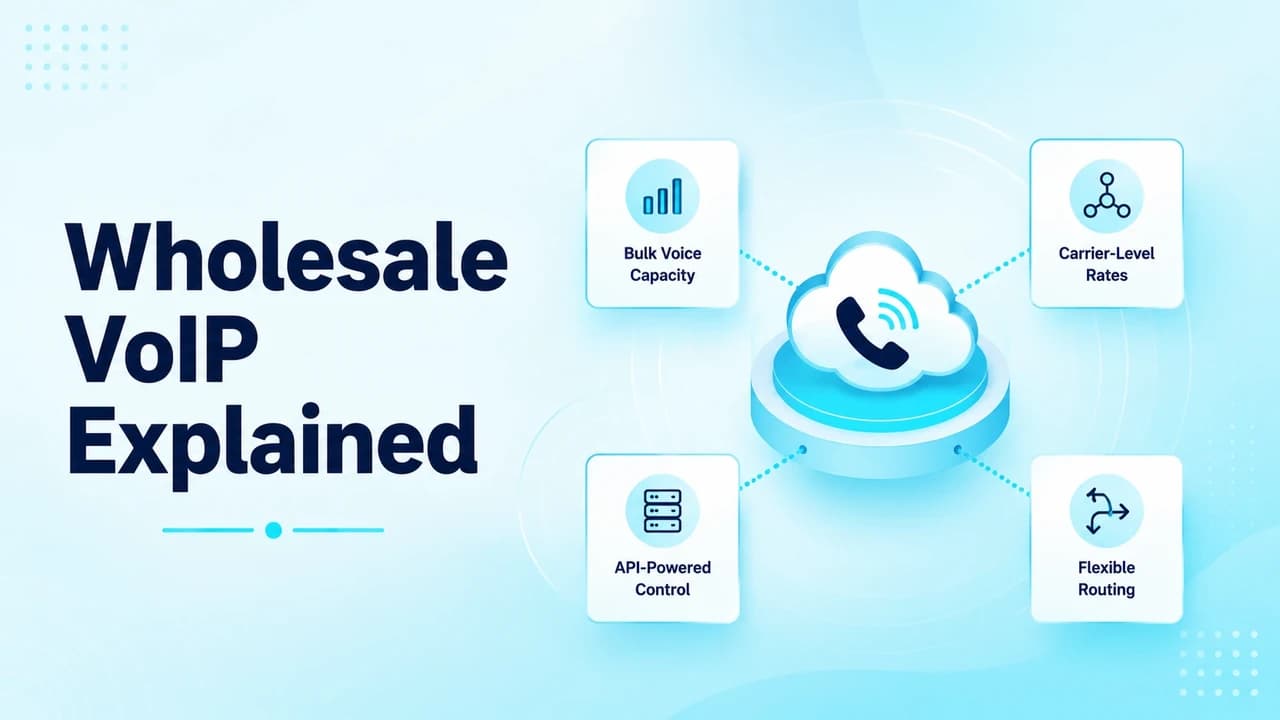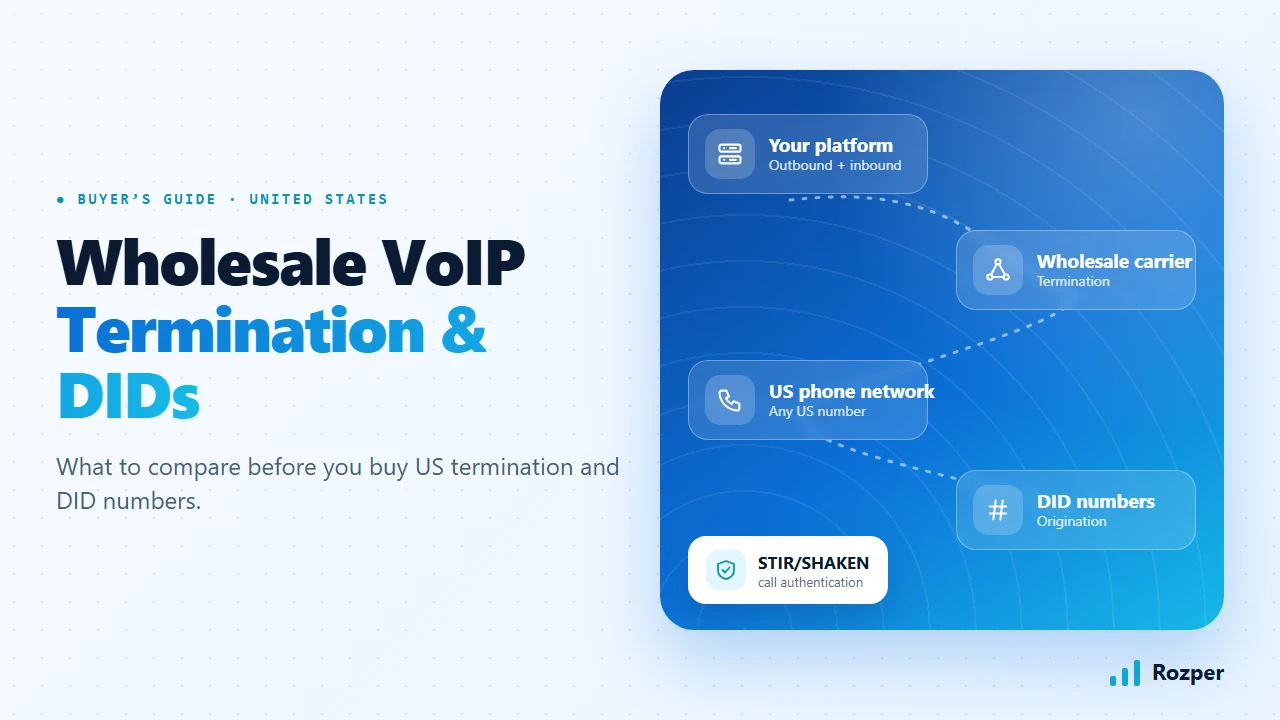
If you run a VoIP platform, a contact center, or a reselling business in the United States, two wholesale services do most of the work: termination (sending your calls out to the phone network) and DID origination (getting phone numbers that receive calls). They are priced and bought differently, and each has its own checks.
Termination vs origination
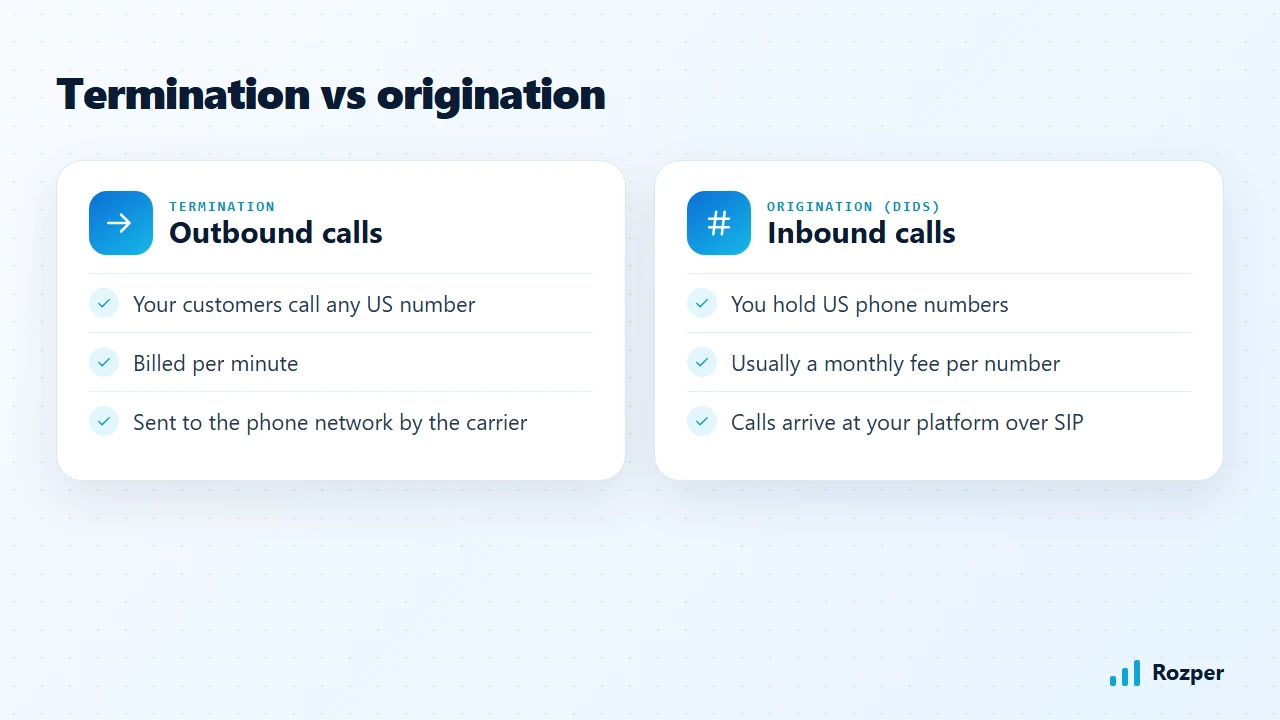
- Termination carries calls your customers place to any US number. You are billed per minute for outbound calls.
- Origination (DIDs) gives you US phone numbers. Callers dial those numbers and the calls arrive at your platform over SIP. You are usually billed a monthly fee per number, sometimes with per-minute charges for inbound minutes.
Most businesses need both, and some buy them from different carriers. For how termination works end to end, see our VoIP termination page and the wholesale VoIP overview.
How US rate decks are structured
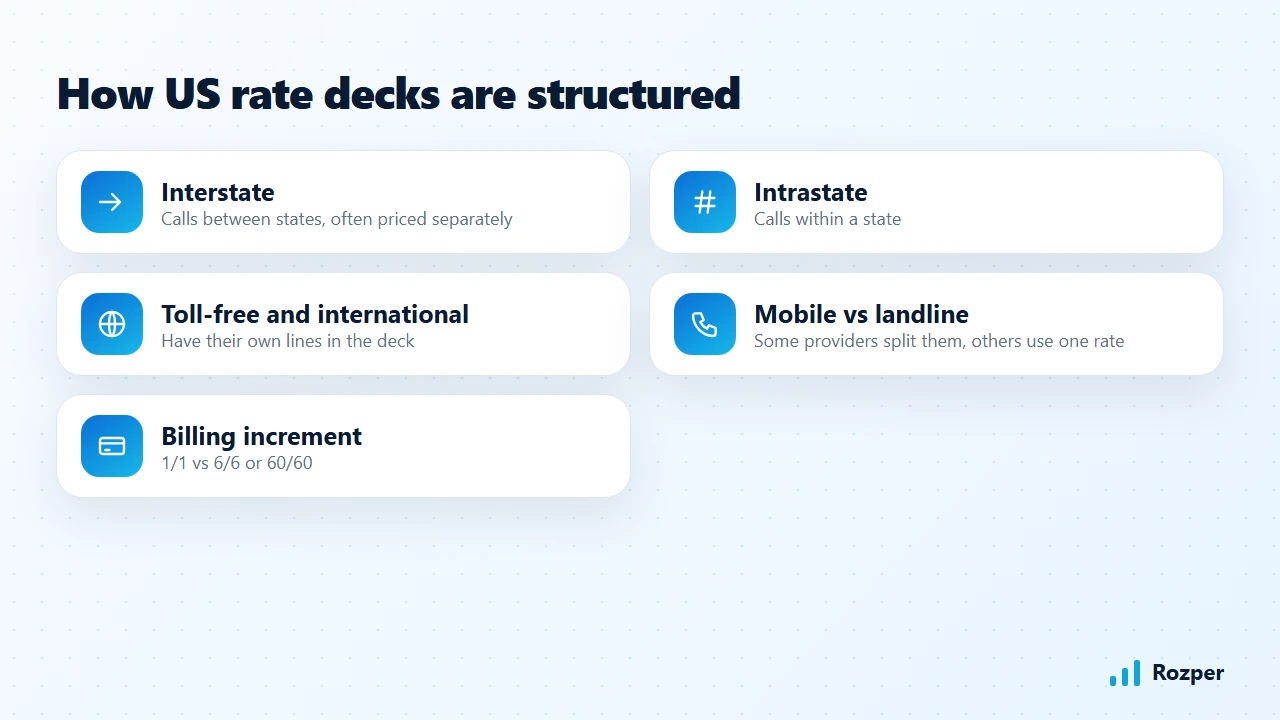
US rate decks commonly separate calls by jurisdiction, so the same destination can have more than one price:
- Interstate calls, between states, and intrastate calls, within a state, are frequently priced separately.
- Toll-free and international destinations have their own lines.
- Some providers price mobile and landline differently; others use one flat US rate.
Ask for the full deck, not a headline "US rate," and ask what the billing increment is (1/1 versus 6/6 or 60/60). Our guide to wholesale VoIP rates explains what moves a rate up or down.
DID numbers: what to check
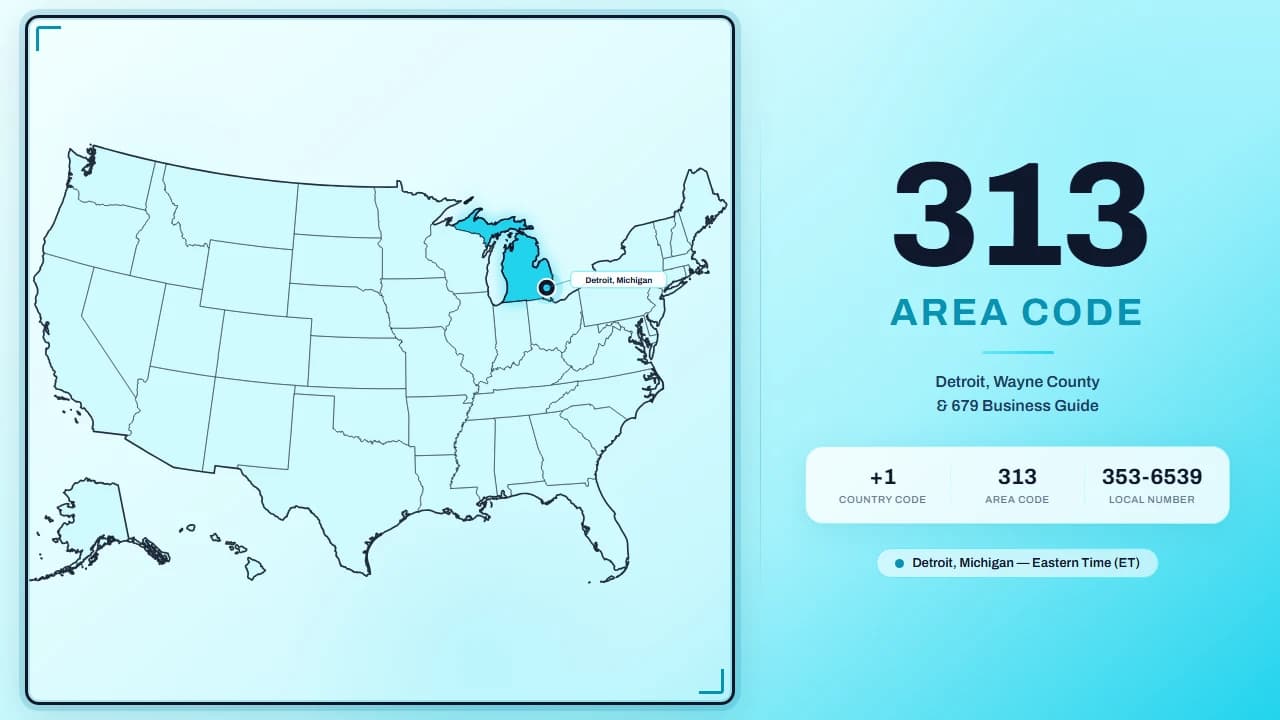
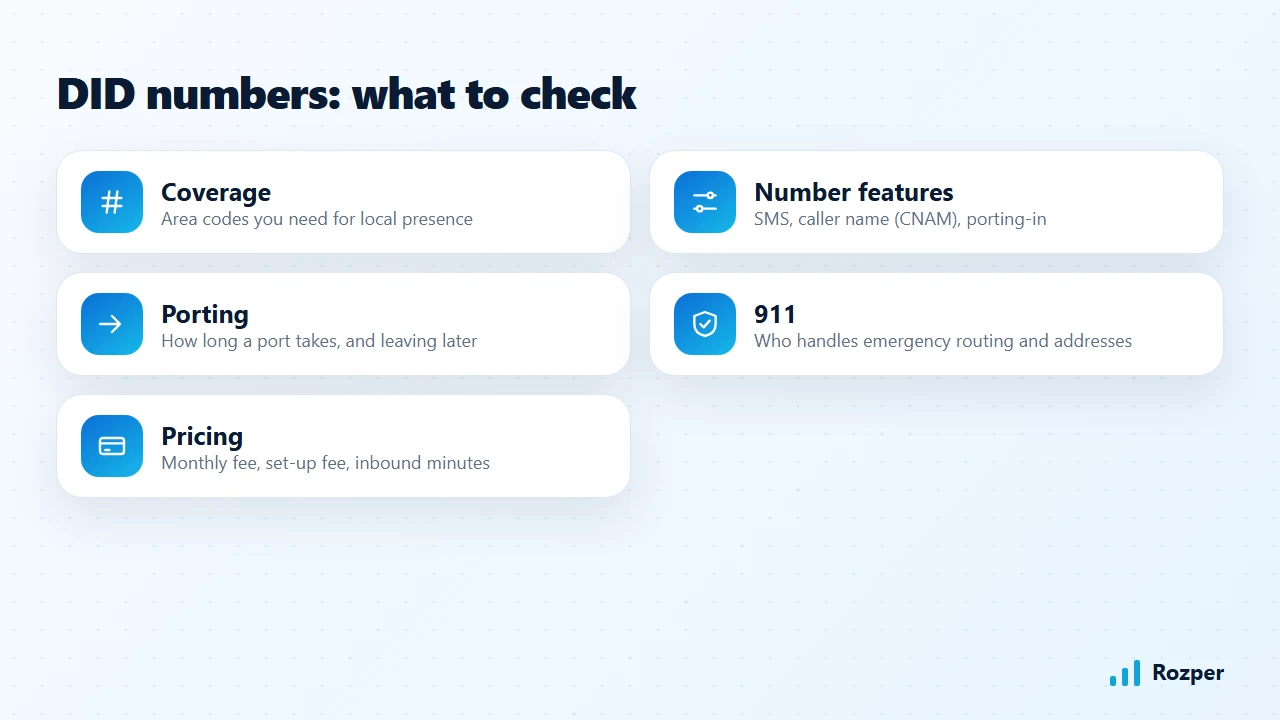
- Coverage. Does the provider offer numbers in the area codes you need? Local presence in a market is the main reason businesses buy DIDs.
- Number features. Ask about SMS enablement, caller name (CNAM) and porting-in options.
- Porting. Check how long a port takes and whether numbers can leave later.
- 911. Calls to emergency services over interconnected VoIP carry specific requirements. Ask who handles 911 routing and address registration for your numbers.
- Pricing. Compare the monthly fee, set-up fee, and any per-minute inbound charges.
Caller ID, STIR/SHAKEN and the Robocall Mitigation Database
The FCC's call authentication rules affect wholesale traffic. Providers must certify STIR/SHAKEN implementation on the IP portions of their networks and file a robocall mitigation plan in the FCC's Robocall Mitigation Database. The FCC has been removing providers whose filings were inaccurate or missing, including more than 1,200 in August 2025 and 14 more in September 2026, and orders U.S. voice providers and intermediate providers to stop accepting calls directly from removed companies. A 2026 proposal would tighten the database further; check the FCC's call-authentication pages and dockets for what has been adopted.
Practical checks:
- Ask the provider whether they appear in the Robocall Mitigation Database.
- Ask how they handle call attestation for traffic you send.
- Ask what happens to your traffic if a downstream carrier blocks it.
The rules and deadlines have changed several times, so confirm the current requirements on the FCC's call authentication pages before relying on any summary, including this one.
Quality metrics to compare
| Metric | What it tells you |
|---|---|
| ASR (answer-seizure ratio) | Share of attempts that connect |
| ACD (average call duration) | Whether calls drop early |
| PDD (post-dial delay) | How long callers wait for ringing |
| Concurrent channels / CPS | Capacity and call-rate limits |
Ask for a trial on your own traffic and compare these numbers, not just price.
How to Test a US Provider Before You Commit
A rate sheet tells you the price, not the quality. Before you move volume, run a short, structured trial:
- Send real traffic. Use your own destinations and call patterns for a few days, not only the provider's sample numbers.
- Measure, don't guess. Compare ASR, ACD and PDD for each destination group against what the provider quoted.
- Check caller ID end to end. Place test calls to mobile and landline numbers on different carriers and confirm what the recipient sees.
- Test failure handling. Ask what happens when a route degrades and how quickly the provider reroutes.
- Confirm the paperwork. Check the provider's Robocall Mitigation Database listing and get the billing increment and rate-change notice period in writing.
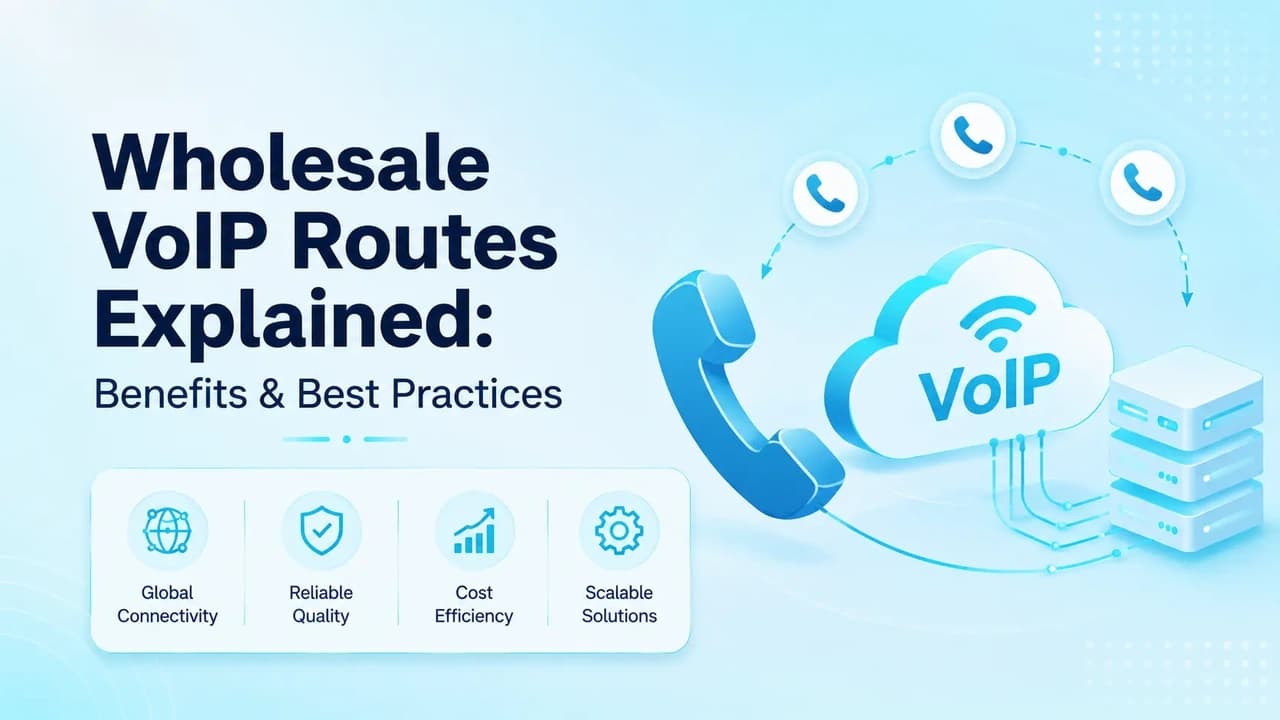
For a longer list of questions, use our wholesale VoIP provider checklist, and see how wholesale VoIP routes work for the difference between CLI and non-CLI paths.
Common Mistakes When Buying US Wholesale Voice
- Comparing one headline rate. A deck with separate interstate, intrastate and mobile prices can cost more in practice than a single blended rate.
- Ignoring the billing increment. Short calls cost more under 60/60 billing than under 1/1.
- Skipping caller-ID checks. Traffic that is labelled as spam or blocked downstream costs you completed calls.
- Buying DIDs without a porting plan. Check how long a port takes and whether the numbers can leave later.
- Assuming 911 is handled. Ask who routes emergency calls and registers addresses for your numbers.
If you only need a few numbers for a business line rather than wholesale volume, see virtual phone numbers. For the carrier side, read how wholesale VoIP termination works.
Conclusion
Compare US providers on the full rate deck, the DID features you will actually use, 911 and call-authentication handling, and measured quality. The cheapest rate is rarely the cheapest outcome if calls are blocked or labelled as spam.
FAQs
What is the difference between wholesale termination and DID origination?
Termination sends your outbound calls to the phone network and is billed per minute. DID origination provides phone numbers that receive inbound calls on your platform.
Do US rate decks charge differently by state?
Many separate interstate and intrastate calls, so ask for the full deck rather than a single US rate.
What is the Robocall Mitigation Database?
An FCC registry where providers file a certification and mitigation plan. Downstream carriers may block traffic from providers that have not filed.
How much does wholesale VoIP termination cost in the US?
It depends on the destination, the route quality and the billing increment, so there is no single price. Ask for the full rate deck, including interstate, intrastate and mobile lines, and compare the effective cost of your own traffic. Our guide to wholesale VoIP rates explains what moves a rate.
What is a DID number?
A DID (direct inward dialing) number is a phone number that routes incoming calls straight to your platform or PBX over SIP, without a separate physical line.
Do I need 911 for my DIDs?
It depends on how the numbers are used. Ask your provider how emergency calling is handled, and confirm the current FCC requirements.