Introduction
Every 1-800-FLOWERS ad makes a bet. It bets that a word sticks better than a string of digits. That bet doesn't always pay off. Marketing teams often just assume it will. The vanity numbers vs local area codes choice looks small. It looks like a branding footnote. In truth, it quietly decides if an odd number ever gets a call back.
The Quick Verdict
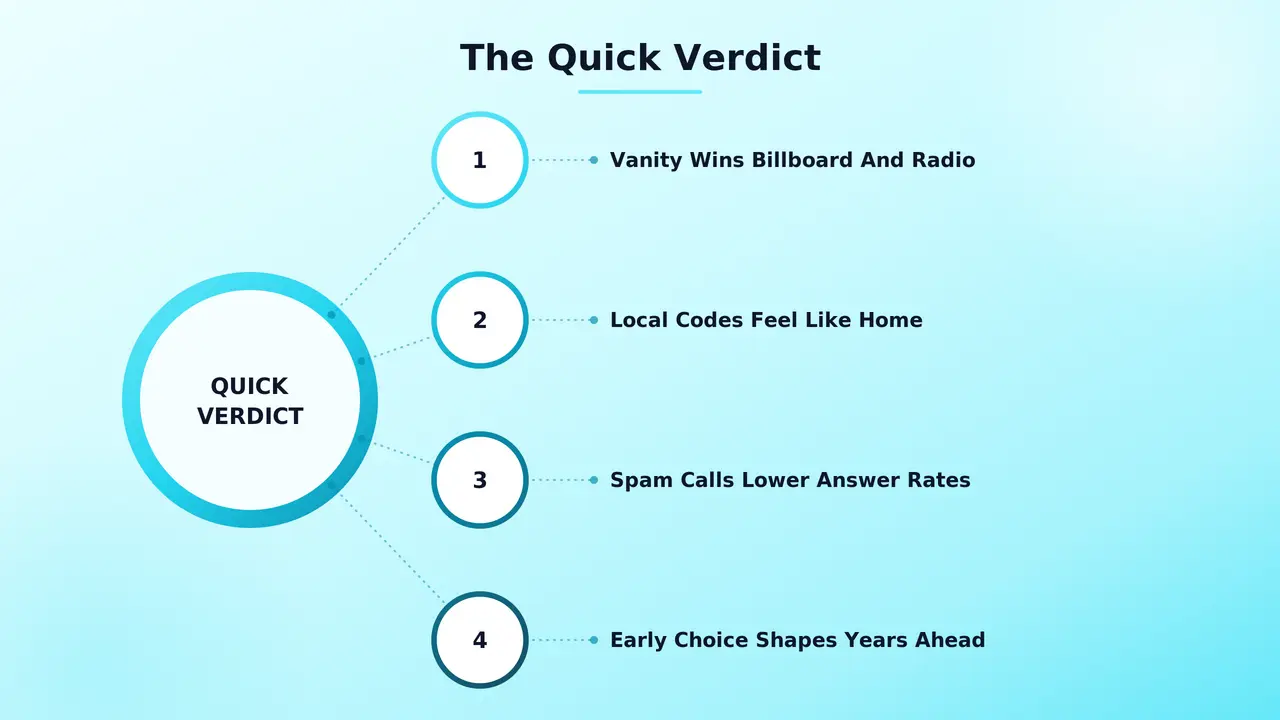
Picture a phone number in a short radio spot. Or on a billboard, seen at highway speed. A spelled-out vanity number usually wins here. It wins on pure recall. Now picture a number that just needs to look local. It should feel like it fits the customer's own street. A local area code wins that test instead. Very few firms need to pick just one. That's why this choice keeps coming back. It comes up every time a firm opens a new market.
Answer rates for odd numbers keep falling. Spam calls keep rising across the country. That raises the stakes on this choice. Most marketing teams don't see this coming. A number picked in year one can cap answered calls for years to come.
Vanity Numbers vs Local Area Codes at a Glance
| Factor | Vanity Line | Local Area Code |
|---|---|---|
| Recall in broadcast ads. | Very strong. | Weak to moderate. |
| Geographic signal. | None. | Strong, tied to one city. |
| Availability. | Popular phrases often already taken. | Almost always available. |
| Typical cost. | Higher, sometimes a resale purchase. | Standard, provisioned instantly. |
| Best fit. | National brands, broadcast advertising. | Local service businesses, community brands. |
That table settles most of the vanity numbers vs local area codes question before a single dollar gets spent on either option.
What Makes a Vanity Number Memorable
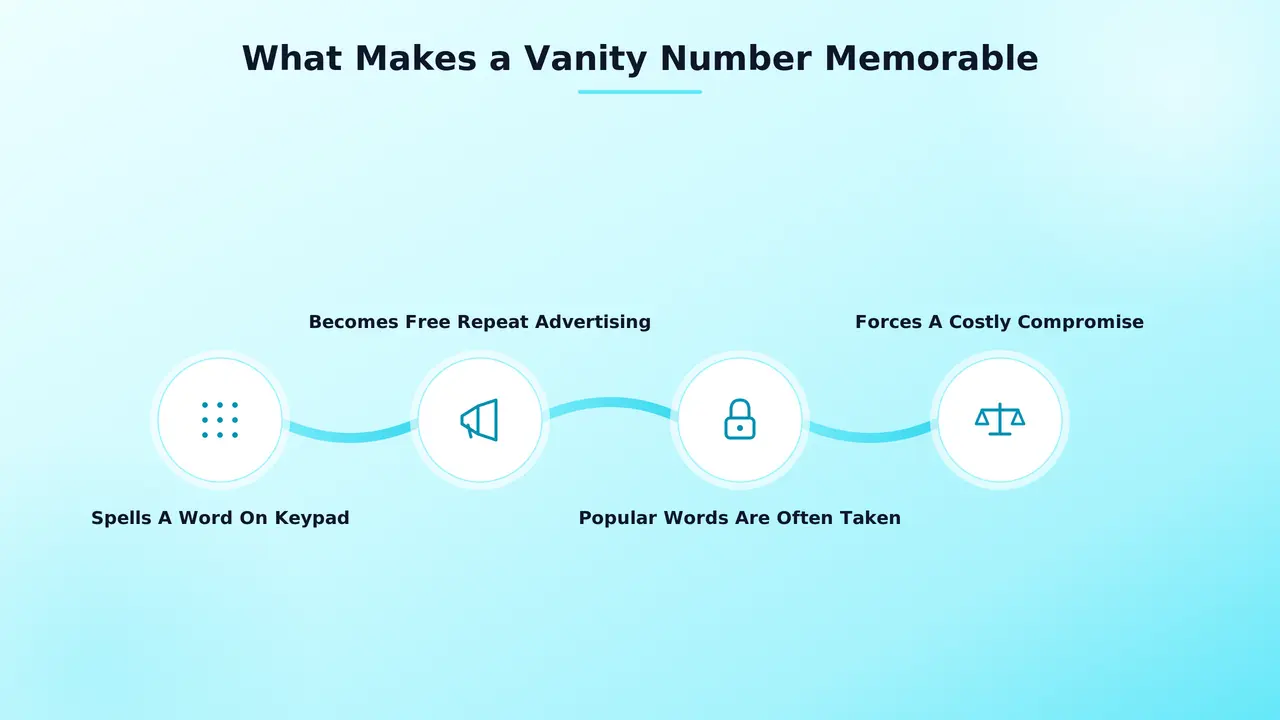
A vanity format spells out a word or pattern on the keypad. Think 1-800-FLOWERS, or 555-CARS. It trades a random string of digits for a word. A customer can recall that word with ease. No one has to write it down. That one trick turns a phone number into free ads. It works every time the number shows up on a truck, a flyer, or a short ad spot.
The catch is scarcity. Popular words are often already taken by another firm. That leaves a business with two choices. It can pay for a costly resale buy. Or it can settle for a word that doesn't quite fit the brand. This shows up early in almost every vanity numbers vs local area codes talk. The flashiest pick isn't always the one that's free.
What Makes a Local Area Code Trustworthy
A local area code has the opposite edge. It ties a business to one city the instant a customer glances at the screen. Customers who compare local options are far more likely to answer a number that matches their own area. They call back that kind of number too. That matters a lot for any business that leans on that first live chat.
Local numbers are also almost always open. A firm can usually get a working prefix in nearly any market. There's no haggling and no scarcity, unlike with a popular vanity word. That quiet edge matters most for firms opening in several cities at once. There, this tradeoff gets solved city by city, not once for the whole company.
A Simple Test: Recall Versus Recognition
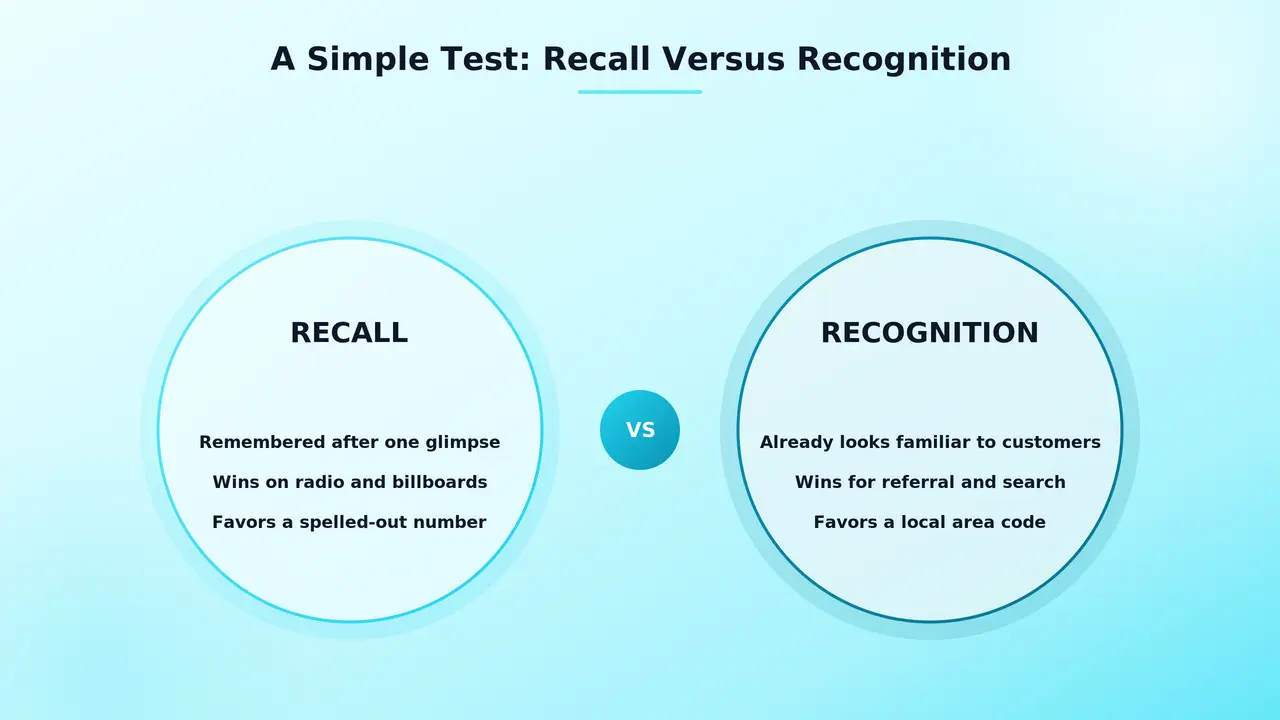
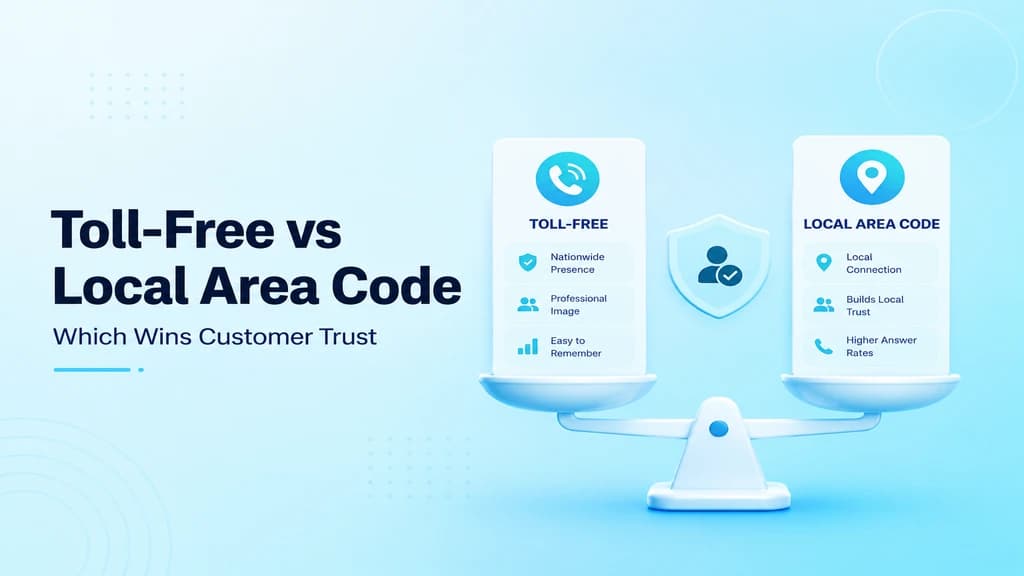
Rather than debate this in theory, split it into two simple jobs. Recall means a stranger can remember the number after one look. That favors a spelled-out number. Recognition means a customer sees a number that already looks known. That favors a local area code.
Ad-heavy marketing leans on recall. An ad only gets a few seconds to land before the viewer looks away. Referral-based and search-based firms lean on recognition instead. Their customer often checks a few local options before they dial. This quick test settles most of this debate. It does so before any cost check even starts.
Piloting Either Format Before You Commit
A landscaping or contracting business expanding into a new region can see this tension play out directly. Rozper's 239 area code guide covers this exact choice. It looks at a Southwest Florida service business, weighing a local prefix against a vanity number for its main line.
Real Businesses, Real Trade-Offs
A national pest control chain keeps one easy vanity number. It uses that same number on every billboard and radio spot. Brand recall across many markets matters more than one city's own code.
A small law firm skips vanity formats entirely. Every client already lives a short drive away. A local area code backs up the "we know this town" feel the firm already has.
A regional urgent care chain splits the difference. One vanity number anchors its national ads. Meanwhile, each clinic gets its own local area code. That way, a patient booking a visit sees a number that matches their own town. Each firm answers this question in its own way. Each one is solving a different problem.
Where Rozper Fits Into Either Choice
Businesses planning a Southeast expansion can see the same logic at work. Rozper's 470 area code guide covers an Atlanta-area prefix. It uses the same recall test explained above.
Rozper backs its whole platform with 99.999% uptime. It also offers real, human-first support. That lets a growing company pair a national vanity number with local numbers in every market it serves. One account manages it all. There's no need for several separate vendors. Coverage spans 150+ countries. So this same choice applies, whether the next market is a nearby state or another country.
Common Mistakes in the Vanity Numbers vs Local Area Codes Decision
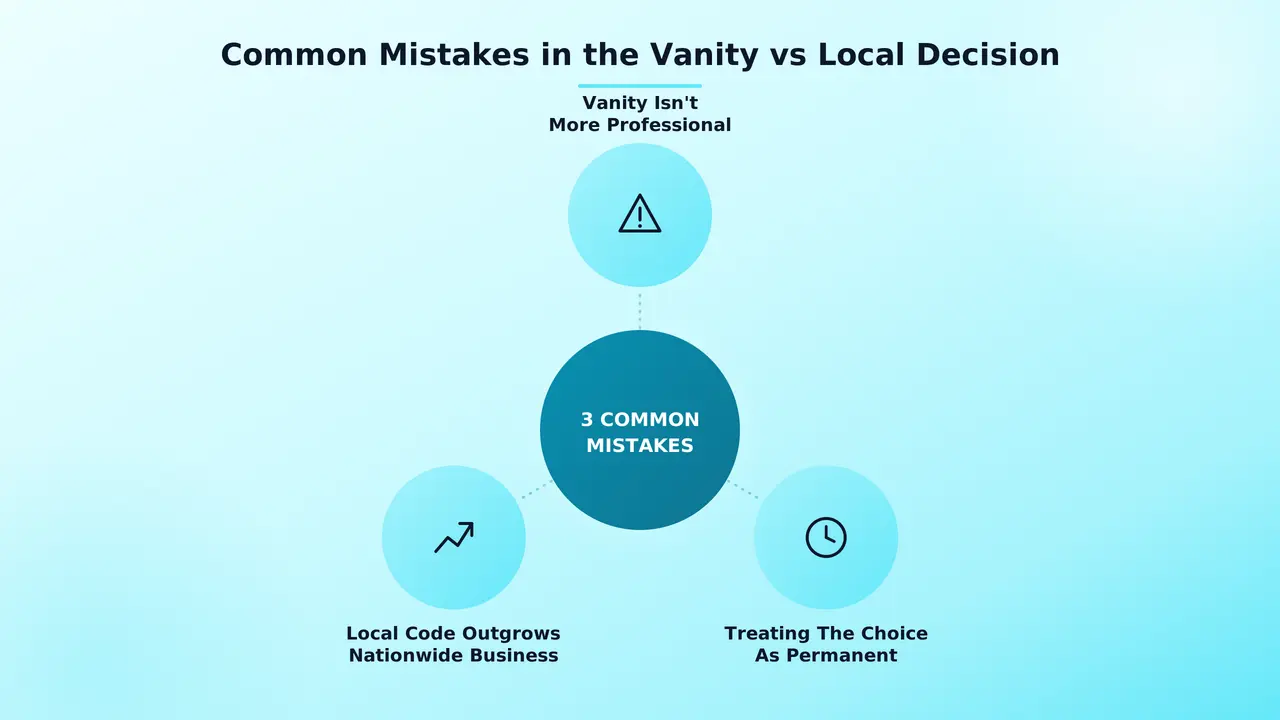
The top mistake is thinking a vanity line is always the "pro" pick. That's just not true in every field. A Wikipedia overview of vanity numbers is a good primer on how these formats began. It explains why some words got so valuable over time. Still, many local, community-based firms gain zero benefit from using one.
The flip side mistake shows up just as often. A growing chain keeps its old local code long after it opens offices across the country. The single-city code no longer fits a nationwide customer base. It starts to look like an oversight, not a real choice.
A final misstep is treating this call as final. A format that made sense for a small startup can stop making sense later. That's true once the firm runs in a dozen cities. Each city can have very different customer needs.
Testing Both Before You Decide
First, check if a preferred vanity word is open, at a fair price. Do this before you look at a simple local prefix. That keeps the choice based on real facts, not guesswork. Run both options side by side for a few weeks. Then compare answer rates and callback rates head to head. That usually settles this question faster than any internal debate.
Track the same two numbers every time. Count how many calls connect on the first ring. Count how many go to voicemail before a human picks up. A gap of even a few points is enough to close this out for good. That small gap adds up across every future call the business gets.
Conclusion
This choice was never about finding the one "better" format. It's about matching a phone number to how a business gets found. Ad-heavy brands tend to gain the most from a memorable vanity number. Local service firms usually get better results from a known local prefix. Run the recall test. Price out both options. The right choice tends to become clear fast.
FAQs
Is a vanity number more expensive than a standard local number?
Often, yes. A popular vanity word can need a paid buy from its owner. Local numbers are usually open right away, at normal rates.
Can a business run a vanity number and a local area code at the same time?
Yes. Many firms use a vanity line for national ads. At the same time, they give local numbers to single branches or city-based work.
Do vanity numbers still work well on modern smartphones?
Mostly, yes. Some newer phones hide letter labels on the keypad. That slightly slows how fast people turn letters into digits.
Which format performs better for a single-city service business?
A local area code usually wins here. People respond well to a number that fits their own town.
How does a company check if a specific vanity phrase is available?
Providers can usually search open words right away. That said, the best words are often already taken by another firm.
Is switching from a local number to a vanity line difficult later?
Not usually. Most providers can route a new vanity number into an existing phone system. The old local number can stay live at the same time.