Introduction
The 918 area code covers Tulsa and eastern Oklahoma, and this guide explains what makes it different from the newer 539 numbers now sharing the same region. This topic matters because 918 is the original code for the area, and that history still shapes how customers judge a business the moment they see it on caller ID. You will learn where 918 reaches, why Tulsa eventually needed a second code, how to spot a spoofed call, and whether an original 918 number still carries real weight for a growing business. Stick around and you will understand this region's numbering system better than most people who have used a 918 number their whole life.
Key Takeaways:
- The 918 area code covers 29 counties across eastern Oklahoma, including Tulsa, Broken Arrow, and Bartlesville.
- Area code 918 dates back to 1953, making it one of Oklahoma's oldest surviving area codes.
- Tulsa added the 539 overlay in 2011 because 918 was running low on available numbers.
- An original 918 number can still signal an established business, since 539 wasn't assigned until 2011.
Where Does the 918 Area Code Reach in Eastern Oklahoma?
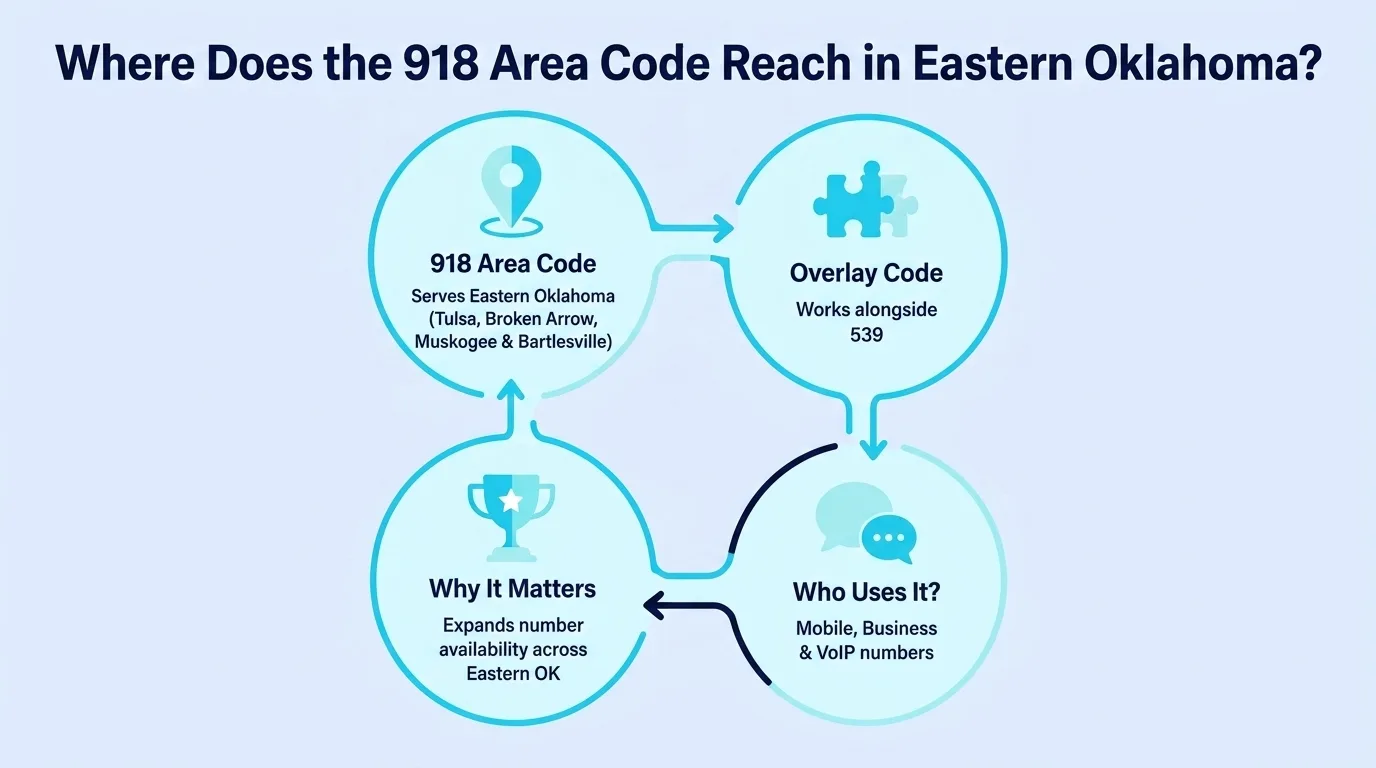
Area code 918 covers 29 counties across eastern Oklahoma, stretching from Tulsa in the west to the Arkansas border in the east. Tulsa is by far the largest city in the region, followed by Broken Arrow and Bartlesville, with Tulsa County holding the biggest share of the population. The entire footprint sits in Central Time, so scheduling calls across the region never requires a time zone adjustment.
- Tulsa, the state's second-largest city and a major energy-industry hub
- Broken Arrow, one of the fastest-growing suburbs in the metro
- Bartlesville, historically tied to the oil and gas industry
- Muskogee and Claremore, established commercial centers east of Tulsa
- Tahlequah, the seat of the Cherokee Nation
A Wide Footprint With One Shared Number Pool
Every one of these cities and the smaller towns around them draw from the same numbering pool, so a 918 area code alone won't tell you exactly where someone lives. That wide reach is part of why the region eventually needed a second code to keep up with demand. More than 1.7 million people share this footprint today, making it one of the largest single numbering regions in the state.
A Number With History: How 918 Became Oklahoma's Second Area Code
Oklahoma's phone system started with a single area code, 405, covering the entire state after the North American numbering plan launched in 1947. On January 1, 1953, the northeastern portion of the state split away to form its own region, and area code 918 was born. That single change gave Tulsa and the surrounding counties their own dedicated numbering pool for the first time.
For nearly six decades, the 918 area code handled every new phone line activated across eastern Oklahoma without any changes to its boundaries. Businesses that opened during that stretch, from small-town shops to major Tulsa employers, all picked up 918 numbers by default. That decades-long run is exactly why the code still carries a sense of permanence today, and it's a history area code 918 Oklahoma shares with very few other regions in the country.
Running Out of Room: Why Tulsa Added a Second Code in 2011
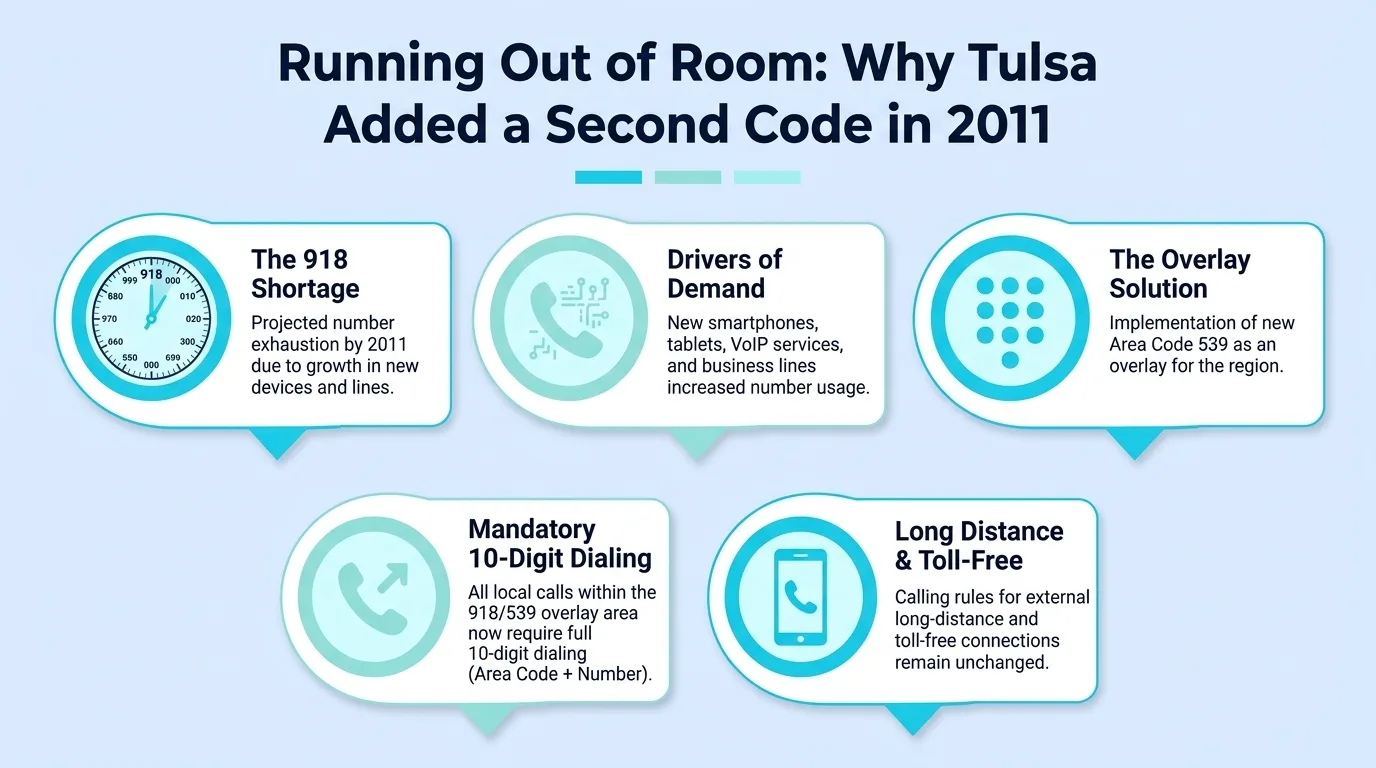
By the mid-2000s, the growing population across eastern Oklahoma started using up the available combinations within the 918 area code faster than regulators expected. Rather than force a disruptive split that would change existing numbers, the Oklahoma Corporation Commission approved 539 as an overlay on April 1, 2011. That decision let every existing 918 customer keep their number exactly as it was.
- New phone lines activated after April 1, 2011 received 539 numbers instead of 918.
- Ten-digit dialing became mandatory across the shared region starting in March 2011.
- Both codes now serve the exact same 29 counties without any change to location.
- Businesses founded before 2011 are far more likely to carry the original 918 area code.
Does an Original 918 Number Still Carry Extra Weight for Your Business?
Customers rarely think consciously about which area code they're calling, but a 918 number quietly signals that a business has been part of the community longer than one carrying a newer 539 line. That impression matters most in industries built on trust, where longevity feels like proof of reliability. Businesses that lean into this history, rather than ignoring it, often find it easier to earn a first call back.
- An 918 number suggests roots that predate the 2011 overlay.
- Long-tenured local numbers get recognized faster by repeat customers.
- Newer businesses can still build the same trust through consistent, responsive service.
- What matters most isn't the code itself, but how reliably a business answers.
Rozper works with growing Tulsa-area businesses to make sure that reputation holds up on every single call, whether the number behind it is an original 918 line or a newer one.
918 Look-Alikes: How Scammers Exploit an Established Area Code
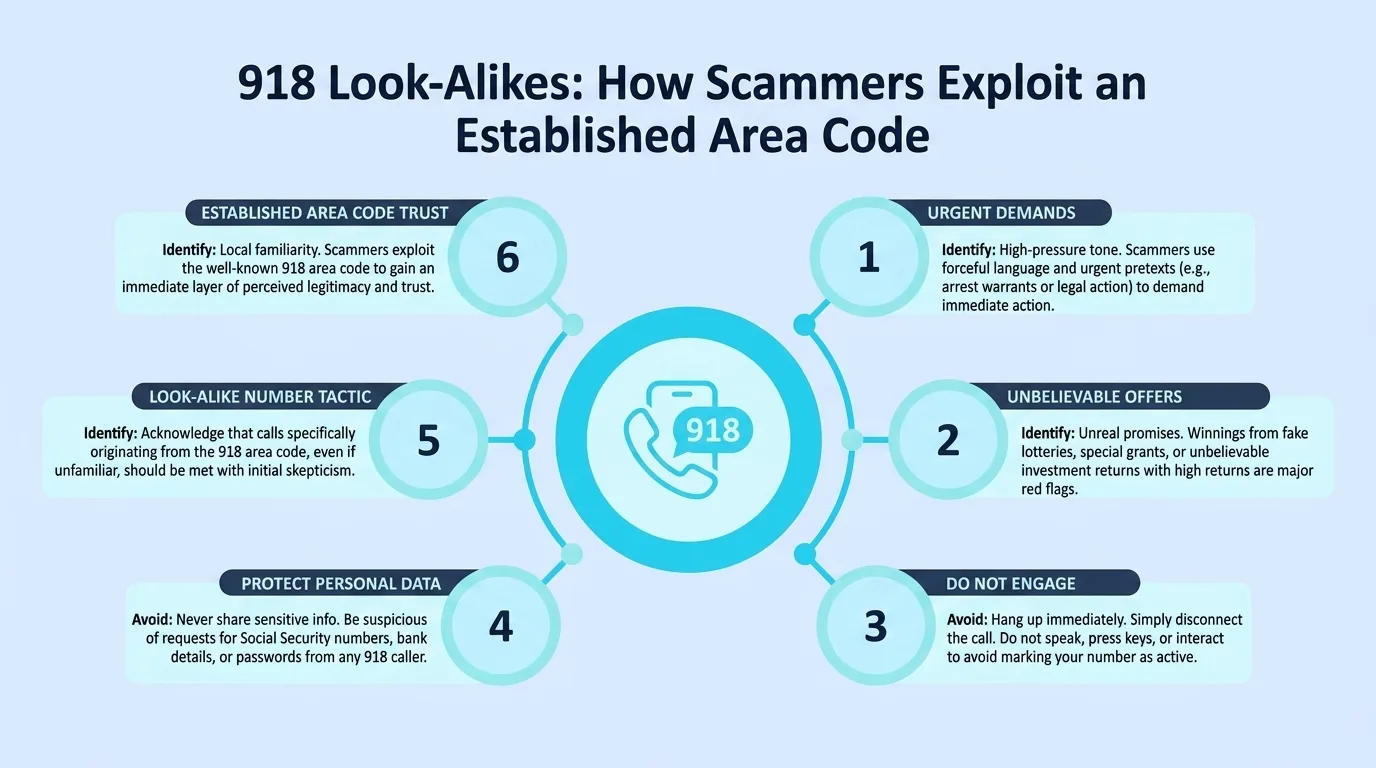
Scammers frequently spoof 918 numbers precisely because the code feels familiar and established to people across eastern Oklahoma. If a caller claiming to represent a utility company or government office pressures you for immediate payment through gift cards or wire transfers, treat that as an urgent red flag. Legitimate organizations in this region never demand instant, untraceable payment over the phone.
Steps To Confirm A Real 918 Caller
Taking a moment before reacting stops most scam attempts before they succeed.
- Search the full ten-digit number online before returning the call.
- Contact the organization directly through its official website or listed number.
- Never share financial or personal details with an unexpected caller.
- Read up on stopping spam calls before they cost your business a real customer.
918 or 539? What the Two Codes Actually Tell a Caller
Both codes serve the identical 29-county footprint, so geography never decides which one you get. The real difference comes down entirely to timing, not location or service quality.
- 918: Assigned to any phone line activated before April 1, 2011.
- 539: Assigned to phone lines activated on or after that date.
- Both require the full ten digits for every local call, no exceptions.
- Neither code hints at which specific city or neighborhood a caller lives in.
- Both codes route through the same carriers and the same local exchanges.
- Switching a business line between the two codes is not something providers offer.
Anyone comparing local area codes across Oklahoma will notice this overlay pattern repeats itself in the state's other major regions too.
Old Dialing Habits That Still Trip Up 918 Callers
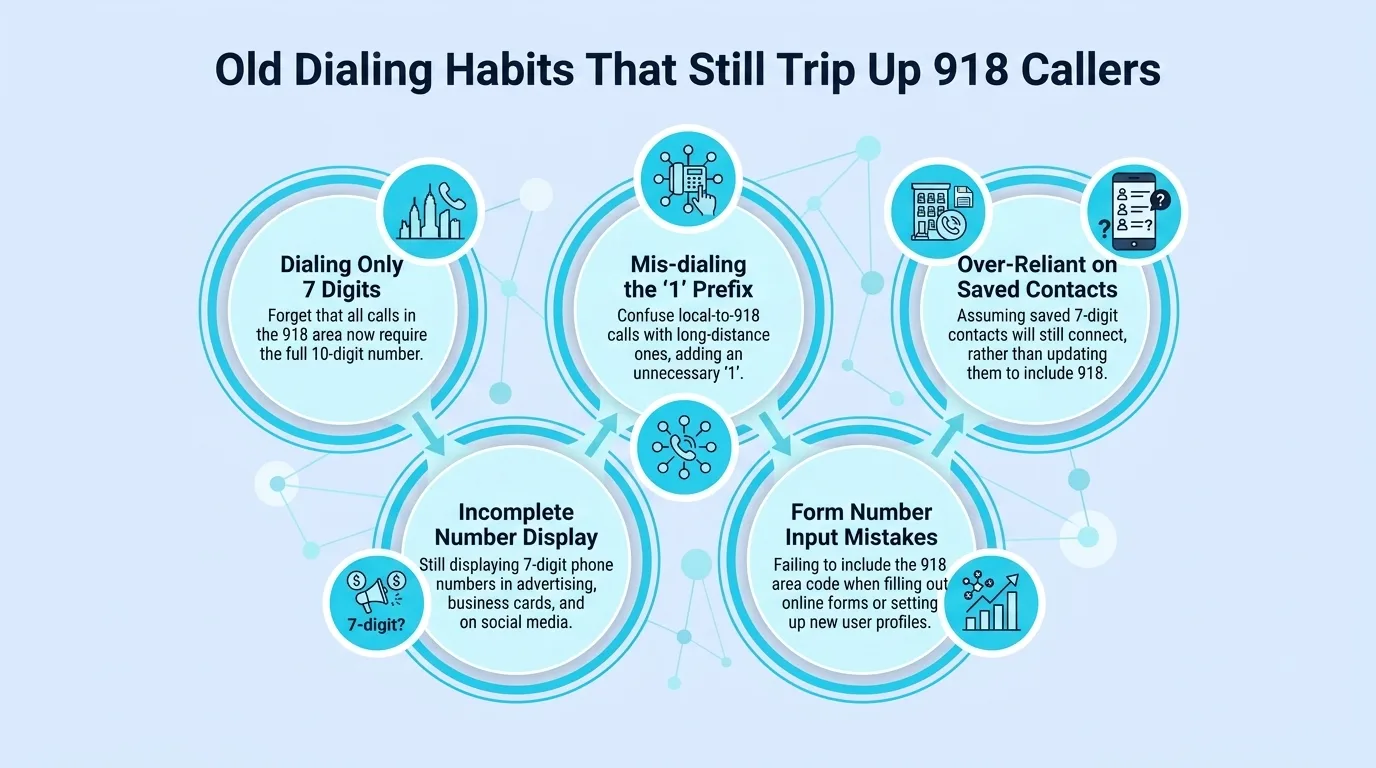
Plenty of longtime Tulsa residents grew up dialing just seven digits, and that habit has been hard to unlearn even fifteen years after ten-digit dialing became mandatory. These small mistakes still cause real friction for callers and businesses alike.
Dropping the area code entirely remains the most common error, especially among people who have used the same 918 number since before 2011. Some callers also assume every eastern Oklahoma business still uses a 918 line, when many newer companies now carry 539 numbers instead. Saved contacts stored without the full area code often fail to autodial correctly on newer phones. According to guidelines, skipping the area code in an overlay region will always result in a failed call, not a warning to try again. Printed materials and old business cards that still list seven-digit numbers cause the same confusion for customers trying to reach a business for the first time.
Conclusion
The 918 area code has served eastern Oklahoma since 1953, making it one of the state's oldest active codes and the original number for Tulsa and the surrounding region. Understanding why the 539 overlay exists, how to catch a spoofed call, and what an original 918 number can still signal helps both residents and business owners navigate this system with confidence. Ten-digit dialing and the timing-based difference between 918 and 539 matter for anyone living or working across this part of Oklahoma. The 918 area code remains more than an old prefix; it's a marker of history that still means something to customers today.
Businesses that want to make the most of that history need a reliable system behind the number, not just a familiar prefix. Rozper gives growing teams the call routing and follow-up tools to turn a long-standing 918 presence into consistent, organized customer conversations. As Tulsa and eastern Oklahoma continue to grow, the businesses that answer every call well are the ones customers remember most.
FAQs
What state is the 918 area code in?
The 918 area code is located entirely within Oklahoma, covering the eastern part of the state. It shares its footprint with the newer 539 overlay.
Where exactly does area code 918 cover?
It covers 29 counties in eastern Oklahoma, including Tulsa, Broken Arrow, Bartlesville, and Muskogee. Smaller towns throughout the region draw from the same numbering pool.
When was the 918 area code created?
It was created on January 1, 1953, when eastern Oklahoma split away from the original statewide 405 code. It served as the region's only area code for nearly six decades.
How do I dial a 918 number correctly?
You must dial all ten digits, including the area code, for every local call. Seven-digit dialing has not worked in this region since March 2011.
Is it safe to answer calls from a 918 number?
Not always, since scammers often spoof established local numbers to appear more trustworthy. Confirm any unusual request before sharing personal or financial information.
What time zone does the 918 area code use?
The entire 918 region operates on Central Time year-round. This applies consistently across all 29 counties it shares with 539.
Does having a 918 number cost more than a 539 number?
No, standard phone service costs the same regardless of which overlay code your line receives. Businesses should compare their phone plans rather than assume either code carries extra fees.
Does an old area code 918 Oklahoma number actually help a business win customers?
It can, since a number predating 2011 quietly suggests a business has been established longer. Pairing that impression with fast, organized call handling turns it into real, lasting trust.