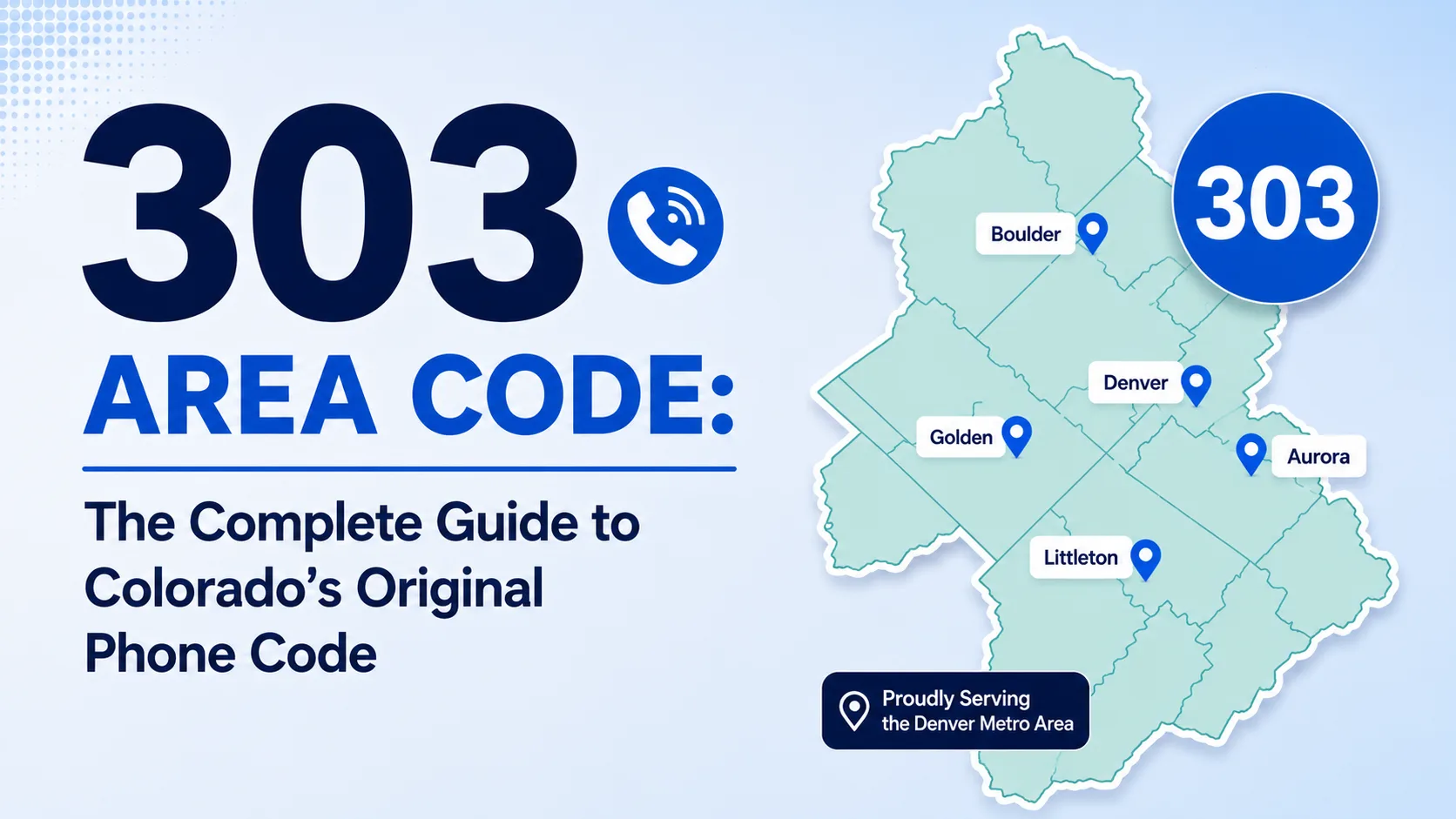
Introduction
If you have ever received a call from a Colorado number starting with 303, you already know this is one of the most recognizable telephone codes in the American West. This code has been serving residents and businesses across the Front Range for decades, and it remains one of the most requested codes for anyone setting up a new phone line in the Denver region. Whether you are a local resident, a business owner expanding into Colorado, or someone simply curious about where a call originated, understanding this numbering region helps you make sense of the calls you receive every day. This guide walks through what it is, where it covers, its history, how to get a number, and how it compares to the other codes now serving Colorado.
Key Takeaways:
- The 303 area code covers Denver and nearby suburbs including Boulder, Aurora, Lakewood, Arvada, Westminster, and Golden.
- It was Colorado's original area code, assigned when the North American Numbering Plan launched in the 1940s.
- The 720 overlay now shares the exact same footprint, so all local calls require 10-digit dialing.
- Local businesses request 303 numbers specifically for the trust and recognition a Denver prefix carries.
Serving the Denver Metro
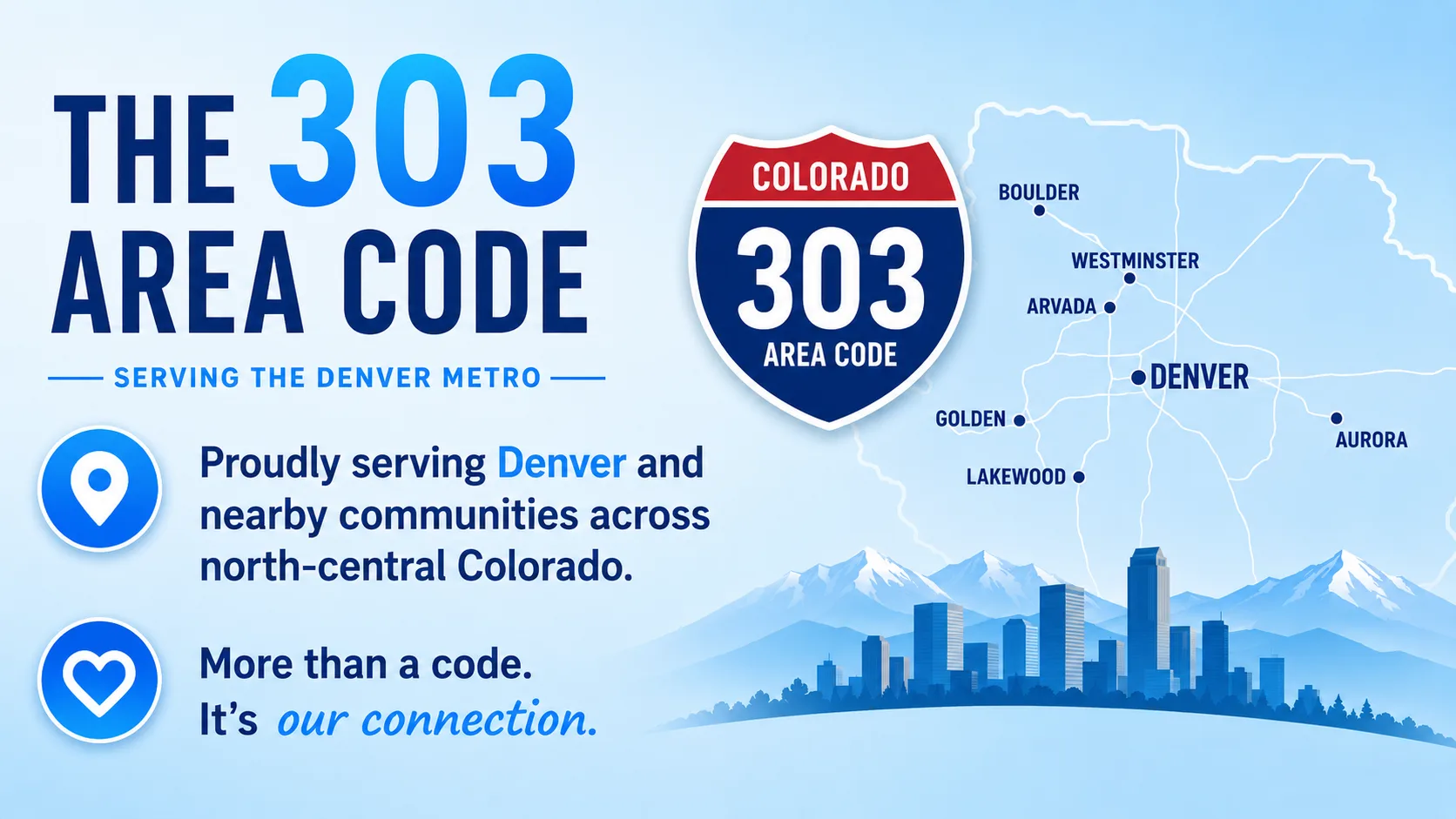
The 303 area code is a telephone numbering plan area (NPA) assigned to a portion of Colorado, centered primarily on the city of Denver and its surrounding communities. As one of the original area codes created when the North American Numbering Plan launched, it has a long history of connecting callers across the Rocky Mountain Front Range. This numbering region covers a large section of north-central Colorado, including Denver itself along with nearby suburbs such as Boulder, Aurora, Lakewood, Arvada, Westminster, and Golden. Millions of residents dial numbers within this region every single day without giving much thought to the history behind the digits. Locally, people often refer to it in shorthand simply as area code 303.
- Denver — the anchor city and the region's business and technology hub
- Boulder — home to a major university and a fast-growing tech scene
- Aurora and Lakewood — large residential and commercial suburbs east and west of Denver
- Arvada and Westminster — growing north-metro communities
- Golden — a historic Front Range city at the foot of the Rockies
Because this part of Colorado has experienced rapid population growth over the past few decades, the original coverage area has needed to share numbering capacity with newer overlay codes to keep up with rising demand. Even so, the 303 area code remains deeply tied to the identity of the Denver metro area, and many long-standing businesses and families still hold onto their original numbers as a point of local pride.
A Brief History Behind the Numbers
Colorado was originally served by a single area code when the numbering system was introduced in the 1940s, and that code was 303. For many years, this single numbering plan covered the entire state, from the eastern plains to the western slope. As the population grew, particularly around Denver, additional numbers were needed, and the state was eventually split into multiple numbering regions to accommodate demand. Despite these changes, the 303 area code retained its coverage of the core Denver metro region, a testament to how central this area has always been to Colorado's growth story. Understanding this history helps explain why so many people still associate this specific code with Denver rather than the state as a whole, even decades after the first split occurred.
How to Get a 303 Area Code Number
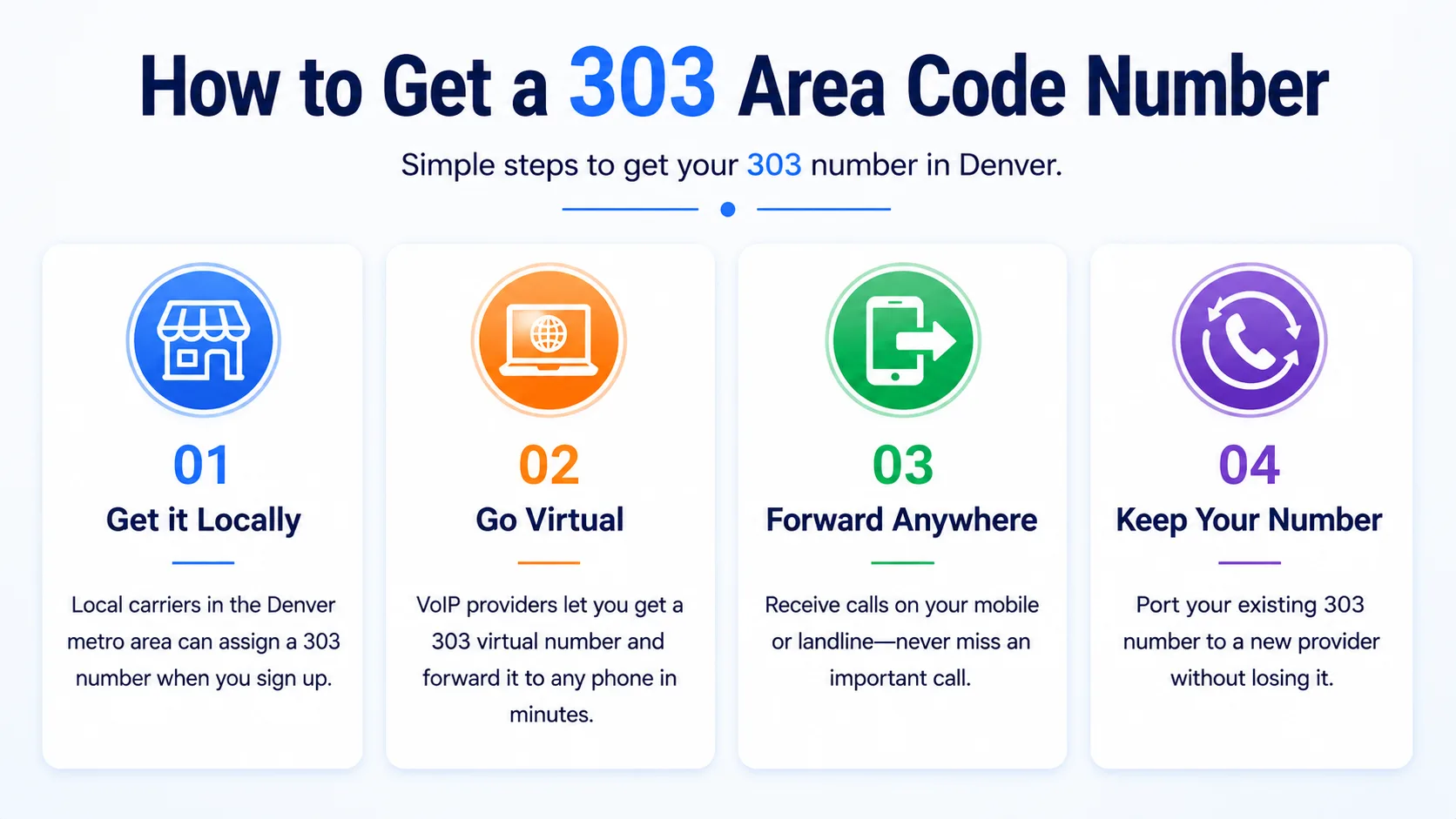
If you want a phone number with the 303 area code, there are a few straightforward paths available. Local phone carriers serving the Denver metro area can often assign one directly when you sign up for new service, provided that numbers are still available in that pool. Many virtual phone number providers and VoIP services also let you search specifically for a 303 virtual number, which is useful for businesses that want a Denver presence without needing a physical office in the city.
- Local carriers can assign a 303 number directly when you sign up for new service
- Virtual phone providers let you search and activate a 303 number online in minutes
- Forward the number to any mobile phone or landline without missing a call
- Port an existing number to a new provider without losing it, usually within a few business days
Signing up this way typically takes only a few minutes online and can be forwarded to any existing mobile or landline device. Because demand for these numbers remains high, availability can sometimes be limited, so it helps to check with your provider early if a local prefix matters for your business.
Comparing Colorado's Area Codes
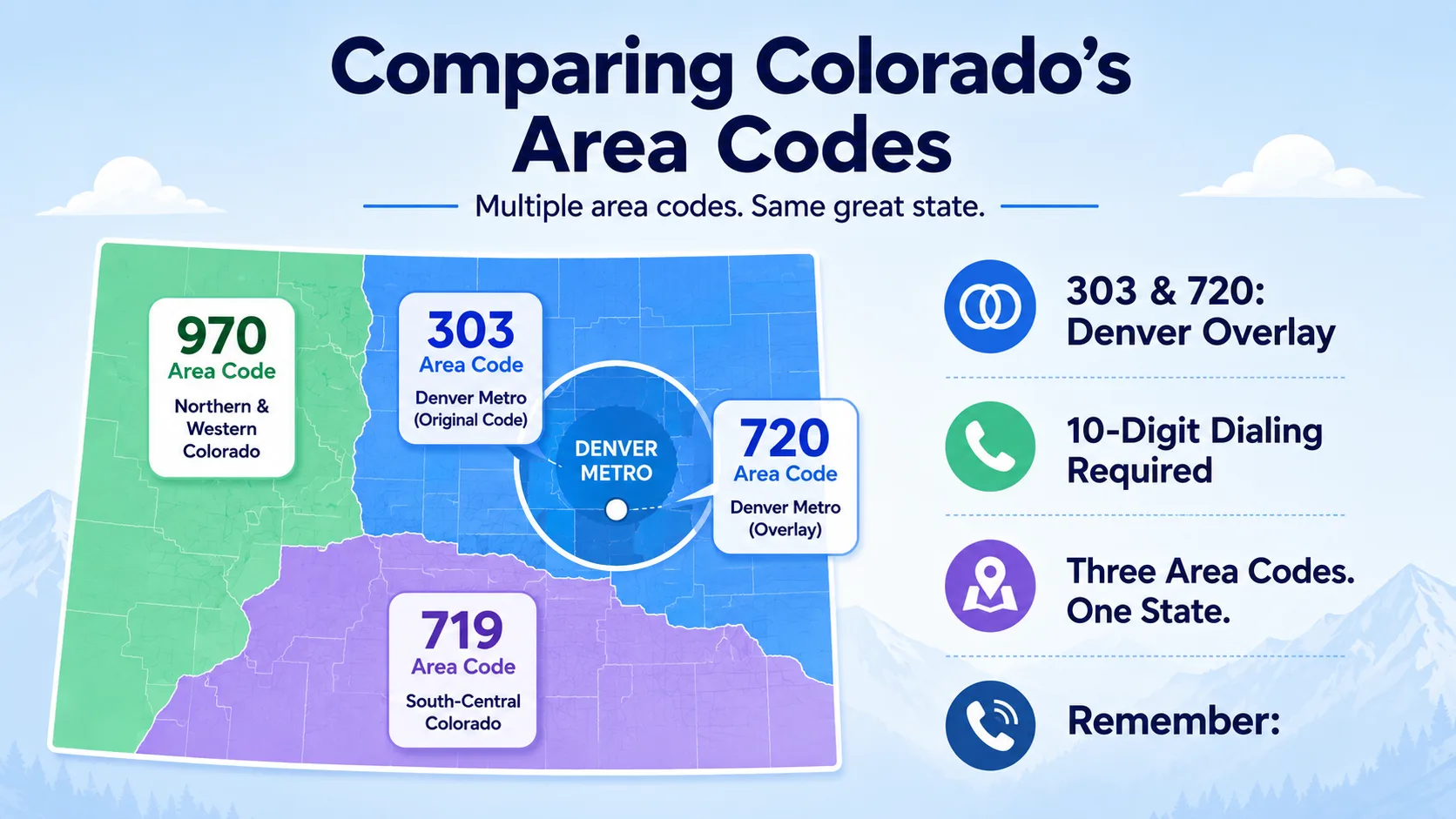
Colorado is no longer served by a single area code, and callers in the Denver region may also encounter the 720 area code, which was introduced to add numbering capacity without changing existing 303 numbers. This overlay covers the exact same geographic footprint as its predecessor, meaning both codes can appear side by side within the same neighborhood or even the same household.
- 303 — Denver metro, the original Colorado code
- 720 — the overlay covering the identical Denver metro footprint
- 970 — northern and western Colorado
- 719 — south-central Colorado, including Colorado Springs and Pueblo
Outside the metro area, Colorado is also served by the 970 area code in the north and western parts of the state, and the 719 area code covering the south-central region. Because the overlay shares territory with the older Denver numbering plan, residents are required to dial all ten digits, including the area code itself, even for local calls within the same city.
Why Local Businesses Prefer This Code
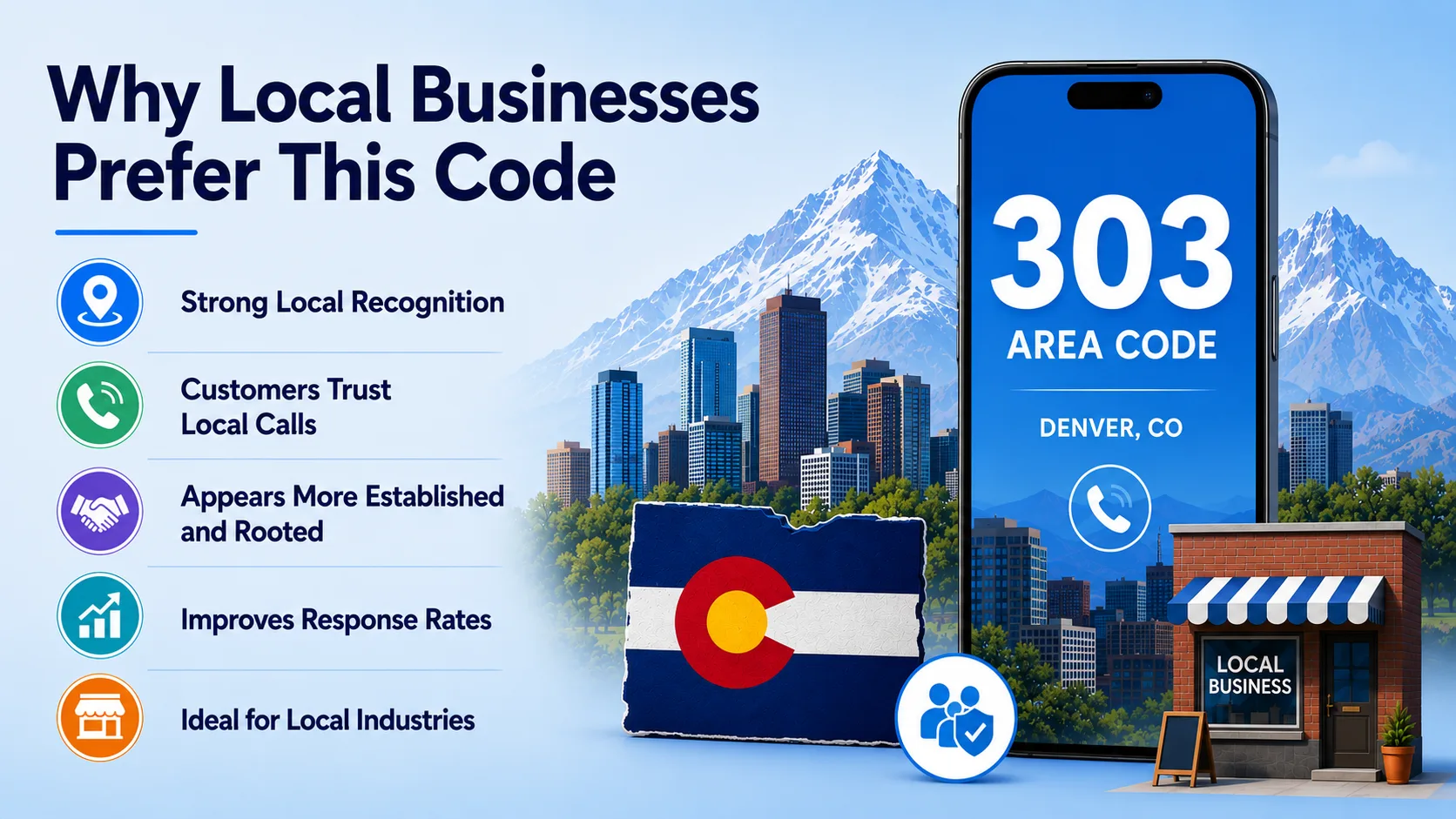
For companies establishing a presence in Colorado, a 303 area code number carries strong local recognition. Customers in the Denver metro area often trust and answer calls from a familiar local prefix more readily than an out-of-state number, which makes it valuable for sales teams, customer service lines, and local marketing campaigns.
- Strong local recognition that customers already trust
- Higher answer and response rates on outreach calls
- Appears more established and rooted in the community
- Well suited to consumer-facing industries like real estate, home services, legal practices, and retail
Startups and established companies alike frequently request a 303 phone number specifically because of this trust factor, even when their physical operations are based elsewhere. Many marketing agencies in the region actively advise clients to secure one of these numbers before launching a local advertising campaign, since response rates on cold outreach tend to improve when the caller ID looks familiar to the person answering. Rozper's virtual number setup lets remote teams claim that local Denver presence without waiting on an office lease first.
Watch Out for Spoofed Calls
Unfortunately, the popularity of this numbering region has also made it a frequent target for robocalls and spoofed numbers. Scammers sometimes use spoofing technology to make a call appear as though it is coming from a legitimate 303 area code number, even when the call originates from outside Colorado or even outside the country entirely. If you receive an unexpected call from a local-looking number asking for personal or financial information, it is worth treating it with caution and verifying the caller through a separate trusted channel before sharing any details.
Consumers can find additional guidance on identifying and reporting spoofed or scam calls through the official caller ID spoofing resource, which explains how spoofing works and what steps to take if you are targeted. Reporting suspicious calls to your carrier also helps flag repeat offenders for the wider network.
Conclusion
This numbering plan is far more than a set of three digits; it represents decades of history tied directly to the growth of Denver and the surrounding Colorado communities. From its origins as the state's very first numbering plan to its continued relevance today alongside the 720 overlay, it remains a trusted marker of local identity for residents and businesses alike. Whether you are trying to secure a local number for your business, understand which cities it covers, or simply figure out where a call came from, this guide gives you a clear picture of everything this iconic Colorado code represents today.
Rozper makes claiming a Denver-area number quick and simple, with call routing, voicemail, and CRM-ready tools built in. A local 303 line signals real roots in a market that rewards exactly that kind of presence.
FAQs
What cities does the 303 area code serve?
It primarily serves Denver and nearby suburbs such as Boulder, Aurora, Lakewood, and Golden in north-central Colorado.
Is it still available for new numbers?
Yes, though availability can be limited. Many providers now also assign the overlay 720 area code once original numbers run low.
Do I need to dial the area code for local calls in Denver?
Yes. Since the 303 and 720 area codes overlap in the same region, all local calls require ten-digit dialing.
Is a call from this code always local to Colorado?
Not necessarily. Scammers can spoof caller ID to display a local number even when calling from somewhere else entirely.
How old is this numbering plan?
It dates back to the original rollout of the North American Numbering Plan in the 1940s, making it one of the country's earliest codes.
Why do businesses request a 303 number specifically?
A 303 number reads as native to the Denver market, which improves trust and response rates for sales, service, and marketing calls.