Introduction
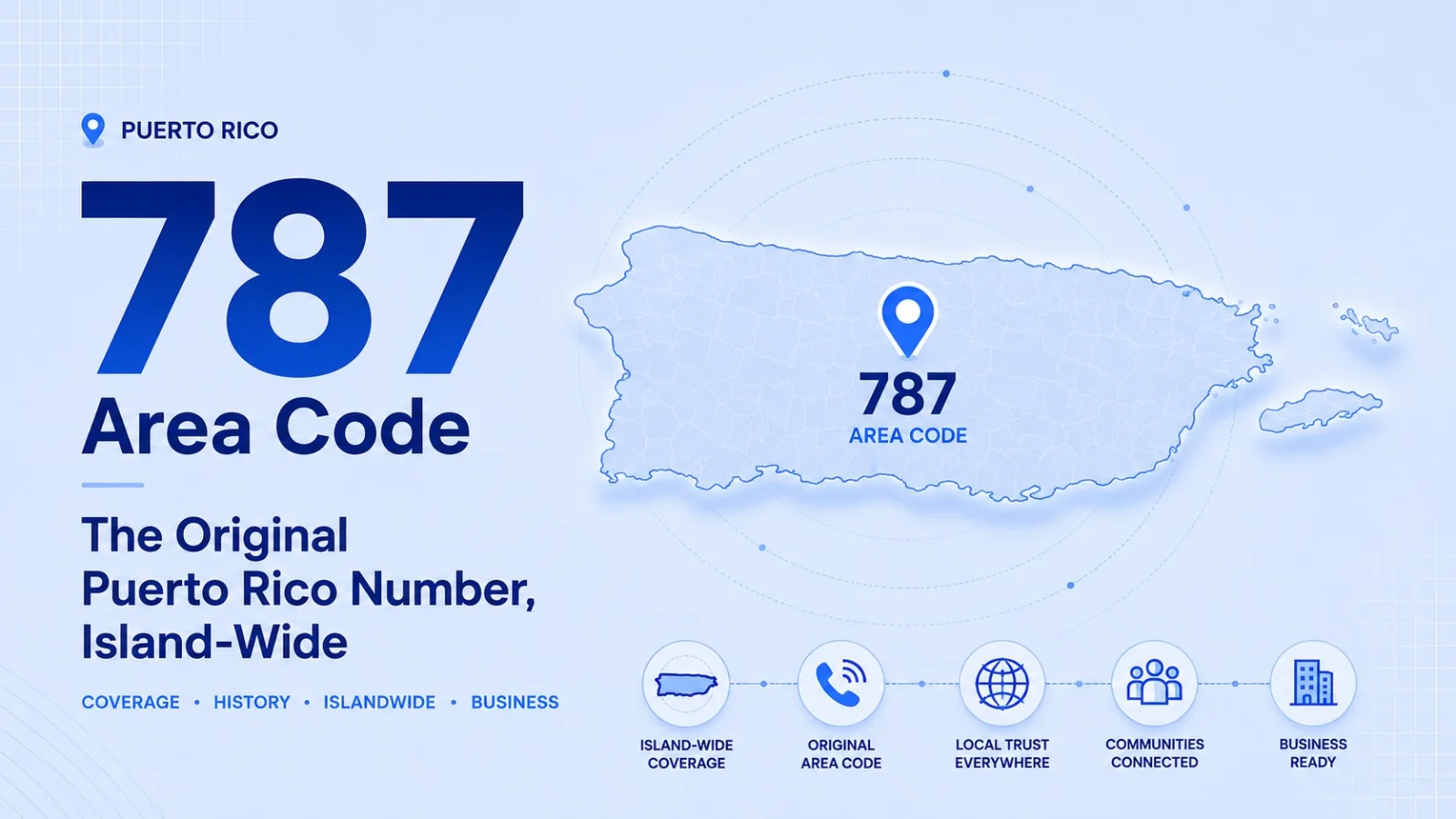
The 787 area code is not a regional slice of Puerto Rico the way most U.S. area codes cover a slice of a state — it is the island's original, territory-wide prefix, and it still reaches every municipio from San Juan to the western coast. That distinction matters because a 787 number does not signal "one neighborhood" the way a 305 or 212 number does; it signals Puerto Rico itself. This guide covers where the code reaches, how it split from the old Caribbean-wide 809 code, what the 939 overlay changed, and how a business claims a 787 number today. Keep reading, because the overlay rules here work differently than in most mainland markets.
Key Takeaways:
- The 787 area code covers the entire Commonwealth of Puerto Rico, not a single city or region.
- It split off from the Caribbean-wide 809 area code on March 1, 1996.
- The 939 overlay was added in 2001 once 787's supply of numbers ran low.
- Puerto Rico runs on Atlantic Standard Time year-round, with no Daylight Saving Time.
One Code, One Island: What 787 Actually Covers
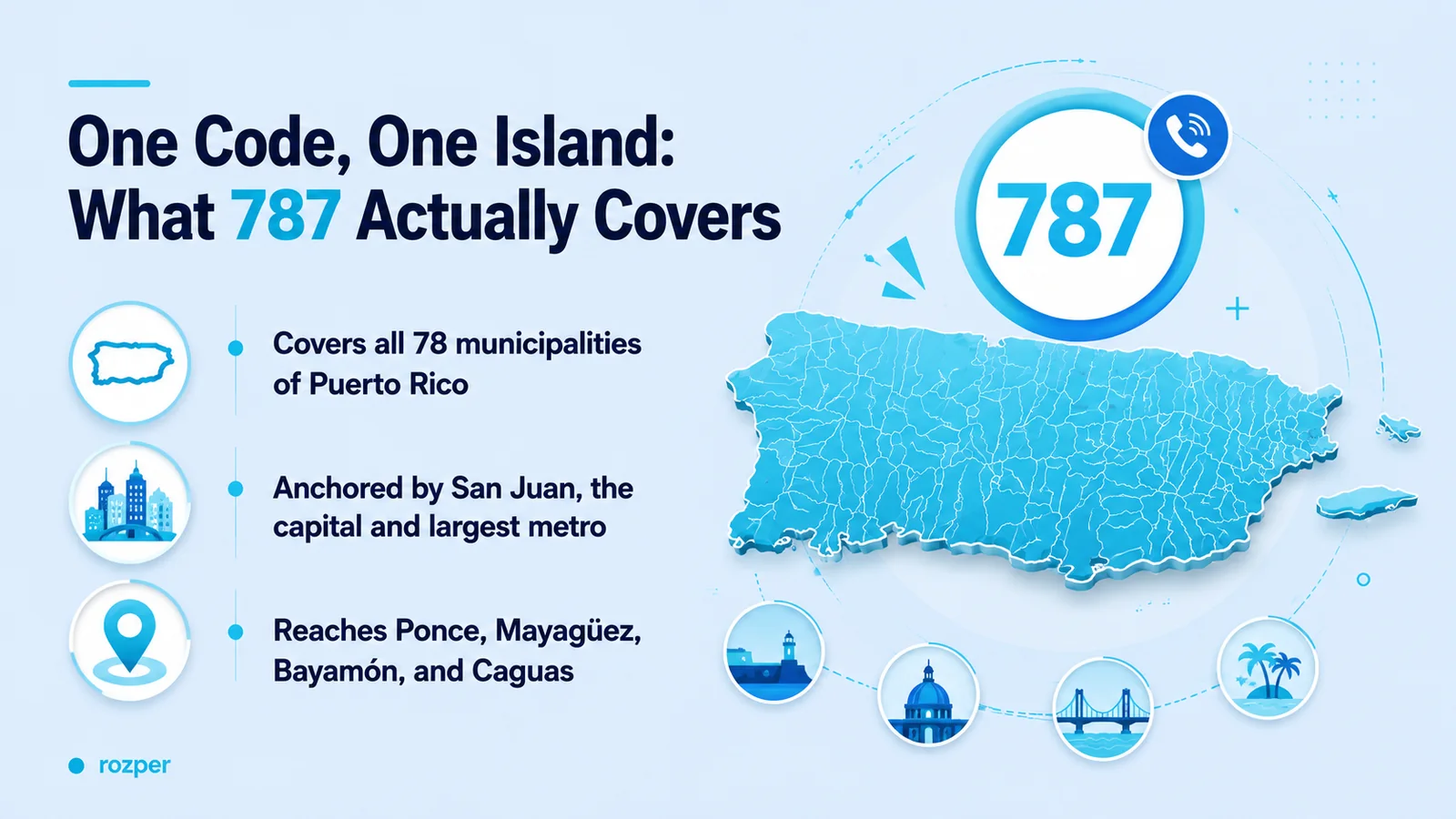
Unlike most U.S. area codes, which map to a metro area or a cluster of counties, the 787 area code spans the whole island of Puerto Rico, all 78 municipios included. San Juan anchors the code as the capital and largest metro, but the footprint runs from Bayamón and Carolina in the north to Ponce on the south coast and Mayagüez in the west. Businesses expanding toward the mainland Caribbean market or comparing overlay setups should also see the 939 area code guide, since the two prefixes now share the same island footprint.
- San Juan — the capital, financial hub, and largest metro on the island
- Bayamón and Carolina — dense San Juan-metro municipios with major commercial corridors
- Ponce — the principal city of Puerto Rico's south coast
- Mayagüez — the anchor city for the western region and a university hub
- Caguas — a fast-growing municipio in the island's central valley
From 809 to 787: The 1996 Split That Gave Puerto Rico Its Own Code
- Before 1996 — Puerto Rico shared area code 809 with a wide swath of the Caribbean, including the Dominican Republic and other island nations, under a single regional numbering plan dating to the late 1950s.
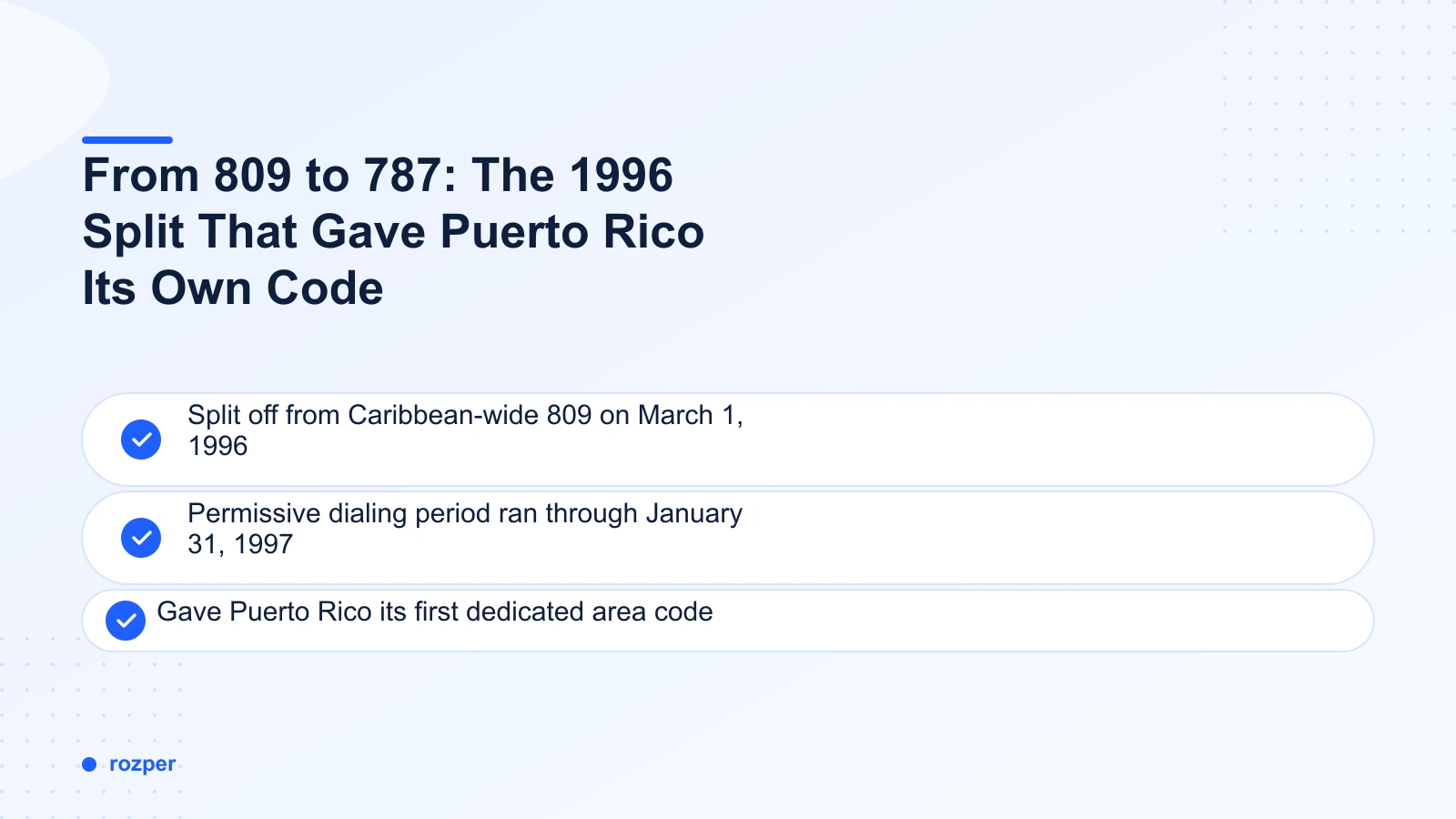
- March 1, 1996 — regulators split off the 787 area code to give Puerto Rico its own dedicated prefix, separate from the rest of the Caribbean.
- Through January 31, 1997 — a permissive dialing period let callers use either the old 809 or new 787 prefix while carriers and customers transitioned.
That split gave the island a numbering identity distinct from its Caribbean neighbors for the first time.
Why a 787 Number Signals "Puerto Rico" to Every Caller
Generic guides describe 787 as just another area code. What they miss is how much weight it carries specifically because it covers the whole island rather than one city.
Trust Built on Territory-Wide Recognition
A 787 number does not need explaining to anyone on the island; it reads as local no matter which municipio a customer calls from, since the code has covered all of Puerto Rico since 1996.
A Tourism and Relocation Economy That Rewards Local Numbers
Puerto Rico's tourism sector and its growing wave of mainland relocations under tax-incentive programs both mean a constant stream of new residents and visitors who expect to reach local businesses at a 787 number, not a mainland toll-free line.
Remote Teams Still Need an Island Presence
Companies serving Puerto Rico from Florida, New York, or elsewhere on the mainland routinely find that a 787 number outperforms a mainland one for answer rates and callback trust. Rozper's virtual number setup lets those teams claim that presence without opening a physical office on the island first.
Ten Digits Required: Dialing Rules Across the 787 Zone
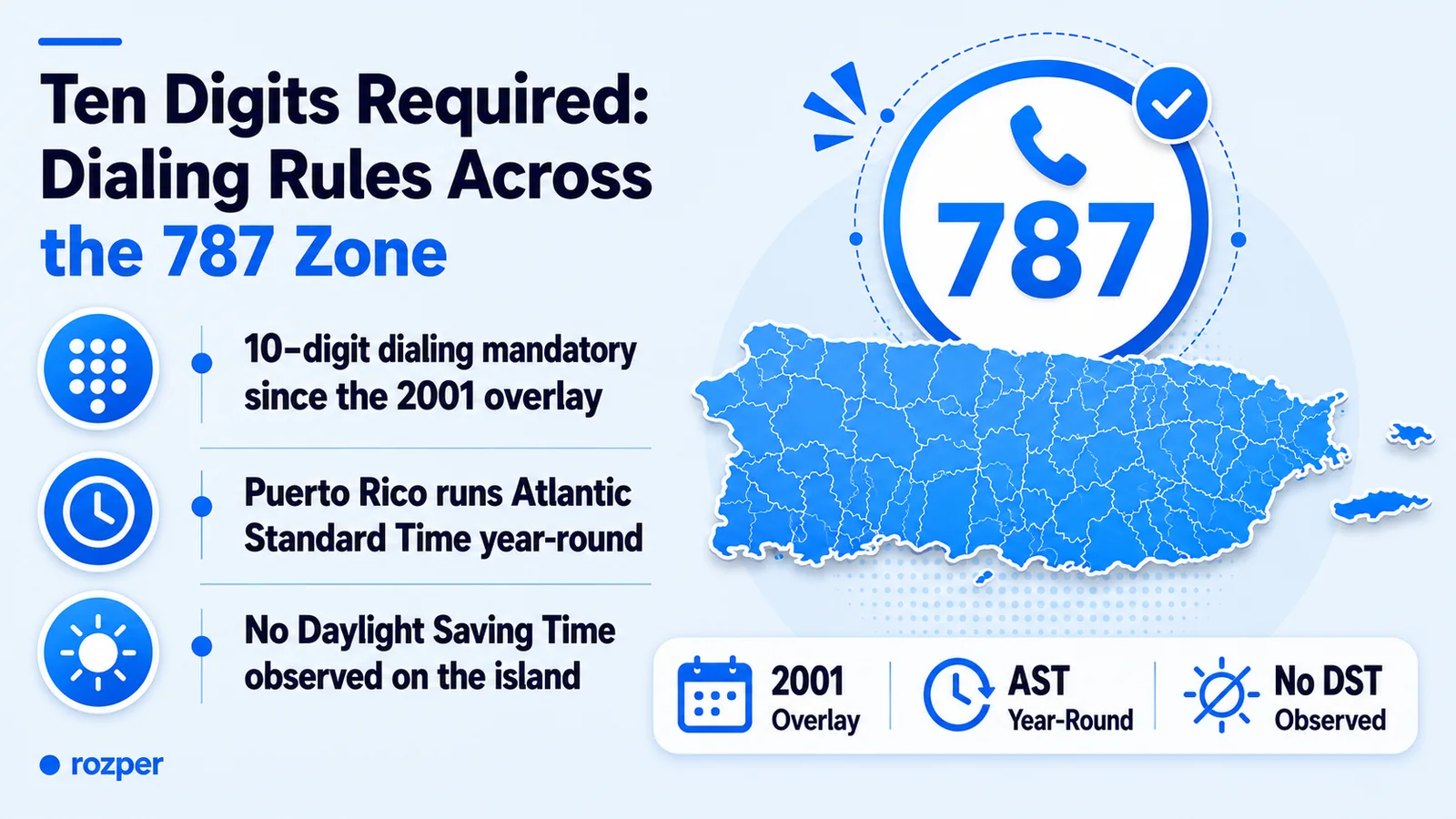
Every number in the 787 area code runs on Atlantic Standard Time year-round, since Puerto Rico does not observe Daylight Saving Time. That makes the offset simple to track: Puerto Rico sits one hour ahead of U.S. Eastern Time for most of the year, and lines up with Eastern Time only during the mainland's own Daylight Saving Time months.
- Local calls require the full 10-digit format: 787-XXX-XXXX
- International or mainland callers dial +1-787-XXX-XXXX
- Ten-digit dialing became mandatory once the 939 overlay activated in 2001
- Eastern Time contacts match Puerto Rico's clock in summer months, and sit one hour behind the rest of the year
- Pacific Time contacts sit three to four hours behind, so late mornings suit outbound calls best
Anyone saving an area code 787 contact should always store the full 10-digit number, since the overlay means shorthand dialing habits from before 2001 no longer work.
Scam Calls Spoofing 787: What Puerto Rico Residents Are Reporting
The 787 area code is genuine and assigned to real Puerto Rico numbers, but scammers spoof it just like any other high-volume prefix. Fraud reports tied to the code cluster around a few repeat patterns.
- Fake utility or power-authority calls threatening service disconnection
- Bogus government-benefit or tax-refund calls demanding personal information
- One-ring missed calls designed to bait an expensive international callback
- Robocalls pitching vacation timeshares or extended warranties to numbers with no prior purchase
Under guidelines, carriers must authenticate outbound caller ID through STIR/SHAKEN, so a legitimate local number still carries real weight even as spoofing attempts continue. Providers such as Rozper apply this authentication automatically, which matters for any business that cannot afford to look like a spoofed call to a new client on the island.
787 vs. 939: Two Codes, One Island
- 787 — the original island-wide prefix, assigned since the 1996 split from 809
- 939 — the 2001 overlay covering the identical footprint, added once 787 numbers ran low
- No geographic difference — both codes serve every municipio in Puerto Rico equally
- The only difference is issue date — which prefix a line carries depends on when it was assigned, not where it is located
Because 787 and 939 are true overlays rather than a geographic split, a business cannot pick a code based on location the way it might choose between neighboring mainland prefixes. Either number reads as authentically Puerto Rican to a local caller, which makes provider inventory, not geography, the deciding factor.
Getting a 787 Number Set Up: Five Steps
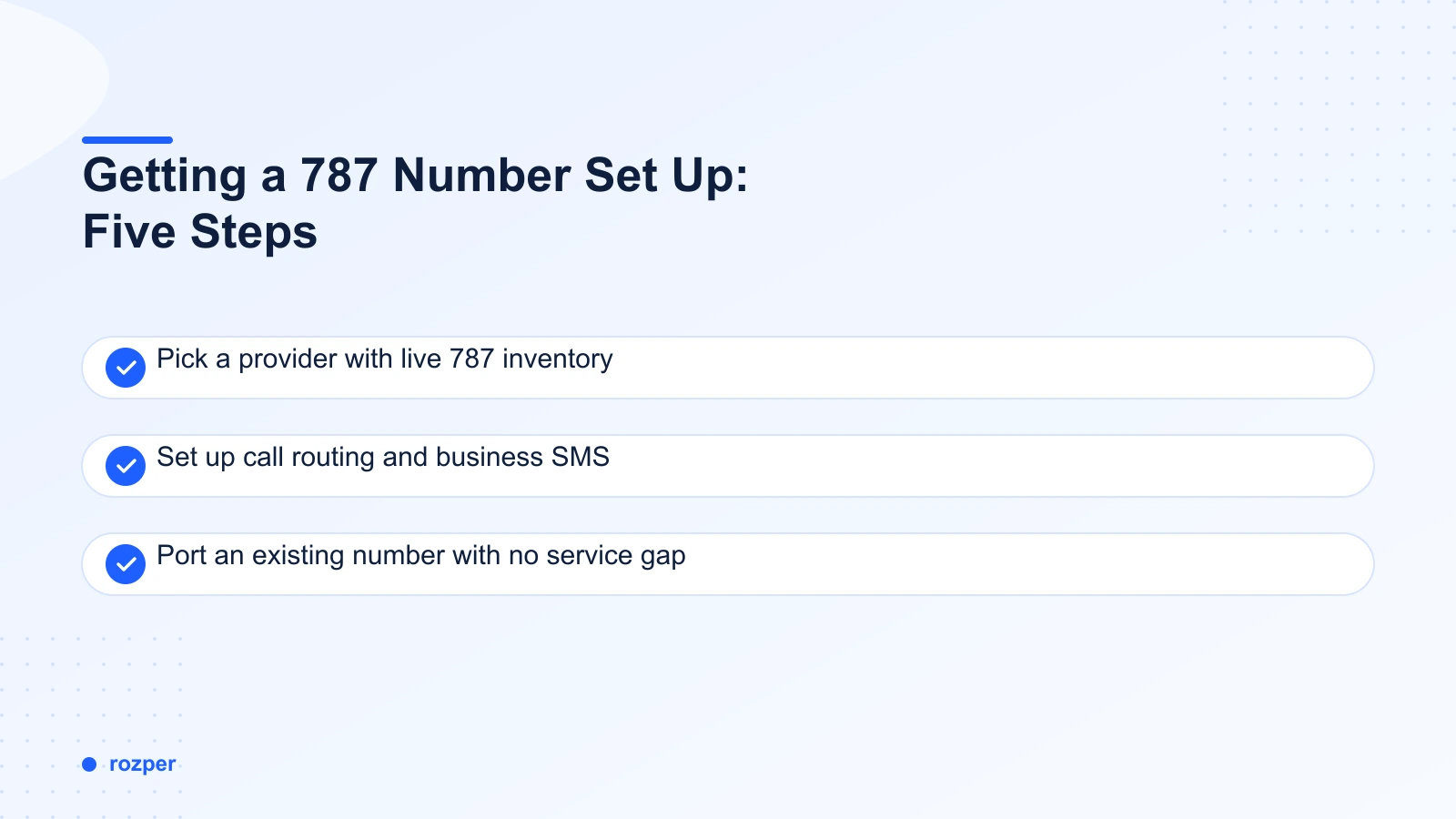
- Pick a provider with live 787 inventory and STIR/SHAKEN compliance built in, since demand on the island's original code stays steady.
- Choose a number format that fits your brand, whether a standard local number or a memorable vanity option.
- Set up call routing to mobile phones, softphones, or a shared team queue so no client call goes unanswered.
- Turn on business SMS for appointment reminders and customer updates.
- Port an existing number if you already have one, with no service gap during the switch.
Most providers activate a new line in minutes, and Rozper backs its numbers with 99.999% uptime and coverage across 150+ countries, which suits mainland teams coordinating with island staff or vendors. Locking in a 787 area code puerto rico number now gives any business island-wide reach from day one.
Conclusion
The 787 area code has anchored Puerto Rico's phone system since it split from the Caribbean-wide 809 code on March 1, 1996, and it still covers the entire island today, from San Juan to Ponce and Mayagüez. The 939 overlay arrived in 2001 to add capacity, not to redraw boundaries, so both codes now serve the identical territory-wide footprint. Understanding that history helps any business claim the 787 identity with confidence, knowing the number reads as authentically local anywhere on the island.
Puerto Rico's tourism economy, growing relocation trends, and steady business growth all keep demand for local numbers strong. Rozper makes claiming a 787 number quick, with setup measured in minutes rather than weeks. A local line signals real roots in a market that rewards exactly that kind of presence. Get your 787 number activated now, and reach Puerto Rico the way local businesses do.
FAQs
What area does the 787 area code cover?
It covers the entire island of Puerto Rico, all 78 municipios, from San Juan and Bayamón to Ponce and Mayagüez.
When was the 787 area code created?
Regulators created it on March 1, 1996, splitting Puerto Rico off from the Caribbean-wide 809 area code.
What is the difference between 787 and 939?
None geographically. The 939 overlay, added in 2001, covers the exact same island-wide footprint as 787; the only difference is when a number was assigned.
How do I dial a number in the 787 area code?
Every call needs the full 10-digit format, area code included, even for calls between two Puerto Rico numbers.
Is a call from a 787 number safe to answer?
The prefix is legitimate, but scammers spoof it for fake utility, government-benefit, and warranty calls. Verify unexpected callers independently.
What time zone does the 787 area code use?
Puerto Rico runs on Atlantic Standard Time year-round and does not observe Daylight Saving Time.
Can a mainland business get a 787 number without an office in Puerto Rico?
Yes. Virtual number providers like Rozper activate a 787 number in minutes with no physical presence on the island required.
Will my 787 number ever change to 939?
No. Existing 787 numbers keep their prefix permanently; 939 only applies to new lines assigned after the overlay began.