Introduction
Area code 620 is the telephone code covering southern and western Kansas, and this guide breaks down exactly where it reaches, how it came to exist, and what it means for anyone dialing in or out of the region today. If you've spotted a 620 number on your caller ID, moved to a town like Hutchinson or Dodge City, or run a business across this stretch of Kansas, understanding this code helps you separate a genuine local call from a spoofed one. Ahead, you'll find the full list of cities and counties, a side-by-side comparison against Kansas's other three area codes, and the time zone detail most guides skip entirely. Keep reading, because 620 covers more ground than any other code in the state, and that scale changes how you should think about it.
Key Takeaways:
- Area code 620 covers roughly 170 cities across 55 Kansas counties, making it the largest calling region in the state.
- The code went into service in 2001 after a geographic split carved it out of the original area code 316.
- 620 touches a small pocket of Mountain Time in far-western Kansas, unlike any other code in the state.
- Because 620 spans so much territory, verifying an unfamiliar call matters more here than in smaller, denser regions.
Where Does Area Code 620 Reach? Mapping Kansas's Largest Calling Region
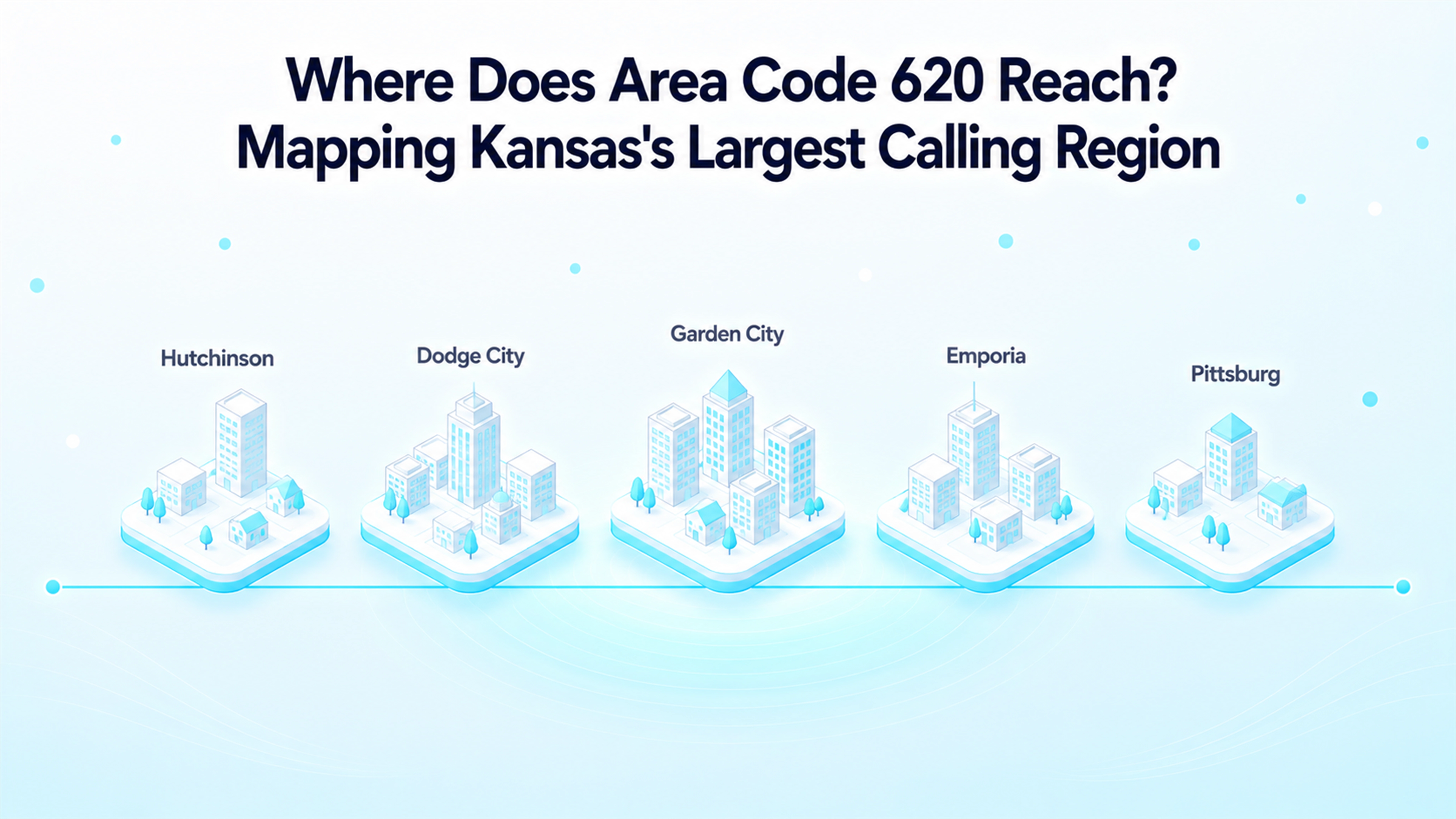
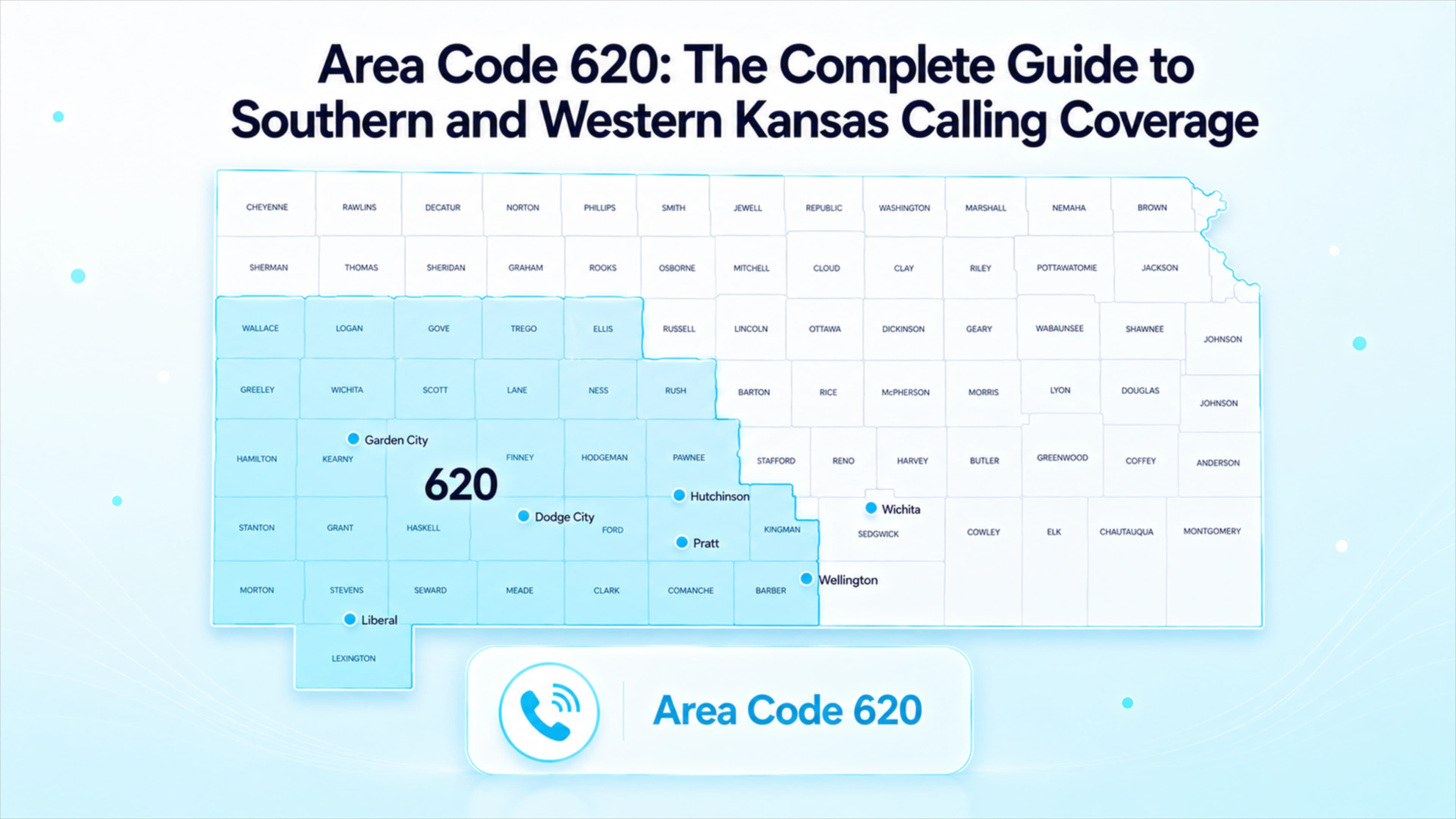
Area code 620 stretches across the southern and western half of Kansas, running from the Oklahoma border up through the state's rural heartland and out toward the Colorado line. Unlike area code 316, which stays contained to the Wichita metro, area code 620 Kansas territory spans dozens of small and mid-sized cities spread across a genuinely rural footprint. Anyone searching for this code is usually trying to place a number from one of these outlying communities rather than a big-city exchange.
- Hutchinson, McPherson, and Newton-adjacent towns anchor the north-central stretch.
- Dodge City, Garden City, and Liberal cover the southwestern plains.
- Emporia, Pittsburg, and Independence sit toward the eastern edge of the region.
- Hays and Great Bend mark the northern reach of the coverage area.
- Smaller communities across Cowley, Montgomery, and Cherokee counties round out the footprint.
172 Cities, 55 Counties: Why 620 Covers More Ground Than Any Other Kansas Code
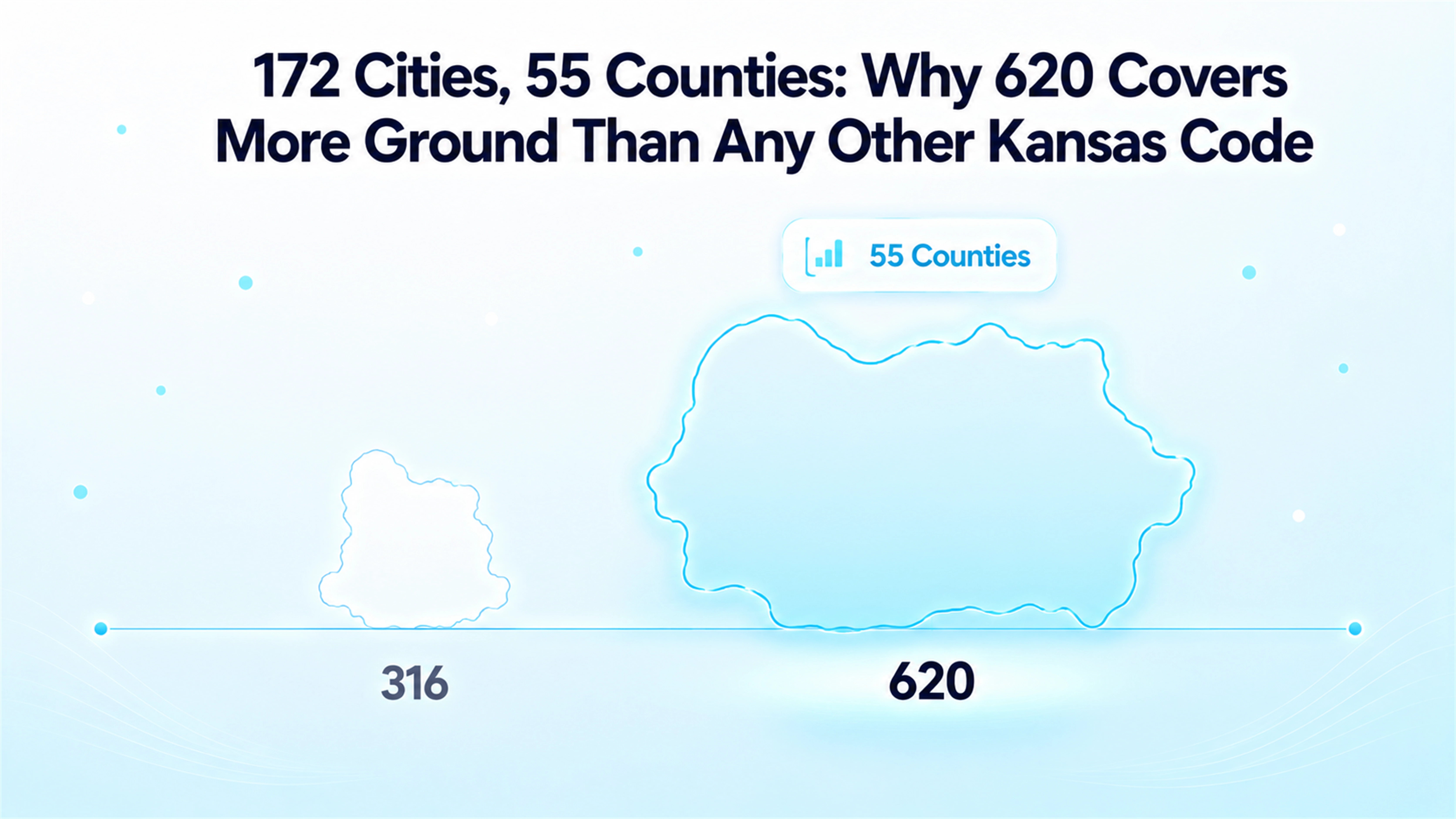
No other Kansas area code comes close to matching the size of area code 620. Where 316 covers six counties around a single metro, this one spans roughly 55 counties and around 170 cities and towns, making it the calling region every rural southern and western Kansas resident shares.
Why the Footprint Is So Large
Southern and western Kansas has a much lower population density than the Wichita metro, so a single area code needs far more square miles to reach the same number of phone lines. That's the trade-off here: fewer people per square mile, but a much bigger map to cover.
What That Means for Callers
A 620 number could belong to a neighbor two counties away just as easily as someone across town, so the code alone tells you far less about exact location than it would in a smaller region.
A 620 Number Just Called You — Here's How to Verify It
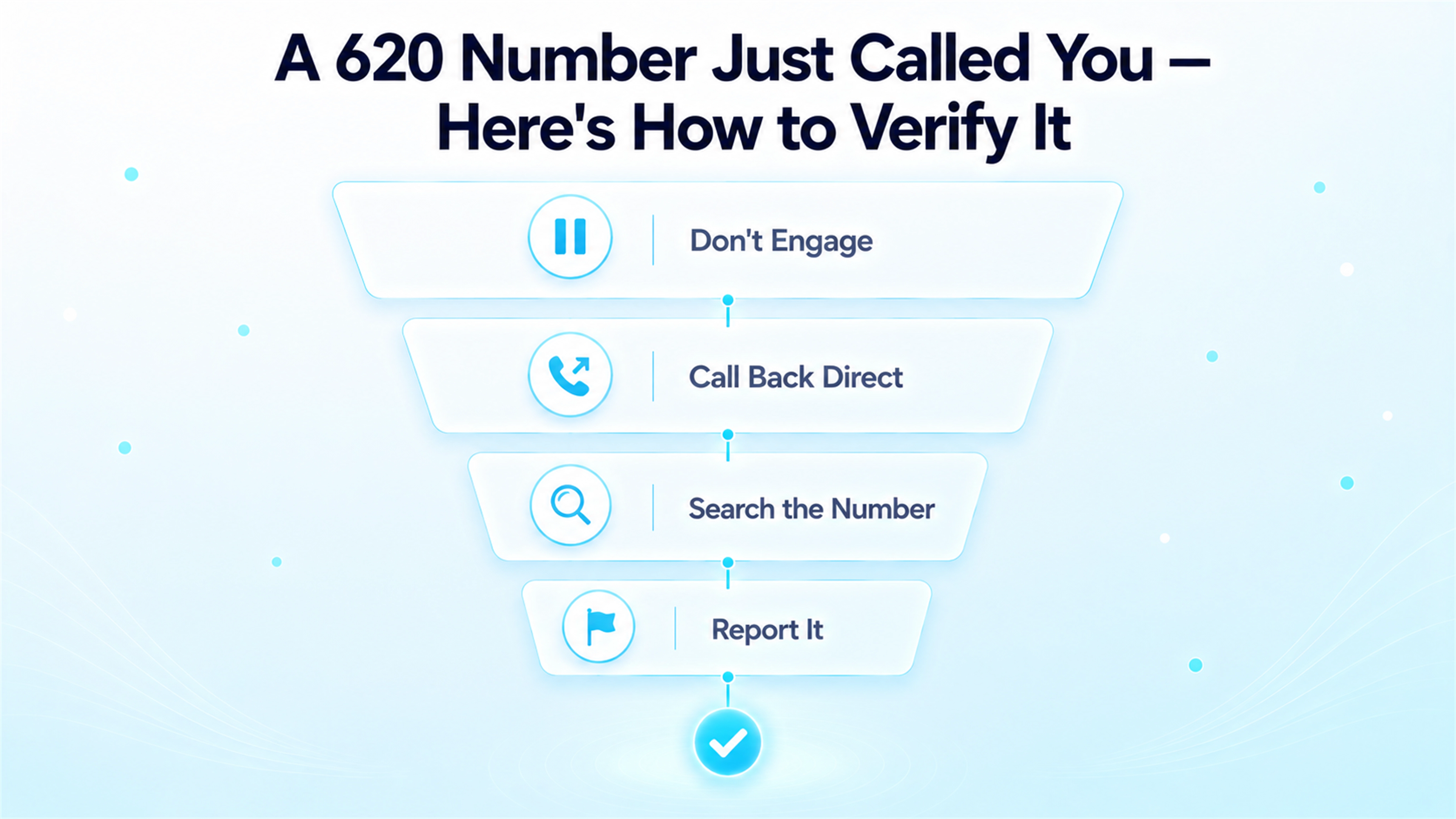
Picture this: your phone rings, a 620 number shows up, and because it looks local, you're tempted to answer without thinking twice. Scammers count on exactly that reaction through neighbor spoofing, faking caller ID to display an area code 620 Kansas number so Social Security threats, fake student loan offers, and bogus tech-support calls feel more trustworthy. Because 620 covers so much ground, "local-looking" here means almost nothing on its own, so a quick verification habit matters.
- Never share personal or financial details with an unexpected caller, no matter how urgent they sound.
- Hang up and dial the organization back using a number from its official website.
- Search the exact number online to check if others have flagged it as a scam.
- Report confirmed scam calls to the FTC and block the number afterward.
620 vs. Kansas's Other Three Area Codes: 316, 785, and 913
Kansas runs four geographic area codes with no overlays, so every number in the state maps to one specific region rather than sharing a pool of digits. Lining area code 620 up against its neighbors makes it easier to tell at a glance whether a number is coming from rural Kansas or somewhere else entirely, which matters for anyone comparing local phone numbers before choosing one for a growing team.
- 620 covers the southern and western counties outside the Wichita metro.
- 316 covers only the Wichita metro area itself.
- 785 covers Topeka, Manhattan, Lawrence, and north-central Kansas.
- 913 covers the Kansas side of the Kansas City metro.
Why One Split Created the Biggest Area Code in Kansas
A common assumption is that area code 620 must be one of Kansas's older, original area codes, given how much territory it covers. The opposite is true: it's actually the newest of the state's four codes, activated in 2001 when growth inside the original area code 316 forced a geographic split. Wichita and its immediate suburbs kept 316, while every county outside that metro was folded into the brand-new 620, instantly making it the largest of the four by land area.
- Area code 620 has been in continuous service since 2001, with no further splits since.
- 785 split off from 913 back in 1997, making it older than 620.
- 913 is the original Kansas City-area code and predates both later splits.
- Kansas has never used an overlay system, so ten-digit dialing stays consistent statewide regardless of code.
Central Time (Mostly): The One Time-Zone Exception 620 Covers
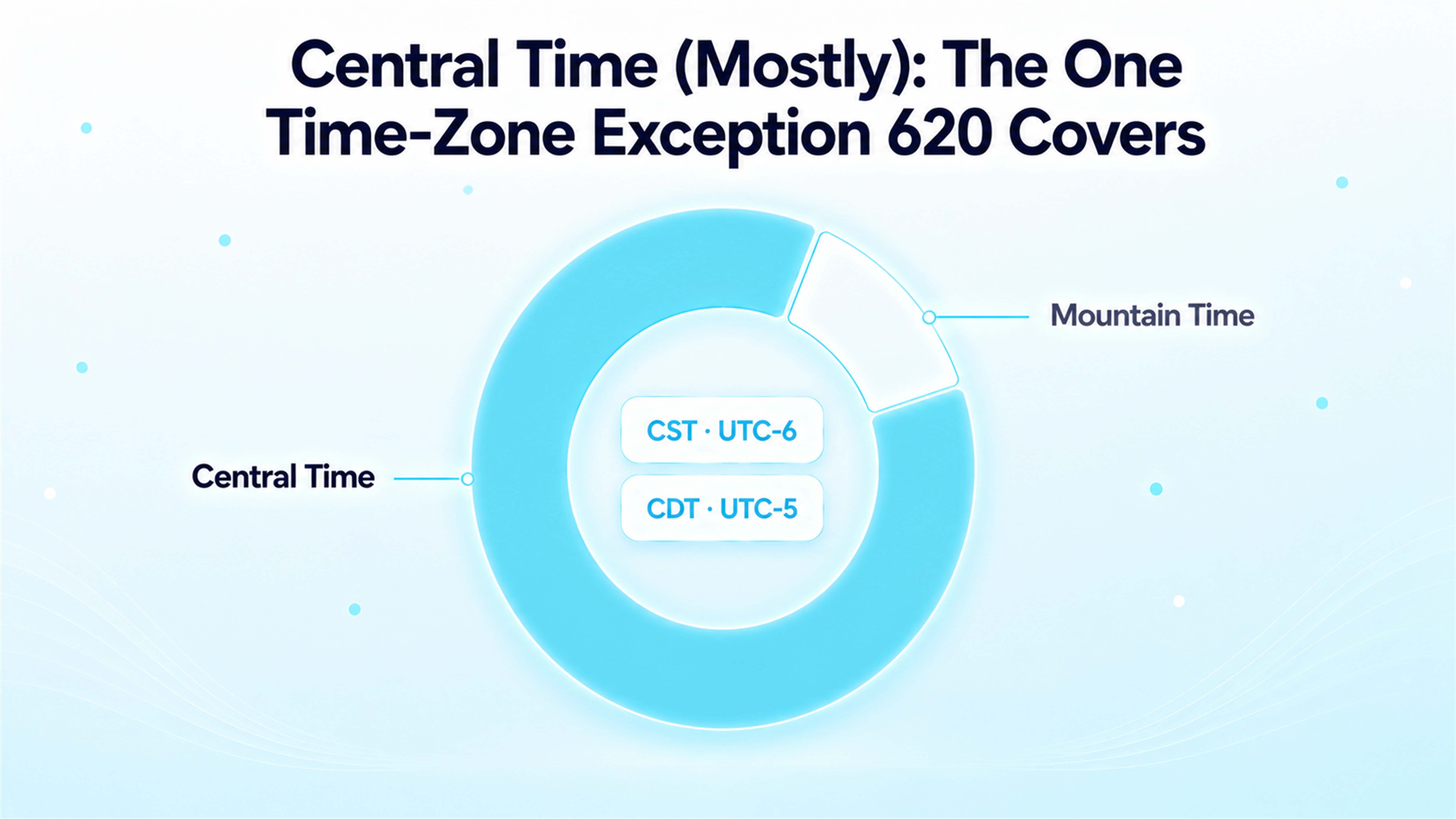
Nearly every part of area code 620 runs on Central Time, the same clock used across most of Kansas, Chicago, and Dallas. What most guides leave out is that a handful of far-southwestern Kansas counties inside the 620 footprint sit in the Mountain Time zone on paper, even though many local businesses there still operate on Central Time by common practice.
- Central Standard Time (CST, UTC-6) and Central Daylight Time (CDT, UTC-5) cover the vast majority of the 620 region.
- A small pocket of far-western counties technically falls under Mountain Time (MT).
- Local custom in that pocket often defaults to Central Time for business hours anyway.
- Confirming a specific town's practice is worth it before scheduling a tight-window call out west.
Should Your Business in Southern Kansas Keep a 620 Number? Three Questions to Ask
Cloud phone systems let a business run from almost anywhere, yet plenty of companies across southern and western Kansas still keep their area code 620 Kansas listing because it signals real local roots. Rozper works with growing teams that want that recognizable local presence backed by 99.999% uptime, so a rural Kansas number never comes with a reliability trade-off.
- Do most of your customers live within the 55 counties that 620 covers?
- Would a caller from a small Kansas town hesitate to pick up a number from outside the region?
- Does your team need call routing tools that scale as the business grows beyond one office?
If any answer is yes, keeping a local 620 number is worth the small setup effort. Rozper's human-first partnership model and reach across 150+ countries make that setup simple, whether a team stays rooted in Kansas or expands well beyond it.
Conclusion
This region covers more of Kansas than any other code in the state, spanning roughly 170 cities across 55 counties from Hutchinson and Dodge City to Emporia and Pittsburg. Knowing this scope helps you recognize a genuine local call, stay alert to the spoofing tactics scammers rely on, and understand why the code has stood as its own region since the 2001 split from area code 316. Anyone who searches area code 620 Kansas from here on will know exactly which counties, cities, and time zone quirks that number represents. Whether you're a resident double-checking an unfamiliar call or a business owner weighing a local listing, this guide gives you the complete, accurate picture you came here for.
As southern and western Kansas keep growing, area code 620 will likely stay the state's largest calling region for the foreseeable future. Businesses considering a local presence now have a clear head start, especially with tools like Rozper that keep call management simple no matter how spread out a customer base is. Take what you've learned here and put it to use the next time an unfamiliar 620 call reaches your phone. Getting set up with a smarter way to handle those calls takes less effort than you'd expect.
FAQs
What is area code 620?
Area code 620 is the telephone area code covering southern and western Kansas. It has served this region since a 2001 geographic split from area code 316.
Where is area code 620 located?
It covers roughly 55 counties across southern and western Kansas, including cities like Hutchinson, Dodge City, Garden City, and Emporia. It does not include Wichita, which stayed under area code 316.
How many cities does area code 620 cover?
Area code 620 covers approximately 170 cities and towns, making it the largest area code by geographic reach in Kansas. Major hubs include Hutchinson, Pittsburg, Hays, and Great Bend.
What time zone is area code 620 in?
Most of area code 620 runs on Central Time, matching CST in winter and CDT in summer. A small pocket of far-western counties technically sits in Mountain Time.
Is a call from area code 620 safe to answer?
Answering is generally safe, but scammers frequently spoof 620 numbers to appear local. Verify unexpected calls before sharing any personal or financial information.
How is area code 620 different from area code 316?
Area code 620 covers the rural southern and western counties, while area code 316 covers only the Wichita metro area. Both trace back to the same original territory before the 2001 split.
Does calling a 620 number cost more than other Kansas codes?
No, calling a 620 number costs the same as any other domestic US call under a standard phone plan. Kansas applies no overlay pricing differences across its four area codes.
Why would a business want to keep a 620 area code Kansas number instead of switching?
A local area code 620 Kansas number builds instant familiarity with customers across this wide rural service area. Platforms like Rozper let businesses keep that local presence while still managing calls flexibly.