Introduction
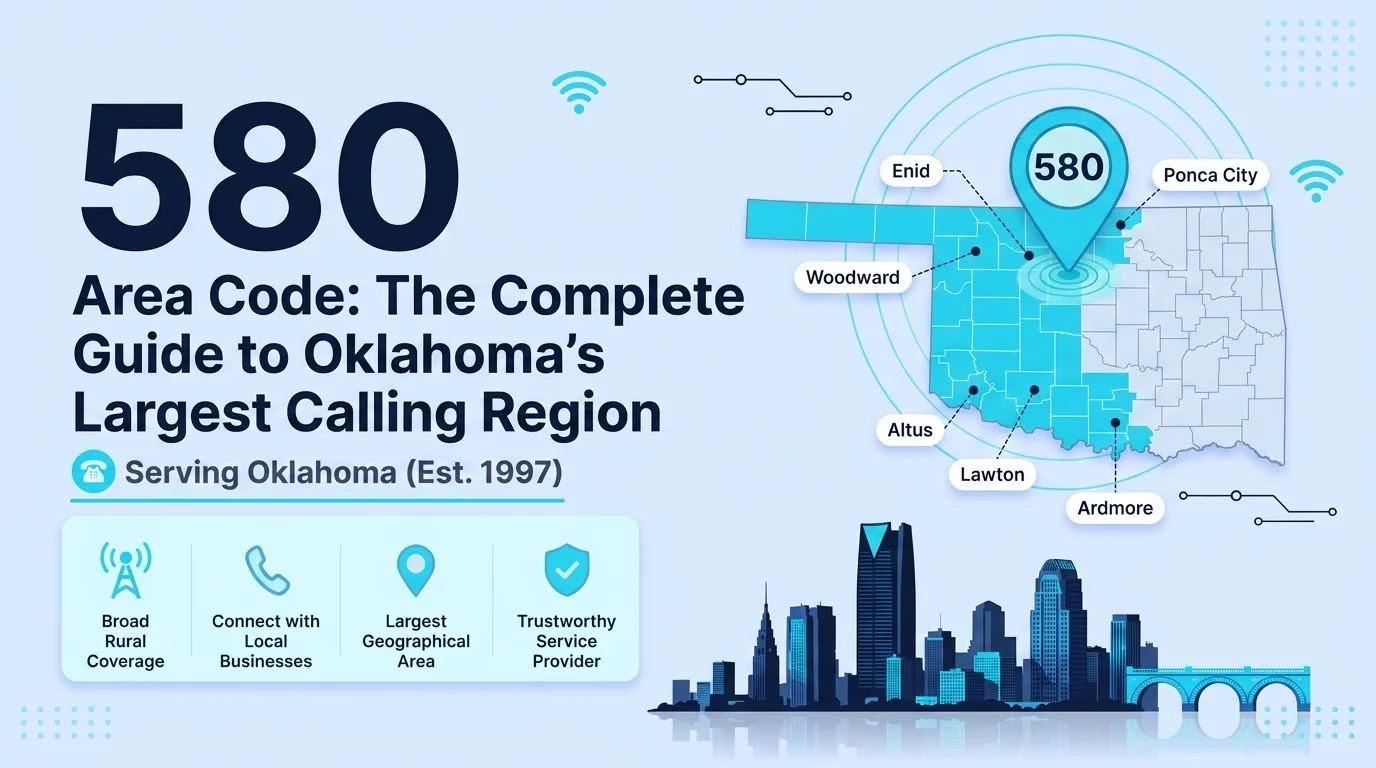
The 580 area code covers more of Oklahoma than any other, stretching across southern and western Oklahoma from the Texas Panhandle to the Red River. This topic matters because 580 works differently than the state's other area codes, and knowing why helps you avoid dialing mistakes and spot scam calls faster. You will learn which cities and counties share this single code, why it never needed a second one, and how local businesses across such a wide region still build real trust with customers. By the end, you will understand this region's phone numbers better than almost anyone who lives there.
Key Takeaways:
- The 580 area code covers 49 counties across southern and western Oklahoma, the largest footprint of any code in the state.
- Unlike 405 and 918, area code 580 has never needed a second overlay code.
- Ten-digit dialing still applies in the 580 region because of a national rule tied to the 988 mental health hotline, not an overlay.
- A 580 caller could live hundreds of miles from you, so the code alone tells you very little about location.
From Lawton to Guymon: The 49 Counties Sharing One 580 Area Code
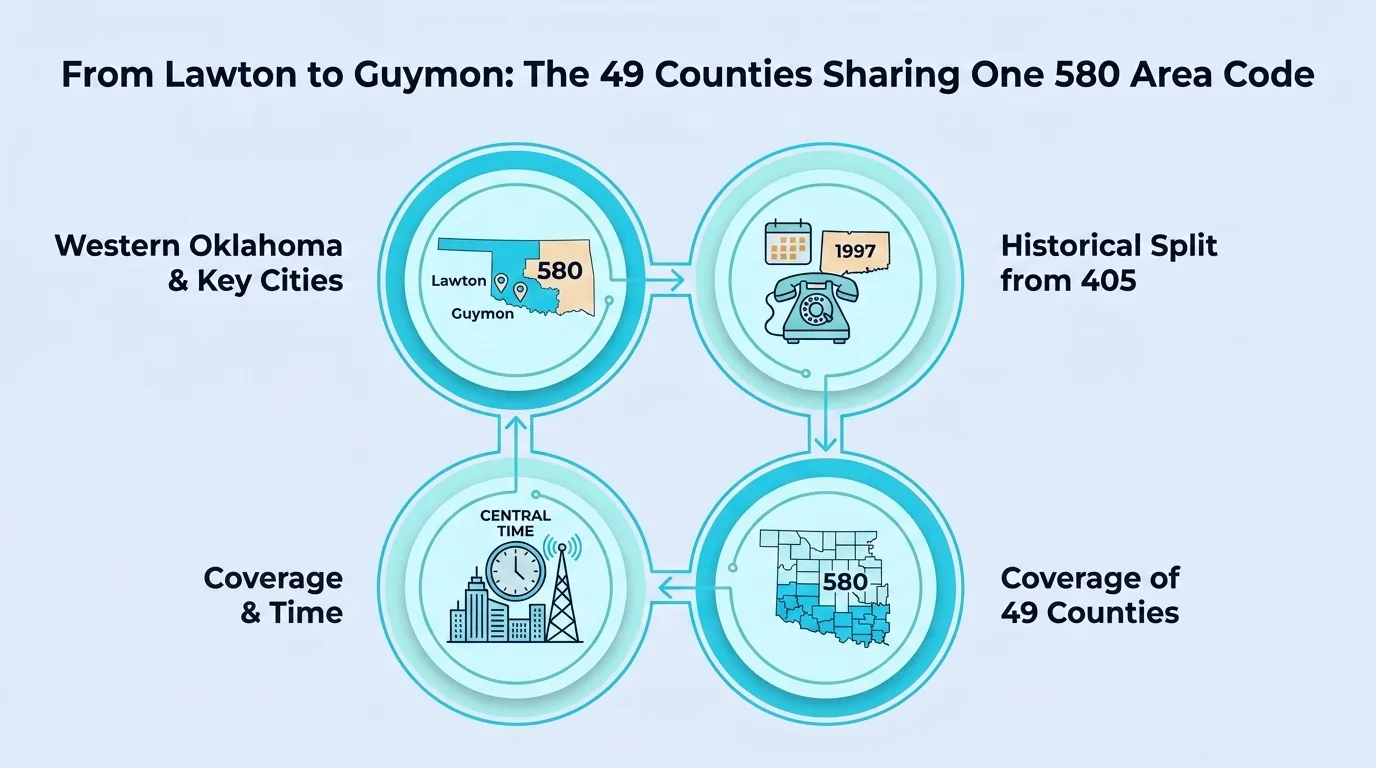
The 580 area code spans 49 counties, more than any other area code in Oklahoma, covering everything from the Panhandle town of Guymon to Ardmore near the Texas border. Lawton is the largest city in the region, followed by Enid and Ardmore, with Comanche County holding the biggest population overall. The entire footprint runs on Central Time, so no matter where a call originates within the region, scheduling never involves a time zone shift.
- Lawton, home to Fort Sill and the region's largest population center
- Enid, a major hub for wheat farming and oil refining
- Ardmore and Durant, anchoring the southern border near Texas
- Ponca City, Altus, and Weatherford, spread across the western half
- Guymon, sitting far out in the Oklahoma Panhandle
A Region Built From Wide Open Spaces
Area code 580 Oklahoma covers roughly 1.1 million residents spread across a huge, mostly rural landscape. That combination of a large area and a smaller population is exactly why this code has lasted so long without running out of numbers.
Why 580 Never Split Into a Second Area Code
Many people assume every Oklahoma area code eventually needs an overlay, the way 405 and 918 did. The 580 area code breaks that pattern because most of the original 405 region's phone lines stayed concentrated in Oklahoma City when the 1997 split happened, leaving 580 with far fewer numbers to assign per person. That lighter demand means the region is projected to have enough available numbers well into the next decade.
Fewer people, spread across more square miles, simply use up phone numbers slower than a dense metro area does. This is the opposite situation from area code 580's neighbors, where fast-growing suburbs forced regulators to add overlay codes years ahead of schedule. Regulators track this kind of usage closely, and the latest projections still put 580 years away from needing any kind of second code.
Same Area Code, Hundreds of Miles Apart: What That Means for Callers
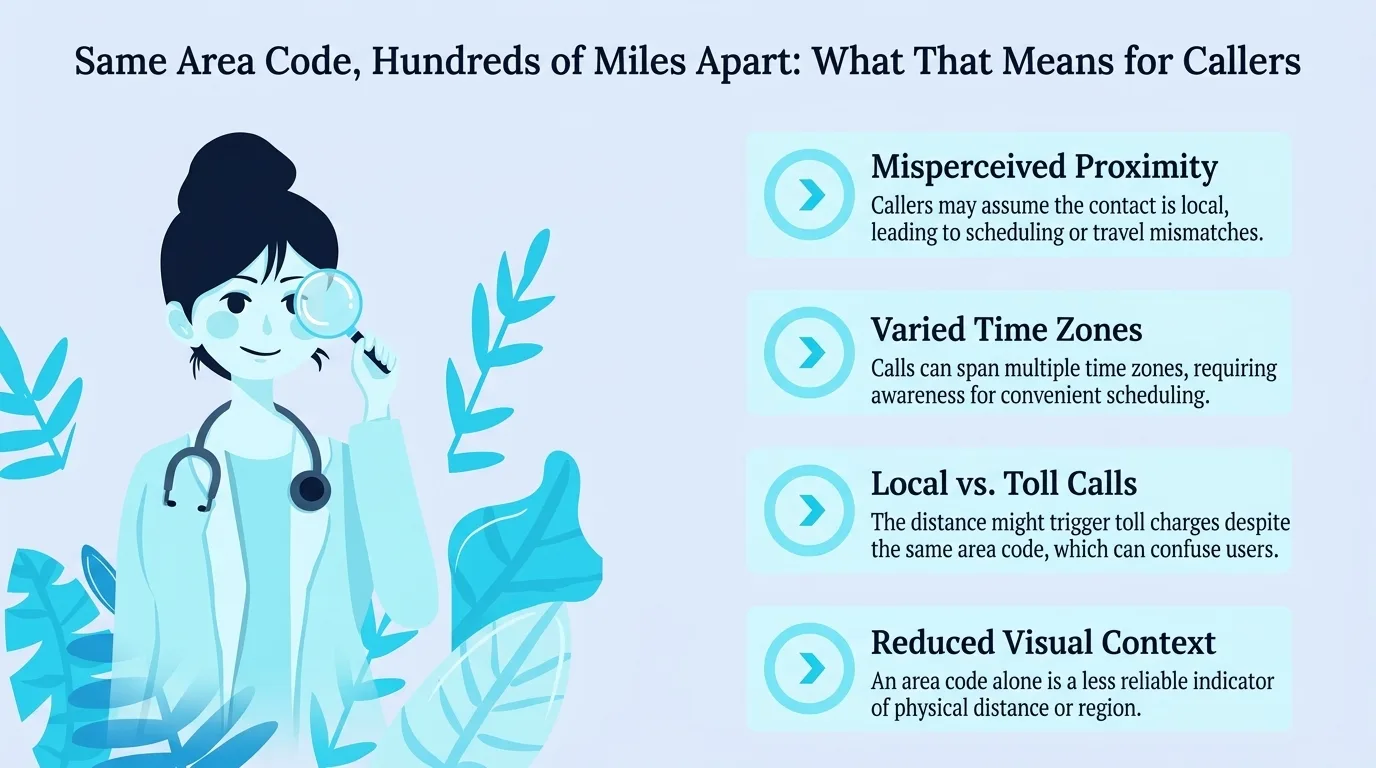
A 580 number from Guymon and a 580 number from Ardmore can be nearly 400 miles apart, even though they share the exact same area code. That distance matters if you are trying to guess where a caller lives or whether a business is actually local to your town. Businesses that serve a specific city inside this region often need to say so directly, since the area code itself won't do that work for them.
- Guymon sits in the Panhandle, closer to Colorado than to most of Oklahoma.
- Ardmore and Durant sit near the Texas border, hours away from Guymon.
- Lawton and Enid anchor the central portion of the footprint.
- Every one of these cities shares the same 580 area code despite the distance.
Ten-Digit Dialing Reached 580 Anyway — Here's the 988 Connection
Unlike 405 or 918, this region never needed an overlay to force ten-digit dialing on its own. Instead, a nationwide rule tied to the 988 mental health crisis line made ten-digit dialing mandatory everywhere in the country, including single-code regions like this one, starting in 2021. Callers who still try dialing just seven digits in this region will get an error, even though 580 has no second code to blame it on.
- Save every 580 contact with the full ten-digit number, area code included.
- Update old business cards, signage, and voicemail greetings to match.
- Expect the same ten-digit requirement everywhere else in Oklahoma too.
- Watch for connection errors if an old seven-digit habit slips back in.
Spot a Fake 580 Call Before It Costs You
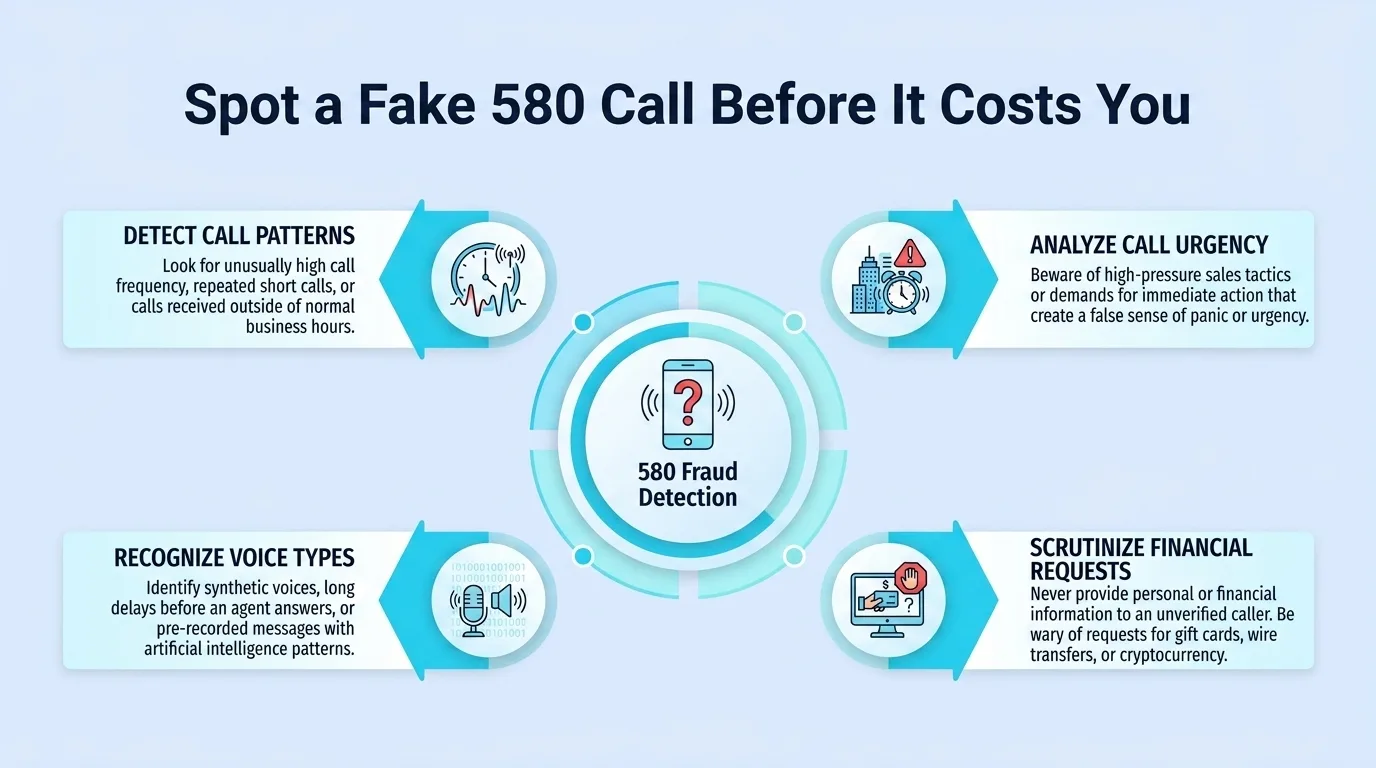
Scammers spoof rural area codes like 580 because a local-looking number makes people more likely to answer without hesitation. If someone claiming to be from a utility company or a government office pressures you for immediate payment through gift cards or wire transfers, treat that as a serious warning sign. Legitimate businesses across this region do not demand instant, untraceable payment over the phone.
Quick Checks Before You Trust a 580 Call
A short pause before reacting stops most scam attempts in their tracks.
- Search the full number online before calling anyone back.
- Contact the business directly through its official website instead.
- Never share banking details with someone who called you first.
- Learn to recognize repeated spam calls from the same suspicious prefix.
580 vs Its Neighbors: 405, 918, and 575 Compared
Comparing area code 580 against the codes around it shows just how different its situation really is. While its neighbors needed overlays to keep up with growth, 580 has stayed a single code since 1997.
- 580: Southern and western Oklahoma, 49 counties, no overlay needed.
- 405/572: Central Oklahoma, overlaid in 2021 due to rapid growth.
- 918/539: Northeastern Oklahoma, overlaid in 2011, the state's first.
- 575: Neighboring New Mexico, a separate numbering plan entirely.
Knowing this layout helps businesses expanding across state lines choose the correct area codes for new locations without confusing customers.
Why Small-Town Businesses Win Trust With a Local 580 Number
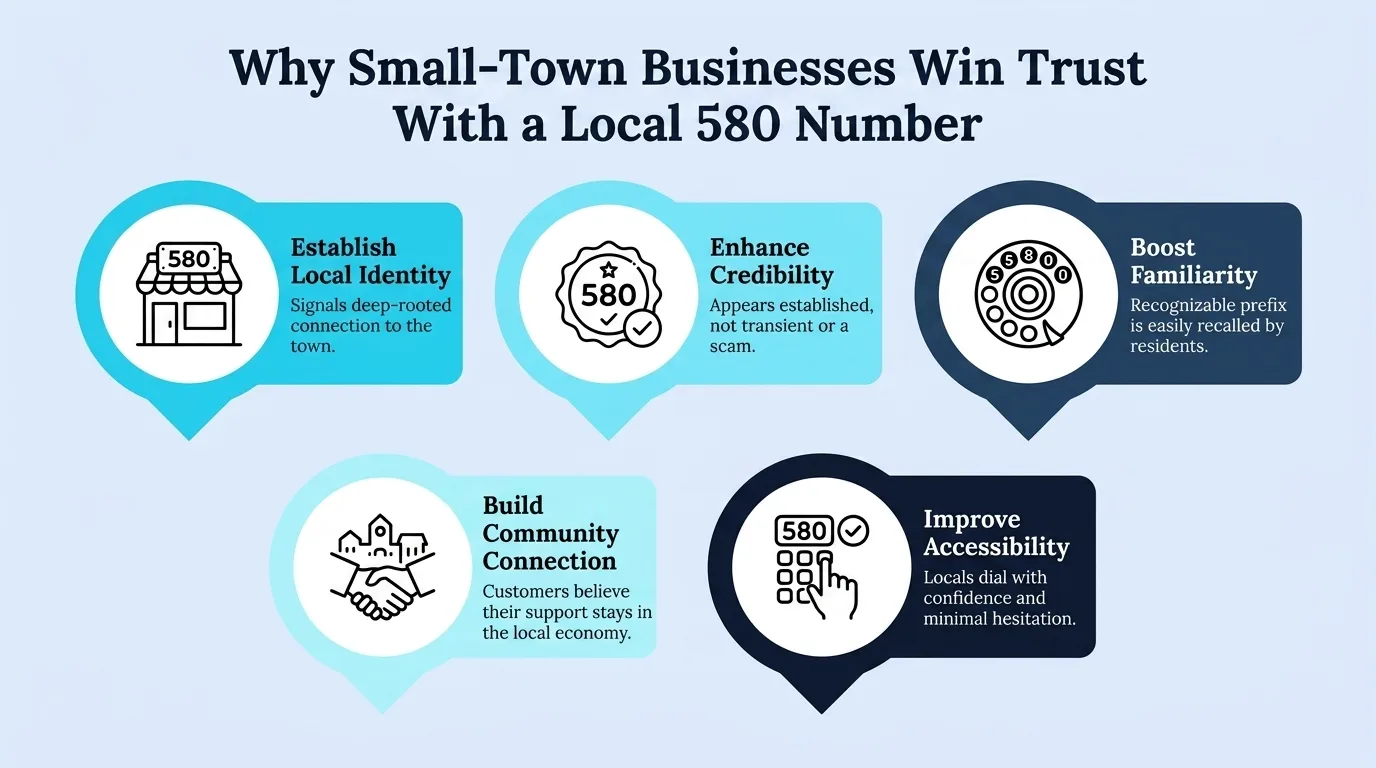
Across a region this spread out, a local 580 area code tells a customer in Enid or Ardmore that a business understands their town, not just their state. That signal carries extra weight in smaller communities where people expect a real, familiar voice on the other end of the line. Businesses that pair that local number with organized call handling keep the trust they earn on the first ring.
- Local numbers get answered more often than unfamiliar toll-free lines.
- Smart call routing connects rural customers to the right person fast.
- Missed-call follow-up recovers leads that a busy front desk might miss.
- Consistent local presence builds repeat business across small, tight-knit towns.
- Clear call records help small teams track which town their customers call from.
- Faster response times matter even more when the next competitor is an hour away.
Rozper helps growing businesses across this region manage exactly this kind of call flow, so a local 580 area code presence turns into real, booked appointments. Teams using Rozper can route incoming calls, track missed-call follow-ups, and keep every customer conversation organized without juggling separate systems. That kind of dependable call handling is what actually earns the trust a 580 number promises in small-town Oklahoma.
Every business in this region, regardless of size, has followed the same guidelines for ten-digit dialing since the rule took effect in 2021.
Conclusion
The 580 area code has covered southern and western Oklahoma since 1997 without ever needing an overlay, making it the largest and least crowded calling region in the state. Ten-digit dialing, the wide geographic spread, and the constant risk of spoofed scam calls all matter for anyone living or doing business across this area code. Understanding why 580 works differently than 405 or 918 helps residents avoid dialing mistakes and helps businesses set realistic expectations about what a local number really signals. The 580 area code isn't just the biggest region on the map; it's a reminder that phone numbers alone rarely tell the whole story.
Businesses spread across this much territory need more than just a working phone line to keep customers close. Rozper gives growing teams the call routing and follow-up tools to turn a local 580 presence into consistent, organized conversations no matter how far apart your customers live. As southern and western Oklahoma keep growing, the businesses that manage every call well are the ones people remember and call back.
FAQs
What state is the 580 area code in?
The 580 area code is located entirely within Oklahoma, covering the southern and western parts of the state. It borders Texas, New Mexico, and the Oklahoma Panhandle.
Where exactly does area code 580 cover?
It covers 49 counties across southern and western Oklahoma, including Lawton, Enid, Ardmore, and Guymon. This makes it the largest area code footprint in the state.
When was the 580 area code created?
It was created on November 1, 1997, when it split away from the original statewide 405 code. Most of that split's population stayed in central Oklahoma, leaving 580 sparsely populated.
How do I dial a 580 number correctly?
You must dial all ten digits, including the area code, for every local call. This has been required nationwide, including in this region, since 2021.
Is it safe to answer calls from a 580 number?
Not always, since scammers frequently spoof rural-sounding numbers to seem more trustworthy. Verify any unusual request before sharing personal or financial information.
What time zone does the 580 area code use?
The entire 580 region operates on Central Time year-round. This applies consistently across all 49 counties it covers.
Does getting a 580 number cost anything extra?
Standard phone service already includes whichever area code your line is assigned. Businesses should compare their overall phone plans rather than assume 580 numbers carry added fees.
Why hasn't area code 580 Oklahoma ever needed a second area code?
Its large, mostly rural footprint uses phone numbers much slower than a dense metro area does. Regulators project the region will have enough numbers available for years to come.