Area codes draw the map that phone networks route by. In Maryland, 240 is one of the busiest lines on it.
Introduction
The 240 area code sits over the older 301 code, covering the same ground rather than splitting it. It reaches western, central, and southern Maryland — including the D.C. suburbs.
This guide covers where it came from, where it reaches, how the overlay works, and what a local 240 number does for a business. It also covers how to spot scam calls.
What is Area Code 240?
The Basics
Area code 240 is a three-digit NANP code serving western, central, and southern Maryland. It overlays the 301 code, and 227 was added later as a third. All three cover identical ground. New numbers come from whichever pool has stock.
Why It Matters
- Local identity: a 240 number ties you to Maryland communities and earns quick trust
- Number supply: it met rising demand without splitting the map or changing anyone's number
- Business reach: it lets firms target the region and look local doing it
- Correct routing: it makes 10-digit dialing the rule across the overlay
How the 240 Code Came About
The NANP
The North American Numbering Plan covers the US, Canada, and much of the Caribbean. Its administrator hands out area codes and keeps every number unique. When demand outruns supply in a code, the administrator picks a fix: split the map, or lay a new code over it.
Maryland Ran Short
Late last century, Maryland grew fast, above all in the towns ringing Washington D.C. That growth drained the 301 code faster than expected, and forecasts showed it running dry.
The fix was an overlay. Adding 240 on the same ground meant no community got split and no existing customer had to change a number.
Where the 240 Area Code Reaches
Three Regions
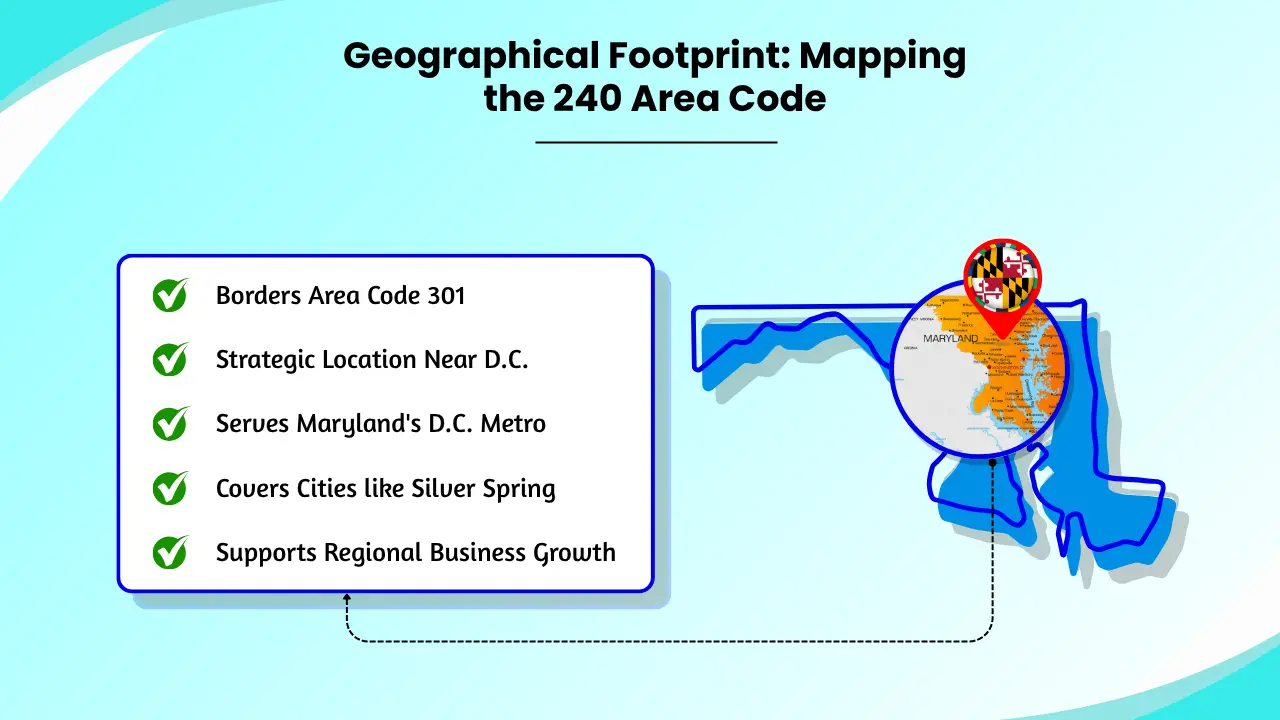
- Western Maryland: Allegany, Garrett, and Washington counties. Health, tourism, and freight drive it, with Hagerstown as the commercial hub.
- Central Maryland (D.C. suburbs): Montgomery and Prince George's counties. Heavy federal presence, a strong tech sector, big corporate offices, and some of the wealthiest towns in the country.
- Southern Maryland: Charles, Calvert, and St. Mary's counties. Suburbs, farming, and a large defense employer at Naval Air Station Patuxent River.
Key Counties
- Montgomery: a major engine for the state, home to biotech firms and federal bodies including the NIH, plus high-spending suburbs
- Prince George's: populous and diverse, lifted by the University of Maryland at College Park and good transport links
- Frederick: one of the fastest-growing counties, mixing small-town character with biotech, health, and tourism
- Washington: the western hub, with Hagerstown as county seat and strong freight and factory work
- Allegany, Charles, and St. Mary's: the rest of the footprint, each with its own economic mix
How the Overlay Works
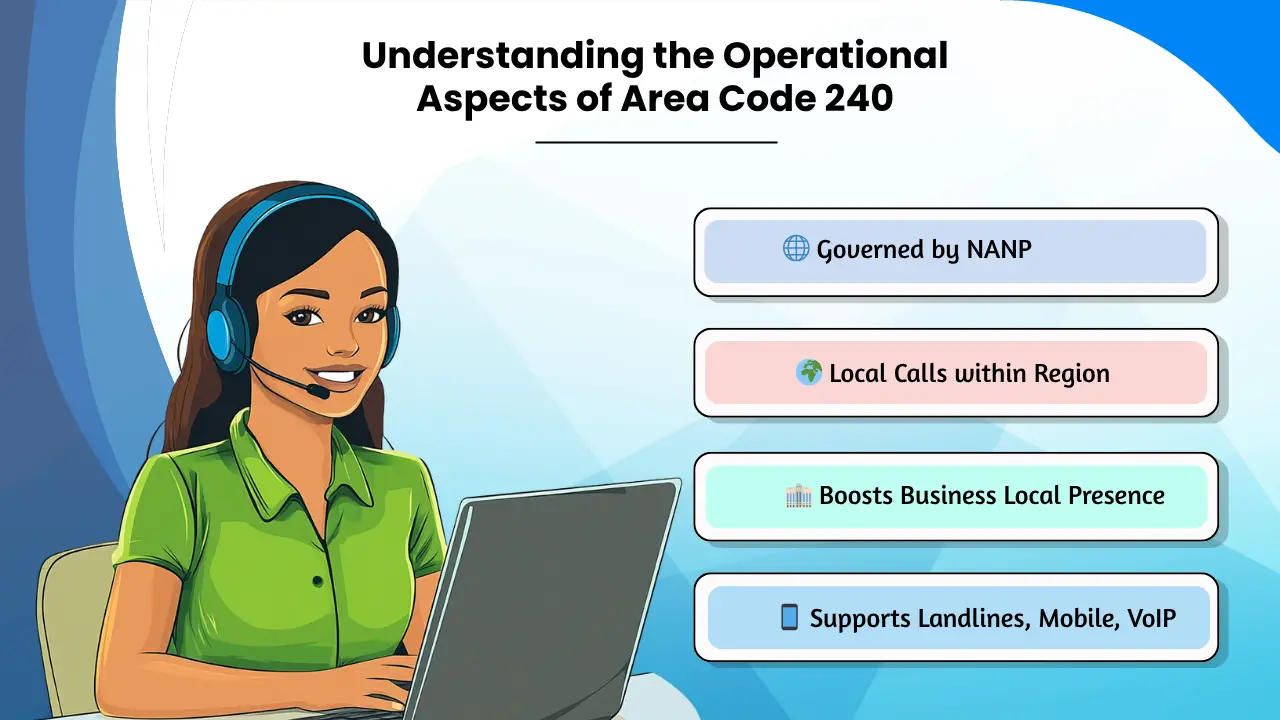
Ten Digits, Every Local Call
The 240, 301, and 227 codes share one set of switches and one map. A new line gets a number from whichever pool has stock.
That means every local call needs ten digits, even when both numbers share a code. Seven digits will not connect. Check your PBX, dialers, alarm panels, and speed dials.
Time Zone
The whole 240 footprint runs on Eastern Time:
- EST (UTC-5) in fall and winter
- EDT (UTC-4) in spring and summer
Worth pinning down before you book calls with Maryland contacts.
Keeping Your Number
The FCC requires number portability, so you keep your number when you switch providers. Porting a 240 number to a VoIP platform does not interrupt calls, and none of your printed contact details need to change.
Who Calls from a 240 Number?
Mostly Ordinary People
Nearly all 240 traffic is exactly what it looks like:
- Firms of every size, from corner shops to regional chains
- Residents calling family, friends, and tradespeople
- State bodies and public services across Maryland
About the Scam Worry
The 240 code is as legitimate as any other. The problem is spoofing: scammers fake the number on your screen, and they can fake any code, not just this one.
Watch for the usual tells. An unexpected request for personal or bank details. Pressure to act right now. An offer too good to be true.
Using a 240 Number for Growth
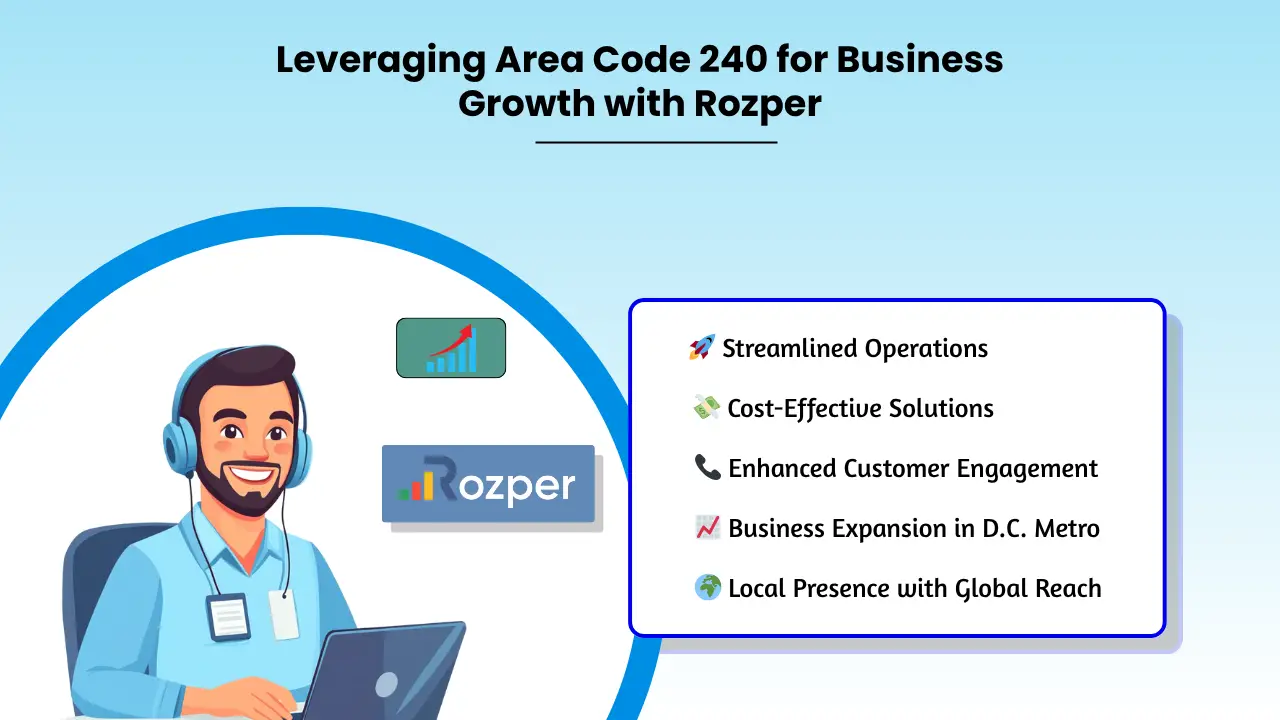
Rozper is one option here: 99.999% uptime and 150+ countries on one platform, so a single account covers your Maryland line and any overseas work.
- New 240 numbers: live in minutes, with no office in the state
- Porting: move your current 240 number across without dropping a call
- Features: auto-attendants, forwarding, voicemail-to-email, recording, and analytics from one dashboard
Getting Set Up
There are two paths, and they run on different clocks.
A new number goes live the same day. Pick one from available stock, set your routing and business hours, and start taking calls. Nothing ships, and no engineer visits.
Porting an existing number takes longer, because your current carrier has to release it. Budget one to four weeks. Three things keep it on track: match the billing name and service address to the old carrier's records exactly, clear any balance before you file, and leave the old line active until the port lands.
Plenty of firms do both. They port the main number customers already dial, then add fresh 240 numbers for new teams or campaigns. Once routing is software, a number per campaign costs almost nothing to run.
Features That Earn Their Keep
- CRM sync: every call logs against the right contact, so your team has the history before they say hello
- Analytics: volume, duration, agent results, and peak hours, used to plan staffing and judge campaigns
- One platform: voice, video, and messaging together instead of three tools
By Industry
- Retail: route calls across branches so service stays consistent
- Healthcare: run appointment and patient lines with compliant handling, voicemail, and recording
- Professional services: law, property, and consulting firms gain a local Maryland number that reads as commitment
- Startups: enterprise features without enterprise overhead
Comparing Your Options
| Feature | Traditional Landline | Basic VoIP Service | Rozper Advanced VoIP |
|---|---|---|---|
| Local Number Availability | Limited | Yes | Yes |
| Geographic Flexibility | No | Partial | Full |
| Call Management | Basic | Standard | Advanced |
| Scalability | Low | Medium | High |
| CRM Integration | No | Limited | Native |
| Setup Complexity | High | Medium | Low |
| Uptime SLA | N/A | Varies | 99.999% |
| Cost | High | Medium | Competitive |
| Reliability | Good | Good | Excellent |
| Feature Updates | Rare | Occasional | Continuous |
Spotting and Stopping Scams
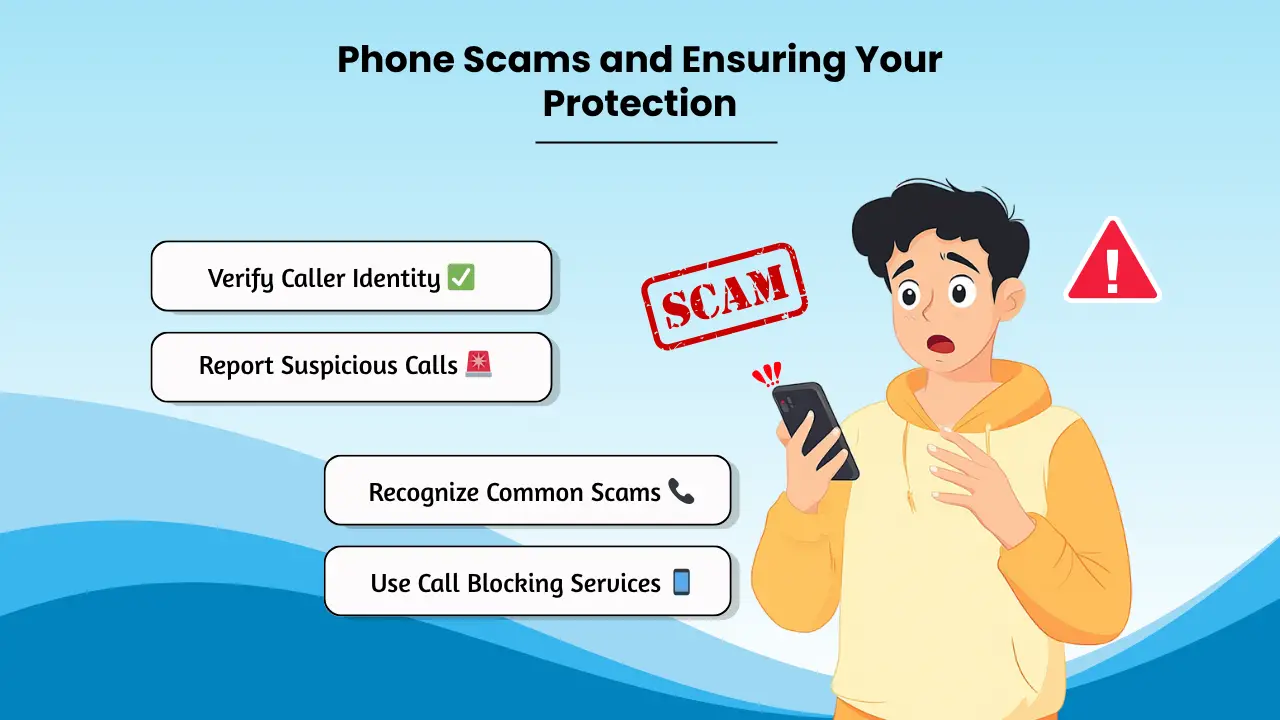
Four Common Tricks
- Caller ID spoofing: the screen shows a local number, or the name of a bank or state office
- Impersonation: the caller claims to be a state official, a utility, or tech support, and pushes hard for money or data
- Phishing by phone: the caller invents a problem with your account to pull out card or bank details
- Fake tech support: an unexpected call about a virus on your computer, aiming for remote access or a bogus fee
How to Stay Safe
- Be skeptical. Treat unexpected calls with care, above all any that demand you act now. If it feels wrong, it probably is.
- Verify yourself. Hang up and call the organisation back on a number from their website or your last statement. Never the number the caller gives you.
- Share nothing. No Social Security number, bank details, card numbers, or passwords over the phone unless you placed the call and know exactly who answered.
- Block and report. Use the blocking tools in your carrier or VoIP platform, and report the call to the Federal Trade Commission.
Conclusion
The 240 area code is more than three digits. It is the way into a large, busy slice of Maryland, from Gaithersburg and Rockville to Frederick and Hagerstown.
It began as relief for a code running out of numbers, and it now carries a serious share of the state's calls. For a business, a 240 number is a cheap, fast way to look local in one of the Mid-Atlantic's strongest markets.
FAQs
What is area code 240, and how does it relate to 301 and 227?
It is a Maryland code that overlays the original 301, with 227 added later. All three cover identical ground. Overlays keep numbers available without splitting communities or changing anyone's number. Every local call in the group needs ten digits.
Which parts of Maryland does 240 cover?
Western, central, and southern Maryland. That means Washington, Allegany, and part of Garrett in the west; Montgomery and Prince George's around D.C.; and Charles, Calvert, and St. Mary's in the south. Frederick County is a large piece too.
What time zone is the 240 area code?
Eastern. That is UTC-5 in fall and winter, and UTC-4 in spring and summer under daylight saving. Worth checking before you schedule calls with Maryland contacts.
Can I keep my 240 number if I switch providers?
Yes. The FCC requires portability, so your number moves with you. Porting to a VoIP platform also brings auto-attendants, forwarding, voicemail-to-email, recording, analytics, and CRM sync, with voice, video, and messaging in one place.
Is 240 a scam area code?
No. It is a normal Maryland code. Scammers can spoof any code to look local, so never trust caller ID alone. Verify with a number you looked up yourself, share nothing sensitive, use call blocking, and report the call to the Federal Trade Commission.
Do I need an office in Maryland to get a 240 number?
No. A virtual 240 number routes to your team wherever they sit, on any device with a connection. Callers see a Maryland number and reach whoever is on duty, which is the whole appeal for firms serving the D.C. suburbs from elsewhere.
How long does porting a 240 number take?
Usually one to four weeks, set by how fast your current carrier releases it. Keep the old line active until it completes, and make sure the billing name and address match their records or the request bounces back.
Will callers know 240 is not 301?
Not in any way that matters. Both codes cover the same ground and read as equally local to anyone in the region. Since every local call there needs ten digits anyway, the code you hold makes no practical difference.
A 240 number is a two-minute decision with a long-term return.
Get your Maryland number → rozper.com
Call forwarding · Voicemail-to-email · CRM sync · AI transcription · 24/7 expert support