Introduction
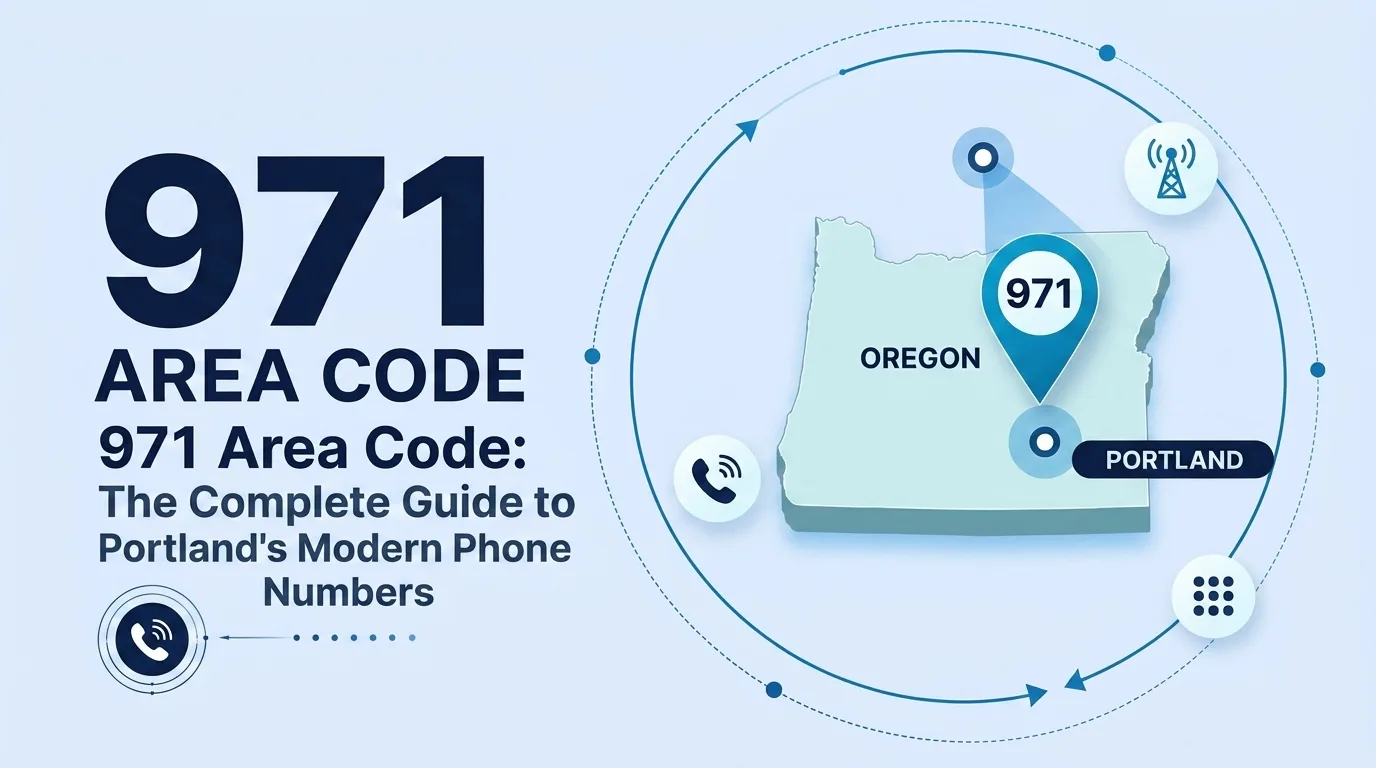
The 971 area code covers Portland and the surrounding metro, and this guide explains what makes this code different from the older 503 numbers sharing the same region. This topic matters because the 971 area code was Oregon's very first overlay, and it quietly became the default number for the wave of businesses that grew up alongside Portland's modern economy. You will learn exactly where 971 reaches, why it exists alongside 503, how to catch a spoofed call, and why so many growth-era Portland businesses ended up with a 971 line by default. Stick with this guide and you will understand Portland's numbering system better than most people who dial a 971 number every day.
Key Takeaways:
- The 971 area code covers the same 10 counties as area code 503 across northwest Oregon.
- Area code 971 launched in 1999 as Oregon's first-ever area code overlay.
- Two coastal counties, Clatsop and Tillamook, did not join the 971 overlay until 2008.
- A 971 number often signals a business that grew up during Portland's modern tech and startup boom.
Where Does the 971 Area Code Reach in the Portland Metro?
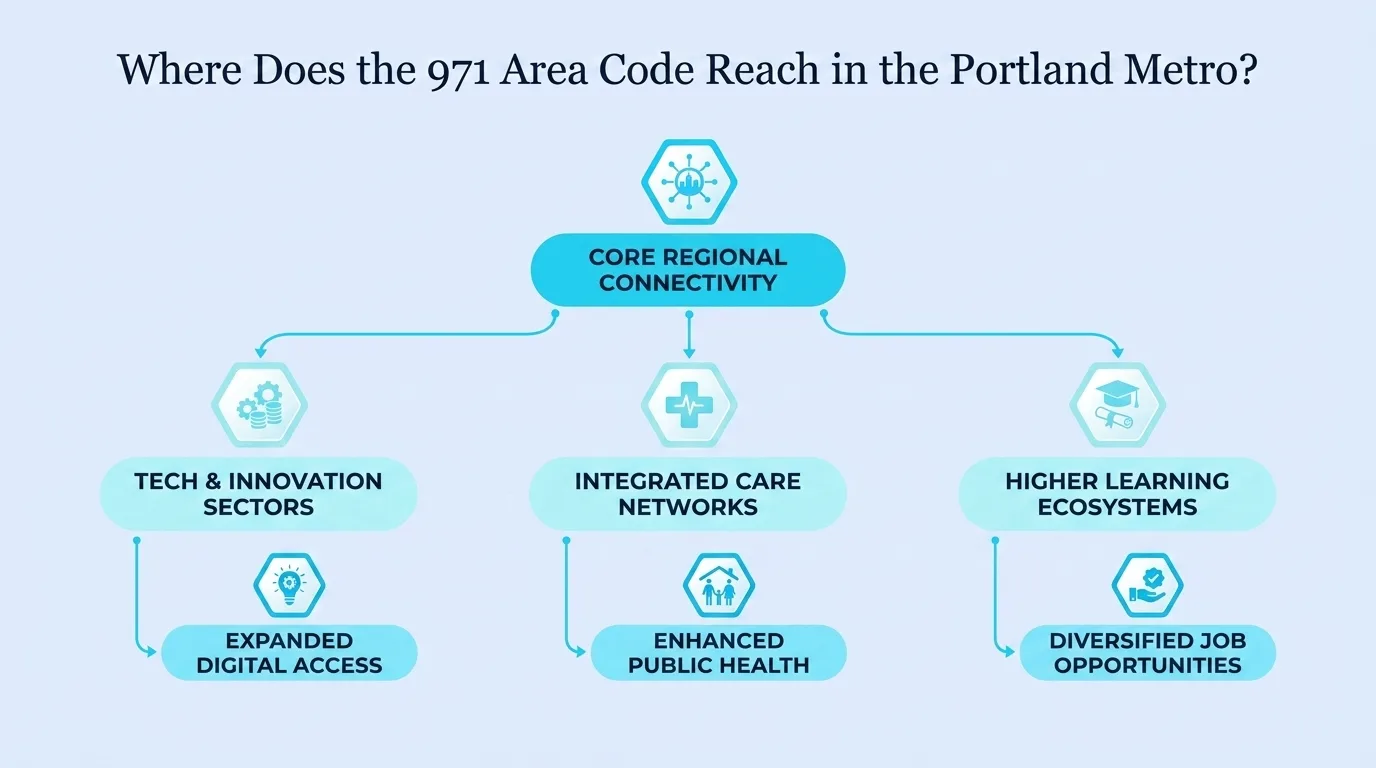
Area code 971 covers 10 counties across northwest Oregon, sharing its entire footprint with area code 503. Portland is by far the largest city in the region, followed by Salem and Gresham, with Multnomah County holding the biggest share of the population. The entire footprint sits in Pacific Time, so scheduling calls across the region never requires a time zone adjustment.
- Portland, the state's largest city and a major tech and business hub
- Salem, the state capital and a key government center
- Gresham, Hillsboro, and Beaverton, anchoring the western suburbs
- Lake Oswego and Tigard, established communities south of Portland
- Astoria and Tillamook, smaller cities near the Oregon coast
One Shared Pool for the Whole Metro
Every one of these cities and the smaller towns around them draw from the exact same numbering pool as 503, so a 971 area code alone won't tell you which Portland neighborhood a caller lives in. That shared pool exists because Oregon chose an overlay instead of forcing a disruptive second split. Anyone researching area code 971 Oregon listings today will find the exact same geography as its older counterpart, just a different activation date.
Oregon's First-Ever Overlay: How 971 Changed Portland Dialing in 1999
By the late 1990s, cell phones and pagers were spreading through the Portland metro faster than regulators had planned for, and the numbers left within area code 503 started running low. Rather than force another statewide split, Oregon approved 971 as an overlay on July 1, 1999, the very first time the state used this approach anywhere. Every existing 503 customer kept their number exactly as it was, while every new line received a 971 area code instead.
Ten-digit dialing became mandatory across the region soon after, first scheduled for January 2000 and later pushed to October 1, 2000 to give residents more time to adjust. That single overlay became the model Oregon followed again eleven years later when the 458 area code joined 541 in the rest of the state, proving the approach could scale to a much larger and more rural region too.
Two Coastal Counties Waited Nine Years to Join the 971 Overlay
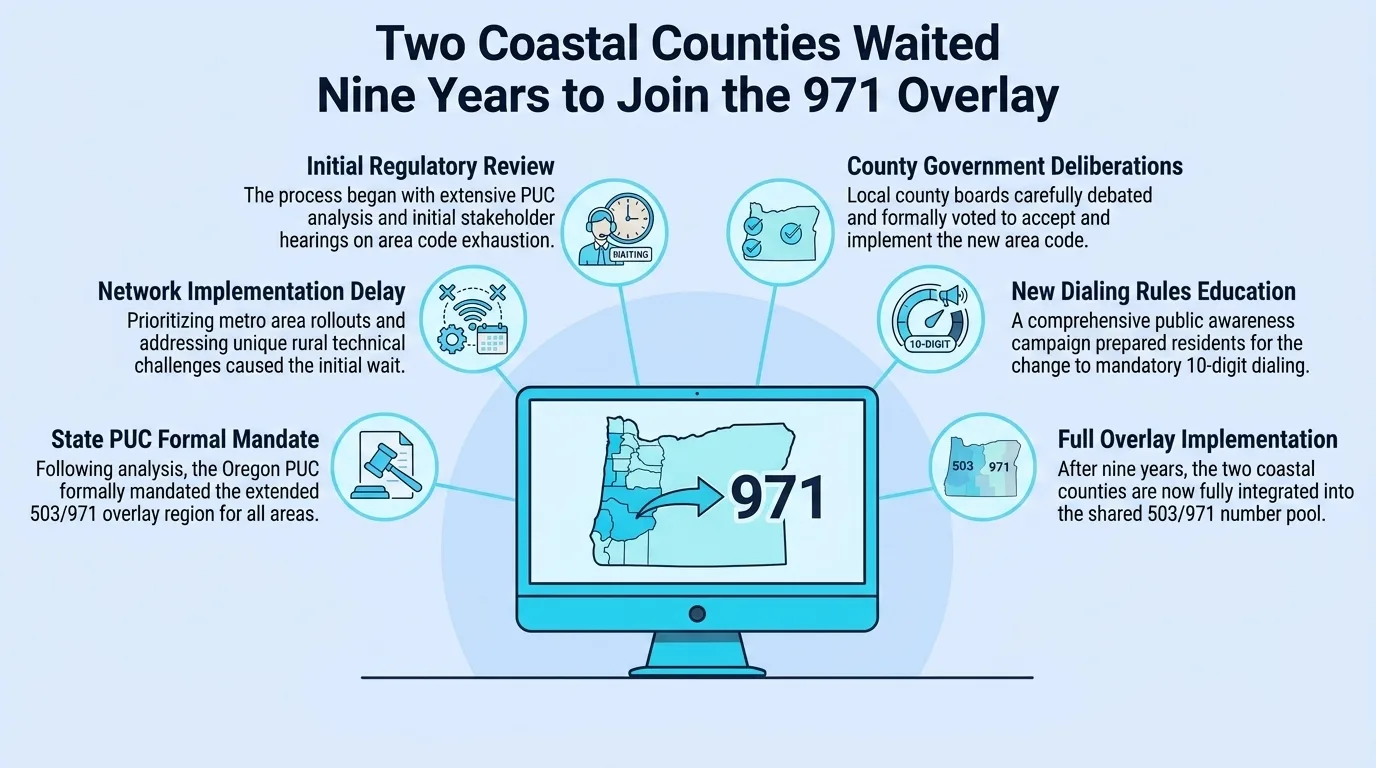
Clatsop and Tillamook counties, both along the Oregon coast, were left out of the original 971 overlay when it launched in 1999. Regulators determined those coastal counties did not need the extra numbers yet, so residents there kept dialing seven digits for years after Portland switched to ten. That exception finally ended on April 27, 2008, when both counties joined the shared 503 and 971 numbering plan.
- Clatsop and Tillamook counties were excluded from the 1999 overlay at first.
- Residents there continued using seven-digit dialing for almost a decade.
- The coastal counties officially joined the plan on April 27, 2008.
- Every part of the region now follows the same ten-digit dialing rule.
971 or 503? What Actually Decides Which Number You Get
Both codes cover the exact same 10 counties, so location never determines which one a customer receives. The real difference comes down entirely to timing, since 971 wasn't assigned until the overlay began in 1999.
- 503: Assigned to any phone line active before July 1999.
- 971: Assigned to phone lines activated on or after that date.
- Both require the full ten digits for every local call, no exceptions.
- Neither code hints at which Portland neighborhood or suburb a caller lives in.
Businesses founded after 1999 are far more likely to carry a 971 area code than an older 503 line, simply because of when they signed up for service. Neither timing says anything about how well a company treats its customers today.
Why Portland's Growth-Era Businesses Lean on a 971 Number
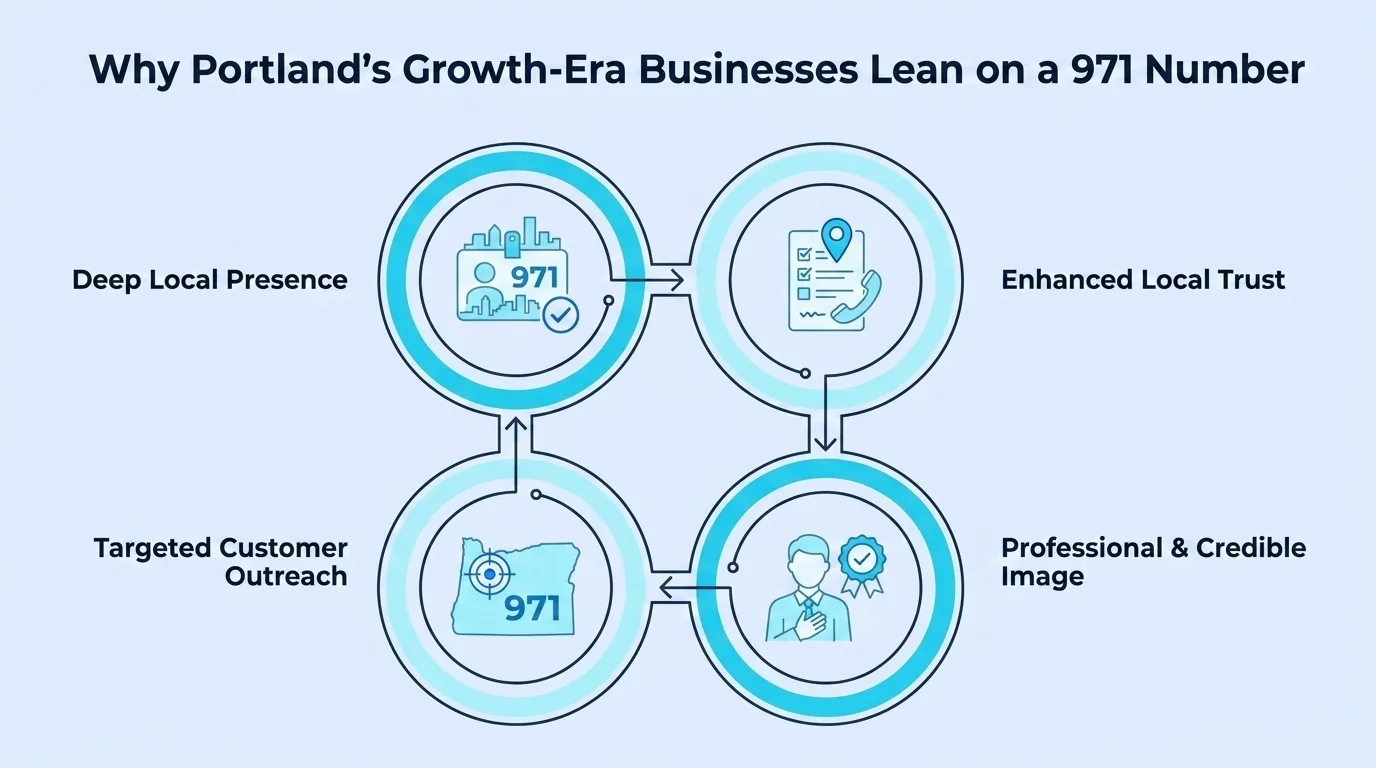
Portland's tech and startup scene largely grew up after 1999, which means a huge share of the city's newer companies picked up a 971 area code by default rather than by choice. That timing quietly links the code to Portland's modern growth economy, from software startups to newer retail chains. Businesses that understand this connection can use it to their advantage instead of treating the number as an afterthought.
- Many Portland startups founded after 2000 carry 971 numbers automatically.
- Newer retail and service businesses often default to 971 lines today.
- A 971 number doesn't signal less trust, just a different founding era than 503.
- What matters most to customers is still how quickly and reliably a call gets answered.
- Growth-stage companies often use area code 971 simply because that's what was available when they signed up.
Rozper helps growing Portland businesses make the most of that reputation, whether the number behind their brand is a newer 971 line or an older 503 one. Anyone comparing this pattern against nearby Oregon area codes will notice the same overlay logic has repeated itself across other fast-growing parts of the state.
That 971 Caller Might Not Be Calling From Portland At All
Scammers frequently spoof 971 numbers because the code feels current and familiar to people across the Portland metro. If a caller claiming to represent a utility company or government office pressures you for immediate payment through gift cards or wire transfers, treat that as a serious warning sign. Legitimate organizations across Oregon never demand instant, untraceable payment over the phone.
Steps To Confirm A Real 971 Caller
Taking a moment before reacting stops most scam attempts before they succeed.
- Search the full ten-digit number online before returning the call.
- Contact the organization directly through its official website or listed number.
- Never share financial or personal details with an unexpected caller.
- Read up on stopping spam calls before they cost your business a real customer.
Dialing Mistakes That Still Confuse New Portland Transplants
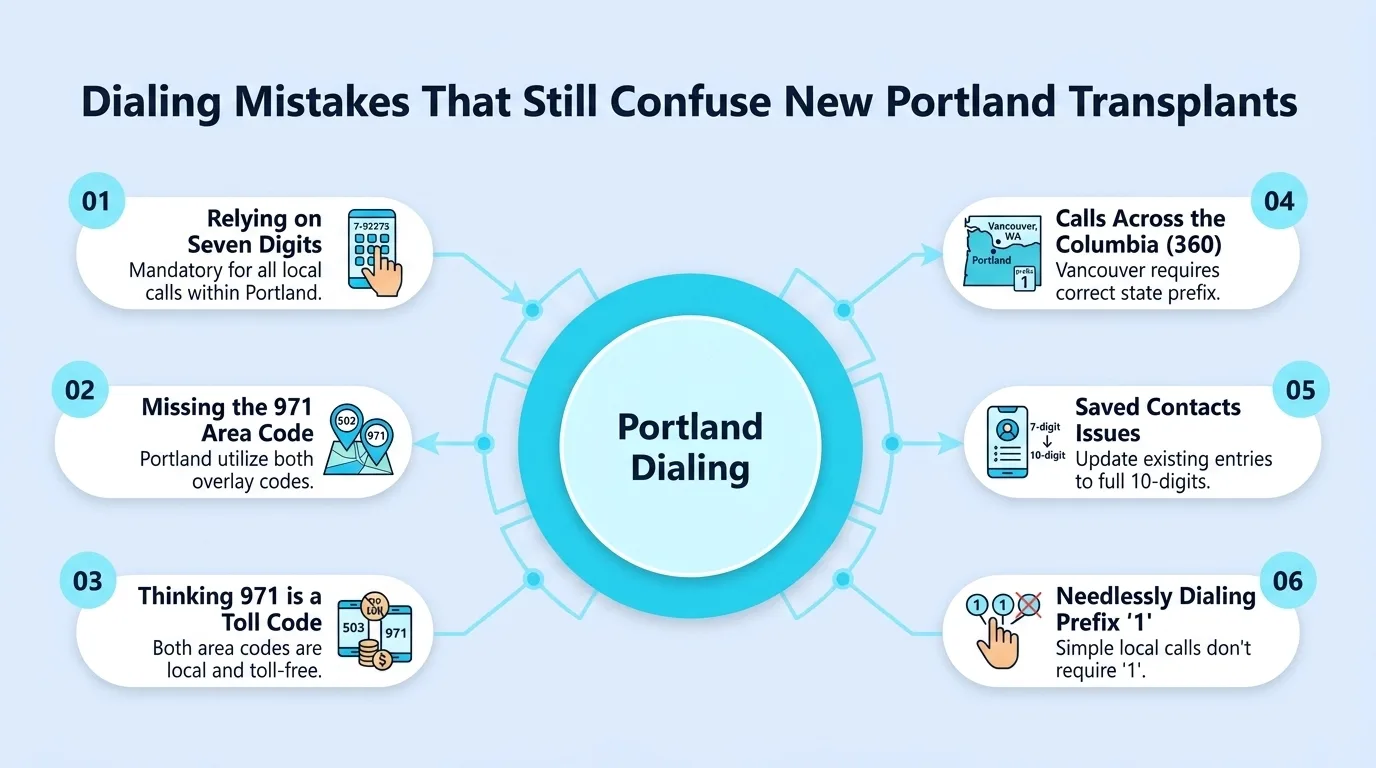
Plenty of newcomers to Portland assume a local number works the same way it did back home, and that assumption causes real friction fast. These small mistakes lead to failed calls and missed appointments more often than people expect.
Dropping the area code entirely remains one of the most common errors among new residents who are not used to overlay dialing. Some callers also assume every Portland business still uses a 971 line, when many longtime companies still carry their original 503 numbers. Saved contacts stored without the full area code often fail to autodial correctly on newer phones. According to guidelines, skipping the area code in an overlay region like this one will always produce a failed call rather than a warning to try again.
Conclusion
The 971 area code has shared its footprint with 503 across the Portland metro since 1999, standing as Oregon's first overlay and the model every later overlay in the state has followed. Understanding why coastal counties joined the plan nine years late, how to catch a spoofed call, and why so many growth-era businesses default to this number helps residents and business owners navigate the system with confidence. Ten-digit dialing and the timing-based difference between 971 and 503 matter for anyone living or working across the region. The 971 area code remains more than a newer prefix; it's a marker of the Portland economy that grew up alongside it.
Businesses that want to make the most of that connection need a reliable system behind the number, not just a modern-sounding prefix. Rozper gives growing teams the call routing and follow-up tools to turn a 971 presence into consistent, organized customer conversations. As Portland and the surrounding valley continue to grow, the businesses that answer every call well are the ones customers remember most.
FAQs
What state is the 971 area code in?
The 971 area code is located entirely within Oregon, covering the northwest part of the state. It shares its footprint with the older 503 code.
Where exactly does area code 971 cover?
It covers 10 counties in northwest Oregon, including Portland, Salem, Gresham, and Hillsboro. Coastal towns like Astoria and Tillamook also draw from the same numbering pool.
When was the 971 area code created?
It launched on July 1, 1999, as Oregon's first-ever area code overlay. The underlying 503 code it overlays dates back to 1947.
How do I dial a 971 number correctly?
You must dial all ten digits, including the area code, for every local call. Seven-digit dialing has not worked in this region since October 2000.
Is it safe to answer calls from a 971 number?
Not always, since scammers often spoof familiar local numbers to appear more trustworthy. Confirm any unusual request before sharing personal or financial information.
What time zone does the 971 area code use?
The entire 971 region operates on Pacific Time year-round. This applies consistently across all 10 counties it shares with 503.
Does having a 971 number cost more than a 503 number?
No, standard phone service costs the same regardless of which overlay code your line receives. Businesses should compare their phone plans rather than assume either code carries extra fees.
Does a newer area code 971 Oregon number put a business at a disadvantage?
No, a 971 number simply reflects a business founded after 1999 rather than one lacking history. What actually builds customer trust is fast, organized call handling, not the code itself.