Introduction
If a call from an 803 number has shown up on your phone, you've likely wondered where it originated — this prefix dates to the earliest days of the modern phone system and now shares its territory with the newer 839 overlay. This guide breaks down where the number comes from, which communities it reaches, and what it takes to claim one today.
What Is the 803 Area Code?
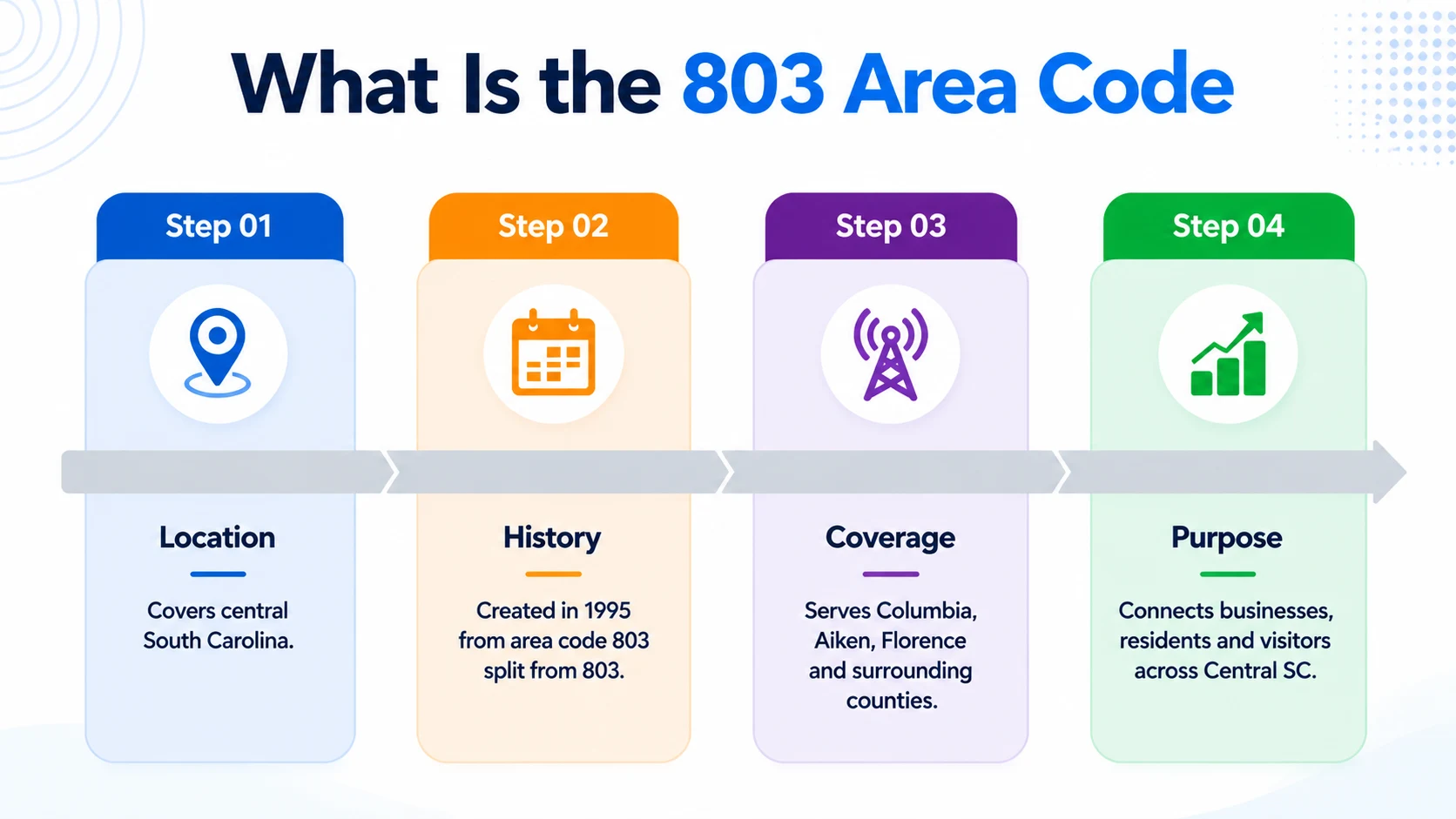
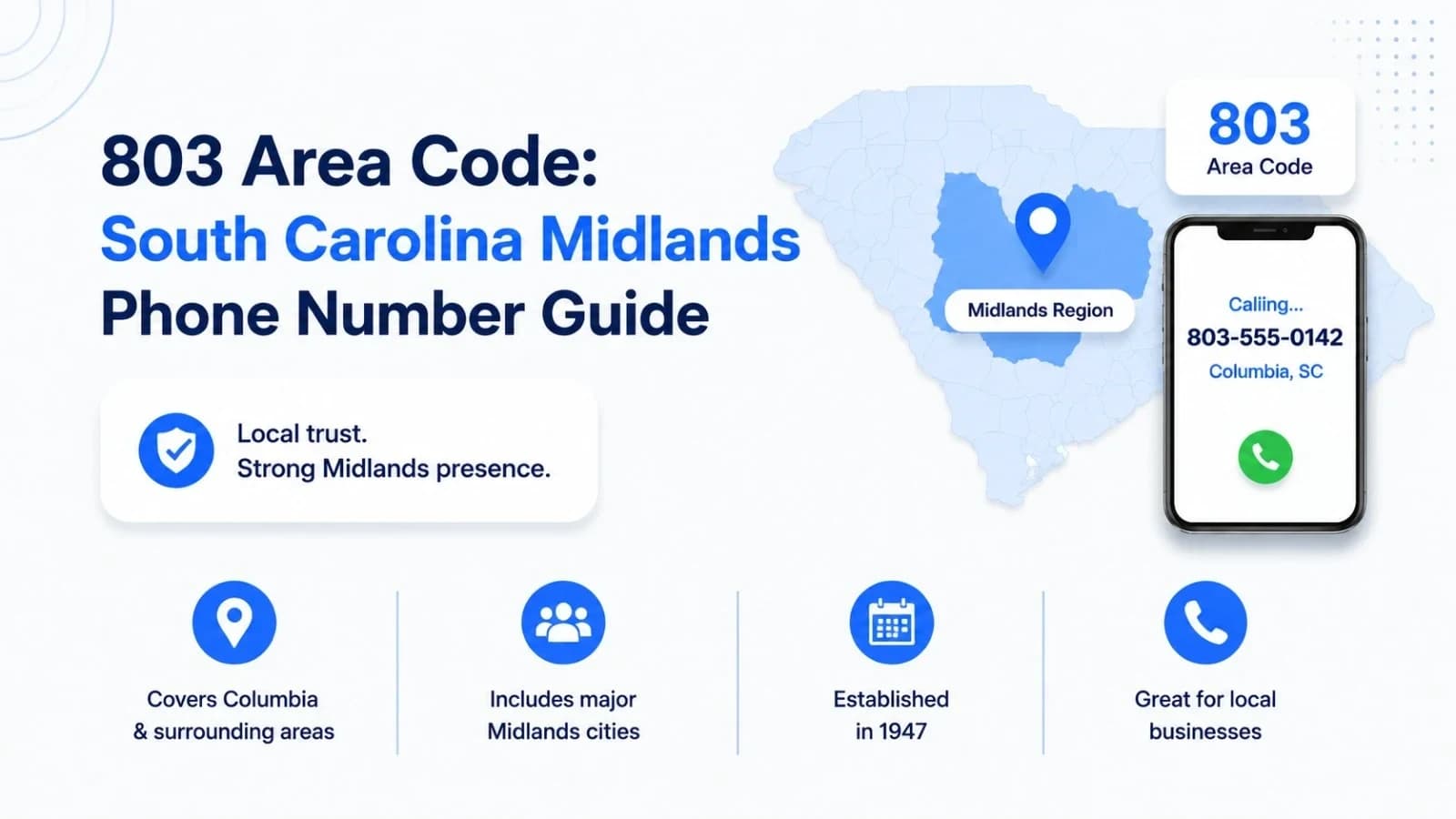
The 803 area code is one of the original area codes assigned when the North American Numbering Plan launched in 1947. It originally covered the entire state of South Carolina before decades of growth forced a series of splits, eventually leaving the 803 area code to serve the state's Midlands region, centered on the capital city of Columbia.
Since those early splits, area code 803 has remained the standard local prefix for Columbia and the surrounding Midlands counties. It later gained the 839 overlay to handle continued growth, meaning newer numbers in the same region may carry a different prefix while still serving the same communities.
Which Cities Does the 803 Area Code Cover?
Area code 803 spans a wide swath of central South Carolina, stretching from the Georgia border in the west toward the state's north-central counties. Major cities and towns using this prefix include:
- Columbia — South Carolina's capital and the largest city in the region
- Rock Hill — a fast-growing city near the North Carolina border
- Aiken — known for its equestrian culture and proximity to Augusta, Georgia
- Sumter — home to Shaw Air Force Base and a strong agricultural economy
- Camden, Orangeburg, and Lancaster — smaller historic communities across the Midlands
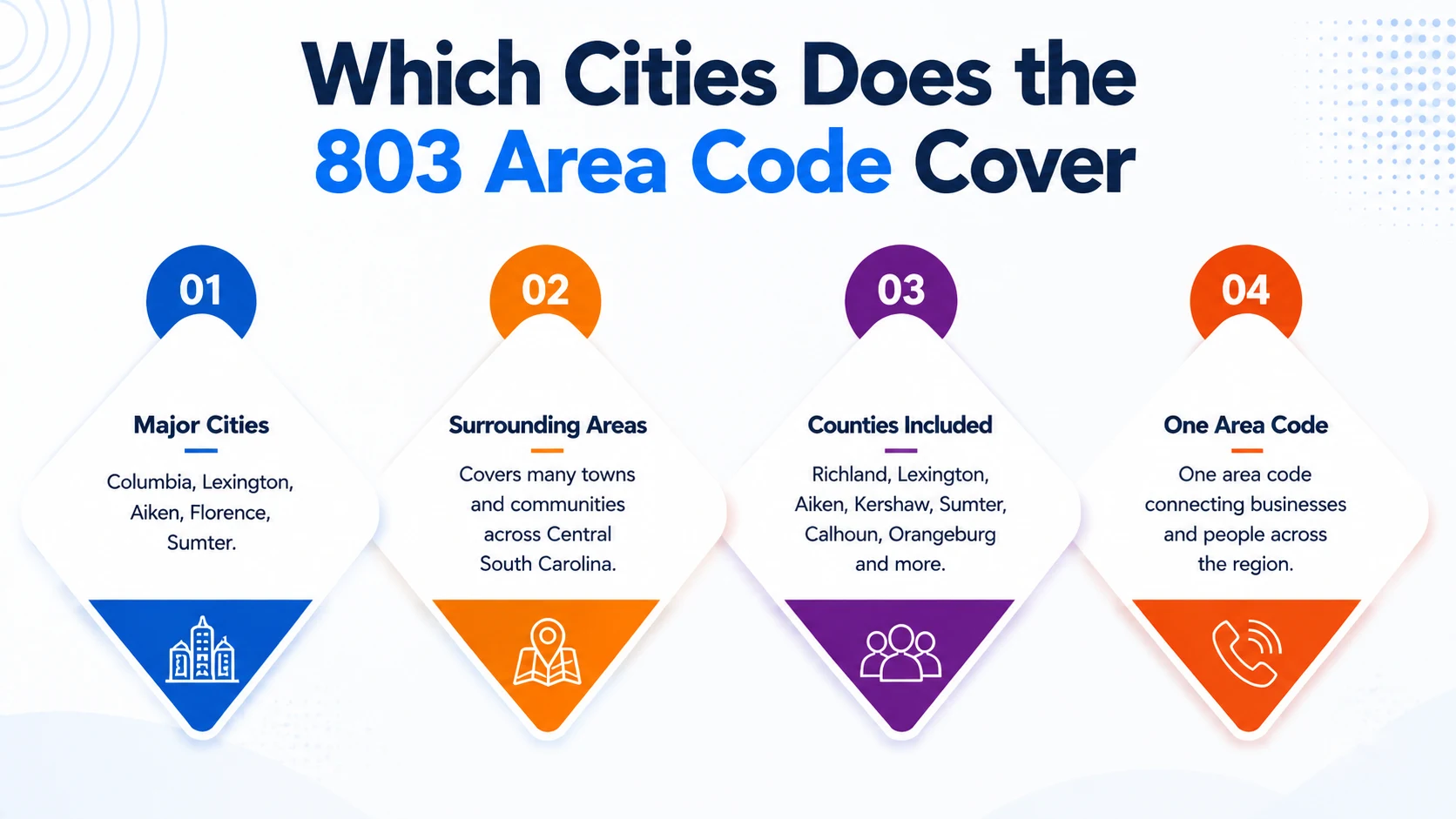
Anyone dialing a number with this prefix is almost certainly reaching someone somewhere in this central South Carolina region, whether it's a state government office in Columbia, a horse farm outside Aiken, or a small business in Rock Hill.
Why Local Area Codes Still Matter
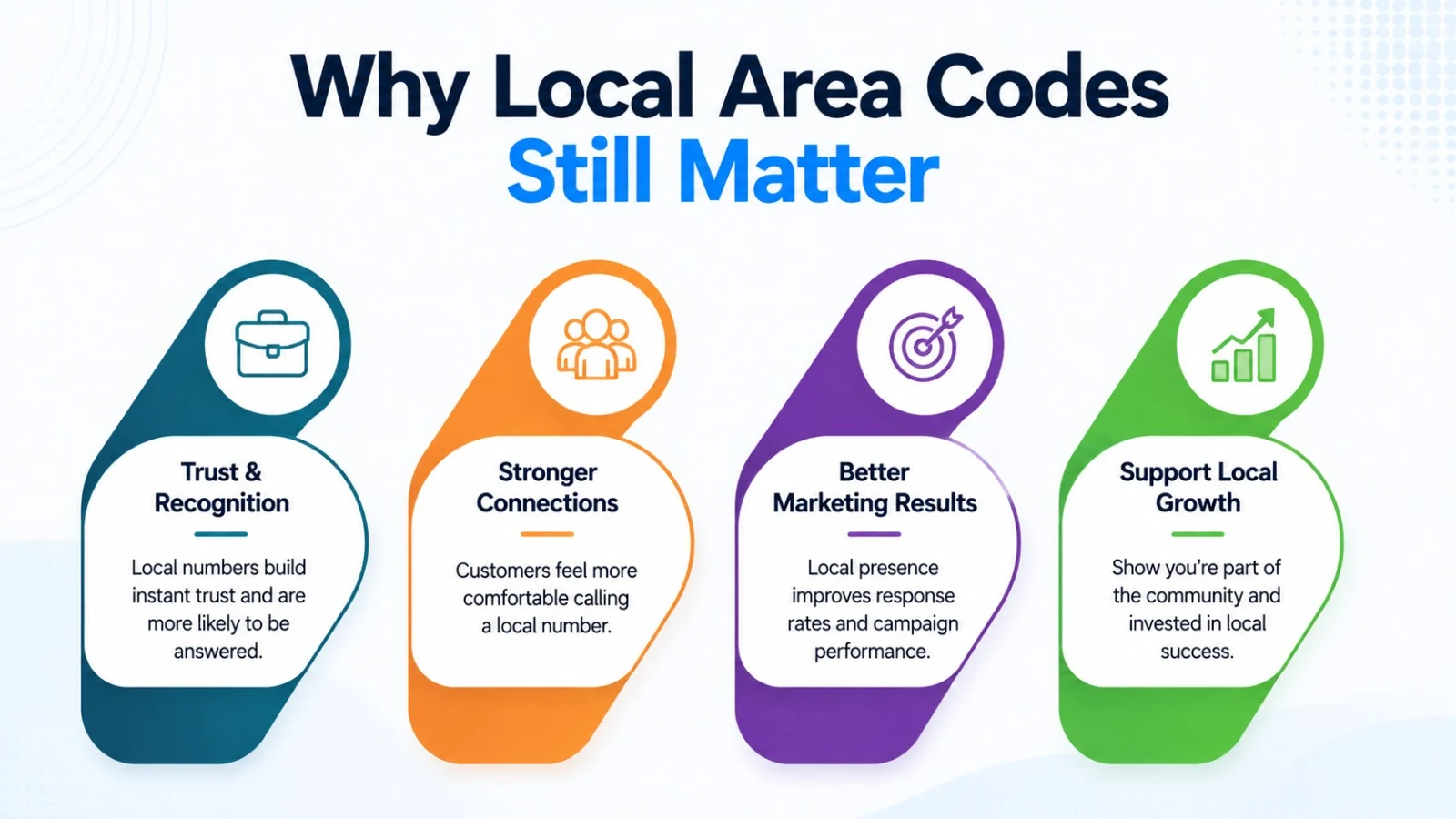
It's tempting to think area codes stopped mattering once cell phones untethered numbers from physical location. In practice, the opposite has held true. Consumer trust research consistently shows that people answer and return calls from familiar regional prefixes far more often than from numbers that look unfamiliar or out of place. For a business trying to reach customers across the Midlands, having a locally matched number signals local presence immediately — no explanation required.
That local signal also shapes call center performance. Teams handling both inbound support and outbound sales calls have found that geographically matched caller ID numbers see meaningfully higher pickup rates than mismatched ones, particularly on a customer's first interaction with a brand.
The Midlands Economy Behind the Numbers
The region covered by area code 803 has grown steadily thanks to Columbia's role as both the state capital and home to the University of South Carolina, which together anchor a stable base of government, education, and healthcare employment. Rock Hill has added significant momentum too, drawing corporate relocations and new residents from the nearby Charlotte metro area just across the state line.
Manufacturing and logistics play a role as well. Companies have set up distribution and production facilities throughout the Midlands, drawing on the region's central location between Charlotte, Atlanta, and the South Carolina coast. That growth has translated into steady demand for local service providers — contractors, healthcare practices, logistics firms, and small retailers alike, all of whom benefit from a phone number that visibly matches the community they serve.
For companies without a physical office anywhere in South Carolina, this creates a practical challenge: how do you sound local without actually being there? That's exactly the gap virtual number platforms were built to close, letting a business answer calls, run marketing campaigns, and route customer support through a number that fits the region it wants to serve.
How to Get an 803 Area Code Number
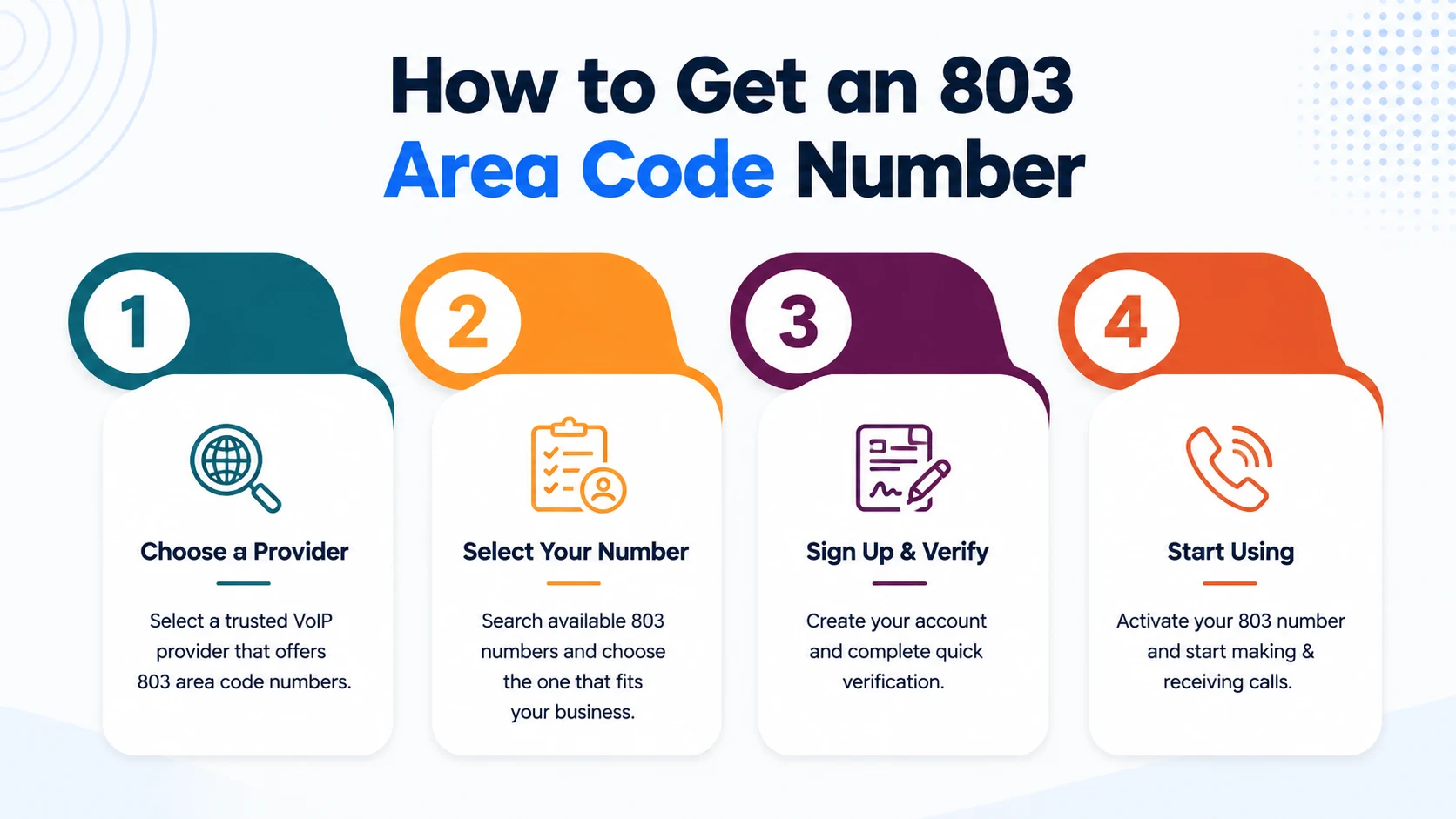
There are a few practical paths to acquiring a number in this prefix:
- Traditional landline — Order service directly through a regional phone carrier, though this option is increasingly rare and expensive to maintain.
- Mobile carrier port — Some wireless providers can assign an 803 area code number if you're physically located in the coverage area, but availability isn't guaranteed.
- Cloud-based virtual numbers — This is the fastest and most flexible route today. A virtual phone number provider lets you claim a local 803 area code number in minutes, without needing a physical address or hardware in South Carolina.
Rozper is one option worth considering here, maintaining 99.999% uptime and coverage in 150+ countries so a single platform can serve both your local Midlands line and any international operations.
For remote teams, e-commerce sellers, or franchises expanding into South Carolina, this kind of setup means customer-facing calls can carry a local Columbia-area number even if every employee is working from somewhere else entirely.
Common Reasons People Search for the 803 Area Code
Most searches around this prefix fall into a handful of categories:
- Unknown callers — checking whether a missed call is legitimate or spam
- Business setup — entrepreneurs establishing a South Carolina-based contact number
- Relocation — new residents wanting to keep a familiar local number
- Verification — confirming that a company claiming to operate in the Midlands actually has a matching phone prefix
Scam calls occasionally spoof legitimate prefixes, including area code 803, to appear trustworthy. If a call seems suspicious, verifying the caller through an official channel before sharing any personal information is always the safer move.
Nearby South Carolina Area Codes Worth Knowing
The Midlands prefix doesn't exist in isolation — it borders the state's other well-established codes. If you're researching numbering plans for a wider South Carolina footprint, it's worth also reviewing the 843 area code covering the coastal Lowcountry to the southeast. Understanding how these codes connect helps businesses plan multi-city local presence across the entire state more efficiently.
Where Area Code Assignments Come From
Area code boundaries aren't set arbitrarily. In the United States, they're coordinated through NANPA, the neutral administrator that manages how prefixes like 803 are created, split, or expanded as population and demand shift over time. That official numbering framework is why this prefix's boundaries stay consistent no matter which carrier or provider assigns the individual number.
How to Get a Business Phone Number from Rozper
Rozper provisions local, international, and toll-free numbers across 150+ countries, backed by 99.999% uptime and CRM-ready integrations with Salesforce, HubSpot, and Zoho. Support comes from a real 24/7 team rather than a bot tree, which matters most the day a routing rule needs fixing fast. Getting a matching 803 area code number set up takes only a handful of steps.
- Visit rozper.com and start a no-pressure conversation about your goals.
- Share your business email and a bit about your call volume and markets.
- Get a custom quote — the plan isn't fixed, so you only pay for what you use.
- Choose your number type: local, international, toll-free, or a second number for privacy.
- Pick your country or area code from the 150+ countries in coverage, including 803.
- Set up call forwarding, call recording, and CRM integration with the onboarding team.
- Port your existing number over with minimal disruption and start taking calls.
Setting Up Call Routing for a Growing Midlands Team
A single 803 number rarely stays a single line for long once a business starts booking real volume. Modern cloud systems let one number ring several devices at once, or hand off automatically to a different team member after a set number of rings. Teams calling into the same Midlands footprint, whether the target is Columbia or Rock Hill, can route every inbound call through one shared queue instead of juggling separate lines. The same setup carries over cleanly for teams also fielding calls from the 864 area code closer to the Upstate, since every inbound number can carry its own tag inside a CRM dashboard regardless of which prefix it came in on.
Common Misconceptions About the 803 Area Code
Some assume the newer 839 overlay is somehow less legitimate than 803, but both carry equal standing under the same numbering plan — the only difference is which pool a specific line was drawn from. Porting is another common mix-up: most carriers let a business keep its existing digits while switching providers, so confirming porting support before signing anything avoids a needless renumbering headache. A final myth worth retiring is that overlay codes cost more to call — 803 and 839 both bill at standard local and long-distance rates, with no premium attached to either one.
Conclusion
The 803 area code is more than digits — it's the connective thread across Columbia, Rock Hill, Aiken, Sumter, and the historic Midlands communities between them. Whether identifying an unfamiliar caller or planning a local presence across central South Carolina, understanding this prefix makes the process far less confusing, and virtual number providers have made claiming a local number simpler than ever. Every step of that process still runs through the Federal Communications Commission's numbering framework, the same oversight that has guided 803's growth since 1947.
FAQs
Where is the 803 area code located?
The 803 area code covers South Carolina's Midlands region, including Columbia, Rock Hill, Aiken, and Sumter.
Is this South Carolina prefix a scam number?
Not inherently. Like any prefix, it can be spoofed by scammers, but the vast majority of 803 numbers belong to real Midlands residents and businesses.
Can I get an 803 number if I don't live in South Carolina?
Yes. Virtual phone number providers let you activate a local 803 number remotely, without needing a physical South Carolina address.
What area codes border the 803 region?
The 803 area code sits between 864 to the northwest and the 843 area code to the southeast, covering the rest of South Carolina.
How old is the 803 area code?
It dates back to 1947, when it was one of the original area codes created under the North American Numbering Plan.
Do I need to dial 10 digits for local calls in this region?
Yes, because 803 shares its territory with the 839 overlay, every local call requires the full ten-digit number. This applies even when calling a neighbor with the same three-digit prefix.
What time zone does the 803 area code use?
The entire region operates on Eastern Time, matching the rest of South Carolina and the broader Southeast it sits within.
How do I get a business phone number from Rozper for this area code?
Visit rozper.com, share your business email and call volume, and get a custom quote for your number. The Rozper team provisions the number, sets up CRM integration, and ports your existing digits if needed.