Introduction
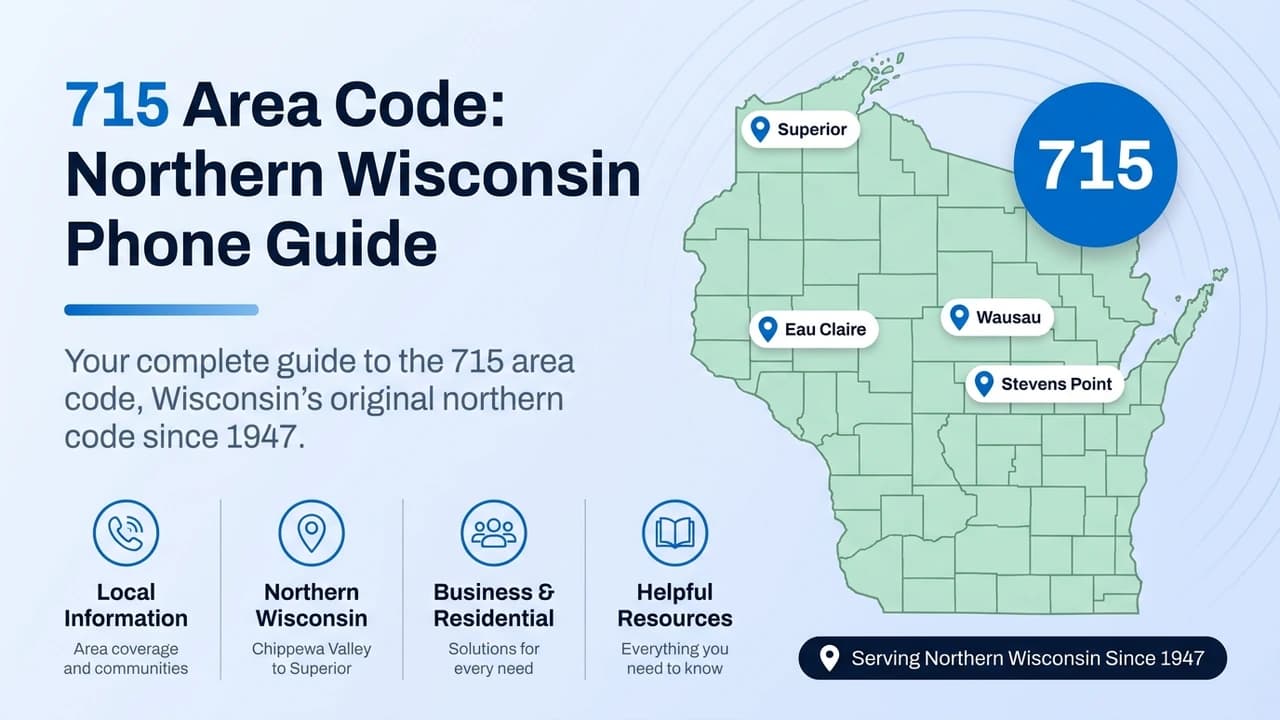
The 715 area code covers the northern and western portions of Wisconsin, reaching from the St. Croix River to the Michigan border and north to Lake Superior. Wisconsin received only two codes when the national numbering map was drawn in 1947, and the 715 area code is the one that still covers roughly half the state today. This guide maps the counties and cities it serves, explains what happened when relief finally arrived in 2010, sets out the ten-digit dialing rules, and shows how to judge a suspicious call. The story of why this code held its ground says a great deal about the region it serves.
Key Takeaways:
- The 715 area code has served northern Wisconsin continuously since 1947.
- Its 1947 twin was carved down three times, while this code kept its territory.
- Relief came in 2010 as an overlay, so nobody had to change their number.
- The region runs on Central Time and requires ten digits for every local call.
Two Codes, Two Very Different Fates
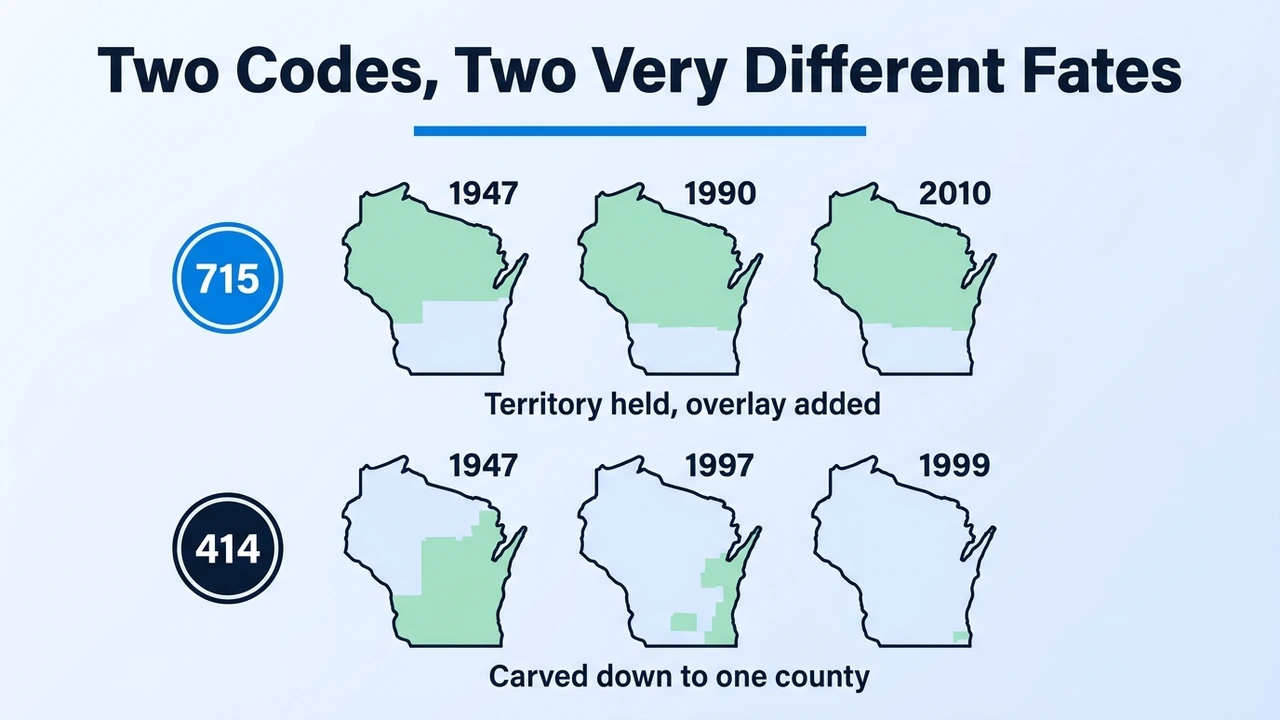
When the first national numbering plan was published, Wisconsin was divided into just two territories. One took the populous southeast, while the 715 area code took everything north and west of it, and the pair have had strikingly different histories in the decades since. Understanding that divergence explains almost every question people ask about numbering in this half of the state.
- The southern twin surrendered territory three separate times as suburbs grew.
- Today that code covers a single county, while this one still spans dozens.
- Northern Wisconsin's population never concentrated the way the southeast did.
- Land area here is enormous, but subscriber density stayed comparatively low.
- When relief finally became necessary, planners chose an overlay instead of a split.
That contrast is easy to see side by side. The 414 area code was reduced to Milwaukee County alone, whereas area code 715 still stretches across a landmass larger than several entire US states.
From The St. Croix To Michigan
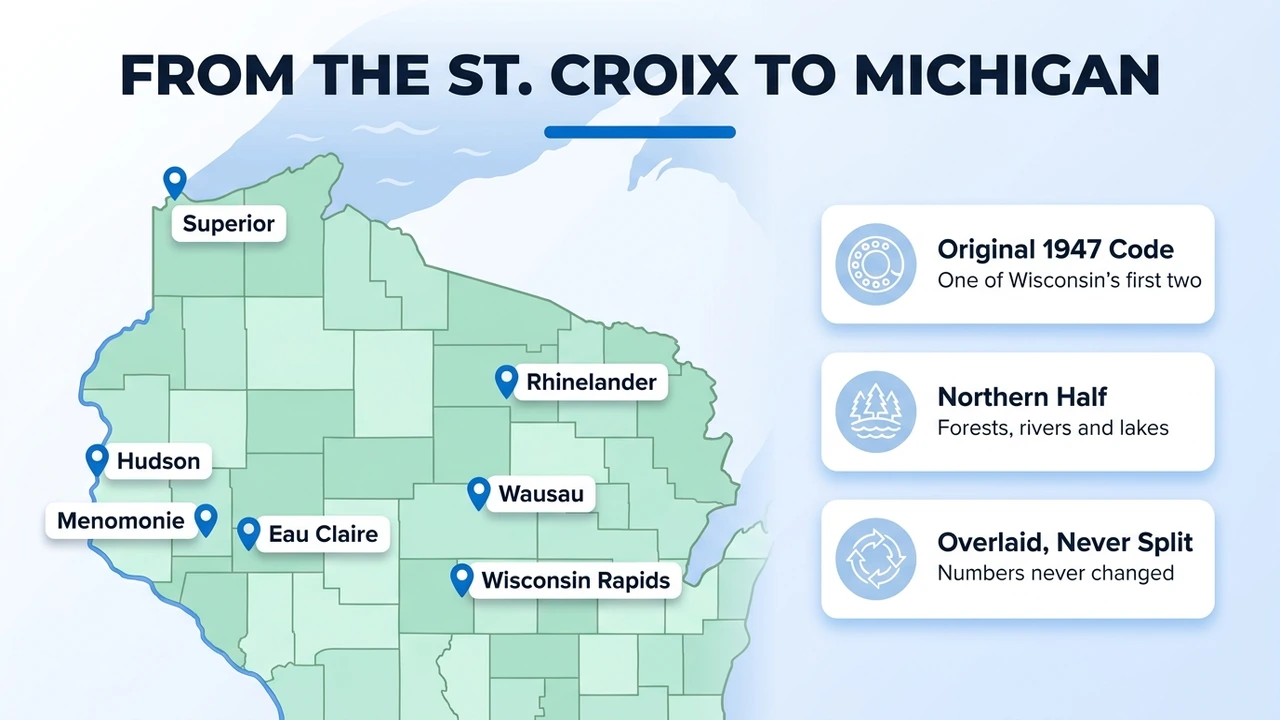
The 715 area code takes in roughly the northern half of Wisconsin, a territory defined far more by forests, rivers, and lakes than by city limits. The western boundary follows the St. Croix River along Minnesota, the northern edge meets the Lake Superior shoreline, and the eastern side runs all the way to the Michigan state line. Within that expanse sit several genuinely distinct regional economies, each with its own rhythm of call traffic.
The valleys and the corridor
The Chippewa Valley around Eau Claire and Menomonie forms the largest population cluster in the western half of the territory. Further east, the central corridor running through Wausau, Marshfield, Wisconsin Rapids, and Stevens Point carries much of the region's manufacturing and healthcare employment. These are the areas where call volume across the 715 area code concentrates most heavily.
The forests and the shoreline
North of that line the character of the region changes entirely. Rhinelander, Minocqua, Park Falls, and Antigo anchor a tourism and timber economy built around lakes and forest rather than factories. Superior and Ashland sit on the Lake Superior shore, closer to Duluth than to any Wisconsin city of comparable size, which gives the far north a distinctly different orientation.
The North Woods Identity Behind Three Digits
Something worth noting that most guides overlook entirely: in Wisconsin, these three digits function as a piece of regional shorthand. People describe themselves as being "from the 715" the way others might name a county, a river valley, or a school. The 715 area code carries cultural weight well beyond anything to do with telecommunications.
- Local businesses build the digits into their names and signage.
- Sports teams, radio stations, and apparel brands use it as a regional badge.
- Residents treat it as a marker of the North Woods rather than a city.
- Newcomers adopt it quickly as a way of signalling they belong.
- That loyalty is precisely why an overlay was preferred over a split.
Planners clearly understood that attachment when relief became unavoidable. Forcing half the region onto an unfamiliar new prefix would have been genuinely unpopular with residents and businesses alike, which is why the 534 area code was layered over the top of the existing territory instead of dividing the map into two separate halves.
How To Dial A 715 Number
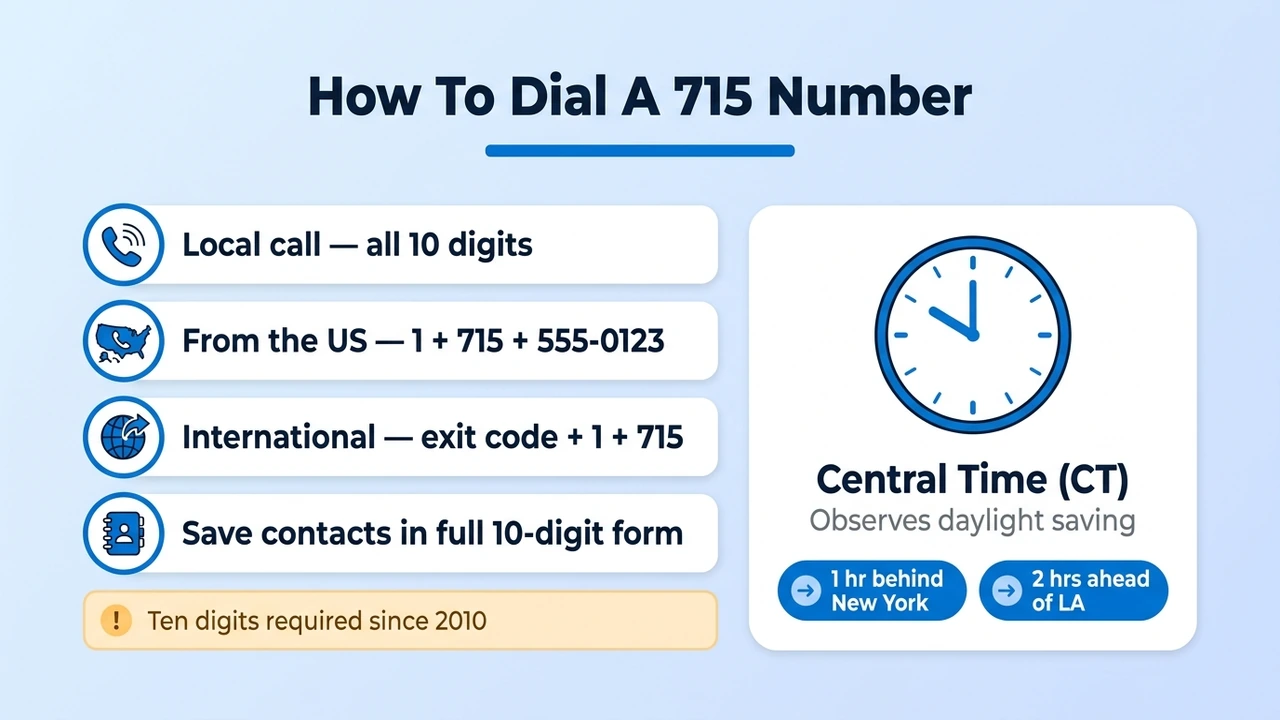
The arrival of a second code in August 2010 changed one practical thing for everyone living here. Because two prefixes now share a single territory, seven digits alone became ambiguous, and ten-digit dialing became mandatory across the entire 715 area code region. Northern Wisconsin sits in the Central Time zone and observes daylight saving each year, putting it one hour behind New York.
- Calling locally inside northern Wisconsin: dial all ten digits, including the area code.
- Calling from elsewhere in the US: dial 1, then 715, then the seven-digit number.
- Calling from abroad: dial your exit code, then country code 1, then 715, then the number.
- Storing contacts: save every northern Wisconsin number in full ten-digit format.
Nationwide, more than eighty codes were later moved onto ten-digit dialing when 988 became the crisis lifeline, though this region had already made that change years earlier. The guidance sets out which areas were affected and why. Cloud platforms such as Rozper reformat stored contacts automatically, so an old seven-digit entry still connects on the first attempt.
One Number for a Region This Size
Serving northern Wisconsin means covering a great deal of ground with relatively few people spread across it. A customer in Hudson and a customer in Rhinelander are separated by several hours of driving, yet both of them expect a business to feel genuinely local to their own town. A single recognizable prefix is one of the very few things that scales cleanly across that entire distance, which is why the 715 area code carries real commercial value.
Why one presence beats many
Running separate numbers for each town splinters your identity and confuses returning callers who cannot recall which line they used. One number spanning the whole region keeps things simple for customers and for your own staff. Rozper lets a distributed team share a single northern Wisconsin identity on every outbound call.
Who depends on it most
Healthcare networks, tourism operators, building contractors, and manufacturers all work across multiple counties here as a matter of everyday routine. Presenting an area code 715 Wisconsin number signals genuine regional presence rather than a distant call centre working from a list. In a region this proud of its own identity, that distinction still earns pickups that an unfamiliar prefix simply would not.
Spotting A Spoofed 715 Call
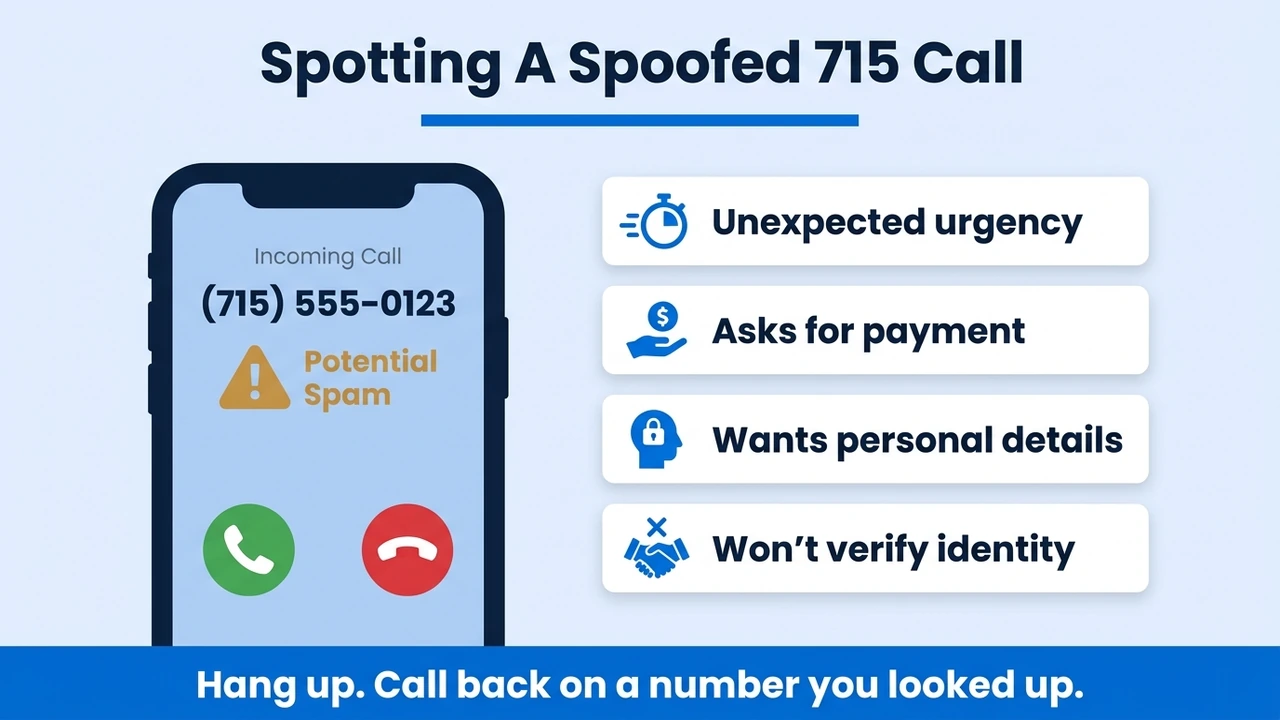
Neighbor spoofing fakes caller ID so an incoming call appears to originate close by, and a well-known regional code makes an appealing disguise. Scammers copy the first six digits of your own number so the call resembles a nearby clinic, contractor, or neighbour. Seeing the 715 area code on your screen proves nothing about where the caller actually is.
- Let unfamiliar numbers go to voicemail, since genuine callers usually leave a message.
- Never confirm personal or banking details to someone who called you first.
- Hang up and dial the organization back on a number you looked up independently.
- Treat manufactured urgency or demands for immediate payment as clear warning signs.
- Report repeated spoofed calls to your carrier and to the appropriate federal regulators.
Long-established businesses across area code 715 keep steady, verifiable numbers for years at a time, which is exactly what makes a spoofed call stand out once you recognise the pattern. Rozper signs outbound traffic with carrier-level authentication so genuine calls stay trusted across the network.
Conclusion
The 715 area code covers northern and western Wisconsin, running from the St. Croix River east to Michigan and north to the Lake Superior shore. It has held that footprint since 1947, while the sibling code assigned alongside it was carved down three times until only one county remained. When relief finally arrived in 2010, regulators chose an overlay so that not a single existing number had to change anywhere in the region. Knowing that history explains both the current map and the ten-digit dialing rule that came with it.
Northern Wisconsin will keep drawing residents, seasonal visitors, and new businesses to its lakes and forests for years to come. Companies serving the region should secure a recognizable local number well before their next busy season begins. Whether you work the Chippewa Valley, the central corridor, or the far northern lakes, the right calling setup makes an enormous territory feel close. Rozper can have that presence running long before your next campaign starts.
FAQs
Where is the 715 area code located?
It covers northern and western Wisconsin, from the St. Croix River east to Michigan and north to Lake Superior. Eau Claire and Wausau are among its largest cities.
What time zone does area code 715 use?
Northern Wisconsin observes Central Time and follows daylight saving each year. That places it one hour behind New York and two hours ahead of Los Angeles.
When was this code created?
It was assigned in 1947 as one of only two original codes covering Wisconsin. The other served the southeastern corner of the state.
Why does northern Wisconsin need ten-digit dialing?
A second code began sharing the same territory in 2010, which made seven digits ambiguous. Every local call now requires the full ten digits.
Which cities use the 715 area code?
Eau Claire, Wausau, Superior, Stevens Point, Marshfield, Wisconsin Rapids, Rhinelander, Menomonie, and Hudson are among the largest. Dozens of smaller towns share it.
Is 534 a different region?
No. It overlays exactly the same territory, so both codes serve identical towns at identical local rates.
Can a 715 number be spoofed by scammers?
Yes. Neighbor spoofing fakes a local caller ID, so verify unexpected callers by hanging up and dialing back on a number you looked up.
Did this code ever get split in two?
No split was needed. When numbers ran short in 2010 an overlay was added instead, leaving every existing number untouched.