Introduction
Seeing a 360 area code appear on your phone usually means the call is coming from somewhere far outside downtown Seattle. This prefix covers more of Washington State than almost any other, stretching from the Canadian border down past the Columbia River, and it carries a numbering history most callers never hear about. In the next few minutes, you'll learn exactly which cities and towns share this code, why a second prefix was quietly added over the same territory in 2017, and how to tell a legitimate local call from one you should ignore. Understanding both events changes how you read every unfamiliar call from this part of the state.
Key Takeaways:
- The 360 area code covers most of Washington outside the Seattle-Tacoma-Everett urban core.
- It was created in 1995, making it one of the earliest splits from the original statewide 206 code.
- A second prefix, 564, was added as an overlay over the same territory in 2017.
- Businesses can request a matching number through a cloud phone system without opening a local office.
360 Area Code: The Washington Prefix Behind Two Numbering Events
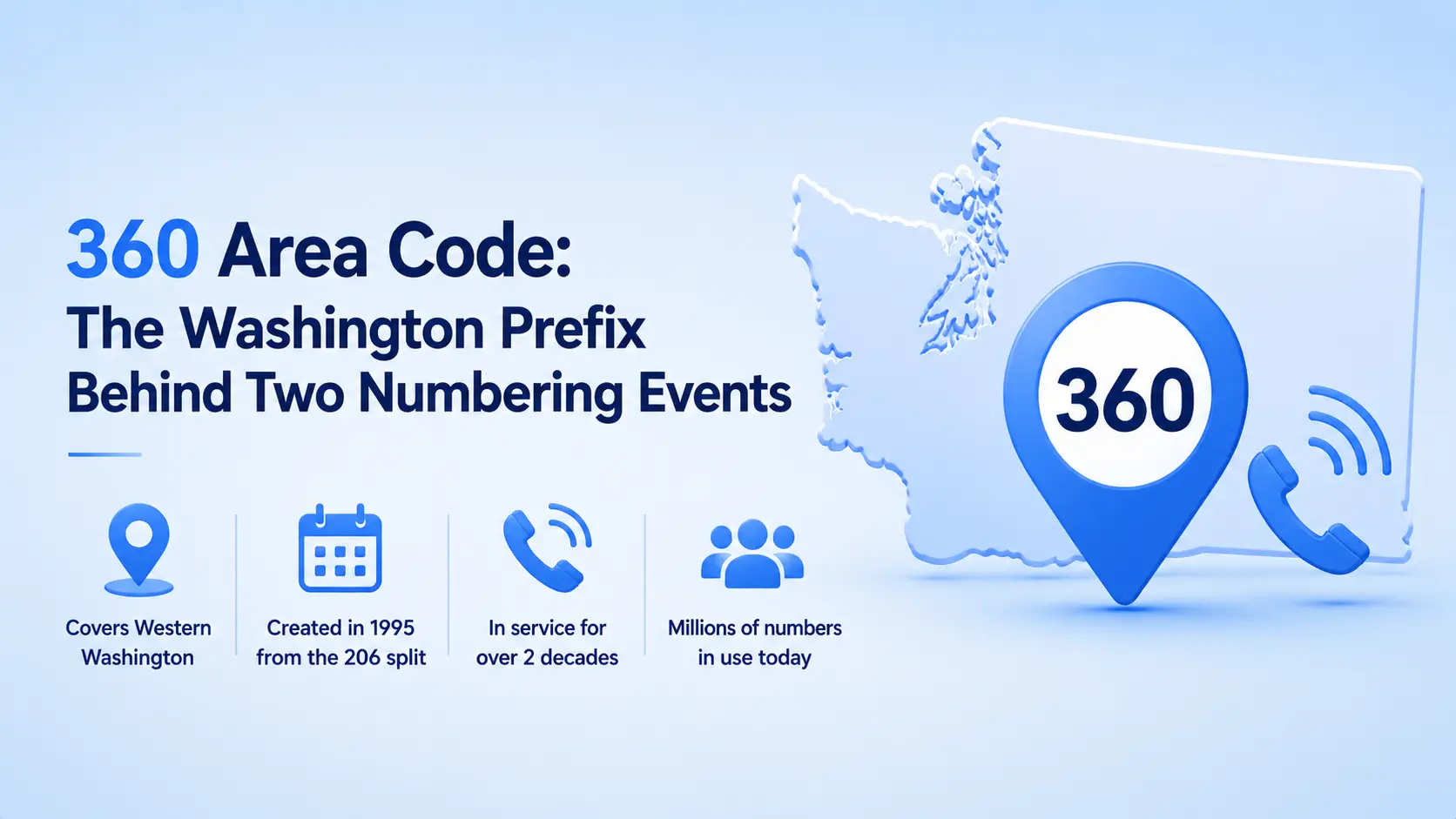
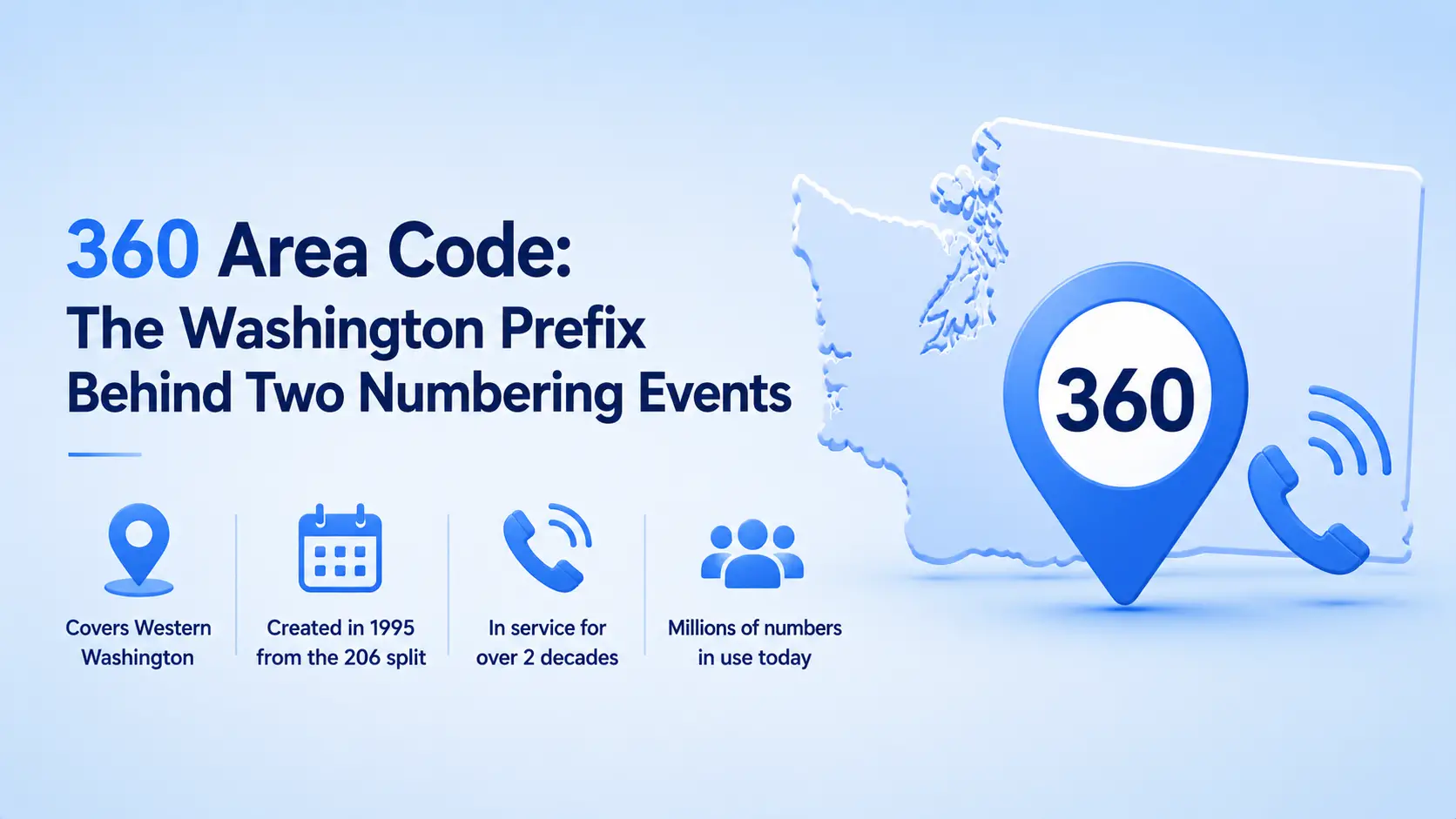
This prefix covers most of Washington outside the Seattle-Tacoma-Everett core, and it carries two separate numbering events in its history rather than the single split most guides describe. Knowing both events is the fastest way to understand every 360 call you receive.
1995 and 2017: The Two Numbering Events Behind This Prefix
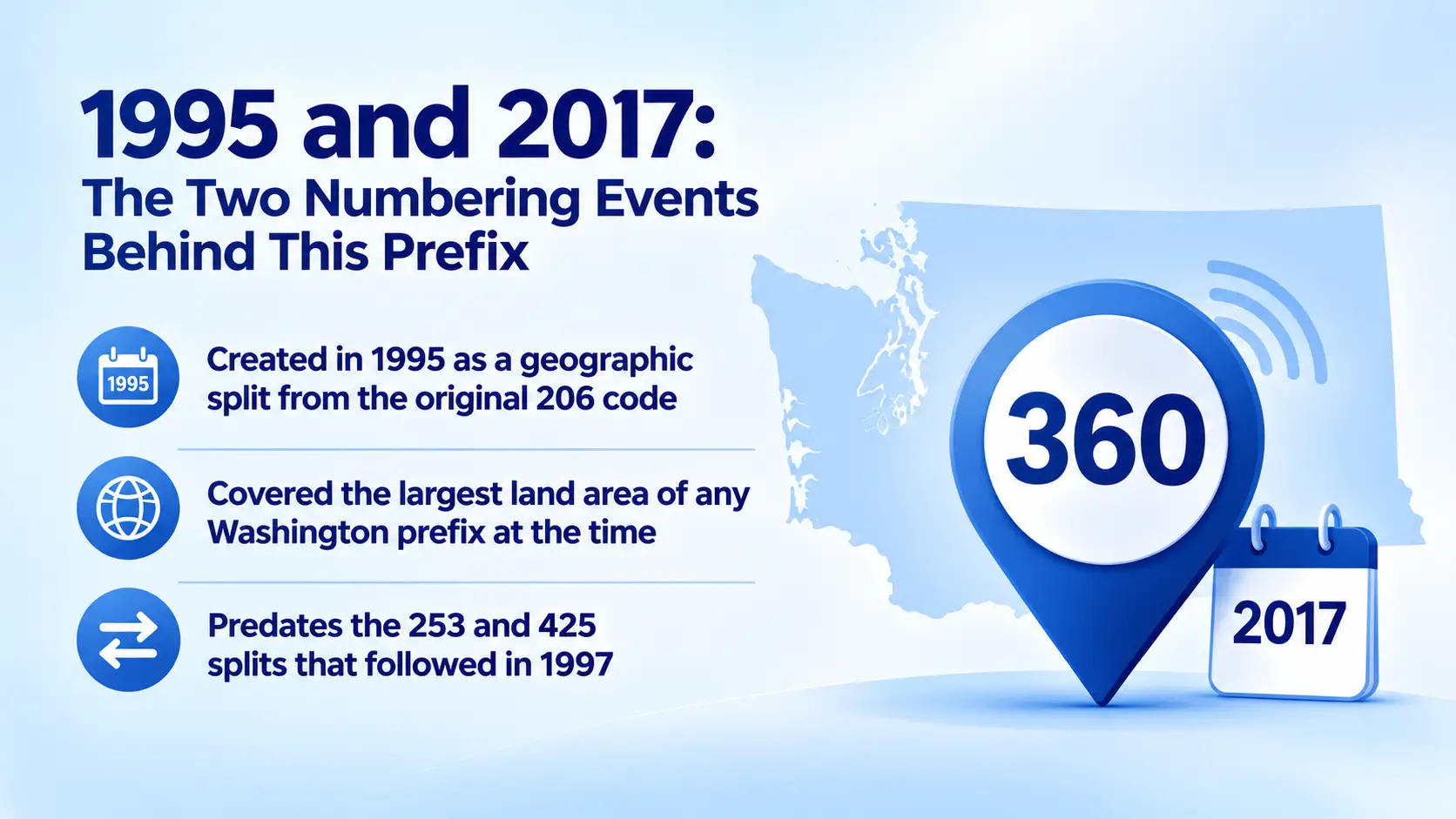
Washington's original 206 code once covered the entire state, but rapid growth in the early 1990s pushed regulators to act well before Seattle itself needed a split. In 1995, the state carved out everything beyond the immediate Seattle-Tacoma corridor into its own dedicated zone, creating the 360 area code two full years before Tacoma received its own separate prefix.
- Created in 1995 as a geographic split from the original 206 code
- Covered the largest land area of any Washington prefix at the time
- Predates the 253 and 425 splits that followed in 1997
- Received a companion overlay, 564, in 2017 once demand grew further
Cell phones, pagers, and fax machines were multiplying faster than regulators had planned for that decade, and the original statewide pool simply couldn't keep pace outside the Seattle core. Search engines and directories often reference this territory as area-code-360, though locals just call it "the 360" out of habit. That early split gave the region breathing room that lasted more than two full decades before any further numbering action was needed.
Which Washington Cities Actually Use Area-Code-360?
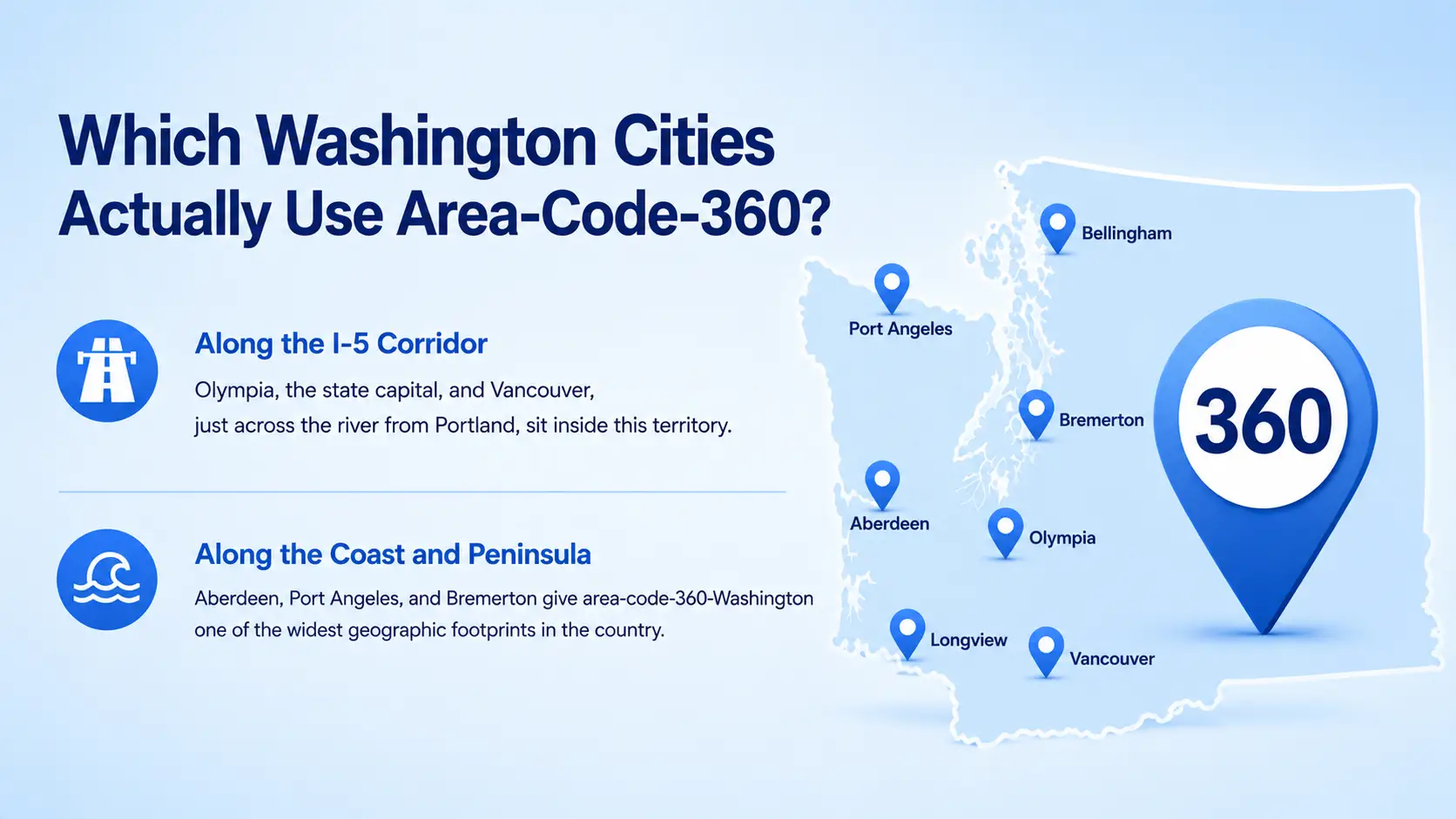
This prefix doesn't cluster around one metro area. It spans Olympia, Vancouver, Bellingham, Longview, Aberdeen, Port Angeles, and Bremerton, along with hundreds of smaller towns scattered across the western and northern parts of the state.
Along the I-5 Corridor
Olympia, the state capital, and Vancouver, just across the river from Portland, both sit inside this territory despite being hours apart by car.
Along the Coast and Peninsula
Aberdeen, Port Angeles, and Bremerton round out the coverage, giving area-code-360-Washington one of the widest geographic footprints of any prefix in the country. Timber towns, ferry communities, and agricultural counties all share this same 360 area code despite having almost nothing else in common economically.
The Coverage Myth That Confuses Most Callers
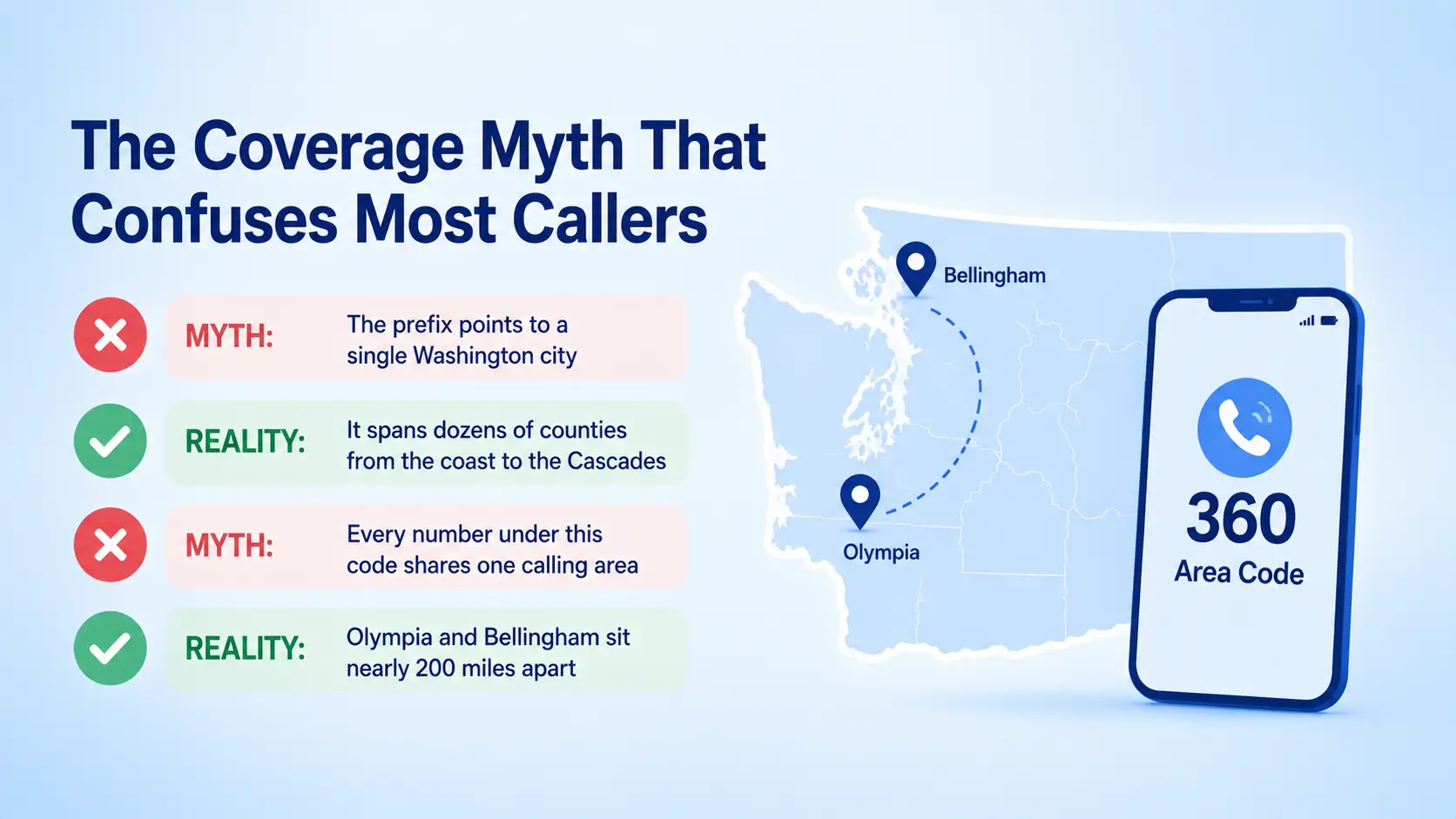
Many people assume a call carrying this prefix must come from one specific town, treating the code like a city-level identifier rather than a regional one. That assumption falls apart the moment you check how much ground this territory actually covers.
- Myth: The prefix points to a single Washington city
- Reality: It spans dozens of counties from the coast to the Cascades
- Myth: Every number under this code shares one calling area
- Reality: Olympia and Bellingham sit nearly 200 miles apart
Confusing area-code-360 for a compact local zone leads to more wasted guesswork than it solves. A caller trying to pin down an exact town from the digits alone is better off checking the last four numbers against a public business directory instead, since the 360 area code itself only narrows things down to a region roughly the size of several East Coast states combined.
An Olympia Retailer's Switch to a Local Line
Picture a home goods shop in Olympia that had been using a toll-free number for years. Customers calling to check on orders kept hanging up before anyone answered, since the toll-free format looked like a telemarketer to most callers.
The owner switched to a 360 area code number through a cloud phone platform, and voicemail-to-answer conversion improved within the first month. Rozper customers report similar results whenever a number matches the community a business actually serves, since local digits build a small amount of trust before the phone even connects. Within three months, the shop's return-call rate on order questions had climbed enough that the owner dropped the toll-free line entirely and kept only the local prefix.
What Changed When the 564 Overlay Arrived?
Adding 564 over the same ground as this prefix meant Washington regulators avoided forcing anyone to change their existing number, a common outcome when overlays replace splits. Instead, new lines simply began drawing from a second numbering pool layered on identical territory.
The tradeoff came in dialing rules. Once the overlay took effect, every local call across the region required all ten digits, including the area code, even between two neighbors who had shared seven-digit dialing for decades beforehand.
- No existing 360 area code numbers had to change or be reassigned
- New lines began drawing from the separate 564 pool
- Seven-digit local dialing ended permanently across the region
- Business phone systems needed a quick one-time reconfiguration
How a Matching Prefix Lifts Response Rates Outside Seattle
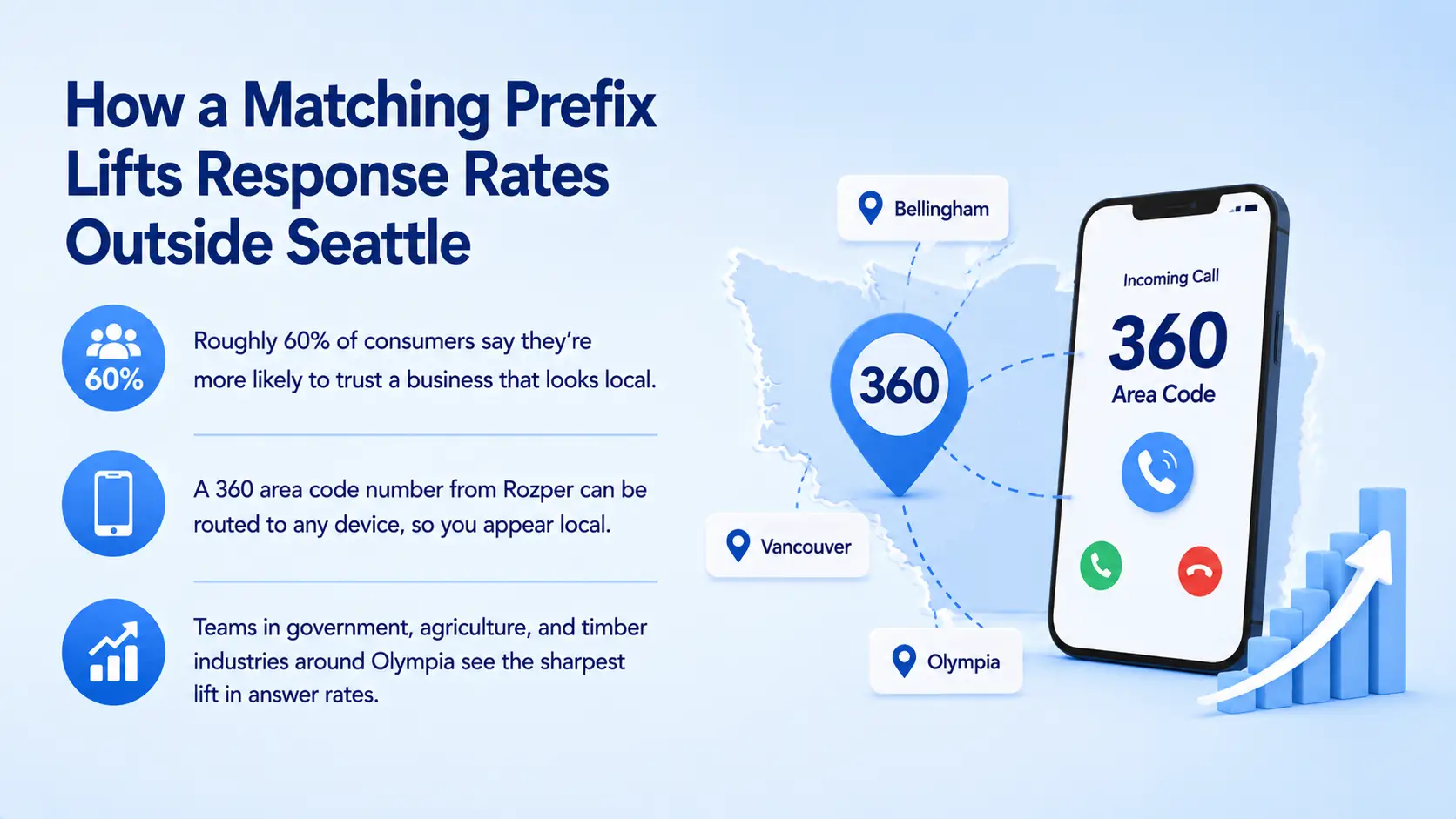
Local numbers still influence whether someone picks up the phone at all. Roughly 60% of consumers say they're more likely to trust a business that looks local, and that preference shows up clearly in outbound call data across rural and small-metro markets served by the 360 area code.
A company using Rozper to provision a 360 area code number can route it to any device, letting a remote rep still appear local to a prospect in Bellingham or Vancouver. That detail alone often does more for answer rates than a polished script ever could. Teams selling into government, agriculture, or timber-adjacent industries around Olympia tend to see the sharpest lift, since those buyers already lean toward vendors who understand the region firsthand.
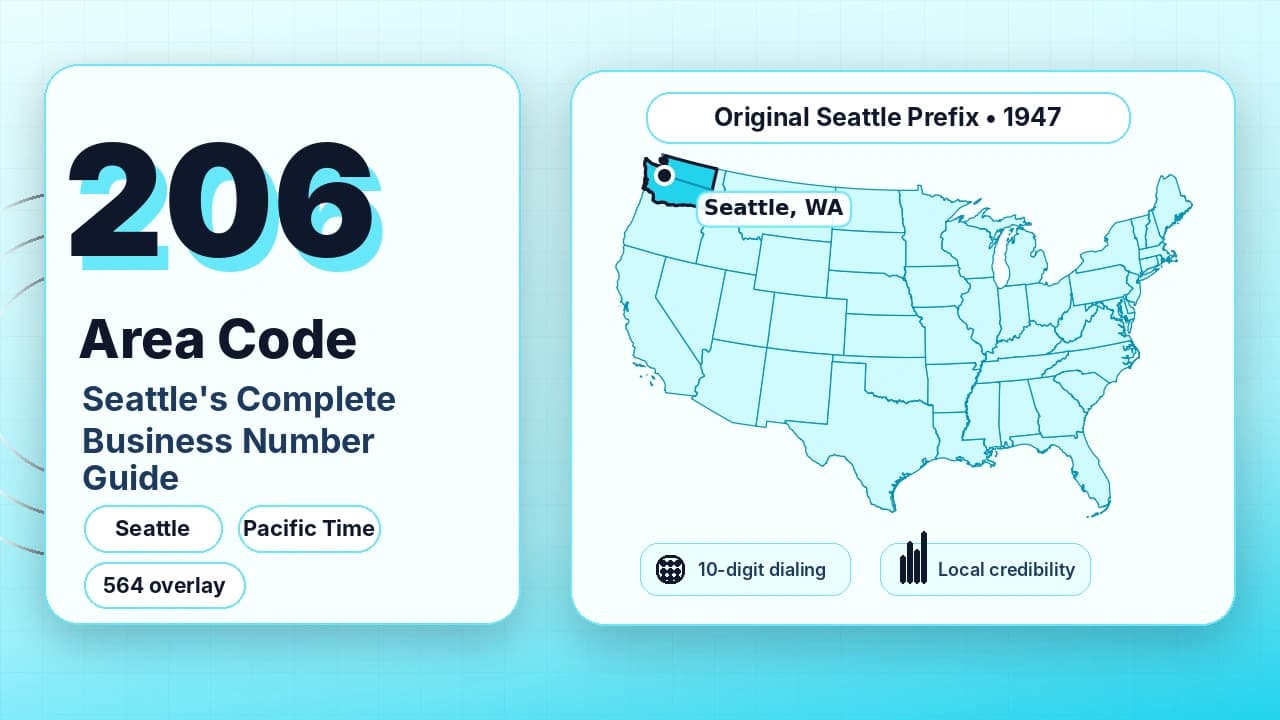
360 vs. 206: Rural Reach vs. Urban Core
Confusing this prefix with Seattle's original code is common, since both trace back to the same statewide numbering pool before the 1995 split separated them for good. The table below breaks down exactly how the 360 area code differs from the urban core it split away from.
| Feature | 360 Area Code | 206 Area Code |
|---|---|---|
| Region | Rural and small-metro Washington | Seattle proper |
| Created | 1995 (split from 206) | Original statewide code |
| Overlay | 564, added in 2017 | None |
| Economy | Government, agriculture, timber | Tech, corporate |
Requesting a 360 Number in Five Simple Steps
Claiming a number tied to this territory no longer requires a physical address in Olympia or Bellingham. A cloud-based platform like Rozper lets any business request a matching prefix in minutes. The whole process for area-code-360 provisioning is designed to take less time than filling out a typical vendor form.
- Create a Rozper account and search available numbers under the 360 area code
- Choose a number tied to the specific city or region you're targeting
- Route the number to a mobile device, desktop app, or existing office phone
- Set up voicemail and call forwarding to match your team's schedule
- Start dialing and receiving calls under a local Washington identity
The rules governing how overlays like 564 get approved are documented publicly through guidelines, which oversee numbering policy nationwide.
Conclusion
Understanding the 360 area code turns an unfamiliar caller ID into useful context instead of a guessing game. This prefix covers most of Washington outside the Seattle-Tacoma corridor, tracing back to a 1995 split that predated every other division of the state's original numbering pool. A second code, 564, now shares the same ground as an overlay added in 2017, which is why ten-digit dialing became mandatory across the entire territory. Knowing both events behind these three digits puts you ahead of most callers who never look past the caller ID.
Whether you're simply trying to identify a call or planning to request a matching number for your own business, the next move is straightforward from here. A cloud phone platform makes claiming area-code-360-Washington coverage possible in minutes, no matter where your team actually sits. Rozper keeps that setup simple, backed by real support instead of an automated queue. The next call from this prefix doesn't have to stay a mystery.
FAQs
What region does the 360 area code cover?
It covers most of Washington outside the Seattle-Tacoma-Everett corridor, including Olympia, Vancouver, and Bellingham. The territory spans dozens of counties rather than one metro area.
Where did this prefix originally come from?
It split away from the original statewide 206 code in 1995, two years before Tacoma received its own prefix. Regulators created it to relieve early numbering pressure outside Seattle.
When did the 564 overlay get added?
The overlay went into effect in 2017 once demand for new numbers in the region grew beyond the original supply. It shares the exact same territory rather than replacing any part of it.
How can I tell if a 360 call is a scam?
Check whether the number matches a business you've actually contacted before, and never share payment details on an unsolicited call. Scammers can spoof any prefix, so caller ID alone isn't proof.
Is this prefix tied to a specific time zone?
Yes, the entire territory sits in the Pacific Time Zone alongside the rest of western Washington. A call placed at a reasonable hour on the East Coast may still be too early here.
What does a 360 area code number cost to set up?
Most cloud phone providers, including Rozper, offer this prefix as part of a standard monthly plan with no separate setup fee. A free trial lets you test the number first.
Do I need to dial ten digits for every local call?
Yes, since the 564 overlay took effect, every call in the region requires the full ten-digit number, including the area code. This applies even between neighboring towns.
Can a business outside Washington claim this prefix?
Yes, cloud-based providers let any business request and route a number tied to this territory regardless of physical location. Calls simply forward to whatever device the team already uses.