VoIP & Voice

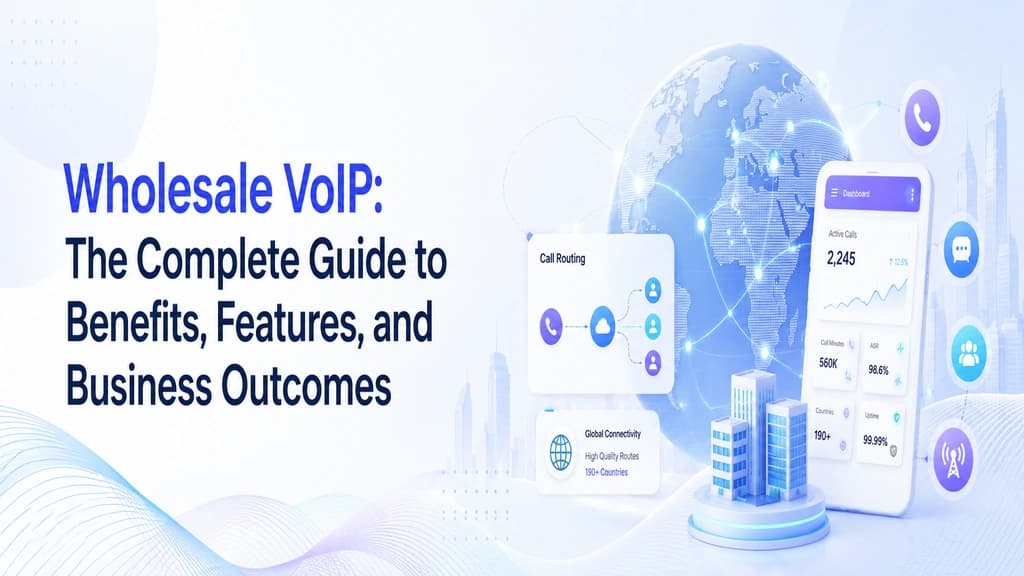
Wholesale VoIP: The Complete Guide to Benefits, Features, and Business Outcomes

批發 VoIP 的完整指南 — 它是什麼、如何運作、主要優點、基本功能以及如何選擇適合您業務需求的供應商。

SK
Shahid Kathawala
Mar 26, 2026·9 min read
wholesale voip

Introduction

Start with the outcome, not the technology. What do you need voice to do? Cut per-minute cost by half? Launch a reseller product at 60% margin? Grow a contact center from 50 seats to 500 without a build?

That answer picks your service, your pricing model, and your provider. Skip it and you just buy a cheaper version of the wrong thing.

The global wholesale voice market hit $44.5 billion in 2026. This guide covers what wholesale VoIP is, how it works, who gains, and how to choose well.

Key Takeaways

  • What it is: VoIP bought in bulk, business to business, at rates retail never offers.
  • Who it serves: enterprises cutting cost, resellers building products, contact centers scaling, and developers adding voice to software.
  • The economics: most buyers cut voice cost by 30–60%. Resellers see 50–70% margins on white-label deals.
  • What you get: termination, origination and DIDs, SIP trunking, hosted PBX, and APIs.
  • How to choose: match the provider to your business model, not to the lowest rate.

What Is Wholesale VoIP?

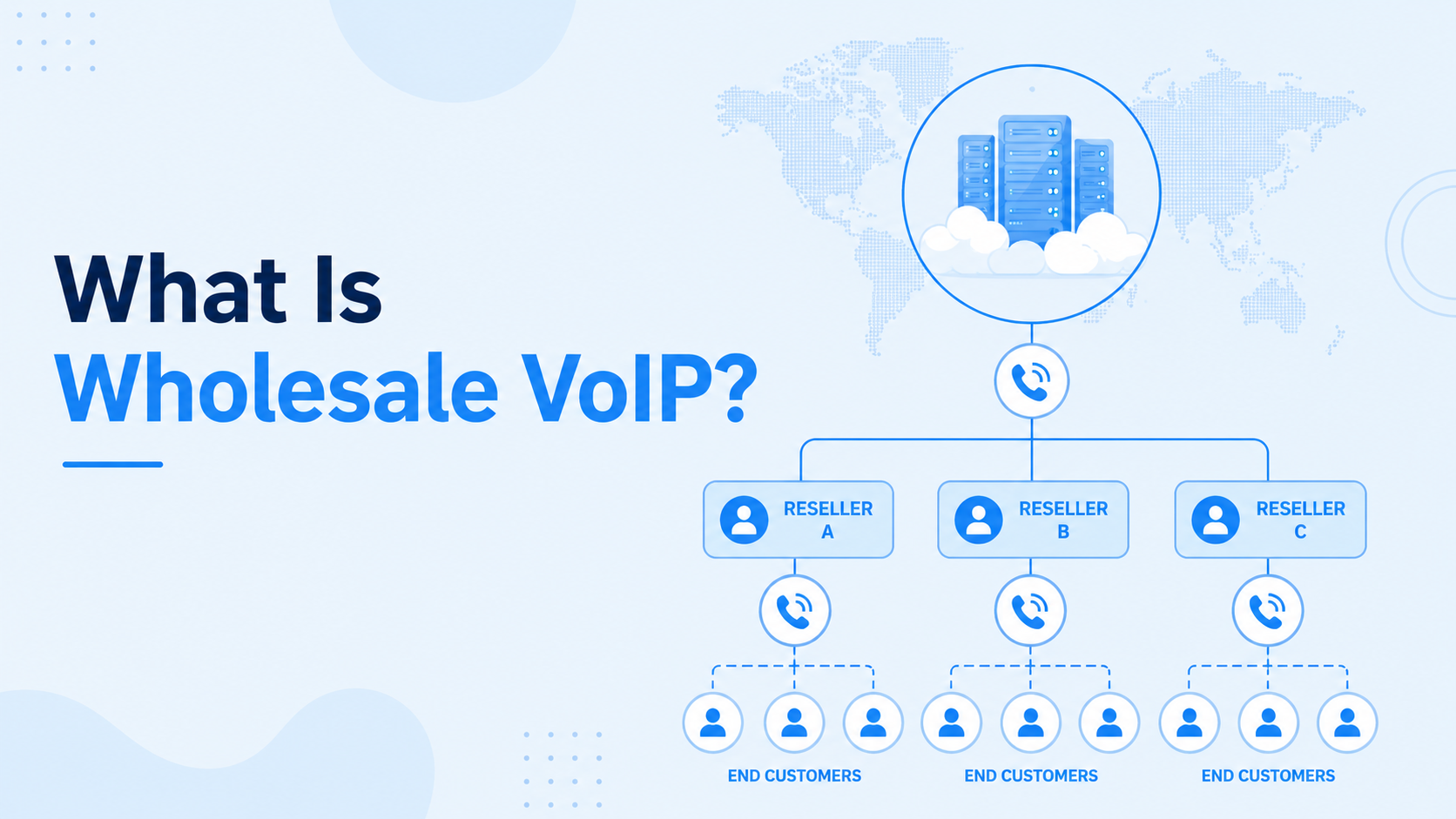
Wholesale VoIP means buying voice capacity in bulk from a carrier or platform, then using it in-house or reselling it. You skip retail line pricing and pay volume rates for termination, origination, SIP trunking, and related services.

What Is Wholesale VoIP

The word "wholesale" carries weight. Retail VoIP is a fixed plan with a portal and a rate card. Wholesale is built for volume, control, and API access, with commercial terms shaped around heavy use or resale.

Four buyer types dominate: enterprises running thousands of calls at once, resellers building products, contact centers dialing at scale, and developers putting voice inside software.

Wholesale vs. Retail

The gap is not just price. Wholesale accounts get rates that fall as volume grows, carrier-grade infrastructure through an API, and control over routing and quality. Support is a partnership. Retail accounts get a portal and a ticket queue.


How Wholesale VoIP Works

Wholesale VoIP turns your voice into data packets and sends them over IP. A few parts work together to move a call from start to finish. The service pieces are broken down in our guide to wholesale VoIP services.

Voice Conversion

Your voice is captured and turned into digital data. A codec compresses it — G.711, G.722, G.729, or Opus, depending on the quality tier. The packets cross the network, get reassembled, and become sound again. On good routes the whole trip takes tens of milliseconds.

SIP and Session Control

Most wholesale VoIP runs on the Session Initiation Protocol. SIP sets up each call, changes it if needed, and ends it. SIP trunks join your PBX or UCaaS platform to the provider's network. Session Border Controllers sit at the edge and handle security, protocol clean-up, and NAT traversal, so mismatched systems still work together.

Termination and Origination

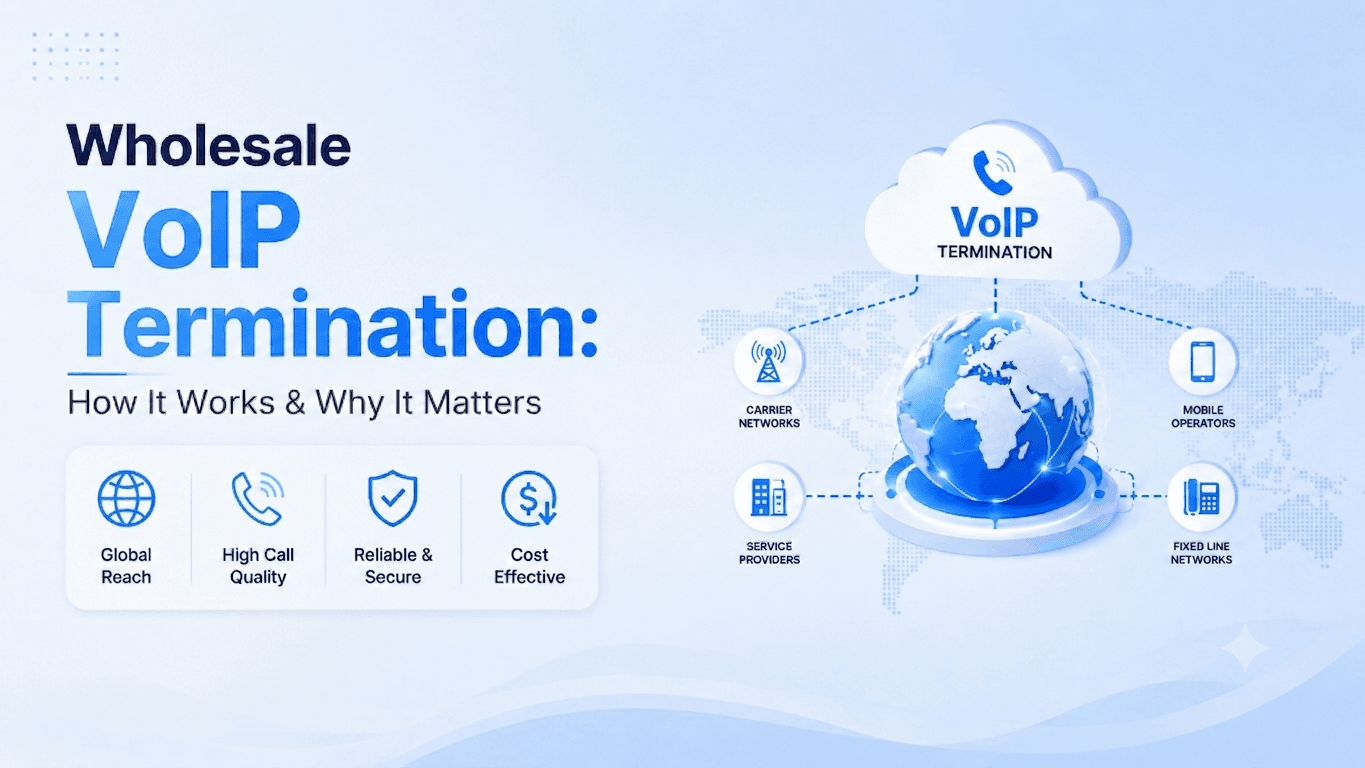
Termination carries your outbound calls through the provider's network to the person you dialed, whether they answer on VoIP, mobile, or a landline. Origination brings inbound calls to you through DID numbers. Together they form the full inbound and outbound stack. For more on the outbound side, see wholesale VoIP termination.

Hosted PBX

Many providers add a cloud phone system. You get auto-attendant, routing, voicemail, and call recording without buying or housing hardware.


Key Benefits of Wholesale VoIP

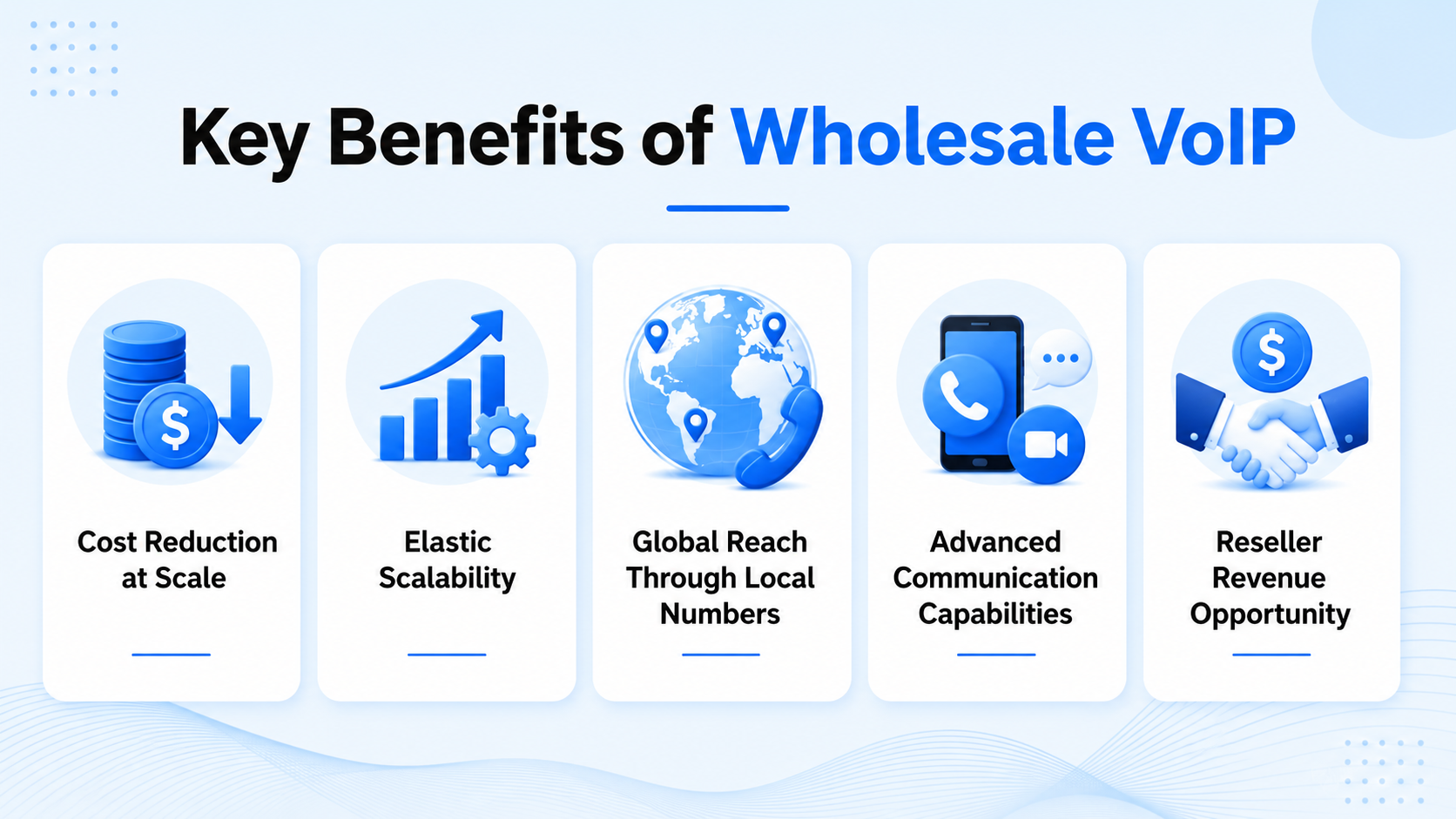
Key Benefits of Wholesale VoIP

Lower Cost at Scale

Wholesale VoIP drops the per-line fees, upkeep, and steep international rates of legacy phone service. Most firms cut voice cost by 30–60% when they move off older systems. International routes save the most — sometimes over 70% on a given destination.

  • Cheaper minutes at home and abroad
  • No dedicated circuits, no hardware to maintain
  • Rates that improve as volume grows

Elastic Scale

Adding capacity takes no hardware and no wait. SIP channels and DID numbers appear in minutes through a portal or an API. That suits contact center growth, new sites, and seasonal spikes.

Global Reach, Local Numbers

DID origination in 150+ countries lets you show a local number in every market you serve. Customers in London, Sydney, or São Paulo see a number they recognize, not a foreign prefix. Answer rates climb as a result.

Advanced Call Handling

You get CLI-based routing, IVR, call recording, live analytics, voicemail-to-email, and API automation. These come inside the service, not as paid extras from other vendors.

Reseller Revenue

White-label deals let you sell voice under your own brand at 50–70% margin. Traditional agent arrangements pay 15–25%. That gap is the whole business case.


Essential Features

  • Termination route tiers. Routes come in grades. CLI routes pass real caller ID and suit sales and customer calls. Non-CLI routes fit bulk traffic. CC routes handle fast-dialing call center work.
  • DID numbers. Inbound numbers in local, mobile, and toll-free formats worldwide. Porting brings your old numbers across without a gap.
  • SIP trunking. Joins your phone system to the carrier network. Channels flex without new hardware. TLS guards signaling, SRTP guards the audio.
  • API access. Add numbers, set routing, and pull call records in code. At scale this is how the service is run, not a bonus.
  • Fraud protection. Live alerts for toll fraud, IRSF, and caller ID spoofing, plus geo-blocks and spend caps.
  • Recording and analytics. Records calls for compliance and coaching, and shows you what your traffic is doing.

Who Uses It, and What They Get

  • Enterprises. Multi-site firms swap costly circuits for wholesale, cut voice spend 30–60%, and deal with one provider worldwide.
  • Contact centers. Hundreds of live calls need high ASR, low PDD, clean caller ID, and headroom for bursts. Wholesale gives all four at prices retail cannot reach.
  • Resellers and MSPs. They buy capacity and sell it branded. White-label tools and bundles of voice, SMS, and video build 50–70% margins instead of thin commission.
  • Developers. Software teams add calling through APIs without owning a network — click-to-call in a CRM, automated outbound, or an AI voice bot. Voice ships like any other feature.

Wholesale VoIP vs. Traditional Phone Systems

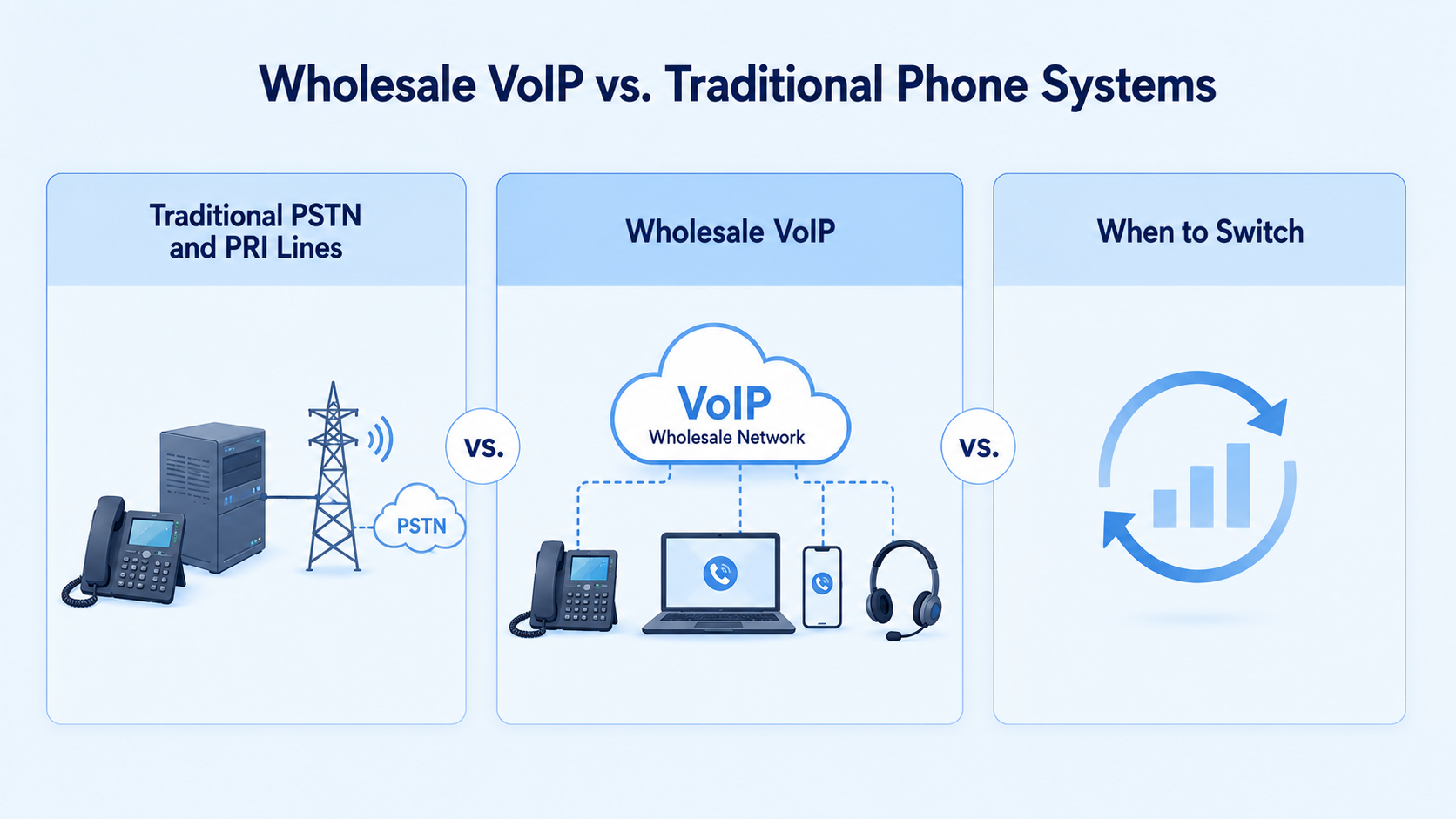
Wholesale VoIP vs. Traditional Phone Systems

Traditional PSTN and PRI run on physical lines. New capacity means an install. International minutes cost a premium. Routing is fixed and there is no API. The gear is costly to own and getting harder to maintain as older networks retire.

批發網路電話 runs over IP with flexible capacity, live routing, and API control. International rates are a fraction of the old ones. Scaling is instant, and features are set in software.

When to Switch

The case grows with volume. Past a few thousand outbound minutes a month, wholesale wins on cost. Migration — porting, SIP setup, testing — is a one-time project. The savings keep coming.


Common Challenges and Fixes

  • Quality swings. Audio depends on latency, jitter, and packet loss. Pick a provider with direct Tier-1 links on your main routes rather than a chain of resellers. Live monitoring and automatic rerouting catch trouble before customers do.
  • PBX integration. SIP settings must match. Ask for documentation for your exact platform before you sign, and check the support team has handled it before.
  • Fraud exposure. Open VoIP invites toll fraud and IRSF. TLS and SRTP encryption, access controls at the SBC, live fraud alerts, and geo-restrictions are the standard defenses. Confirm they are included, not billed extra.
  • Compliance. In the US, STIR/SHAKEN, E911, and registration requirements all apply. A provider outside those rules passes the risk to you. Ask for the paperwork.

Choosing a Provider

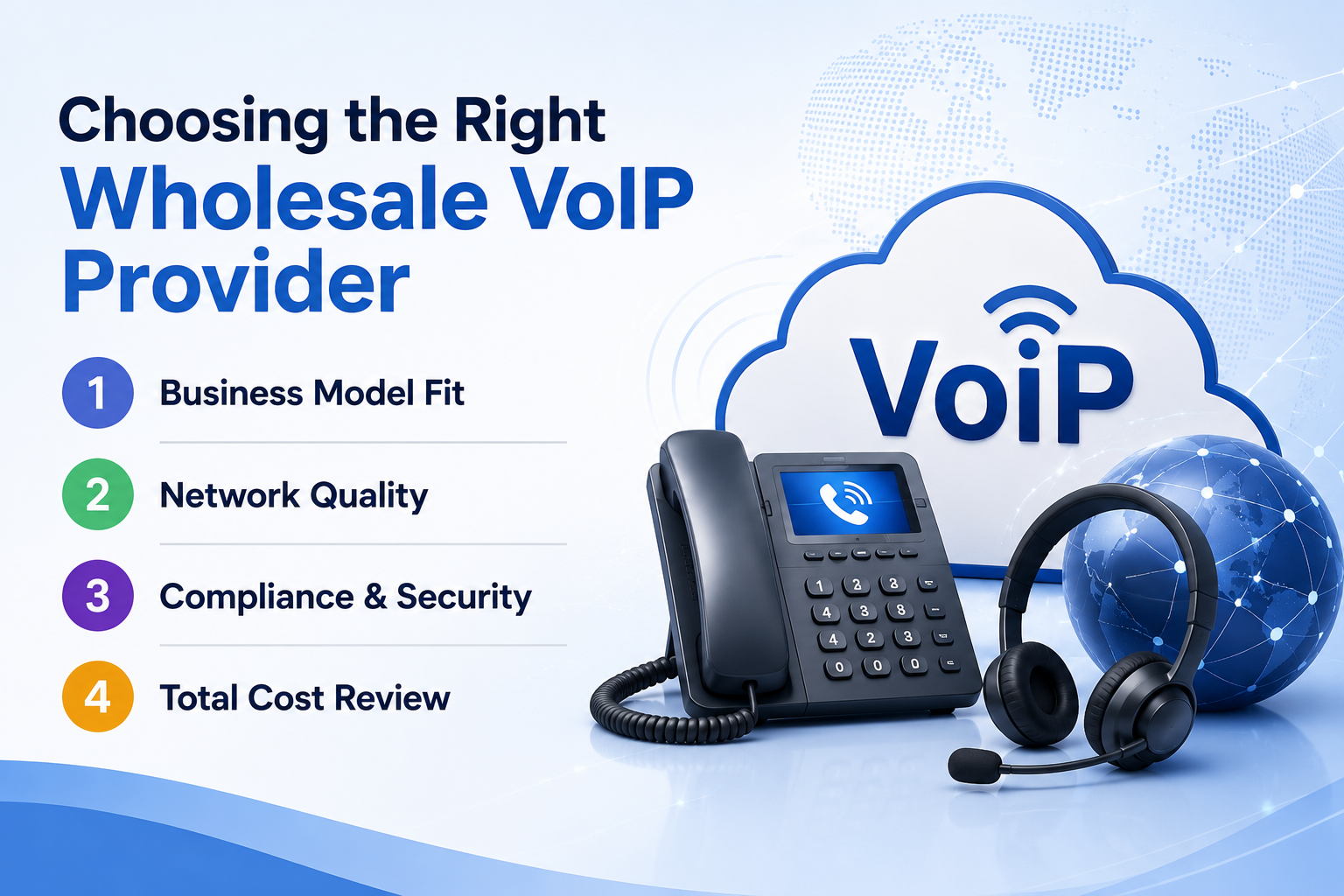
Choosing the Right Wholesale VoIP Provider

Match the Provider to Your Model

Enterprises need deep carrier links and volume pricing. Resellers need white-label tools, portals, and billing. Developers need real APIs and SDKs. Few providers do all three well, and picking one built for someone else wastes money and time.

Test Before You Commit

Run live traffic in a proof of concept. Check quality on your top destinations, exercise the API, time the provisioning, and call support at odd hours. What you see in the test is what you get in production.

Confirm Compliance and Security

Ask for STIR/SHAKEN attestation, E911 confirmation, and FCC registration details. Verify TLS and SRTP are standard. A provider slow to produce documents is not the right partner for regulated traffic.

Model the Whole Cost

Headline rates hide the rest. Ask for every fee: E911, porting, API access, setup, and minimum commitments. Then model it against your real traffic before you compare.

Rozper is one option here: 99.999% uptime and 150+ countries on one platform.


Conclusion

Wholesale VoIP is the layer that makes voice cheap, flexible, and rich in features — for enterprises, resellers, contact centers, and developers alike. The provider you pick shapes your call quality, your costs, your compliance position, and, if you resell, your margin.

The firms that gain most start from the outcome they want, choose the provider type that fits, and then hold that provider to hard commitments on quality and compliance rather than picking on rate card alone.


Ready when you are
Ready to sound local everywhere you call?
Rozper gives you local presence, call routing, voicemail, and CRM-ready tools in one dashboard. Start your free trial and get set up in minutes.
Start your free trial

FAQs

What call volume makes wholesale VoIP worth it?

There is no hard line, but the math usually turns around 5,000–10,000 outbound minutes a month. At that point the rate gap against retail shows up on the bill. Higher volumes gain more. Resellers can justify it sooner, since they price for their own customers.

How long does migration take?

It depends on how much moves. A SIP trunk into an existing IP PBX can run live in one to three days. A full move with porting, a new PBX, and several sites takes two to six weeks. Domestic porting runs three to ten business days; international takes longer.

Will it work with my current PBX?

Almost certainly. Wholesale VoIP is SIP-based and works with Asterisk, FreePBX, 3CX, Cisco CUCM, and hosted UCaaS. Older systems may need a SIP-to-PRI gateway. Check your model against the provider's supported list first.

Is billing per minute or per channel?

Both exist. Per-minute suits traffic that swings. Per-channel is a flat monthly fee per concurrent call and suits steady, heavy volume. Large accounts often mix the two: flat channels at home, metered rates abroad.

What happens during a network outage?

Providers with spread-out infrastructure and live routing switch to a backup path in seconds, so calls keep flowing. Confirm this sits in the SLA rather than the brochure, and ask what the maximum failover time is.

Can it carry SMS as well as voice?

Often, yes. Many wholesale platforms handle SMS in both directions alongside voice, and some add video and contact center features. One relationship across channels means less vendor sprawl and usually a better bundled price.

#wholesale VoIP#VoIP providers#SIP trunking#hosted PBX#VoIP termination#telecom#VoIP resellers
Share
From the field to your stack

Want this running on your numbers?

No SDR phone tree. The person on the call has read the docs, can quote your contract live, and can spin up a POC on your traffic in under 24 hours.

The dispatch

One issue. Every other Tuesday. Zero filler.

Three picks from our editors, one chart from the network, and a single concrete idea you can take into your next standup.

  • Hand-picked posts — never an aggregator dump
  • Carrier-grade signal, not vendor hype
  • Unsubscribe in one click, no dark patterns

Joined by 12,400+ operators · We don't share your address.

批發 VoIP:定義、優點、功能和供應商 | Rozper Communications Platform Cloud