Introduction
A traditional PBX can look cheap on paper. But the real cost shows up later. It shows up once you add up every bill over several years. That's why so many finance teams get a shock partway through a phone system's life. A fair UCaaS vs Traditional PBX comparison looks past the first invoice. It tracks every cost a business pays over the years it runs the system. That's what a true total cost of ownership check is meant to do.
Comparing UCaaS vs Traditional PBX From Day One
A traditional PBX means buying hardware outright. You need a server or controller unit. You need desk phones for every worker. You need cabling, and often a dedicated closet or rack space too. This upfront cost can run into tens of thousands of dollars before a single call is placed. It often has to be paid or financed right at the start.
A cloud-based system flips that math. There's no big upfront purchase. Instead, businesses pay a steady per-seat fee each month. They use the internet connection they already have, not dedicated phone lines. When you compare UCaaS vs Traditional PBX costs at the moment of purchase, the monthly plan almost always wins on cash flow. And that's before you even look at the years ahead.
That upfront gap alone pushes many finance teams to run a full UCaaS vs Traditional PBX comparison. It's smarter to check the numbers now. Otherwise, you may be stuck with hardware that needs replacing again within a decade.
The Ongoing Costs of UCaaS vs Traditional PBX
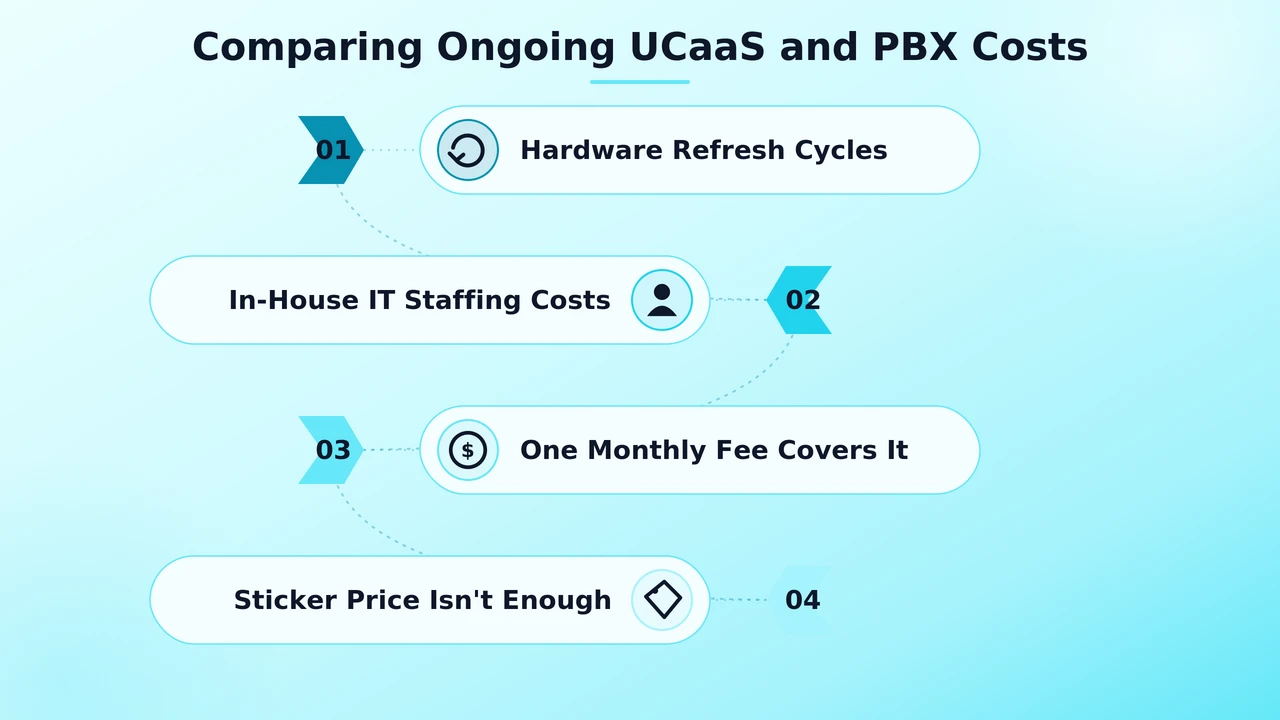
Hardware doesn't stay maintenance-free once it's set up. A traditional PBX needs firmware updates. It needs part swaps now and then. It needs a full hardware refresh every five to eight years too, once vendors stop backing older gear. Each of these events comes with its own bill. That's on top of what the business already paid to install the system.
Staffing is another cost that rarely comes up in the first sales pitch. On-site systems usually need an in-house IT person who knows the hardware. Or they need a support deal with an outside vendor. Both come with fees that add up over time. A cloud plan folds upkeep, security patches, and tech support into one bill each month. This is one of the clearest ways the UCaaS vs Traditional PBX comparison shifts once you look past year one.
That single monthly bill quietly replaces three or four separate invoices. Think a maintenance contract. A security patch vendor. An IT staffing cost. An emergency repair fund. Businesses that only check the sticker price against a monthly fee are almost always comparing the wrong numbers.
Rozper's business phone system page lays out the kind of bundled support worth comparing against a traditional PBX vendor's ongoing service quote. That recurring cost often gets left out of the first sales pitch entirely.
Scalability: How UCaaS vs Traditional PBX Costs Diverge Over Time
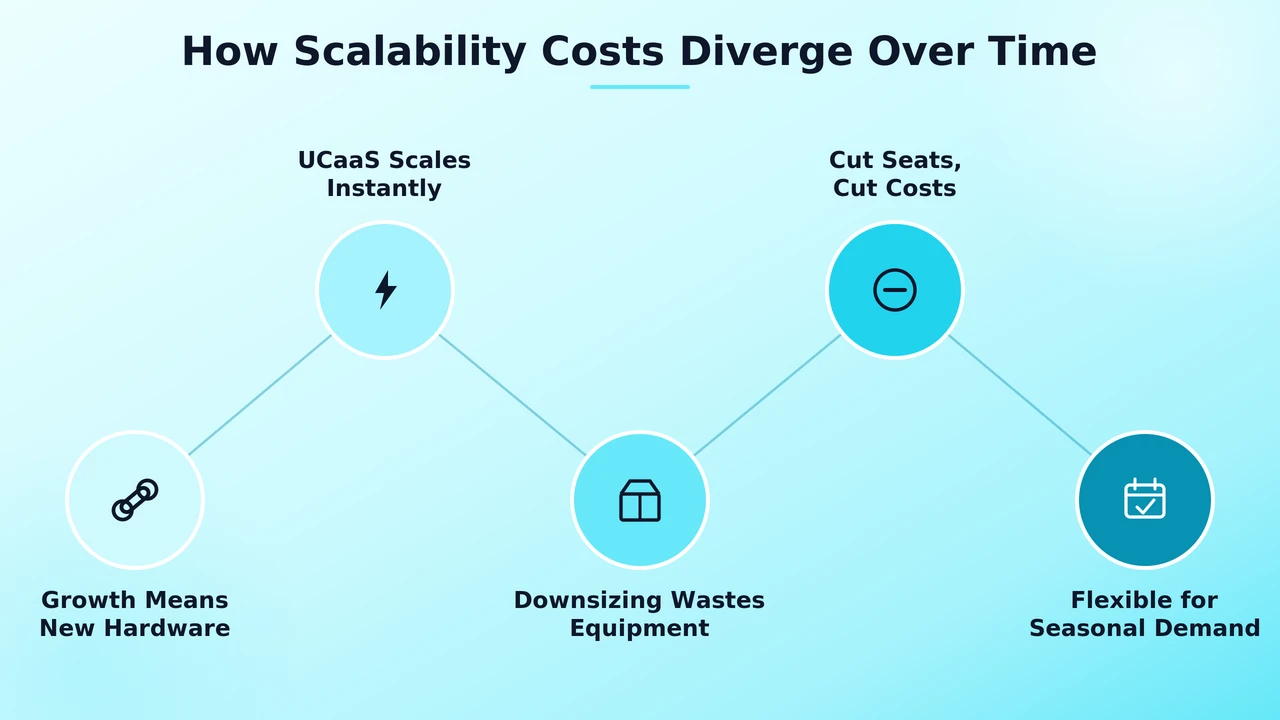
Growth is where the UCaaS vs Traditional PBX cost gap widens the most. Adding ten new staff to a traditional PBX usually means buying ten new desk phones. It means running new cabling too. It may also mean upgrading the controller hardware if it's close to full. Each step takes time to plan and install. None of it happens fast.
Adding those same ten staff to a cloud-based system is simpler. It often just means bumping up the seat count and shipping a few devices, if any hardware is even needed. That gap matters a lot for seasonal firms, fast-growing startups, or any company that expects its headcount to shift soon.
Shrinking tells the same story in reverse. A business stuck with owned PBX gear after a layoff still pays for hardware it barely uses. A monthly plan lets a company cut seats and stop paying for space it no longer needs.
Seasonal firms feel this gap the most. A retailer that triples its call center staff every November and December pays for a full year of desk phones and wiring under a traditional PBX. That's true whether those extra seats get used for two months or twelve. A monthly plan lets that same retailer scale up for the holiday rush. Then it can scale back down in January. No paying for space that sits empty the rest of the year.
When Traditional PBX Might Still Make Sense
None of this means a traditional PBX is always the wrong pick. Some businesses may want to stick with what they have a bit longer. That includes firms in spots with weak internet service. It includes groups with strict rules around on-site data. It includes firms that already spent big on hardware with years of life left in it.
A factory with a locked-down network has strict rules to follow. Its needs look nothing like a remote startup picking its first phone system. Context matters more than a blanket rule. That's why checking your own numbers beats following generic vendor advice.
The honest version of the UCaaS vs Traditional PBX talk admits that switching costs money and causes some disruption too. A firm six months from a planned office move or merger may be smart to wait. Moving twice in a short window rarely pays off. Even then, it's worth running a light UCaaS vs Traditional PBX check every year or two. Prices, uptime, and internet quality keep shifting in ways that can change the math.
Where Rozper Fits Into the Total Cost Conversation
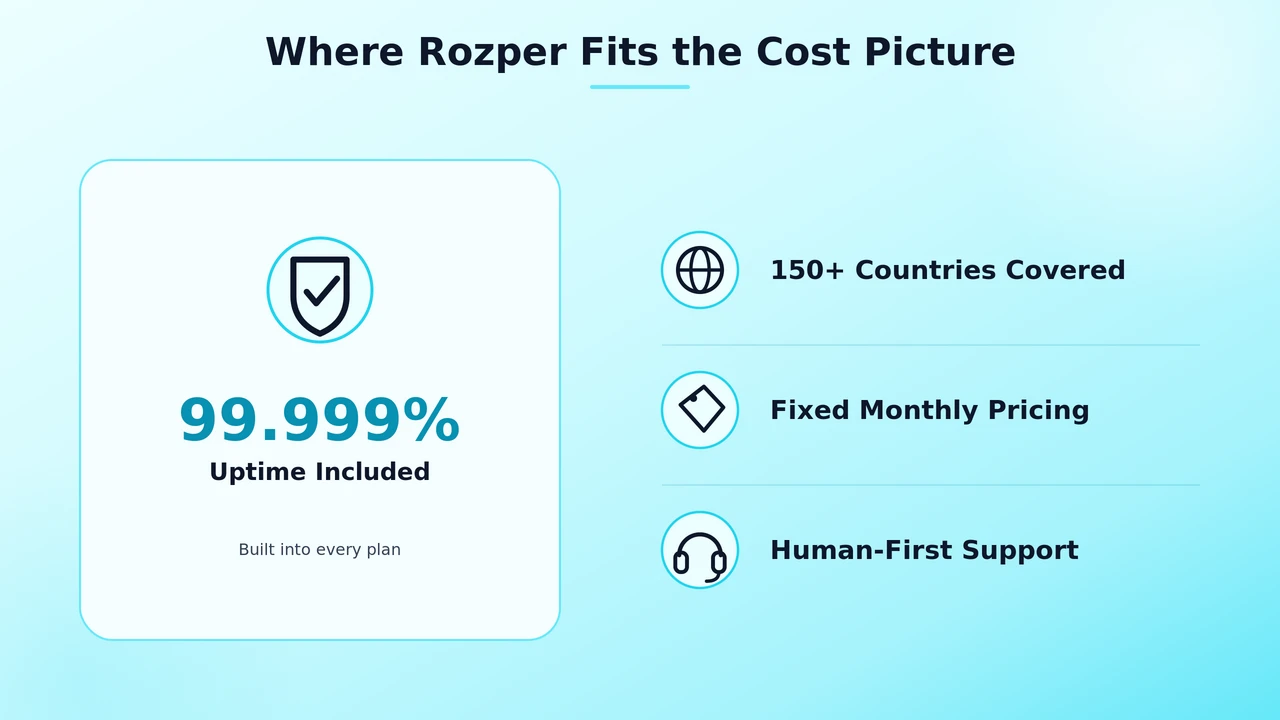
Rozper tackles the total cost of ownership question head-on. It provides local and virtual numbers in over 150 countries. It bakes 99.999% uptime into every plan, rather than selling it as a pricey add-on. That mix of steady pricing and built-in tech is a big reason cloud plans tend to win on cost. That holds true once you count support and hardware refresh cycles.
The platform runs on a real, human-first partnership rather than a self-serve afterthought. So support costs that would show up as a separate line on a traditional PBX contract are already baked into the monthly bill.
Evaluating What You'll Actually Pay Over Time
A fair cost check means adding up every expense across a real timeline for both options. Most teams use five years. That means hardware, install costs, upkeep deals, staffing, hardware refreshes, and monthly fees. Investopedia's cost-accounting overview is a handy guide for the idea. It wasn't written just for phone systems, but the logic still applies.
Once every cost is counted, not just the number on the first quote, the UCaaS vs Traditional PBX comparison often looks very different than it did on day one. Run the numbers yourself. Don't just trust either vendor's math. Both sides have a clear reason to leave some costs out of their pitch.
Build a simple spreadsheet. Give each cost type its own row. Give each year of the five-year span its own column. Fill it in with real numbers from actual vendor quotes, not rough guesses. Businesses that take this step seriously rarely get surprised by their phone system's true cost again, no matter which option they pick.
Conclusion
The sticker price on a traditional PBX rarely tells the full story. Nor does a cut-rate monthly quote from a cloud provider that skimps on support. A fair UCaaS vs Traditional PBX comparison has to count hardware refreshes, staffing, and upkeep deals. It also has to weigh how well each option scales as a business grows or shrinks. Run the full five-year math before you sign anything. The right pick usually becomes clear on its own.
FAQs
Is UCaaS always cheaper than a traditional PBX?
Not always upfront. But total cost of ownership over several years usually favors UCaaS. That's once you count maintenance, staffing, and hardware refresh costs.
What hidden costs does a traditional PBX often have?
Firmware updates, hardware refreshes every five to eight years, dedicated IT staffing, and physical repairs are the most commonly missed expenses.
How long does a typical PBX hardware refresh cycle last?
Most on-site systems need a real hardware refresh every five to eight years, once vendors stop backing older gear.
Does switching from PBX to UCaaS require new phones?
Not always. Many UCaaS platforms work with the desk phones or apps you already have. That cuts the hardware cost needed to switch.
Is a traditional PBX ever the better choice?
Yes. This is true for firms with weak internet access, strict on-site data rules, or hardware they bought recently that still has years of life left.
How should a business run its own UCaaS vs Traditional PBX comparison?
Add up hardware, install, maintenance, staffing, and monthly costs across a real five-year span for both options. Don't just check the first price.
What's the single biggest number to get right in a UCaaS vs Traditional PBX comparison?
The hardware refresh cycle is usually the most underrated figure. Many firms forget to plan for swapping on-site gear every five to eight years.