Introduction
VoIP sales teams that win deals do one thing differently. They lead with outcomes, not features. A buyer signs a long phone contract. They don't care how SIP works. They care about one thing: what changes after setup. That single shift decides the whole deal.
This guide covers four things. What VoIP sales is. How the process works, from first call to signed deal. Which objections come up most. And what actually wins deals, not long demos.
What Is VoIP Sales?
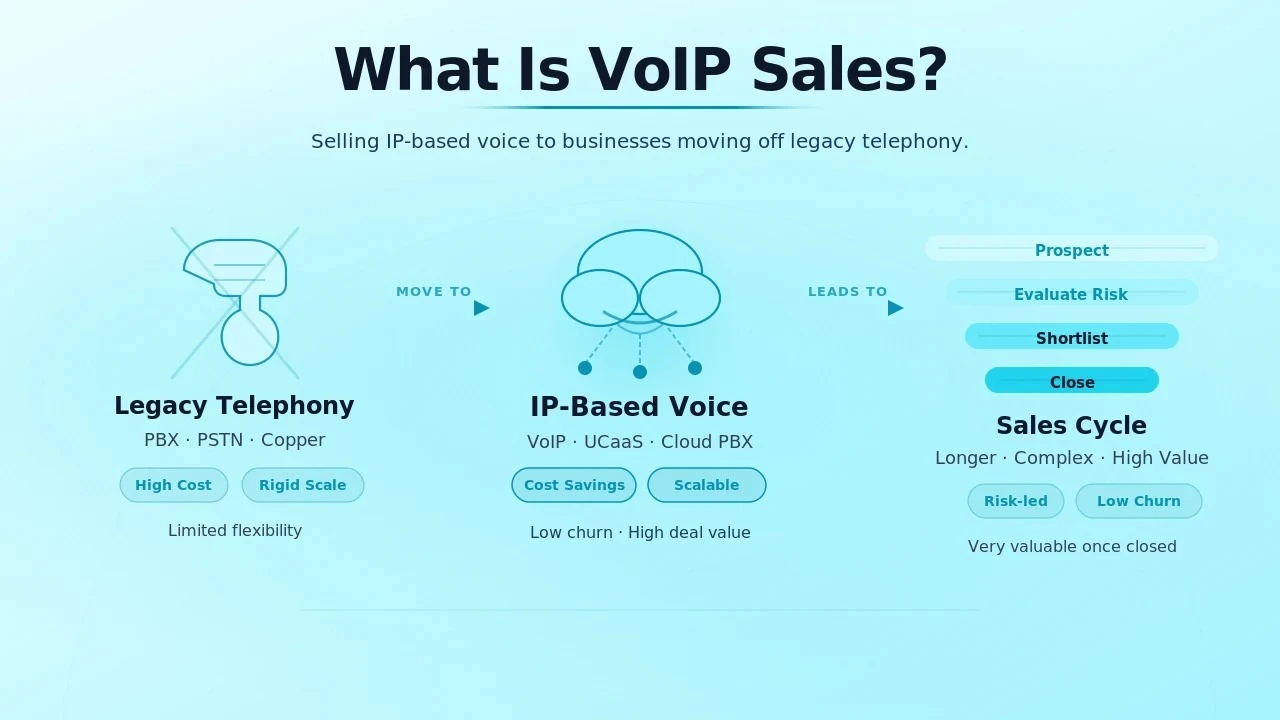
VoIP sales means selling phone service over the internet to businesses. It moves buyers off old phone systems — PBX, PSTN, or copper lines. It moves them to IP-based voice. That system saves money, adds features, and grows with the business. It is the shift most firms make sooner or later.
Understanding the sales VoIP world starts with one idea: buyers do not just compare features. They weigh risk. Who moves phone numbers? What if calls drop at busy times? How fast does support answer after signing? These are fair questions. They are not objections to beat. They decide the shortlist.
This sales cycle runs longer than most software deals. Why? The product touches daily work in every team. Every worker who makes or takes a call feels the change. CRM links, call recording rules, compliance needs, and dialing plans all shift at once. That depth stretches the timeline. But it also creates very low churn after setup. Each closed deal becomes worth a lot. That is why patient reps win the most in this field.
The VoIP Sales Process Explained
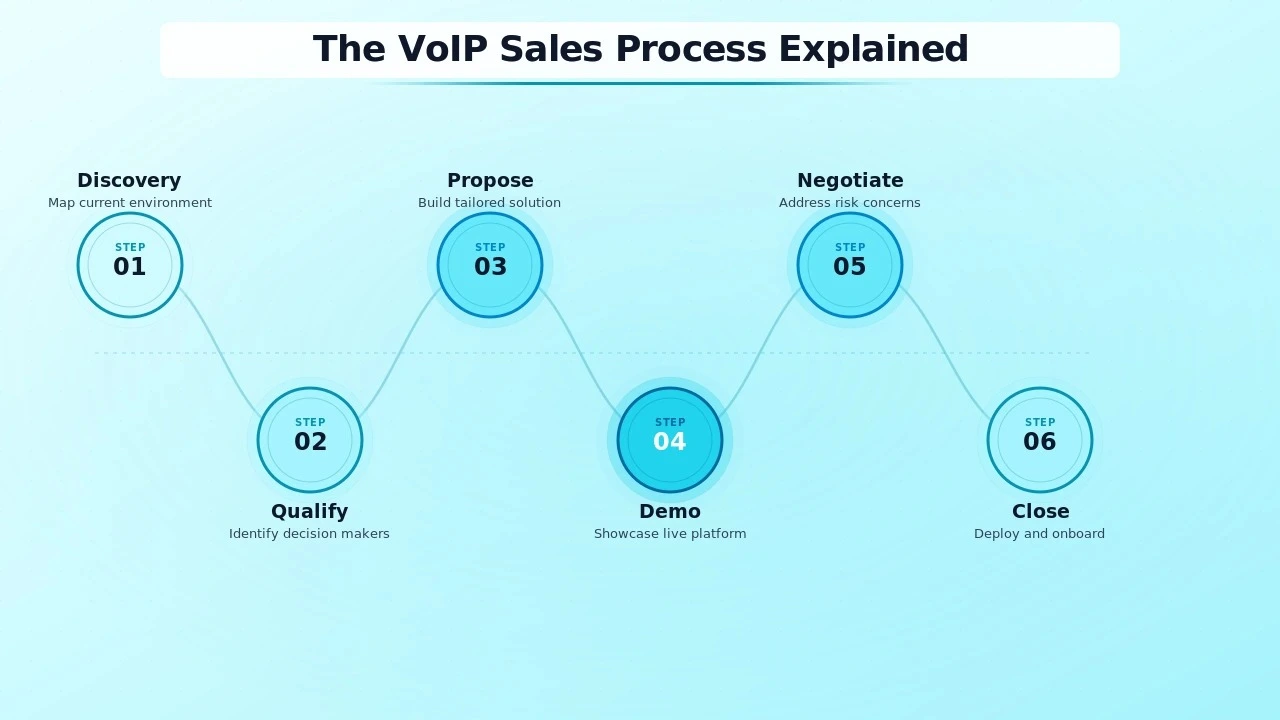
Success here follows a clear path. It matches how buyers make phone decisions. It does not match how vendors like to sell.
Discovery — Before any proposal, map the buyer's setup. Note the number of lines. Note the current PBX. Note which countries they call. Note current spend. Note the pain points. Good sales VoIP reps learn this before the demo, not during it. Buyers who feel understood trust you. Buyers who get a feature dump do not.
Solution design — Build the proposal around real needs. Show prices for real call volume. Pick the right route type: CLI or Non-CLI, SIP trunk or hosted PBX. Match features to the workflows they described. Generic pitches lose. Tailored ones win. Buyers can tell the difference right away.
Proof-of-concept — Big accounts want to test live before they buy. Give them trial access on real, live systems, not a sandbox demo. Call quality, setup speed, and portal ease prove value better than any slide deck.
For companies testing voice systems during a trial, Rozper's wholesale VoIP services are built for buyers who want to test quality on real traffic before committing.
Key Benefits That Drive VoIP Sales
Cost Reduction
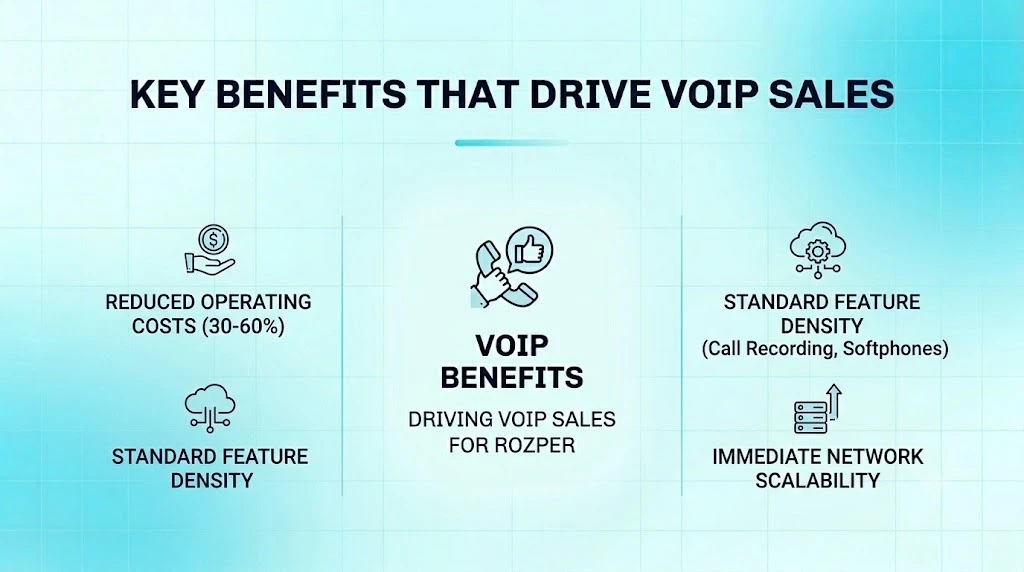
Sales cycles speed up when buyers see the cost gap. Old phone lines cost more than IP voice. Firms that drop PBX cut phone spend by 30–60%. Calls abroad often cost the most on the bill. Wholesale VoIP rates cut that cost a lot, versus PSTN.
Feature Density Without Add-On Costs
SIP platforms bundle features that old systems bill as extras. These include call recording, auto-attendants, voicemail-to-email, softphone apps, and live call data. Compare the buyer's current add-on fees to what comes free with IP. That one comparison often wins the deal in the first meeting. Numbers speak louder than any sales script.
Scalability Without Infrastructure Delays
Old phone systems add lines through orders, new hardware, and weeks of wait. IP voice adds new lines and numbers in minutes. That speed wins over fast-growing firms and call centers right away.
For firms that need global coverage at clear rates, Rozper's wholesale voice solutions support DID setup and A-Z calls with clear per-minute pricing.
Common Objections in VoIP Sales
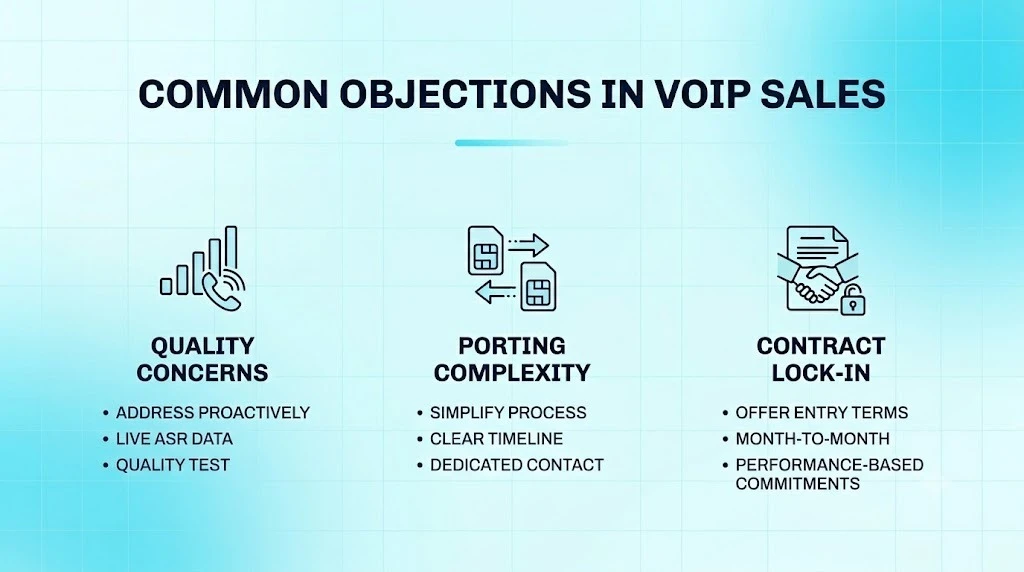
Every skilled rep in this field hits the same core objections. This holds true no matter the company size or field. Spotting them early is the difference between a quick close and a stalled deal.
Call quality concerns — Handle these before they come up. Show live call-quality data for the buyer's top call spots. Offer a real-system test. Walk through the backup network setup. Proof beats promises, every time. Let the buyer see the numbers for themselves.
Number porting complexity — Make it simple. Run the move yourself. Give a clear timeline. Assign one contact for the move. Offer call forwarding, so the buyer's phones never go dark.
Contract lock-in — Offer month-to-month terms at first. Let good results earn the long deal. Do not demand it upfront.
Top sales VoIP teams treat each objection as a gap in knowledge. It is something the buyer needs answered first. It is not a wall to break through. Answer it well, and trust grows fast.
Regulatory and Compliance Awareness
Compliance knowledge sets strong sales teams apart from weak ones in tight fields. Health, finance, and government buyers ask direct rule questions. Not having an answer ends the deal faster than any price fight.
U.S. VoIP firms must follow FCC rules. These cover E911 emergency calls, STIR/SHAKEN caller ID checks, CPNI data rules, and number-move duties. The consumer VoIP guide is the top U.S. source on which rules apply to firms and their clients. Reps who can quote real rules build trust that a plain sales sheet cannot. This one skill closes many stalled deals.
How to Build a Winning Strategy
A strong plan here grows through three habits. Each one feeds the others over time.
Vertical specialization — VoIP value shifts a lot by field. Health care needs safe call recording and HIPAA setup. Call centers need strong routes and CLI. Hotels need PMS links. Reps who speak one field's language close faster than reps with one pitch for all.
Relationship-led prospecting — In telecom, referrals and partners build a steadier pipeline than cold calls. Happy clients who see real gains become fans. MSPs, system firms, and IT experts already hold the trust big phone deals need. That trust moves deals through many-person buying teams.
Structured follow-up — Telecom sales cycles run long. A buyer who says no now often says yes in six months. That happens when a contract ends or quality drops with their current firm. Send updates with industry facts, rule changes, and new features, not the same pitch again. That keeps you visible without wearing out your welcome. Patience often wins the deal in the end.
Conclusion
Every good deal starts with a clear view of what the buyer wants to fix or protect. Features follow outcomes. It never works the other way. Learn the process. Know the objections. Build trust through rule knowledge.
FAQs
Why do telecom buying cycles run longer than most software evaluations?
Telecom touches every team's daily work. Phones, CRM links, rule papers, call recording, and dialing plans all shift at once in a move. This means more people involved, more tech checks, and more rule checks than a normal software buy. Good rollouts create very low churn. That makes each win worth the longer sales cycle.
How should you respond when a prospect raises call quality concerns?
Lead with data, not comfort words. Show live call-quality and delay stats for the buyer's key spots. Offer a live trial on real systems, not a boxed demo. Quality worries are really risk worries. They fade once buyers feel real speed, not just hear claims about it.
What challenges do sales VoIP teams face when entering regulated verticals?
Firms entering health, finance, or government face one big wall: gaps in rule knowledge. Buyers expect real answers on E911 rules, STIR/SHAKEN checks, CPNI duties, and call-recording storage rules. Firms who do not know this lose to rivals who can talk rules with proof and papers.
How does pricing transparency affect deal outcomes in telecom sales?
A lot. Buyers judge total cost, not just the headline rate per minute. Move fees, E911 add-ons, API costs, and minimum volume rules that show up after the deal break trust and stall deals. Show full prices upfront, with rates by call spot based on real call mix. That builds trust and speeds up the review.
When is the right time to offer a proof-of-concept in the sales process?
Offer a trial for big accounts, tough moves, or real system doubt. This works best when doubt comes from risk, not budget or timing. Set a clear test window and clear win rules before the trial starts. Open trials with no goals rarely turn into deals, no matter how good the product is.