Introduction
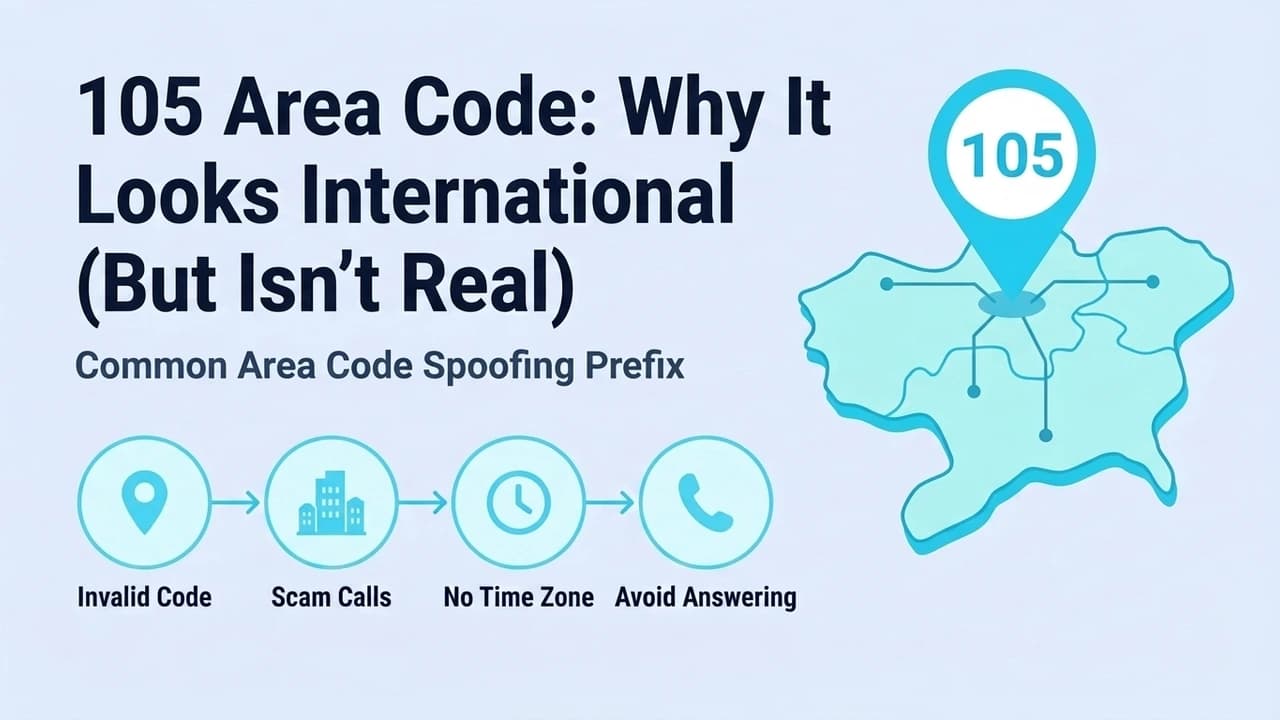
If your phone just flashed a call from the 105 area code, you might wonder whether it belongs to another country instead of a US region, regardless of which app or device displayed it. That assumption trips people up because plenty of nations use short numeric prefixes, so a low three-digit number feels plausible at a glance. This guide breaks down exactly why the 105 area code fails the numbering rules, why it gets mistaken for an international dialing code, and how a real, regulator-approved layer like area code 743 North Carolina proves what a genuine assignment looks like. Stick around, and you will never confuse a fabricated domestic prefix with a foreign one again.
Key Takeaways:
- The 105 area code has never been assigned to any city, carrier, or region in the United States or Canada.
- Its first digit breaks the North American Numbering Plan format before international dialing even enters the picture.
- International calling prefixes follow a completely different system, so 105 cannot be a foreign code either.
- Area code 743 North Carolina shows what a real, government-approved overlay looks like layered on top of 336.
105 Isn't Missing — It Was Never a Candidate
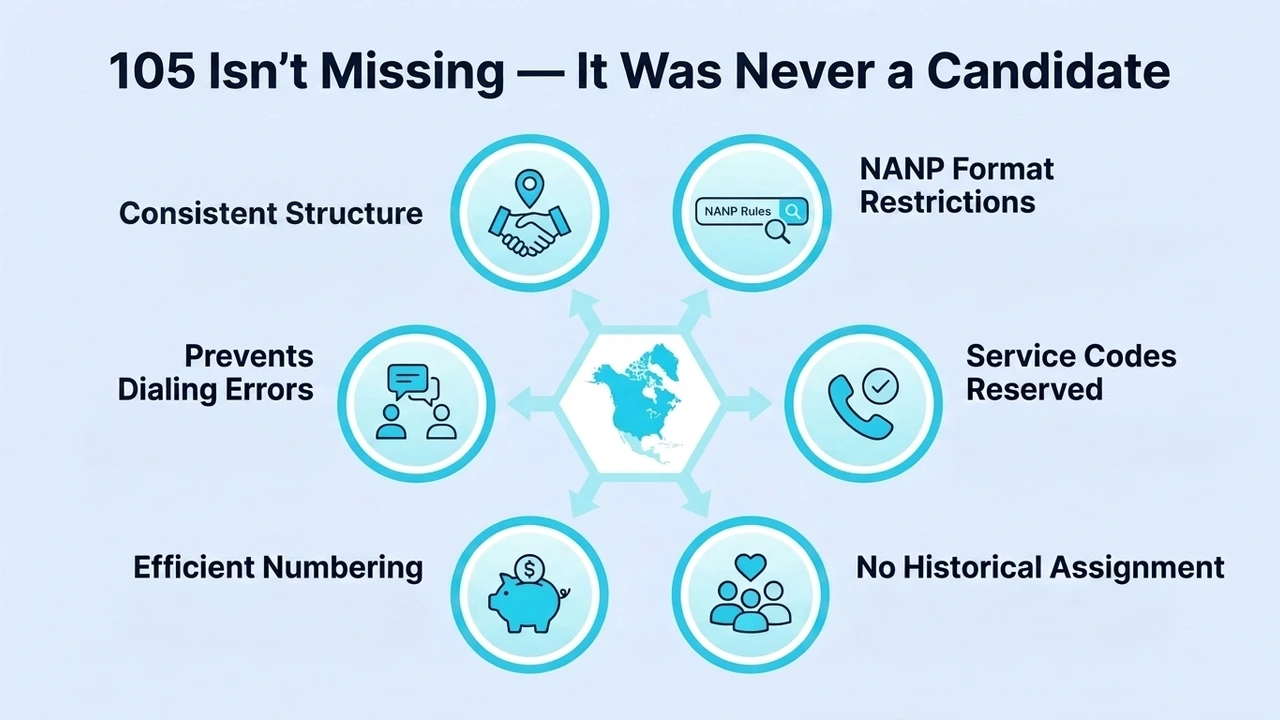
Most people assume an unfamiliar area code must belong somewhere, and the 105 area code exploits that assumption by looking just plausible enough to pass a quick glance. Its low, round digits give it a false sense of legitimacy, especially to someone who has never had a reason to question a caller ID before.
- No US city, county, or state has ever had 105 assigned as its area code, in any regulatory filing on record.
- Canadian carriers and provinces show the exact same absence in every directory, past or present.
- The code has never appeared in any NANPA relief plan, split, or overlay announcement anywhere in North America.
- Numeric neighbors like 104 and 106 are equally absent, confirming a structural gap, not a lost record.
- Reverse lookup services and carrier databases agree unanimously, with zero conflicting entries anywhere on file.
The Digit Rule Behind Every Real NANP Code
Every legitimate area code in the United States and Canada follows one unbending format, and understanding it explains why the 105 area code could never have existed under any version of the numbering plan.
The Digit Every Area Code Must Start With
The North American Numbering Plan requires every area code to begin with a digit from 2 through 9. The digit 1 is reserved strictly as the long-distance access prefix, so nothing starting with 1 — including 105 — can ever qualify as a valid regional code. This rule has held since the plan launched in 1947, without a single exception carved out for any state or province.
Why This Applies Everywhere in the Plan
This rule covers every US state, Canadian province, and Caribbean territory inside the numbering plan, with zero regional exceptions. The 743 overlay in North Carolina exists precisely because it followed this format; the 105 area code never had that option.
Why People Confuse 105 With International Dialing Codes
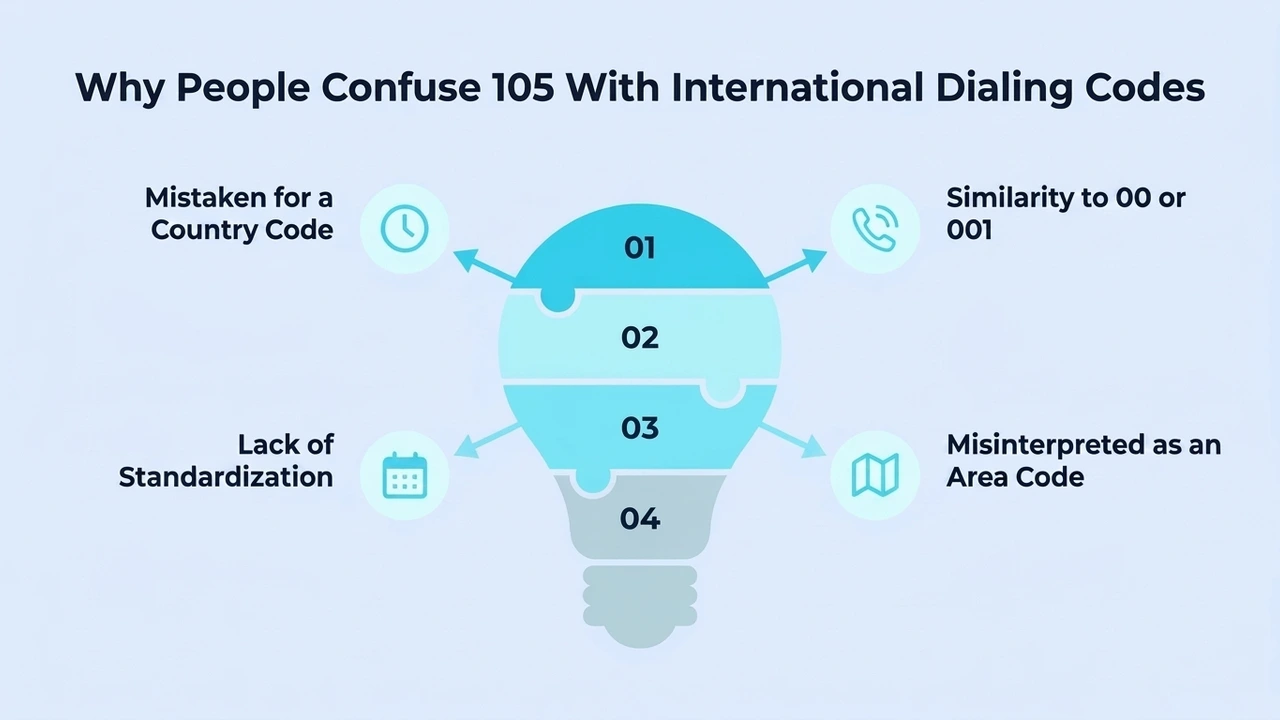
A big part of the confusion around the 105 area code comes from how international dialing actually works. Plenty of countries use short numeric prefixes, so a three-digit US number can feel like it belongs abroad.
- Country calling codes are dialed after an international access prefix like 011, not in place of a US area code.
- Codes such as 44 (UK) or 91 (India) never appear inside a standard ten-digit US number.
- A caller ID showing "105" is still formatted like a domestic call, which rules out an international explanation entirely.
- Genuine international calls typically display a "+" symbol or a longer digit string, not a plain three-digit prefix.
- Even satellite and VoIP-to-VoIP calls route through recognizable country codes, never a bare invalid area code like 105.
What a Call Showing 105 Usually Means Instead
Seeing the 105 area code almost never means what it appears to mean, whether that is a foreign code or a hidden domestic one. The real explanation is usually far more mundane.
The Two Most Common Causes
Caller ID spoofing software can generate any three digits it wants, including invalid ones like 105, specifically to look unusual or urgent enough to prompt a callback. A simple data entry typo in a contact list, CRM, or autodialer can just as easily produce 105 instead of a working area code, especially when digits are entered manually at scale.
A Less Common but Real Possibility
Some call center systems leak a malformed test number during a software update or carrier migration, briefly displaying invalid prefixes like 105 before the issue gets caught and fixed. Smaller businesses running budget VoIP setups are especially prone to this, since fewer of them audit outbound caller ID configuration on a regular basis.
North Carolina's Newest Layer: How the 743 Overlay Joined 336
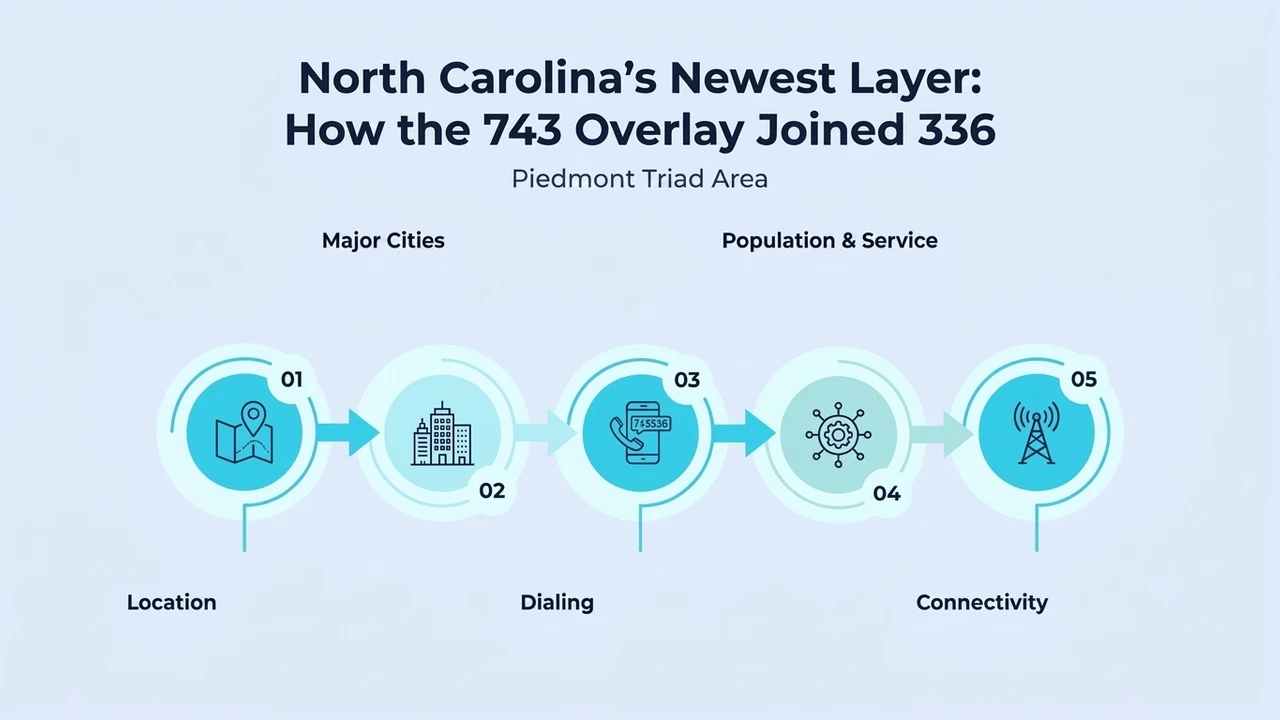
Comparing a fabricated code to a real one makes the gap obvious. Area code 743 North Carolina is a genuine overlay added to the Piedmont Triad, layered directly on top of the existing 336 region without displacing a single subscriber or changing anyone's existing number.
- Area code 743 North Carolina was approved on October 24, 2015, and entered service on May 23, 2016.
- It shares the exact same footprint as 336, covering Greensboro, Winston-Salem, High Point, and Burlington.
- Ten-digit dialing became mandatory across both codes once the overlay activated in the region.
- New subscribers in the Triad may receive either 336 or 743, with equal legitimacy in every carrier's official records.
- The rollout followed a full public regulatory process, complete with published notices, something the 105 area code has never gone through.
5 Signs a Caller ID Number Deserves a Second Look
A short verification habit beats guessing every time an unusual prefix shows up on your screen, whether it looks domestic or foreign. Run through these signs before you call back or share any information with a caller you don't recognize.
- The area code's first digit is 0 or 1, which instantly rules out a real NANP assignment like the 105 area code.
- The number displays with no "+" symbol or country code, despite claiming to be international.
- A reverse lookup search returns no carrier match or reports it as unassigned.
- The caller pressures you for personal or financial details within the first few seconds.
- The same prefix has already been reported to your carrier or through the FCC guidelines for consumer complaints.
Making Sure Your Own Caller ID Never Raises Questions
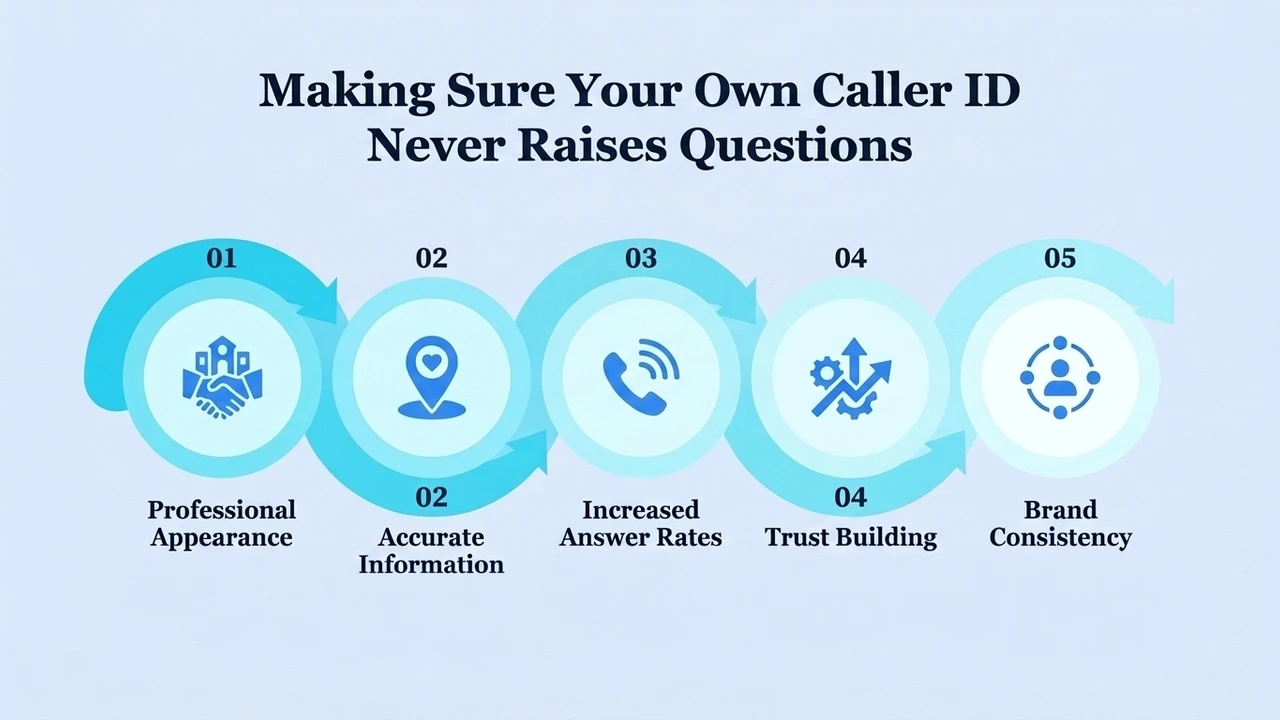
Businesses face the same look-alike problem from the other direction: making sure their own outbound numbers never resemble a fabricated prefix like the 105 area code. That mistake quietly costs answered calls and customer trust, especially for sales and support teams calling out at scale.
- Provision every outbound line through a carrier that issues real, NANP-compliant numbers, never invented digits.
- Use STIR/SHAKEN-authenticated calling so your caller ID cannot be mistaken for spoofed or suspicious traffic.
- Choose local presence numbers, including legitimate overlays like the 743 region in North Carolina, so customers see a recognizable regional code.
- Rozper configures every business number so it always matches a real, assignable NANP region, never a fabricated or foreign-looking prefix.
Rozper customers get this verification built into their outbound calling by default, which keeps every number they dial from looking as suspicious as a stray 105 area code, whether the team is five people or five hundred, and regardless of how many regions they operate across.
Conclusion
The 105 area code will never show up in a legitimate carrier directory because it breaks the same first-digit rule every real area code must follow, and it fails as an international code too, since foreign prefixes never replace a domestic area code slot. Comparing it against a real, regulator-approved overlay like area code 743 North Carolina shows exactly what a genuine regional assignment looks like, built through a formal process with a public activation date. Most calls displaying 105 trace back to spoofing software or a simple data entry mistake rather than any assigned carrier, foreign or domestic. Knowing this distinction turns a confusing caller ID into a fast, confident decision.
Applying the same short verification habit to every unfamiliar number protects your time and your personal information going forward, no matter how convincing or foreign the prefix looks. Whether you are checking a personal call or managing outbound numbers for a growing team, the checks above separate real regional codes from fabricated ones in seconds, no lookup subscription required. Rozper builds that same clarity into every number it provisions, so your business never sends a confusing caller ID by accident. Start applying these checks today, and unfamiliar prefixes like a stray 105 area code stop being a mystery.
FAQs
Is 105 a real area code anywhere in North America?
No, this prefix does not exist in the US or Canadian numbering system. It fails the basic NANP rule requiring every area code to start with a digit between 2 and 9.
Could 105 be an international dialing code instead?
No, international calls use a separate access prefix and country code format, never a plain three-digit US-style area code. A caller ID showing 105 is still structured like a domestic number.
Should I answer a call showing this prefix?
Answering is generally safe, but never share personal or financial details with a caller you cannot verify. Hang up and contact the organization directly through a known number if anything feels off.
Does the 743 overlay cost more than 336 to call in North Carolina?
No, area code 743 North Carolina shares identical rates and coverage with 336, since it is an overlay, not a separate pricing region. Every local call requires ten-digit dialing either way.
How can I stop my own business numbers from looking suspicious?
Work with a provider that issues verified, carrier-grade numbers backed by STIR/SHAKEN authentication instead of invented digits. Rozper builds this protection into every number it provisions for growing teams.