Introduction
A quick caller ID lookup for the 101 area code almost always ends the same way — no city, no state, no match. That gap matters, because a phone number showing up with no home region is either a display glitch or something worth a second look. This guide breaks down exactly why the 101 area code fails to register in the North American Numbering Plan, what a call displaying it usually signals, and how a legitimate overlay code like area code 680 New York proves what a real area code actually looks like. By the end, you will know exactly how to read any unfamiliar number with confidence instead of guessing.
Key Takeaways:
- The 101 area code is not assigned anywhere in the United States, Canada, or the wider North American Numbering Plan.
- Every valid area code must start with a digit from 2 through 9, which rules out 101 by format alone.
- Numbers displaying the 101 area code usually trace back to spoofed caller ID, dialing errors, or app-based fake IDs.
- Area code 680 New York shows what a genuine, government-approved overlay code looks like in practice.
Why Your Caller ID Search for the 101 Area Code Comes Up Empty
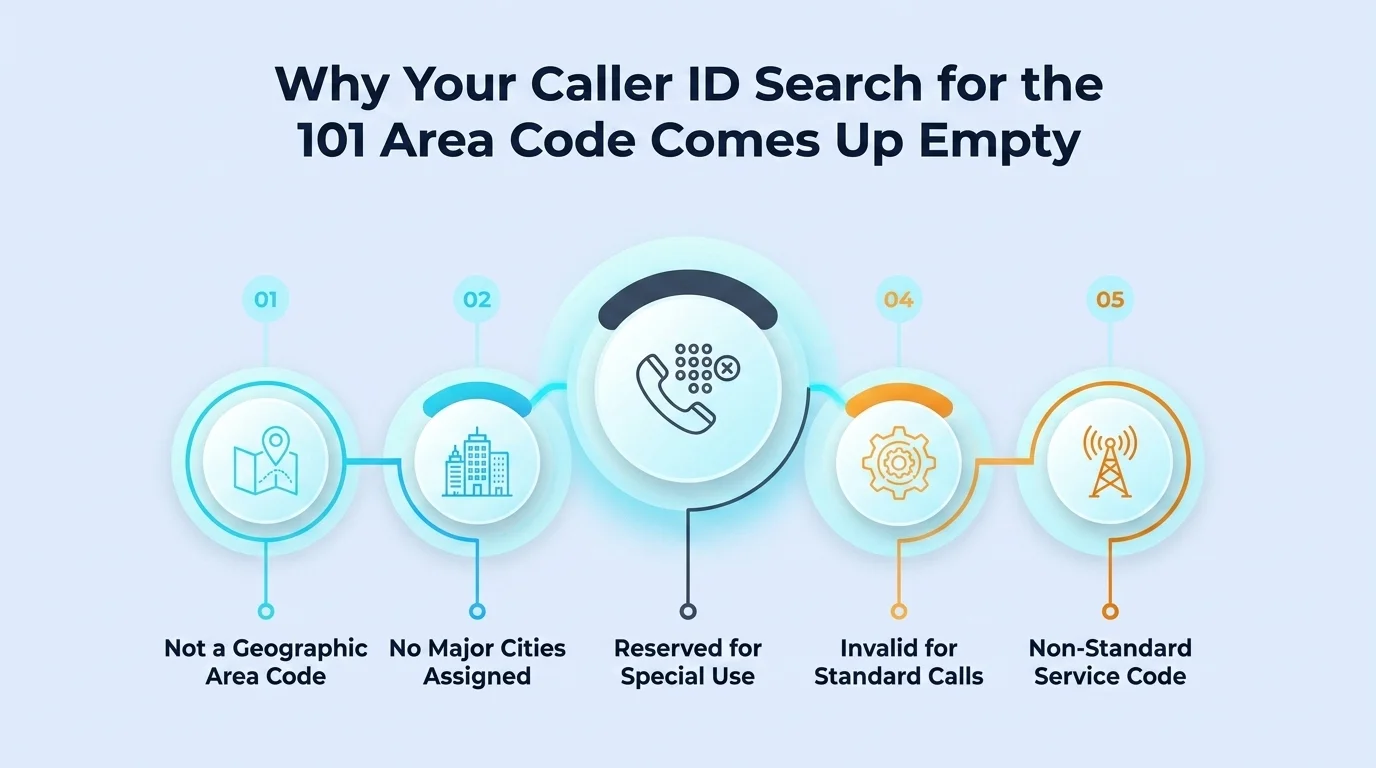
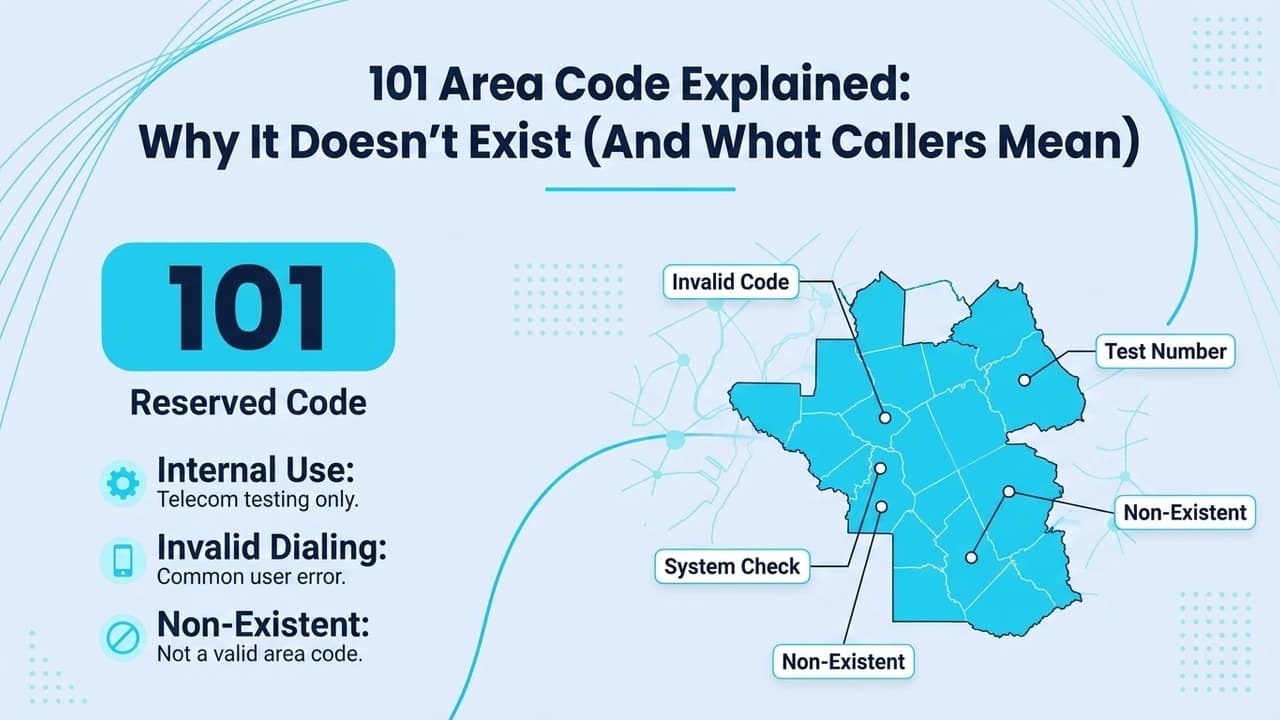
Typing "101" into any area code lookup tool returns the same blank result, and that is not a database error or a temporary glitch. The 101 area code has never been assigned to a city, state, or carrier anywhere in the United States or Canada, despite showing up occasionally on caller ID screens. Telecom directories, carrier databases, and the North American Numbering Plan Administrator all agree on this point without exception.
That blank result is actually useful information. It tells you the number on your screen was never issued through the standard numbering system, which narrows down what actually happened rather than leaving you guessing about a mystery caller.
- No city or state has ever been linked to the 101 area code, in any regulatory filing or carrier record.
- Major lookup services and reverse number databases list it as unassigned or flatly invalid.
- Carriers have no billing, routing, or porting records tied to it, so it cannot originate a real call.
- The code has never appeared in any official area code split, relief plan, or overlay announcement anywhere in North America.
The Numbering Rule That Disqualifies 101 as a Real Area Code
Every legitimate area code follows a strict format set by the North American Numbering Plan, and 101 breaks that format at the first digit. Understanding this rule is the fastest way to spot a fake number without needing a lookup tool at all.
The Format Every Real Area Code Must Follow
Valid area codes always begin with a digit between 2 and 9. The number 1 is reserved as the long-distance access code you dial before a ten-digit number, so no area code can start with it — which instantly disqualifies the 101 area code.
Where 101 Breaks the Pattern
Because its first digit is a 1, the sequence 101 can never function as a real area code under current or historical NANP rules. This is the same reason codes like 011 or 100 never appear on a legitimate caller ID either, since the entire block starting with 1 is set aside for dialing logic rather than regional assignment. Once you know this single rule, spotting a fabricated area code becomes almost instant, no lookup tool required.
What It Usually Means When a Call Shows the 101 Area Code
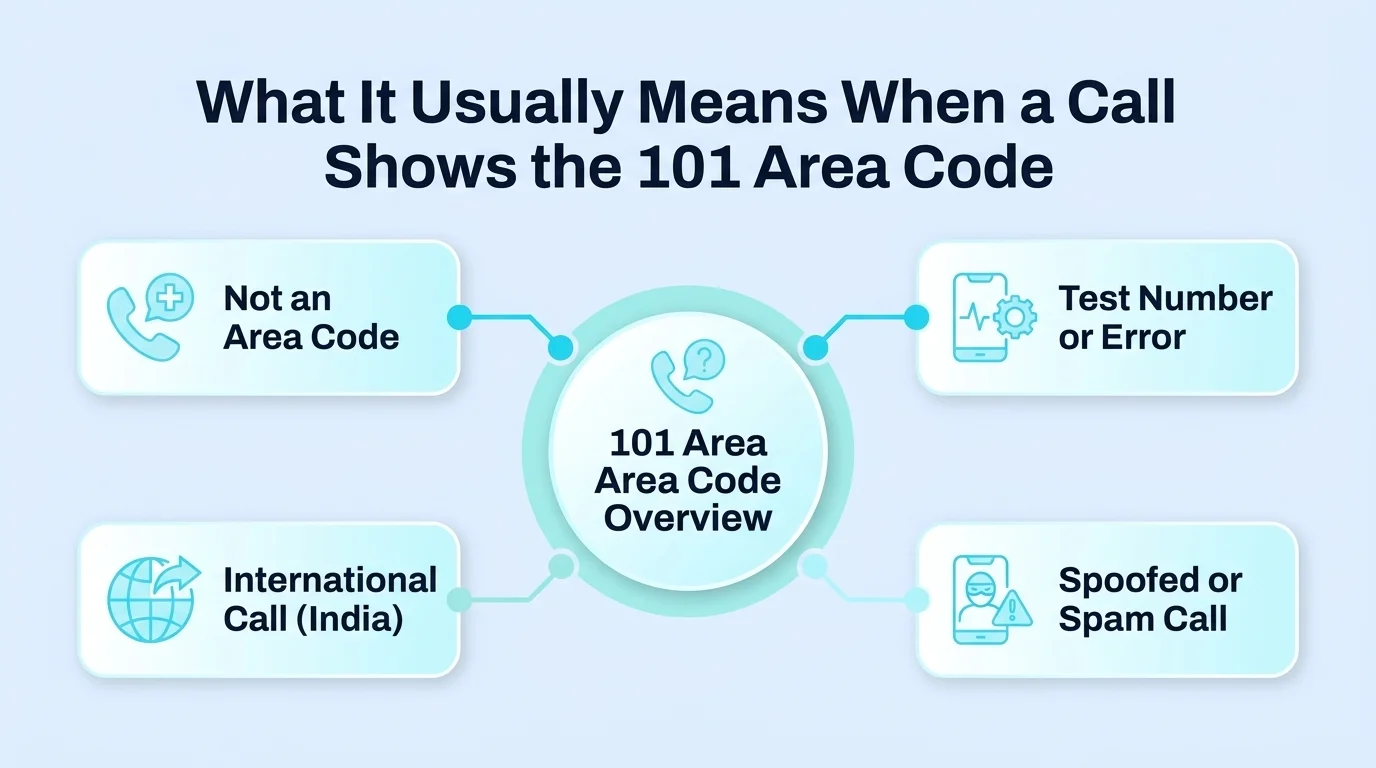
If your phone displays a call from the 101 area code, the number itself was almost certainly manipulated before it reached your screen. This happens more often than most people realize, and it rarely means anything good is on the other end.
- Caller ID spoofing: Scammers use widely available software to display any number they choose, including invalid ones like 101, to look more convincing.
- App-based fake calls: Some prank or marketing apps generate placeholder numbers that never route through a real carrier network at all.
- Testing or misconfigured systems: Call centers and dialers occasionally leak internal test numbers with invalid prefixes during software errors or upgrades.
- Simple typos: A three-digit entry error in a contact list, CRM, or dialer can display 101 instead of a real, working area code.
Answering is usually safe, but never give out personal or financial details to a caller whose number cannot be traced back to a real region or carrier.
A Real Overlay in Action: How the 680 Area Code Works in New York
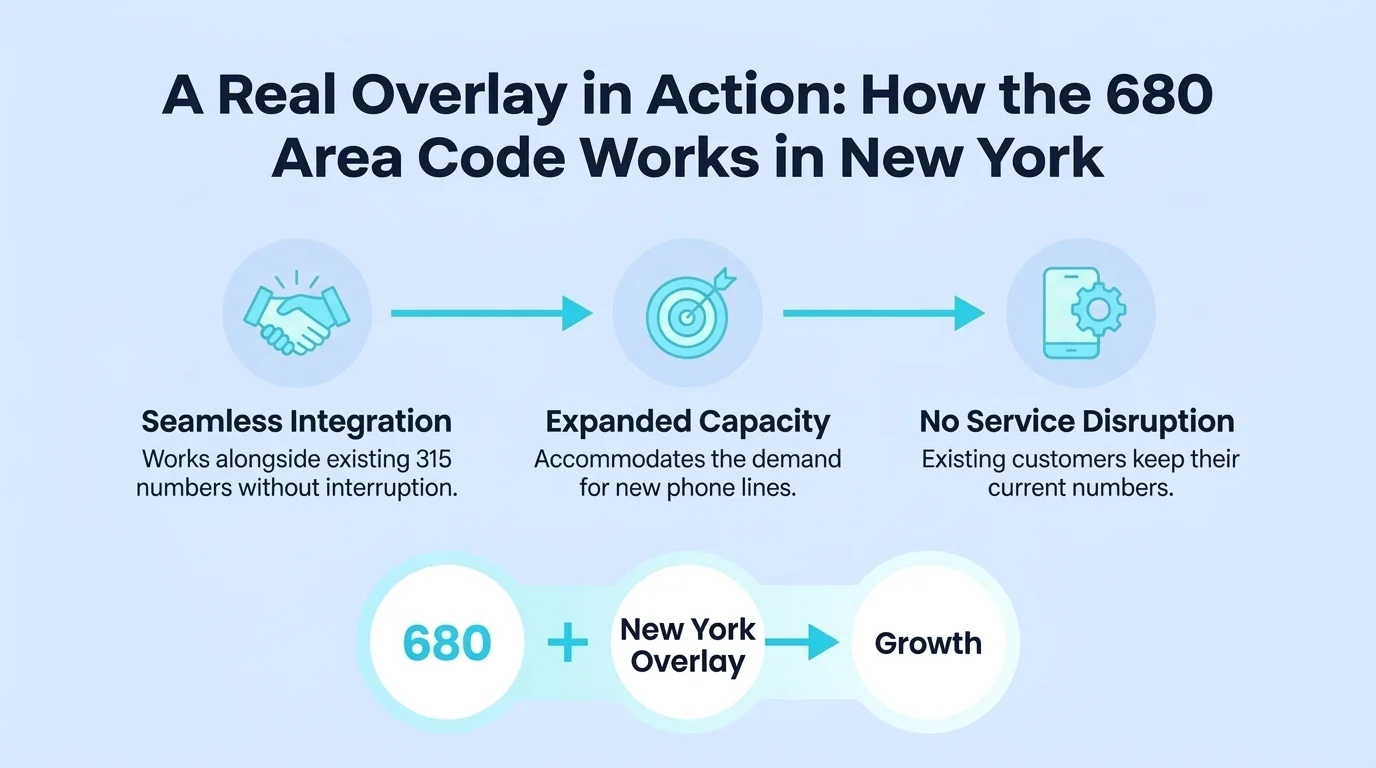
Comparing a fake code to a real one makes the difference obvious. Area code 680 New York is a genuine 680 area code overlay that the New York State Public Service Commission approved to add capacity to the 315 region covering Syracuse, Utica, and Watertown.
Why New York Needed a Second Code
Central New York was running out of fresh number combinations under 315 alone, as more homes, businesses, and mobile lines competed for the same finite set of seven-digit endings. Rather than force existing New York numbers to change, regulators layered area code 680 New York directly on top of the same geographic footprint, preserving every customer's original number.
What the Overlay Changed for Callers
- Both 315 and 680 now serve the exact same counties across Central and Northern New York.
- Ten-digit dialing became mandatory for every local call in the region once the overlay went live.
- New subscribers may receive either code, and both are treated as equally legitimate local numbers.
- The rollout followed a public, FCC-supervised approval process, unlike the 101 area code, which has no such record anywhere on file.
5 Steps to Confirm Any Unfamiliar Area Code Before You Call Back
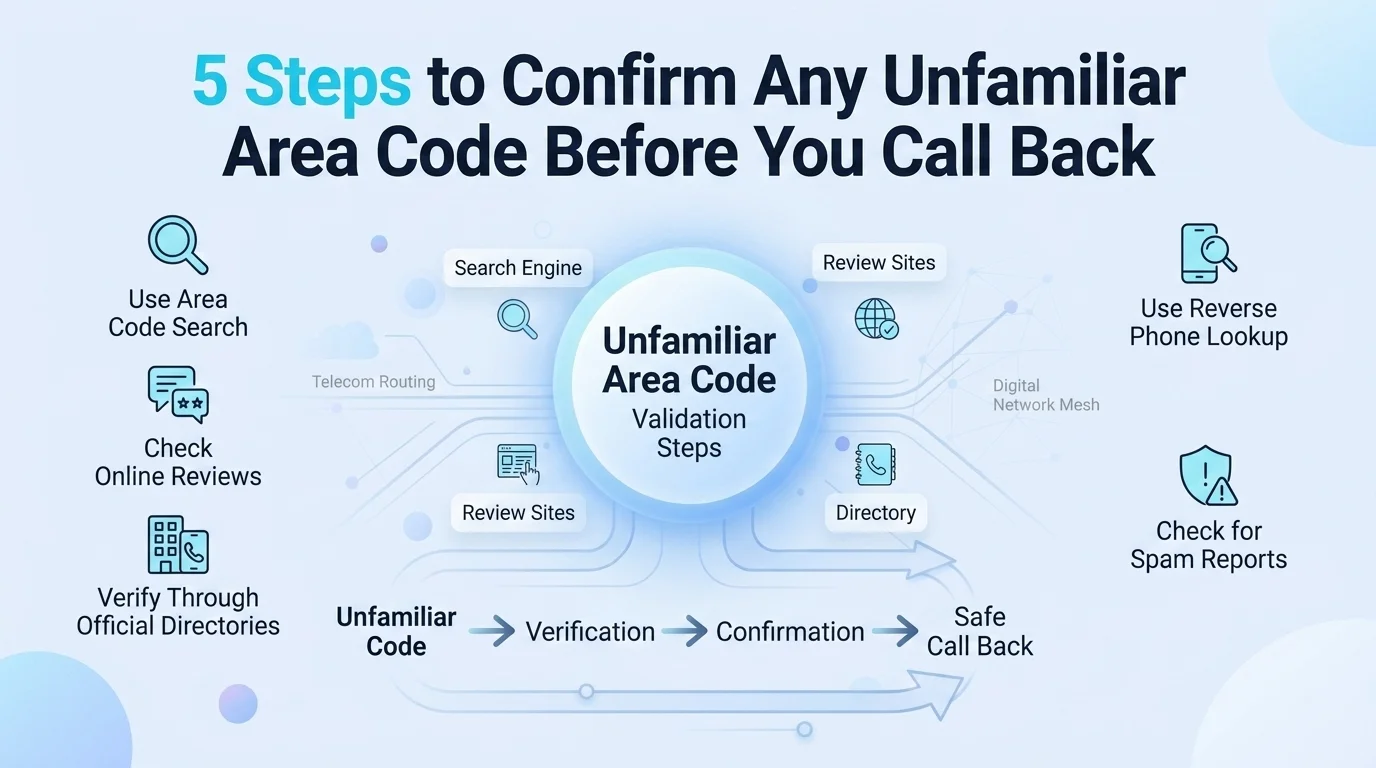
A short verification habit protects you from spoofed numbers far better than guessing ever will. Use this quick process whenever a call looks unfamiliar or the area code itself seems off.
- Search the exact three digits in a trusted area code directory before assuming the caller is real.
- Check whether the code follows NANP rules — it must start with 2 through 9, unlike the 101 area code.
- Look up the full number itself, not just the area code, using a reputable reverse lookup service.
- Avoid calling back immediately; wait and search first if no voicemail or callback reason was left.
- Report confirmed spoofing attempts to your carrier, or through the FCC guidelines for consumer complaints, so the pattern gets tracked.
How Growing Teams Keep Their Caller ID Trustworthy Across States
Businesses face a different version of this problem: making sure every outbound number they use is real, traceable, and trusted by the person receiving the call. This matters just as much as spotting a fake 101 area code on your own phone, because customers apply the exact same scrutiny to the numbers calling them.
- Provision numbers only from carriers that assign genuine, NANP-compliant area codes rather than recycled or unverified blocks.
- Use STIR/SHAKEN-verified calling so your outbound caller ID cannot be mistaken for spoofed or untrustworthy traffic.
- Choose local presence numbers, including real overlays like area code 680 New York, so customers see a recognizable regional code every time.
- Rozper issues verified local numbers across the same trusted numbering system that makes overlays like 680 possible, so outbound calls never carry the red flags of an invalid prefix or a mismatched region.
Rozper customers get this verification built into every number they provision, which keeps caller ID clean and trustworthy across every region a growing team operates in, from a single Central New York office to a fully distributed sales floor.
Conclusion
The 101 area code will never show up in a legitimate carrier directory because it breaks the basic formatting rule every real area code must follow, and comparing it against a real, approved code like area code 680 New York makes the contrast clear — one went through a formal regulatory process, and the other never existed at all. Treating every unfamiliar number with the same short verification habit protects your time, your money, and your personal information going forward, whether you are checking a personal call or managing outbound numbers for a growing business. Rozper builds that same reliability into every number it provisions, so your team never has to second-guess a caller ID again. Start applying these checks today, and unfamiliar numbers quickly stop being a mystery.
FAQs
Is 101 a real area code in the United States?
No, the 101 area code does not exist anywhere in the US or Canadian numbering system. It fails the basic NANP format rule that every valid area code must follow.
How do I know if a call is spoofed?
Spoofed calls often show unusual, unassigned, or inconsistent area codes, like this one. Reverse lookup tools and reporting unusual numbers to your carrier help confirm suspicious activity.
Is it safe to answer a call from an unknown area code?
Yes, answering is generally safe as long as you never share personal or financial information. Hang up and verify independently if the caller pressures you for sensitive details.
Does the 680 overlay cost more to call than 315 in New York?
No, the 680 overlay carries the exact same rates and coverage as 315 in New York, since it is an overlay, not a separate pricing zone. Callers dial ten digits either way, with no extra charges.
How can a business avoid using invalid or spoofed-looking numbers?
Work with a provider that issues verified, carrier-grade numbers backed by STIR/SHAKEN authentication. Rozper provisions every business number through legitimate NANP channels, avoiding the red flags tied to codes like 101.