Invoering
De stem van de groothandel zorgt ervoor dat bedrijven met klanten, partners en personeel blijven praten. Het is de laag onder vrijwel elk zakelijk gesprek.
Dit is het uitgangspunt: wat grootschalige stem is, hoe de onderdelen ervan – beëindiging, oorsprong, doorvoer – in elkaar passen, en de woordenschat die je nodig hebt voordat je dieper gaat.
Als u al weet wat u zoekt, ga dan direct naar onze volledige handleidingen op groothandel spraakdiensten (functies, gebruiksscenario's en providerselectie) of groothandel spraakbeëindiging (routing, kwaliteitsstatistieken en prijzen).
Als je je nog steeds aan het oriënteren bent, begin dan hier.
Wat is groothandelsstem?
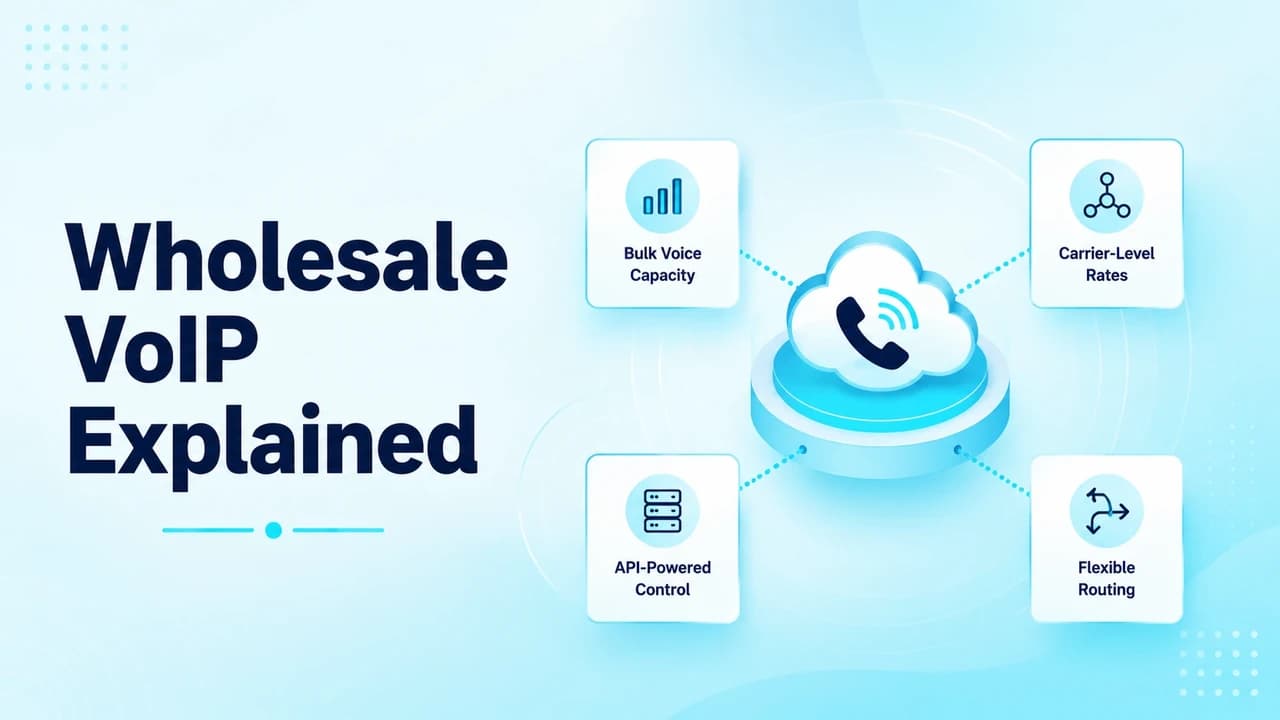
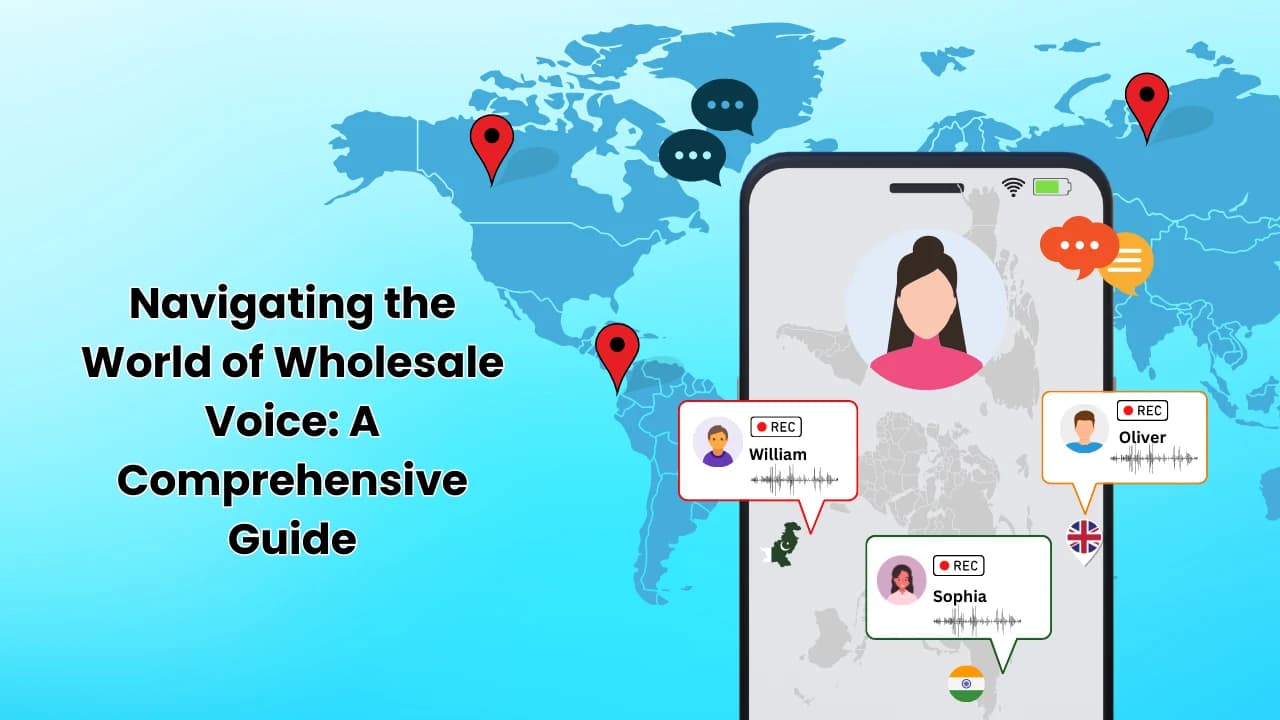
Wholesalespraak is de bulkverkoop van gesprekscapaciteit aan bedrijven, vervoerders en exploitanten. Het valt uiteen in drie delen:
- Spraakbeëindiging: verbindt uw uitgaande gesprekken met de persoon die u hebt gebeld.
- Stemoorsprong: handelt oproepen af die van buitenaf binnenkomen.
- Doorvoer: geeft gesprekken door tussen netwerken die geen directe verbinding hebben.
Vervoerders verkopen deze in bulk. Kopers gebruiken ze vervolgens intern of verkopen ze door.
Het bereik is waar het om gaat. Eén contract kan u in contact brengen met klanten over de hele wereld, tegen tarieven die een retailabonnement nooit kan evenaren.
Belangrijkste afhaalrestaurants
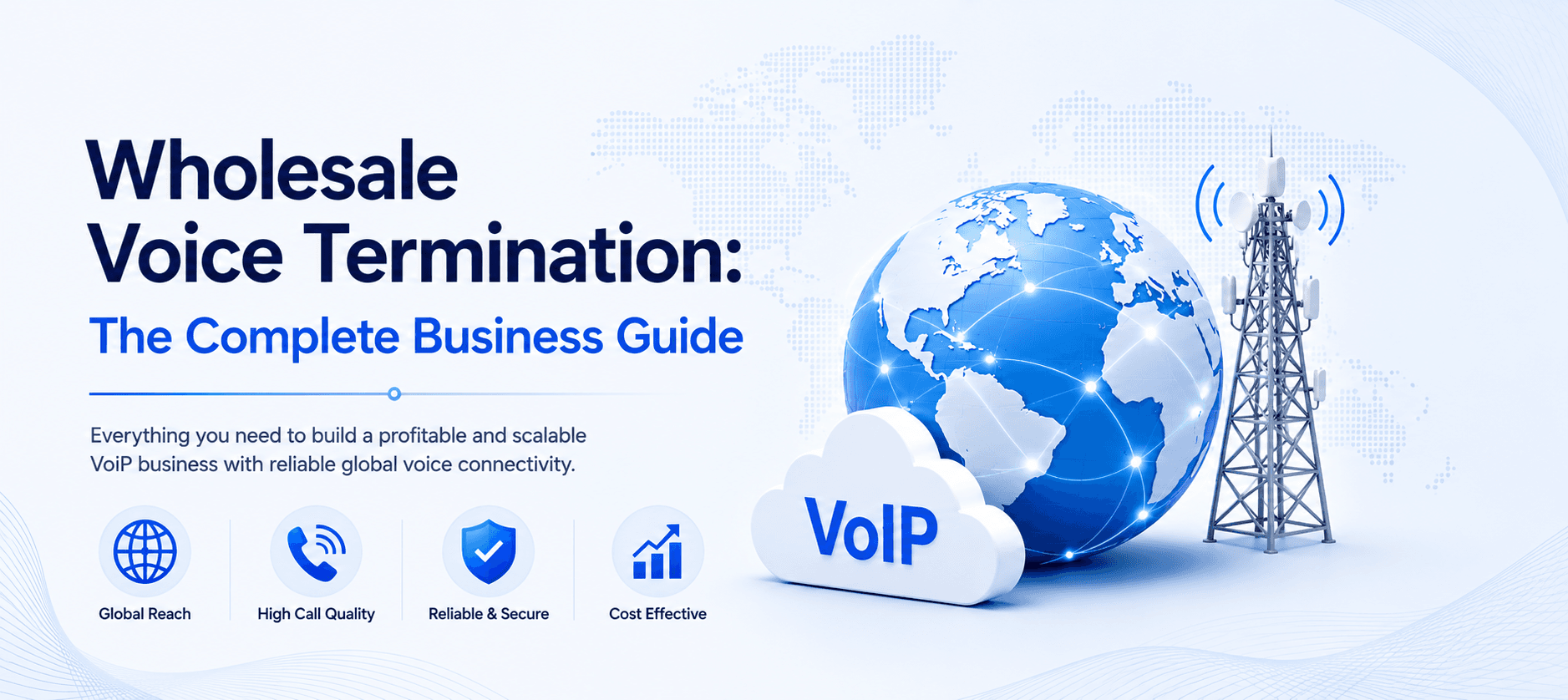
- Wereldwijd bereik: Praat met klanten en partners in andere landen zonder een vervoerderdeal in elk land.
- Schaal: Vergroot de gesprekscapaciteit naarmate de vraag toeneemt, zonder nieuwe hardware.
- Kwaliteit: Duidelijke, stabiele verbindingen maken elk gesprek eenvoudiger.
- Klantervaring: Bellen landt, klinken schoon en komen op tijd aan.
- Kosten: Door groot in te kopen, wordt de prijs per minuut verlaagd.
Inzicht in wholesalespraakdiensten
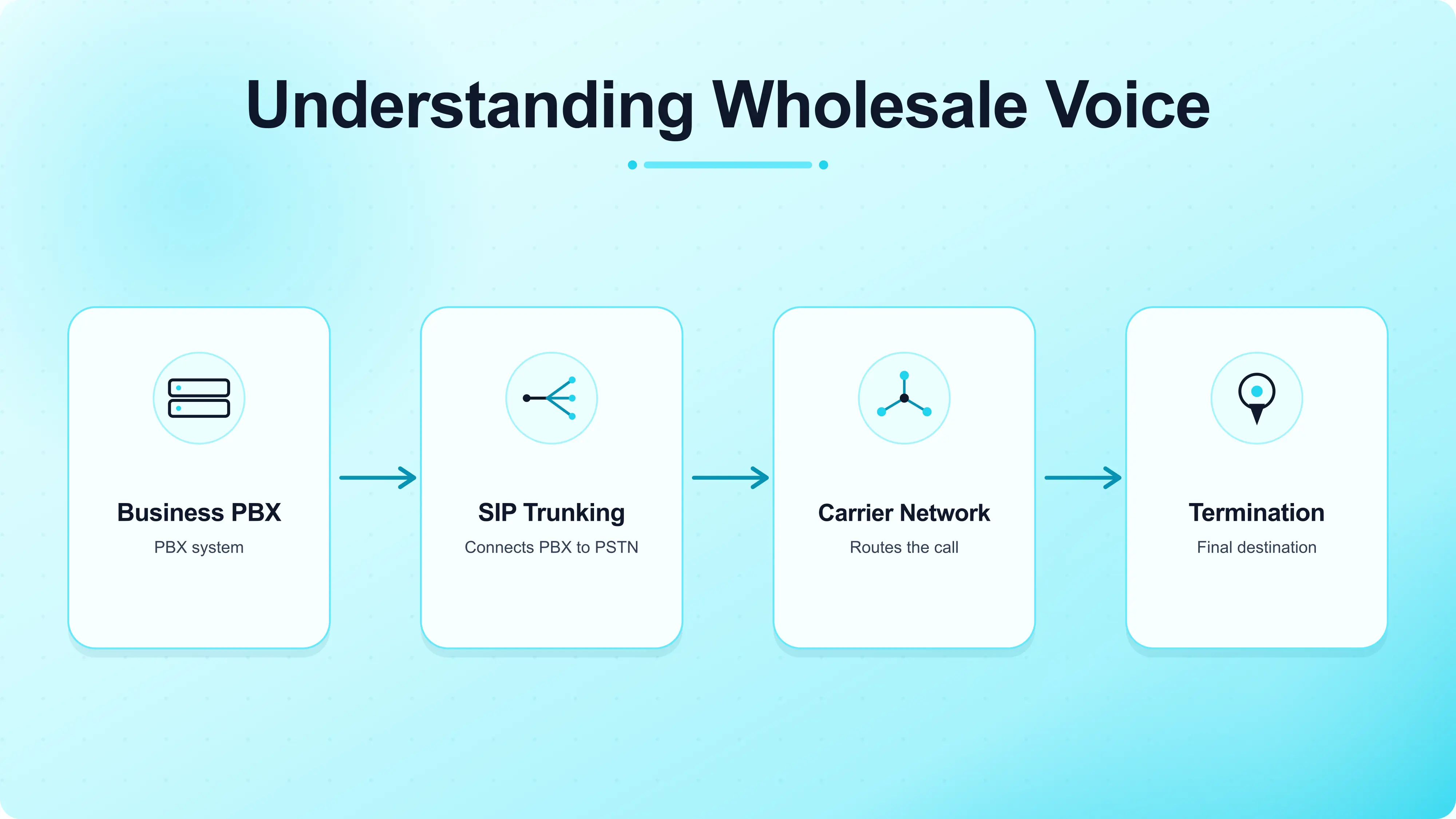
Een oproep verlaat uw systeem en komt binnen op een netwerk van een provider. Die vervoerder gebruikt diensten voor spraakbeëindiging om een pad te vinden en het gesprek door te geven aan het verre netwerk, waardoor het wordt voltooid. De hele sprong duurt even, waar de twee uiteinden zich ook bevinden – of het nu gaat over traditionele circuitgeschakelde lijnen, VoIP of SIP-trunking.
Bedrijven gebruiken het om hun eigen gesprekken te voeren. Vervoerders gebruiken het om hun aanbod uit te breiden. App- en platformbedrijven gebruiken het om bellen aan hun producten toe te voegen. Voor een volledig overzicht van de functies, gebruiksscenario's en hoe u de markt kunt evalueren, raadpleegt u onze gids voor groothandelsspraakdiensten.
Voordelen van wholesalespraak
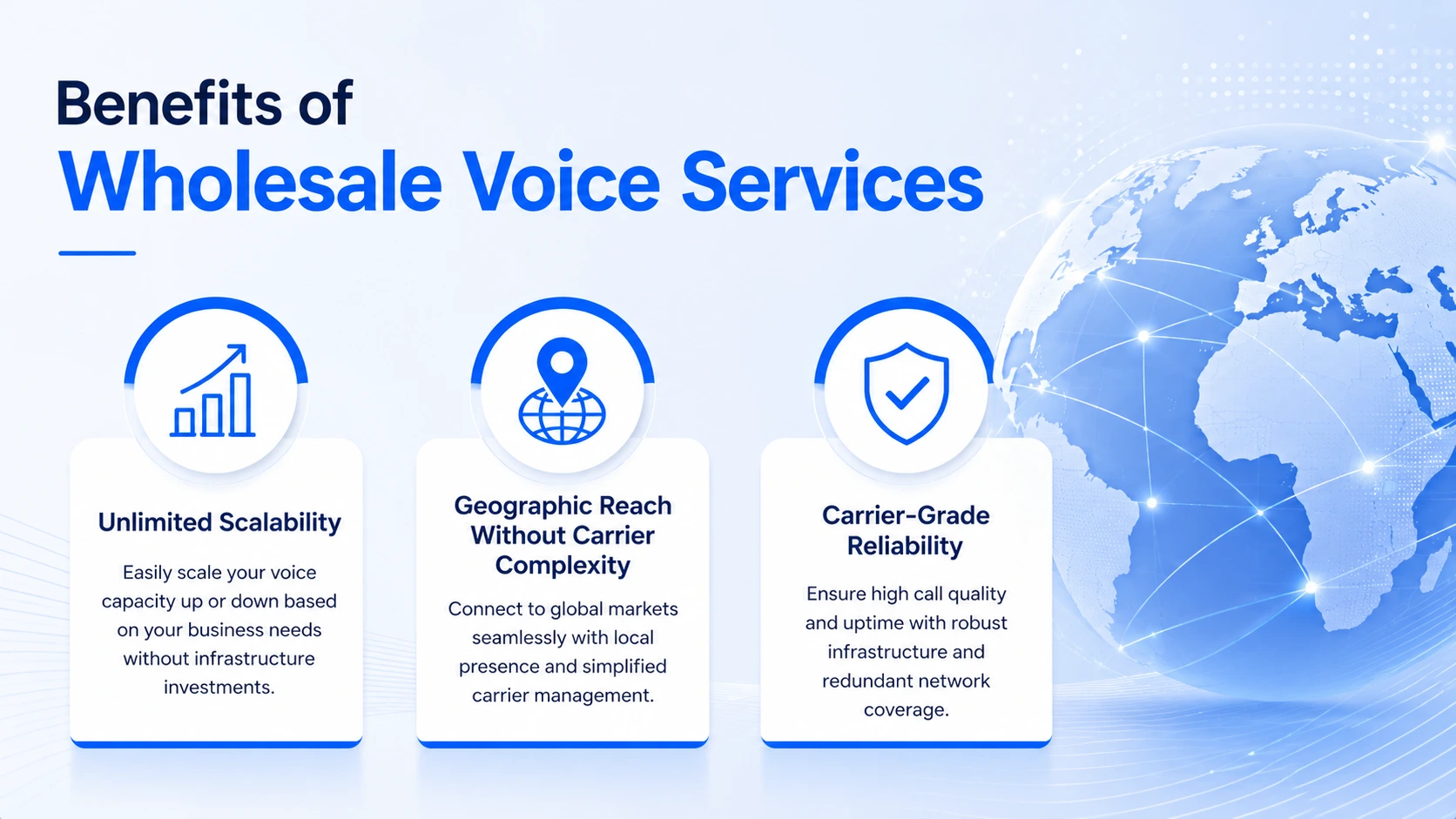
Lagere kosten
Bij bulkaankopen daalt de prijs per minuut, en die besparingen lopen snel op. Spreek een maandelijks volume af en het tarief daalt weer, omdat stabiel verkeer het risico voor de vervoerder verlaagt. Je slaat ook een groot deel van de hardware over, omdat het netwerk dat je al hebt het werk doet.
Meer flexibiliteit
Het belvolume verandert van week tot week. Groothandel laat u meebewegen. U kiest hoe oproepen worden gerouteerd en waar ze terechtkomen, zodat u kunt afstemmen op de kosten of de kwaliteit. Die controle is het deel dat retailplannen nooit bieden.
Betere gesprekskwaliteit
Goede routes betekenen duidelijke lijnen, minder vertraging en geen echo. Bellers merken het op. Dat geldt ook voor uw personeel. Voor uitgaande teams is het effect eenvoudig te meten: schonere routes verhogen het antwoordpercentage, en het antwoordpercentage verhoogt de omzet.
Ruimte om te groeien
Voeg binnen enkele minuten capaciteit toe en laat deze vallen wanneer de haast voorbij is. Dagen met veel verkeer zijn geen probleem meer. Een seizoensretailer kan de capaciteit voor een kwartaal verdrievoudigen en deze in januari terugleveren, waarbij hij alleen betaalt voor wat hij verbruikt heeft.
Belangrijkste kenmerken van Wholesale Voice
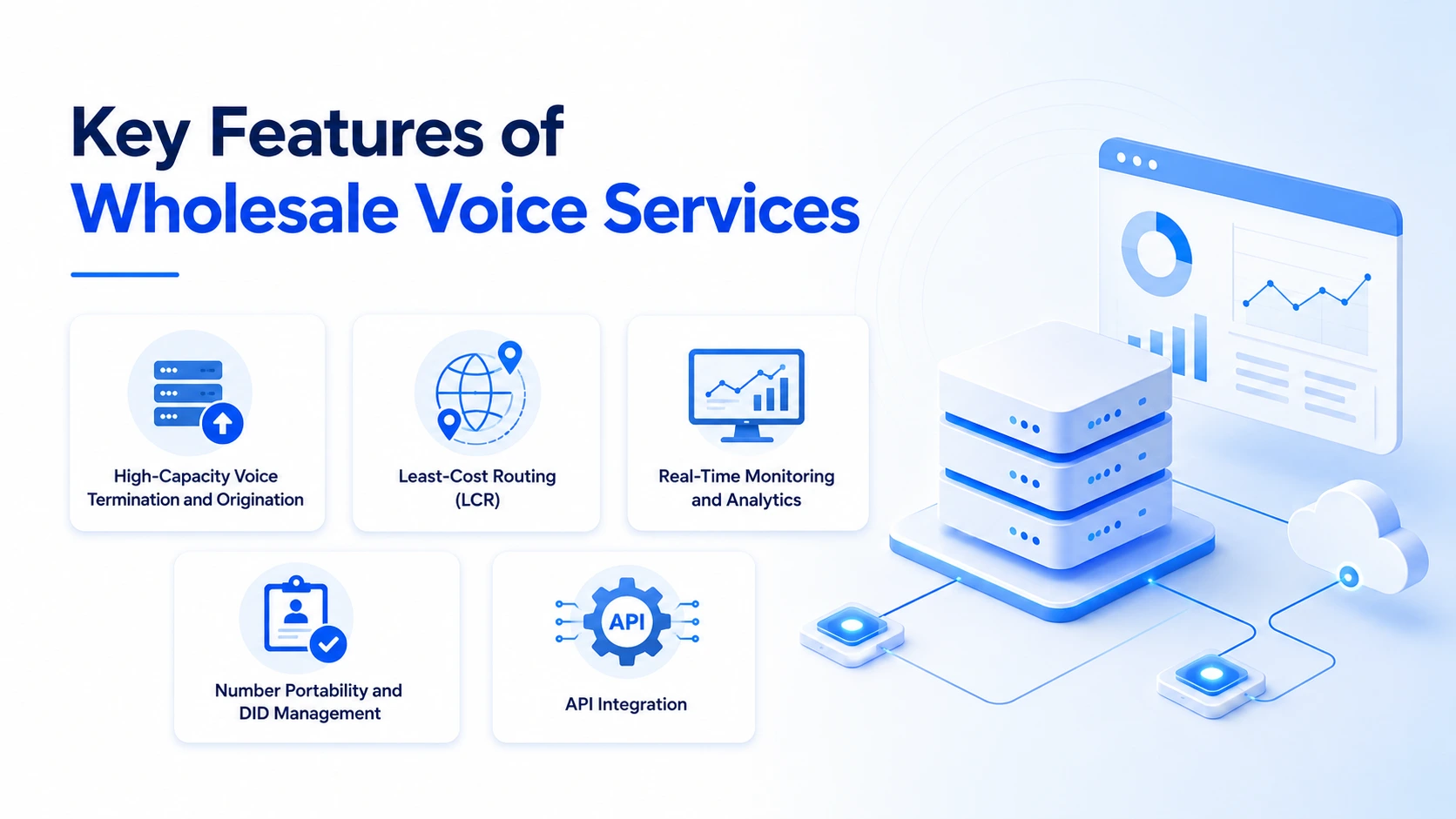
Beëindiging van het gesprek
Beëindiging is de kernfunctie: uw oproep wordt naar de bestemming gebracht. Sterke beëindiging betekent helder geluid en hoge antwoordpercentages, tegen een tarief dat u kunt plannen.
Oproepherkomst
Originatie is de inkomende kant. U kunt gratis en lokale nummers nemen en vervolgens doorschakelingen en wisselgesprekken toevoegen om het verkeer op de door u gewenste manier te sturen.
Nummeroverdracht
Porteren verplaatst uw bestaande nummers met weinig downtime naar een nieuwe provider. In de VS is de lokale regels voor nummerportabiliteit het proces beheersen. Het maakt het meeste uit of u van aanbieder verandert of in meerdere landen actief bent.
Oproeproutering
Slimme routering kiest voor elk gesprek het beste pad. Least cost routing (LCR) vindt de goedkoopste route die nog steeds aan uw kwaliteitseisen voldoet. Live updates verschuiven het verkeer wanneer een netwerk langzamer wordt.
Het kiezen van de juiste aanbieder
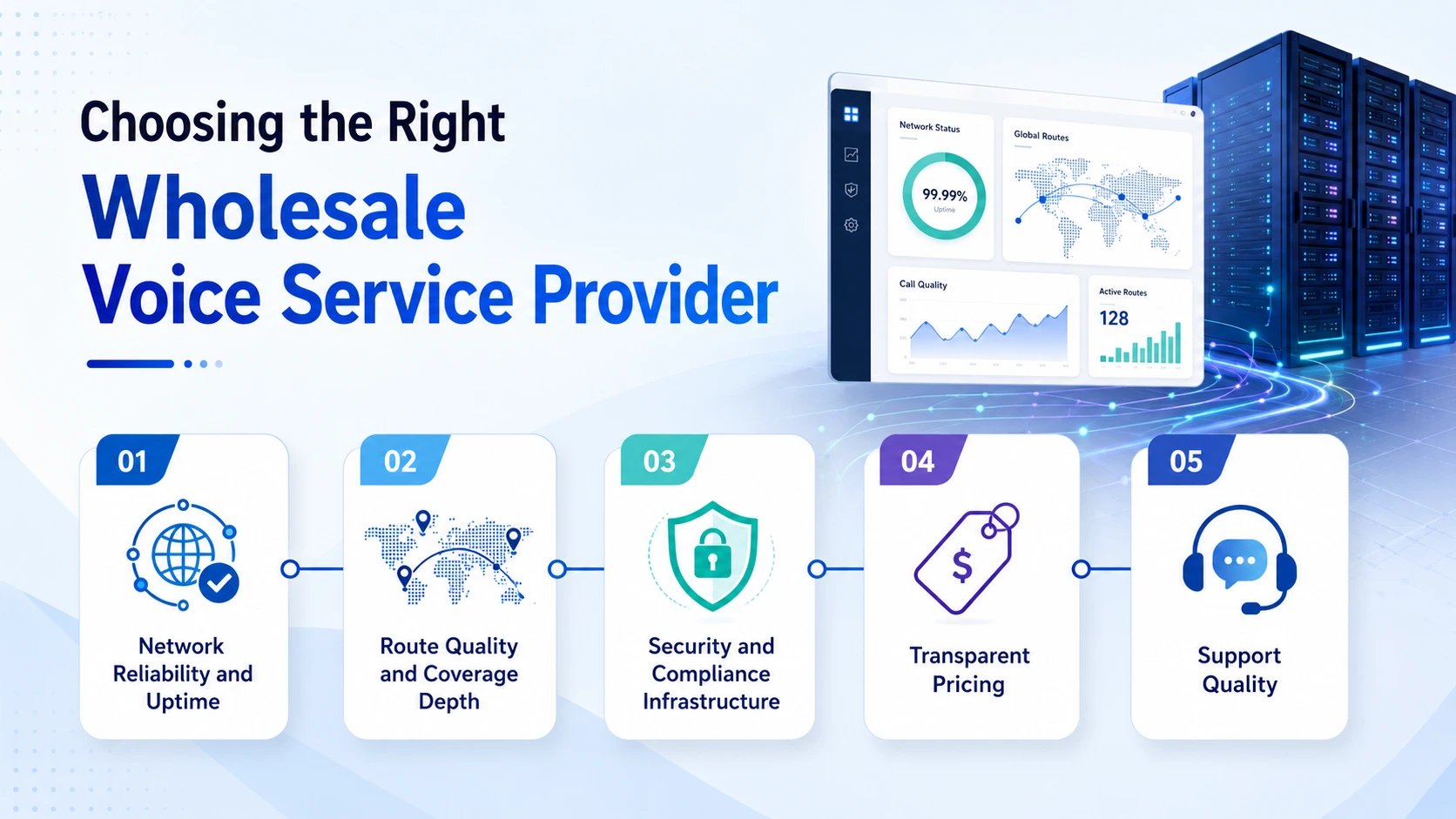
Weeg op zijn minst prijs, dekking en routekwaliteit af, ondersteun responsiviteit, beveiliging/compliance en hoe gemakkelijk het contract kan worden geschaald. Rozper is hier één optie, met groothandelsspraak, SIP-trunking en nummers op één platform. Voor het volledige evaluatiekader – inclusief waarschuwingssignalen waar u op moet letten en hoe u een RFP of proof of concept kunt uitvoeren – raadpleegt u het gedeelte 'Een leverancier kiezen' van onze gids voor groothandelsspraakdiensten.
Trends en innovaties

AI-spraakanalyses, door machine learning gestuurde routering, 5G en IoT veranderen allemaal de manier waarop groothandelsspraakcapaciteit wordt gekocht en gebruikt. Voor meer informatie over wat er verandert en wat dit voor kopers betekent, raadpleegt u het gedeelte 'Trends om in de gaten te houden' van onze gids voor groothandelsspraakdiensten.
Wholesalespraak versus retailspraak
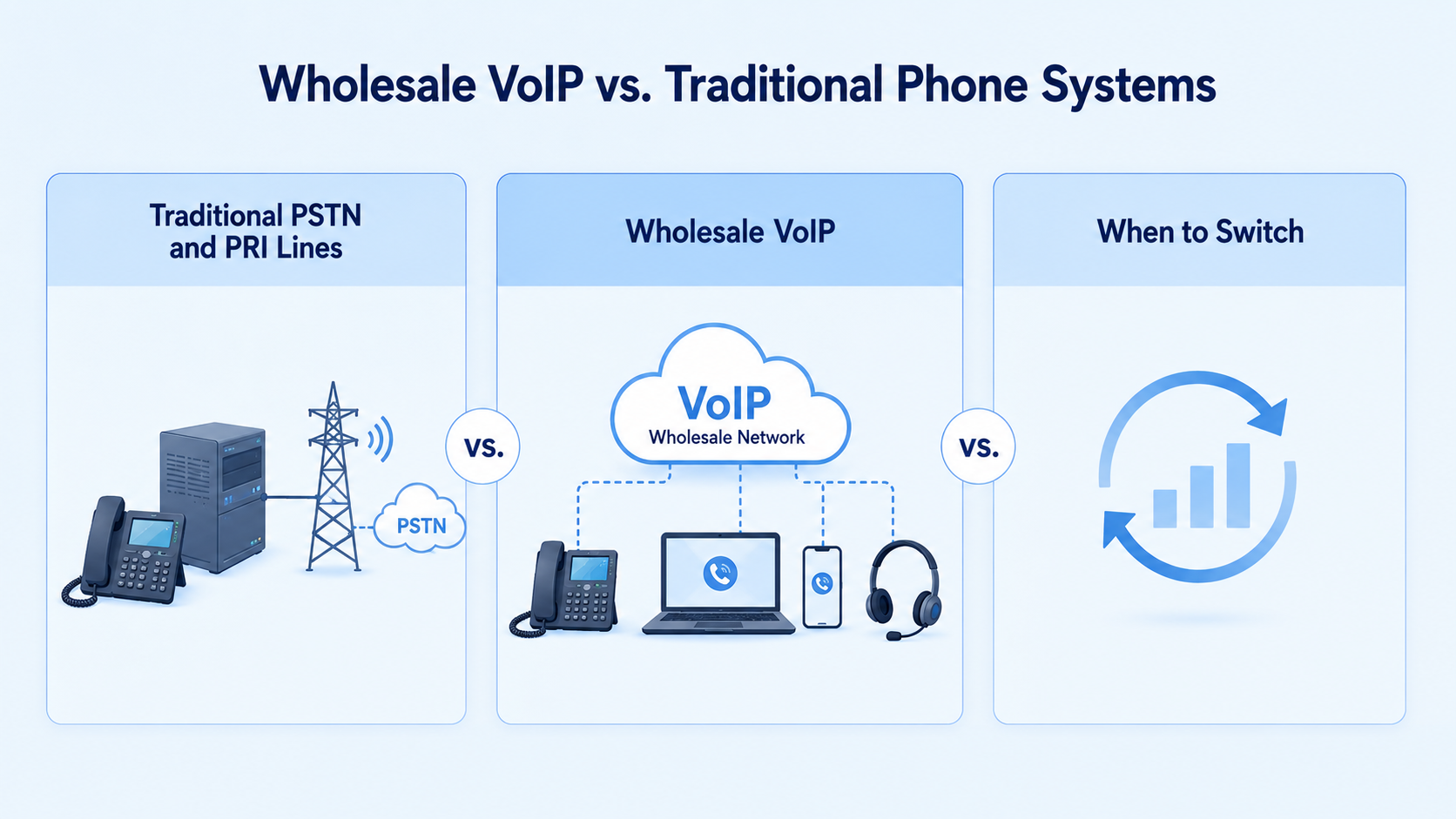
Groothandel stem is gebouwd voor bedrijven en vervoerders die bulkverkeer vervoeren. Prijzen zijn afhankelijk van het volume, routing kun je zelf vormgeven en API's geven je echte controle.
Stem van de detailhandel bedient individuele gebruikers. De abonnementen liggen vast, de prijzen zijn eenvoudig en er valt weinig te configureren. Het is geschikt voor persoonlijk en klein zakelijk gebruik.
De splitsing komt neer op volume en controle. Wholesale verwerkt het grote verkeer met aangepaste tarieven en geavanceerde tools. Retail verwerkt licht verkeer volgens een standaardplan.
Wanneer kies je voor groothandel?
Kies voor groothandel als het belvolume hoog is, als u routering rondom uw verkeer nodig heeft of als u API's aan uw eigen systemen wilt koppelen. Zodra het uitgaande volume groeit, wordt er een dedicated groothandel spraakbeëindiging plan betaalt zichzelf meestal terug.
Prijzen en kostenbeheersing
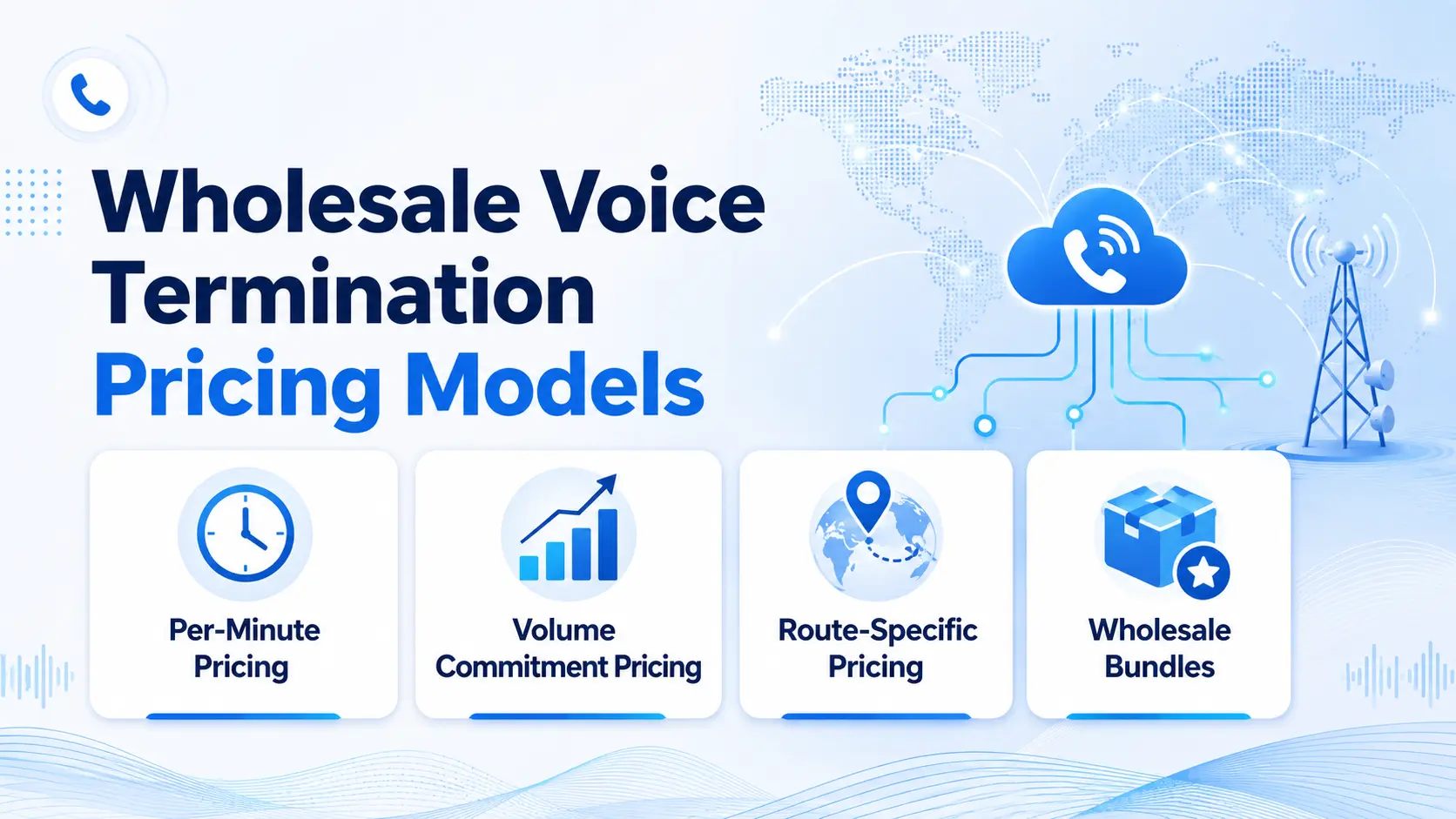
Groothandelsspraak wordt doorgaans per minuut geprijsd, tegen een vast tarief, gelaagd op volume of op maat gemaakt rond uw verkeersmix. In grote lijnen: consolideer het verkeer bij één provider om de facturering te vereenvoudigen en uw onderhandelingspositie te versterken, stem de route af op het goedkoopste pad dat nog steeds aan uw kwaliteitseisen voldoet, en controleer het gebruik regelmatig om verspilling tegen te gaan. Voor een volledig overzicht van prijsmodellen en kostenoptimalisatie op routeniveau, zie het gedeelte 'Prijsmodellen' van onze groothandel gids voor spraakbeëindiging.
Welke gids moet u hierna lezen?
Nu de basisbeginselen aan bod zijn gekomen, kun je de gids kiezen die past bij wat je eigenlijk probeert te doen:
- Providers, functies of gebruiksscenario's evalueren? Lees onze gids voor groothandelsspraakdiensten — het volledige overzicht van wat er beschikbaar is, wie er gebruik van maakt en hoe u een provider kiest.
- Specifiek gericht op uitgaand bellen, routering of gesprekskwaliteit? Lees onze groothandel gids voor spraakbeëindiging — routing, kwaliteitsstatistieken, prijsmodellen en fraudepreventie.
Conclusie
Wholesale voice ondersteunt betrouwbare zakelijke communicatie. Het verlaagt de kosten, voegt flexibiliteit toe, verbetert de gesprekskwaliteit en schaalt met u mee. Als u weet hoe terminatie, originatie, porting en routing werken – en welke van onze diepere handleidingen dekt wat u werkelijk nodig heeft – kunt u dit allemaal gebruiken.
Veelgestelde vragen
Wat zijn wholesalespraakdiensten en waarin verschillen deze van retail?
Groothandel betekent dat u belcapaciteit in bulk koopt, met de routering die u zelf bepaalt en geavanceerde tools. Retail bedient individuele gebruikers met vaste abonnementen en hoeft weinig te configureren.
Waarom zou een bedrijf wholesalespraak moeten gebruiken?
Omdat volume de wiskunde verandert. Als u veel verkeer verwerkt, eromheen een routering nodig heeft of lagere tarieven wilt, wint groothandel. U krijgt ook meer controle over het verloop van oproepen.
Wat zijn de belangrijkste voordelen?
Lagere kosten, meer flexibiliteit, betere gesprekskwaliteit en ruimte om te groeien. Samen maken ze het gebruik van een groot belvolume eenvoudiger.
Hoe verbetert wholesalespraak de gesprekskwaliteit?
Betere routes betekenen minder vertraging en geen echo, zodat de lijnen vrij blijven. Bellers horen het verschil, en uw agenten ook.
Waar moet ik op letten bij een aanbieder?
Weeg prijs, dekking, ondersteuning, beveiliging en schaal af. Vergelijk ze allemaal met uw eigen verkeer, of u nu gewone afgifte of een volledige VoIP-installatie voor groothandel nodig heeft.
Hoe lang duurt het voordat u begint?
De meeste opstellingen zijn binnen enkele dagen live, niet weken. Het werk is configuratie, niet constructie: u richt uw PBX op de SIP-trunk van de provider,
komt de inloggegevens en toegestane IP's overeen en plaatst testoproepen.
Het overzetten van bestaande nummers duurt langer, meestal één tot vier weken, afhankelijk van het land en de verliezende provider.
Kan ik meer dan één groothandelsaanbieder tegelijk gebruiken?
Ja, en veel zware gebruikers doen dat ook. Als u twee providers gebruikt, kunt u terugvallen als er één uitvalt, en kunt u de livekwaliteit op dezelfde routes vergelijken. De afweging is meer administratie: twee contracten, twee tariefpakketten en twee sets inloggegevens om te beveiligen.
Welke statistieken moet ik bekijken na de livegang?
Volg ASR (hoeveel oproepen er verbinding maken), NER (hoeveel er mislukken vanwege netwerkredenen) en PDD (hoe lang de beller wacht voordat hij overgaat). Bekijk ze per bestemming, niet alleen als een gemiddelde voor de hele site. Eén enkele slechte route kan uw cijfers naar beneden halen, terwijl al het andere prima verloopt.