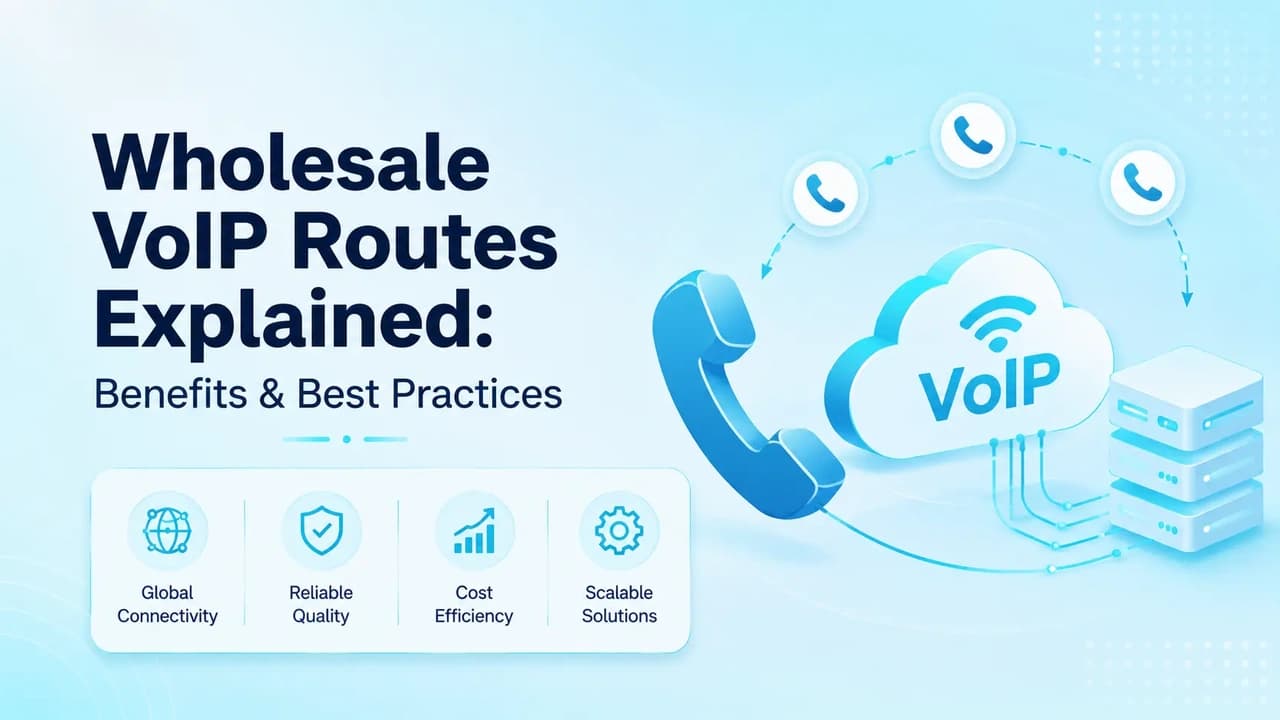
Wstęp
Czy Twoja firma wykonuje dużo połączeń telefonicznych? Czy Twoje koszty za minutę nadal wydają się nieprzewidywalne? Jeśli tak, problemem często jest warstwa routingu,
a nie sama usługa.
Hurtowe trasy VoIP decyduj, dokąd kierowane są Twoje połączenia. Decydują, który operator zakończy połączenie. Ustalają koszt za minutę. Decydują również,
czy Twoi klienci słyszą czysty dźwięk, czy złą linię.
W tym przewodniku opisano, czym są te trasy. Porównuje główne typy. Obejmuje to, które kontrole jakości mają znaczenie. Pokazuje również, jak wybrać dostawcę, który pasuje do Twojego sposobu pracy.
Czym są hurtowe trasy VoIP?
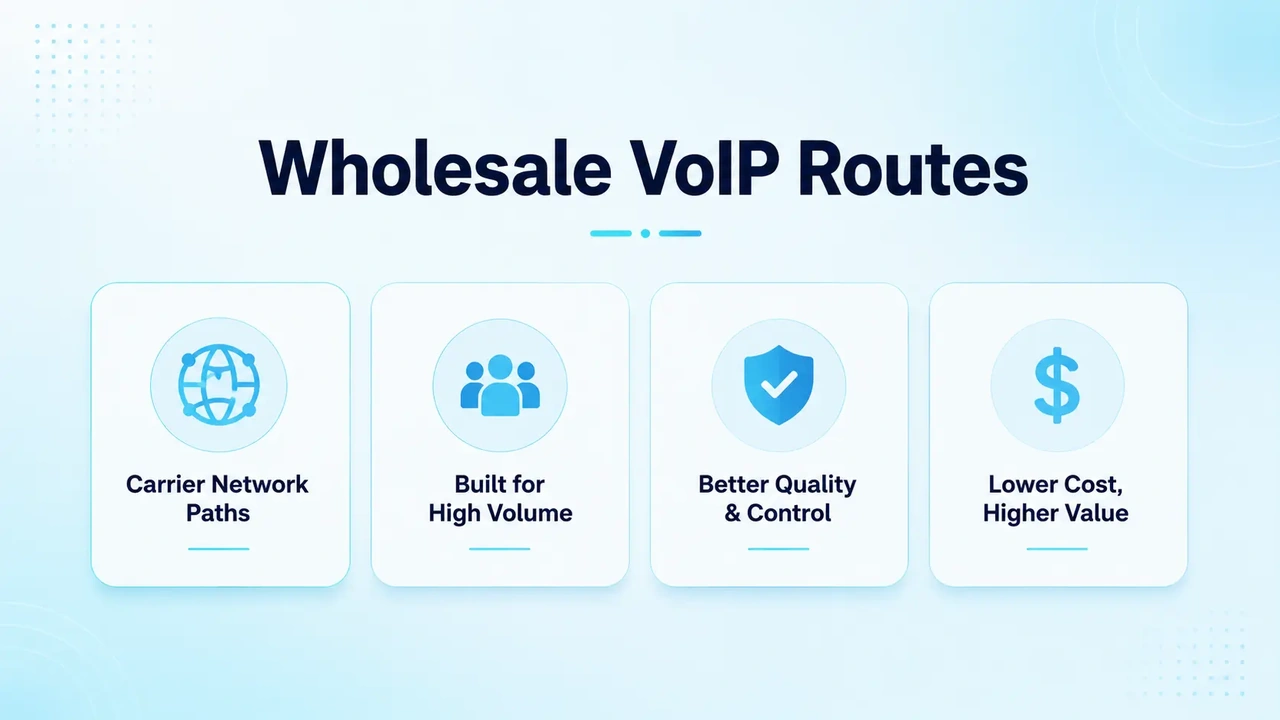
Są to ścieżki operatorów obsługujące masowy ruch głosowy. Połączenie jest przesyłane od punktu początkowego do punktu końcowego za pośrednictwem sieci IP. Ponieważ przemieszcza się masowo,
uzyskuje ceny, których plany detaliczne nie oferują.
Detaliczne plany VoIP pobierają stałą stawkę za miejsce. Trasy hurtowe działają w inny sposób. Duże firmy, sprzedawcy i przewoźnicy kupują je hurtowo. Potrzebują routingu,
który mogą kontrolować za pomocą kodu i operatora wycena i kontroli jakości w wielu krajach.
Hurtowe trasy VoIP są pogrupowane według cech technicznych, zasad i poziomu jakości. Firma wykonująca 10 000 połączeń dziennie na lokalne telefony komórkowe potrzebuje czegoś innego niż contact center prowadzące kampanie w 30 krajach. Wiedza o tym pomoże Ci wybrać konfigurację, która będzie działać, gdy zostanie uruchomiona.
Wybór trasy wpływa na kilka rzeczy jednocześnie: współczynnik odpowiedzi, jakość dźwięku, zgodność z przepisami i koszt minuty. Wybierz niewłaściwy poziom, a ryzykujesz uszkodzeniem identyfikatora rozmówcy, filtrami spamu i ryzykiem oszustwa za granicą.
Rodzaje hurtowych tras VoIP
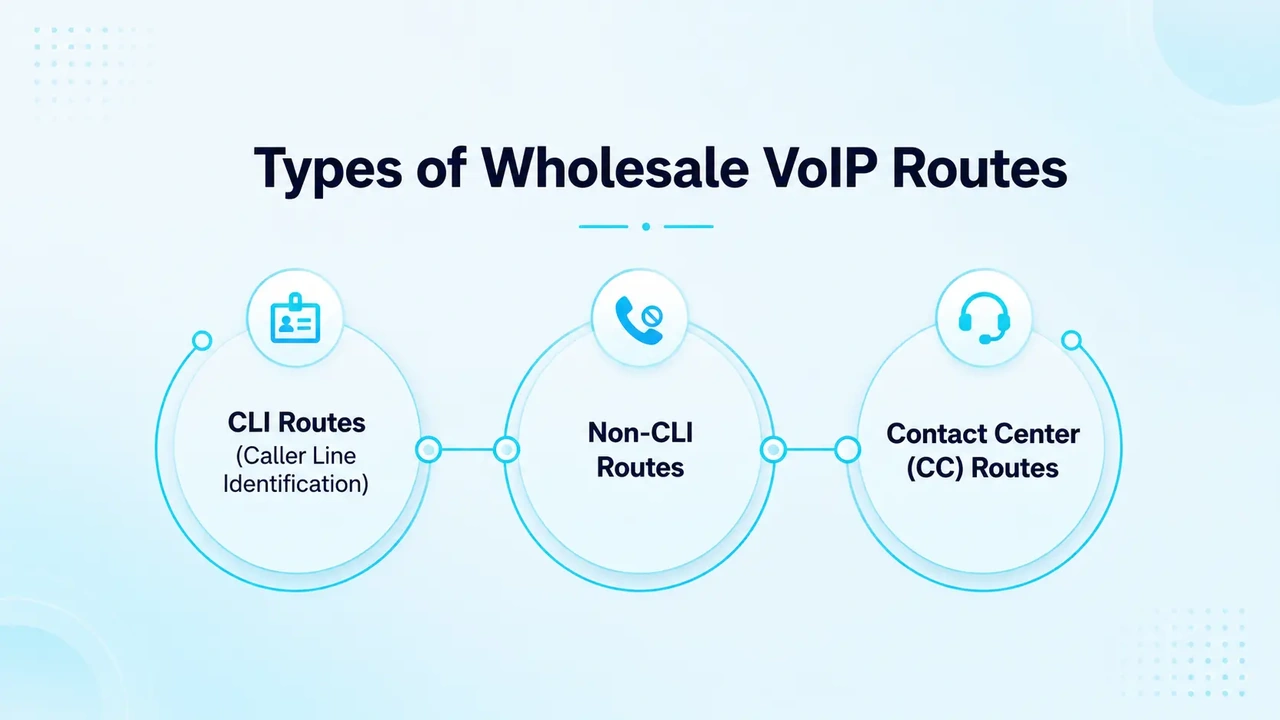
Trasy te można podzielić na trzy główne grupy. Każdy z nich jest przeznaczony dla innego rodzaju ruchu i innych potrzeb biznesowych.
Trasy CLI (identyfikacja linii dzwoniącego)
Trasy CLI wysyłają prawdziwy identyfikator dzwoniącego do osoby odbierającej. Są to trasy najwyższej jakości. Zespoły używają ich do sprzedaży wychodzącej, obsługi klienta i połączeń, gdzie numer wyświetlany na ekranie wpływa na to, czy ktoś odbierze. Trasy CLI kosztują więcej za minutę, ponieważ identyfikator rozmówcy pozostaje nienaruszony u każdego operatora na trasie.
Trasy inne niż CLI
Trasy inne niż CLI nie zapewniają dostarczenia identyfikatora dzwoniącego. Pasują do zautomatyzowanego ruchu o dużym natężeniu, takiego jak połączenia sprawdzające, alerty i kampanie powiadamiające.
W tym przypadku ważniejsze jest wykonanie połączenia niż wyświetlony numer. Stawki są niższe niż CLI. Jednak używanie funkcji innych niż CLI do połączeń z klientami wiąże się z ryzykiem flag spamowych i problemów z regułami.
Trasy centrum kontaktowego (CC).
Trasy CC są budowane z myślą o pracy w contact center. Oznacza to wiele połączeń jednocześnie, stałe korzystanie z dialera oraz połączenie połączeń przychodzących i wychodzących. Balansują zasady CLI z niższymi kosztami, na skalę potrzebną dla contact center.
Najpierw dopasuj poziom trasy do swojego przypadku użycia. Porównaj ceny za minutę w sekundzie. Niewłaściwy poziom stwarza ryzyko związane z jakością i zgodnością, niezależnie od tego, jak niska wydaje się cena.
Aby uzyskać pełny widok opcji tras i zasięgu globalnych przewoźników, Hurtowe usługi VoIP Rozper udostępnia opcje tras CLI, Non-CLI i CC.
Jak działa przekierowywanie głosu
Oto, co się dzieje, gdy połączenie przechodzi tymi ścieżkami. Głos zamienia się w dane cyfrowe. Kodek to ogranicza – G.711, G.729 lub Opus. Dostawca wysyła go do kontrolera granicznego sesji (SBC) na brzegu swojej sieci. SBC sprawdza połączenie, uruchamia swoje reguły i wysyła je najlepszą ścieżką do punktu końcowego.
Protokół Session Initiation Protocol (SIP) obsługuje sygnały połączeń przez cały czas. Rozpoczyna, zmienia i kończy każde połączenie. Narzędzia do wyznaczania tras najtańszych (LCR) wybierają spośród oferowanych łączy na podstawie ceny,
danych ASR i wyników jakości na żywo.
Dobrzy dostawcy dodają czeki na żywo oprócz LCR. Dzięki temu mogą ominąć słabą ścieżkę, zanim połączenie zaszkodzi, a nie po złożeniu skargi przez klienta.
Kluczowe zalety hurtowych tras VoIP
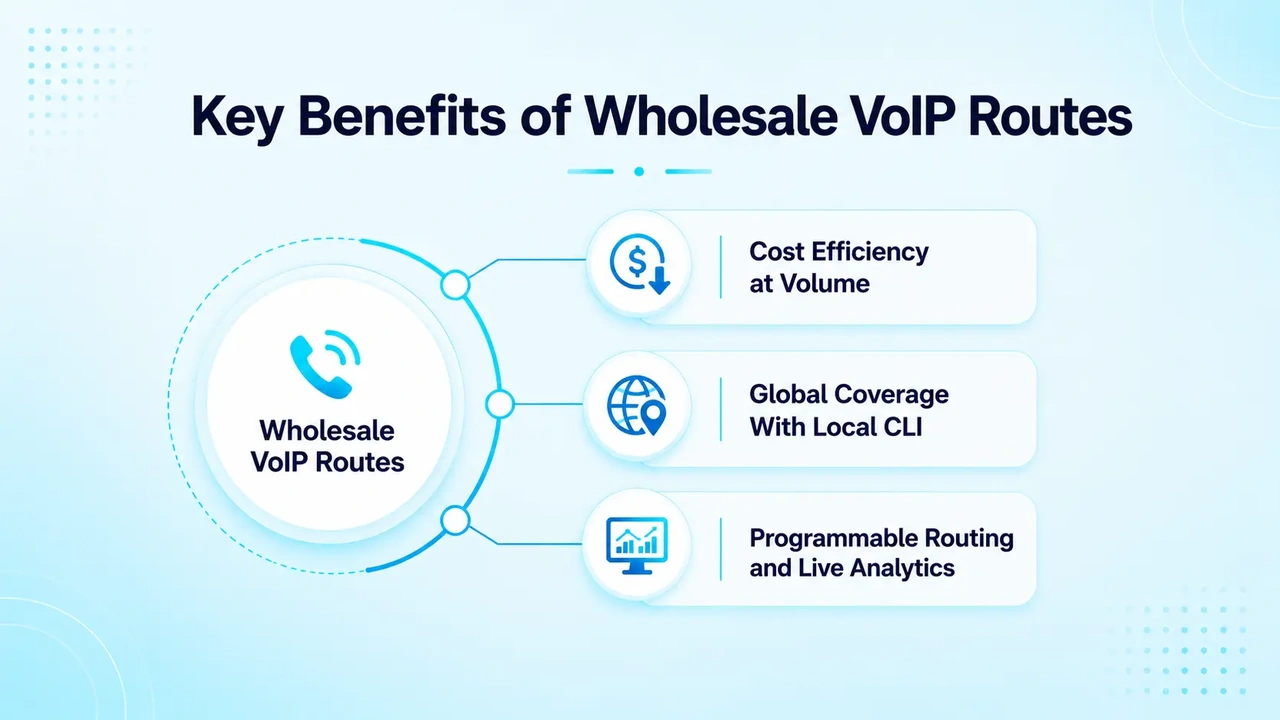
Oszczędność kosztowa w ujęciu ilościowym
Ten poziom zapewnia ceny za minutę, których plany detaliczne nie mogą dorównać. Trasy krajowe kosztują zazwyczaj 30–60% mniej. Oszczędności są jeszcze większe za granicą, gdzie dostawcy detaliczni dodają dużą marżę. Korzystaj z ponad 10 000 minut miesięcznie, a ceny hurtowe mogą każdego roku zaoszczędzić prawdziwe pieniądze, bez zmiany konfiguracji.
Globalny zasięg z lokalnym interfejsem CLI
Szeroka sieć połączeń umożliwia Twojej firmie wyświetlanie prawdziwego lokalnego identyfikatora rozmówcy na obsługiwanych przez Ciebie rynkach. Zwiększa to liczbę odpowiedzi i nie wymaga lokalnych biur. Załóżmy, że contact center dzwoni do potencjalnych klientów w Europie. Potrzebuje routingu, który pokaże właściwy CLI dla każdego kraju, a nie biura w każdym z nich.
Programowalny routing i analiza na żywo
Platformy hurtowe umożliwiają kontrolowanie tras za pomocą prostych interfejsów API. Twój zespół może zmieniać poziomy, pobierać dane połączeń, oglądać na żywo numery ASR i PDD oraz dostosowywać trasy bez biletu do pomocy technicznej. Zarządzanie trasami staje się zadaniem dla programistów, a nie czymś, co czeka na wsparcie.
Dla organizacji wymagających globalnego zasięgu na poziomie operatorskim z analizą tras w czasie rzeczywistym, Hurtowe stawki VoIP Rozper zapewniają przejrzyste ceny w zależności od miejsca docelowego, bez ukrytych opłat i model wsparcia zorientowany na człowieka, stworzony z myślą o skali.
Wskaźniki jakości i wymagania regulacyjne
Aby sprawdzić hurtowe trasy VoIP, śledź trzy podstawowe liczby: współczynnik odpowiedzi do liczby połączeń (ASR), opóźnienie po wybraniu numeru (PDD) i średni wynik opinii (MOS). ASR pokazuje, jak często docierają próby połączenia. Jeśli ASR utrzymuje się poniżej 55%, oznacza to problem. PDD to czas pomiędzy wybraniem numeru a pierwszym dzwonkiem. Powyżej 4 sekund dzwoniący zaczynają zauważać opóźnienie. MOS ocenia czystość dźwięku rozmowy w skali od 1 do 5. Powyżej 4,0 oznacza, że połączenie jest wystarczająco wyraźne do użytku biznesowego.
Po stronie zasad Hurtowe trasy VoIP używane w Stanach Zjednoczonych muszą być zgodne z zasadami identyfikacji rozmówcy STIR/SHAKEN. The Przegląd przepisów dotyczących VoIP to oficjalne źródło rządu USA, według którego zasady mają zastosowanie do dostawców i użytkowników biznesowych VoIP. Jeśli dostawca nie może wyświetlić zapisów STIR/SHAKEN na żywo, jest to czerwona flaga.
Jak wybrać hurtowe trasy VoIP
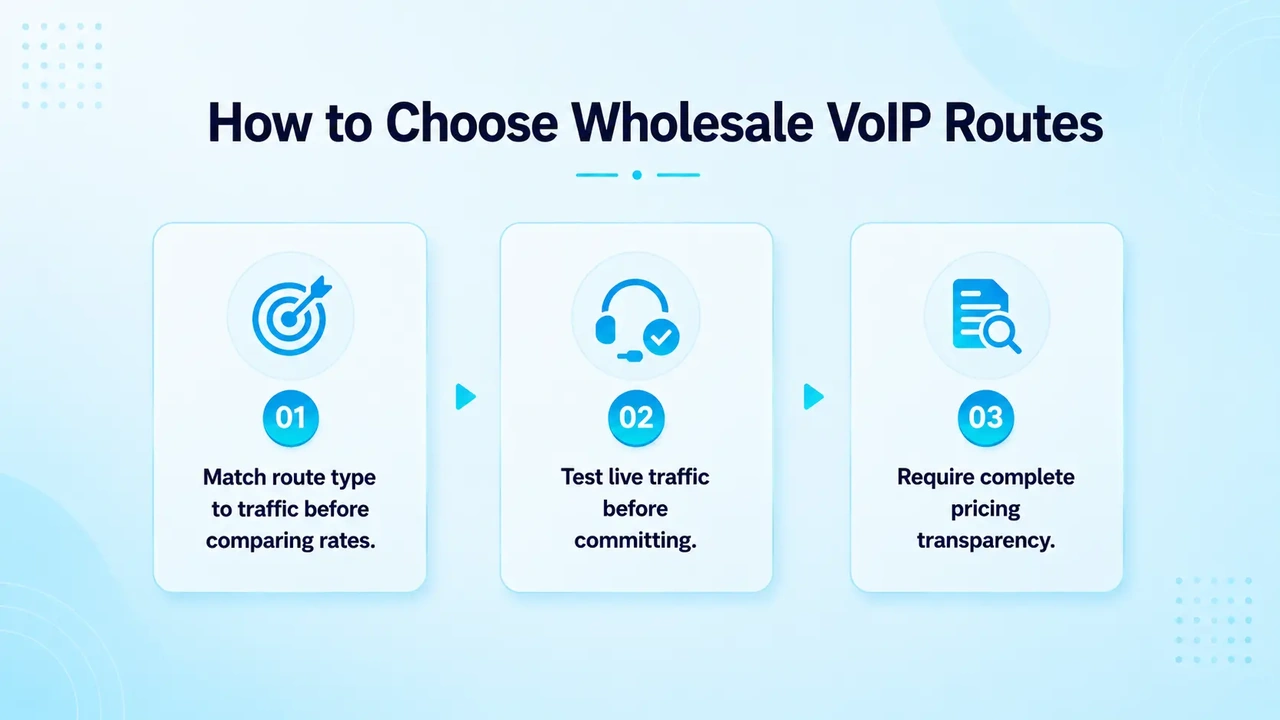
Wybór odpowiedniego poziomu oznacza dopasowanie typu trasy do ruchu. Nie goń tylko za najniższą stawką. Te trzy czeki pomijają rozmowy sprzedażowe.
Zanim porównasz stawki, dopasuj rodzaj trasy do natężenia ruchu. Połączenia wychodzące do klientów wymagają tras CLI. Zautomatyzowany ruch o dużym natężeniu może korzystać z interfejsu innego niż CLI po niższych kosztach. Wybieranie numeru w centrum kontaktowym wymaga tras klasy CC. Mieszaj typy tras, nie znając kompromisów, a ryzykujesz problemy z jakością i regułami.
Przed zatwierdzeniem przetestuj ruch na żywo. Jakość tras nie jest taka sama u różnych dostawców, nawet w przypadku tego samego miejsca. Mierz ASR, PDD i MOS pod rzeczywistym obciążeniem, w regionach, na których Ci najbardziej zależy. Zrób to przed podpisaniem jakiejkolwiek umowy. Dostawca ufający własnej sieci pozwoli Ci ją najpierw przetestować.
Zapytaj o pełny cennik. Stawki za minutę to tylko część kosztów. Zapytaj o szczegółowe informacje na temat opłat instalacyjnych, opłat za przeniesienie, minimalnych stawek i dodatkowych opłat za miejsce docelowe. Zanim porównasz dwóch dostawców, porównaj swoje rzeczywiste koszty z rzeczywistym ruchem.
Wniosek
Właściwa konfiguracja trasy pozwala kontrolować koszt minutowy, zgodność z identyfikatorem dzwoniącego, jakość dźwięku i globalny zasięg jednocześnie. Najpierw podejmij właściwą decyzję o routingu. Wybór dostawcy jest na drugim miejscu.
Firmy, które dopasowują typ trasy do ruchu, testują w rzeczywistych warunkach i wymagają jasnych wskaźników jakości, maksymalnie wykorzystują wydatki na infrastrukturę głosową.
Często zadawane pytania
Czym trasy głosowe CLI różnią się od tras innych niż CLI?
Trasy CLI wysyłają prawdziwy identyfikator dzwoniącego do osoby, która odbierze. Ma to znaczenie w przypadku połączeń wychodzących do klientów, ponieważ wyświetlany numer wpływa na to,
czy ludzie odbierają.
Trasy inne niż CLI nie zapewniają dostarczenia identyfikatora dzwoniącego. Pasują do ruchu o dużym natężeniu, np. alertów lub sprawdzania połączeń. Korzystanie z interfejsu innego niż CLI do połączeń sprzedażowych lub serwisowych wiąże się z ryzykiem stosowania filtrów spamu i problemów z regułami.
Najpierw dopasuj rodzaj trasy do natężenia ruchu, a następnie porównaj cenę.
Jak zorganizowane są zbiorcze ceny tras głosowych?
Stawki za minutę zmieniają się w zależności od rodzaju trasy, miejsca i poziomu głośności. CLI kosztuje więcej niż bez CLI w tym samym miejscu.
Stawki różnią się znacznie w zależności od kraju – spoty reklamowe w UE kosztują mniej niż rynki wschodzące, które mają mniej połączeń operatorskich.
Większość dostawców obniża ceny przy większych ilościach. Zawsze proś o arkusz stawek odpowiadający Twojemu rzeczywistemu zestawowi połączeń.
Do czego służą hurtowe trasy VoIP w contact center?
Zespoły contact center najczęściej korzystają z tych tras w przypadku zajętych połączeń wychodzących. Celem jest zwiększenie stawek za połączenia agentów przy jednoczesnej kontroli kosztów w przypadku dużej liczby połączeń.
Warstwy tras CC obsługują stałe obciążenie i mieszane wzorce potrzebne do pracy dialera. Utrzymanie interfejsu CLI w stanie nienaruszonym ma również znaczenie — zapobiega etykietom spamowym,
które obniżałyby odsetek odpowiedzi.
Na jakie testy porównawcze ASR, PDD i MOS powinienem się zdecydować?
Zdrowa trasa pokazuje ASR powyżej 65%, PDD poniżej 3 sekund i MOS powyżej 4,0. ASR poniżej 55% wskazuje na problemy z routingiem.
PDD powyżej 4 sekund szkodzi doświadczeniu dzwoniącego. MOS poniżej 3,5 oznacza, że dźwięk brzmi wyraźnie gorzej. Poproś o pulpity nawigacyjne na żywo od dowolnego dostawcy, którego sprawdzasz.
Średnie miesięczne mogą ukryć złe okresy, które najbardziej szkodzą połączeniom na żywo.
Co to jest STIR/SHAKEN i dlaczego ma to znaczenie przy wyborze trasy?
STIR/SHAKEN to system wymagany przez FCC do sprawdzania tożsamości dzwoniącego. Wymaga, aby operator rozpoczynający połączenie potwierdził kodem, że połączenie jest dozwolone.
Sprawdź, czy Twój dostawca posiada rejestrację FCC i może pokazać Ci rekordy STIR/SHAKEN. Trasy bez tego dowodu mogą zostać oznaczone jako spam lub zablokowane przez innego przewoźnika.
To obniża stawki za połączenia i przede wszystkim eliminuje oszczędności uzyskane z cen hurtowych.