Einführung
Jede SIP-Verbindung beginnt mit der gleichen Frage, die ein Netzwerktechniker stellt, bevor er etwas unterzeichnet: Wie wird dadurch ein Anruf tatsächlich von meinem Netzwerk zum Zielnetzbetreiber weitergeleitet? Nicht der Marketing-Pitch – die Mechanik.
Dieser Leitfaden wurde von der Seite der Tabelle aus geschrieben: Netzbetreiber, ITSPs und Telekommunikationsaggregatoren, die eine VoIP-Zusammenschaltung im Großhandel bewerten, und nicht Endbenutzer, die Telefontarife vergleichen. Es behandelt, was VoIP-Interconnection im Großhandel ist, wie die SIP-Sitzungs- und Routing-Ebene tatsächlich funktioniert und wie man einen Carrier-Partner auswählt.
Der weltweite Sprachgroßhandelsmarkt erreichte im Jahr 2026 ein Volumen von 44,5 Milliarden US-Dollar. In diesem Leitfaden erfahren Sie, was Großhandels-VoIP ist, wie es funktioniert, wer davon profitiert und wie man eine gute Wahl trifft.
Wichtige Erkenntnisse
- Was es ist: Direkte SIP-basierte VoIP-Verbindung zwischen Netzbetreibern, ITSPs und Aggregatoren, die in großen Mengen zu Preisen gekauft werden, die im Einzelhandel nie angeboten werden.
- Wem dient es: Netzbetreiber schließen Versorgungslücken, ITSPs und Aggregatoren bauen Netzwerkreichweite auf und Netzwerkingenieure evaluieren Verbindungspartner.
- Die Ökonomie: Die meisten Käufer senken die Sprachkosten um 30–60 %. Wiederverkäufer erzielen bei White-Label-Angeboten eine Marge von 50–70 %.
- Was Sie bekommen: Terminierung, Ursprung und DIDs, SIP-Trunking, gehostete PBX und APIs.
- So wählen Sie: Passen Sie den Anbieter an Ihre Netzwerkarchitektur an, nicht an den niedrigsten Tarif.
Was ist Wholesale-VoIP?
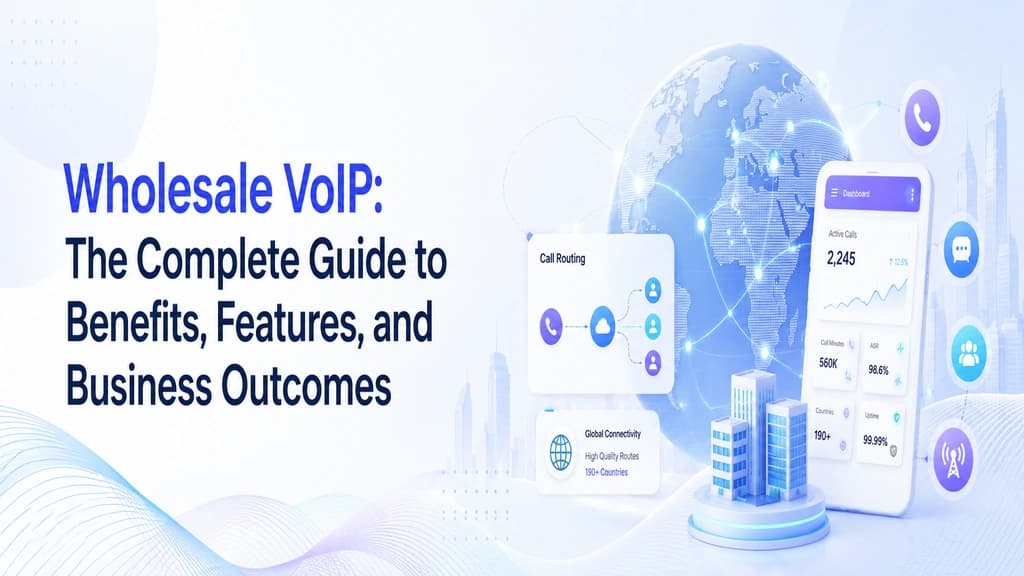
Wholesale-VoIP bedeutet, Sprachkapazität in großen Mengen von einem Netzbetreiber oder einer Plattform zu kaufen und diese dann intern zu nutzen oder weiterzuverkaufen. Sie überspringen die Einzelhandelspreise für Leitungen und zahlen Volumentarife für Terminierung, Originierung, SIP-Trunking und zugehörige Dienste.
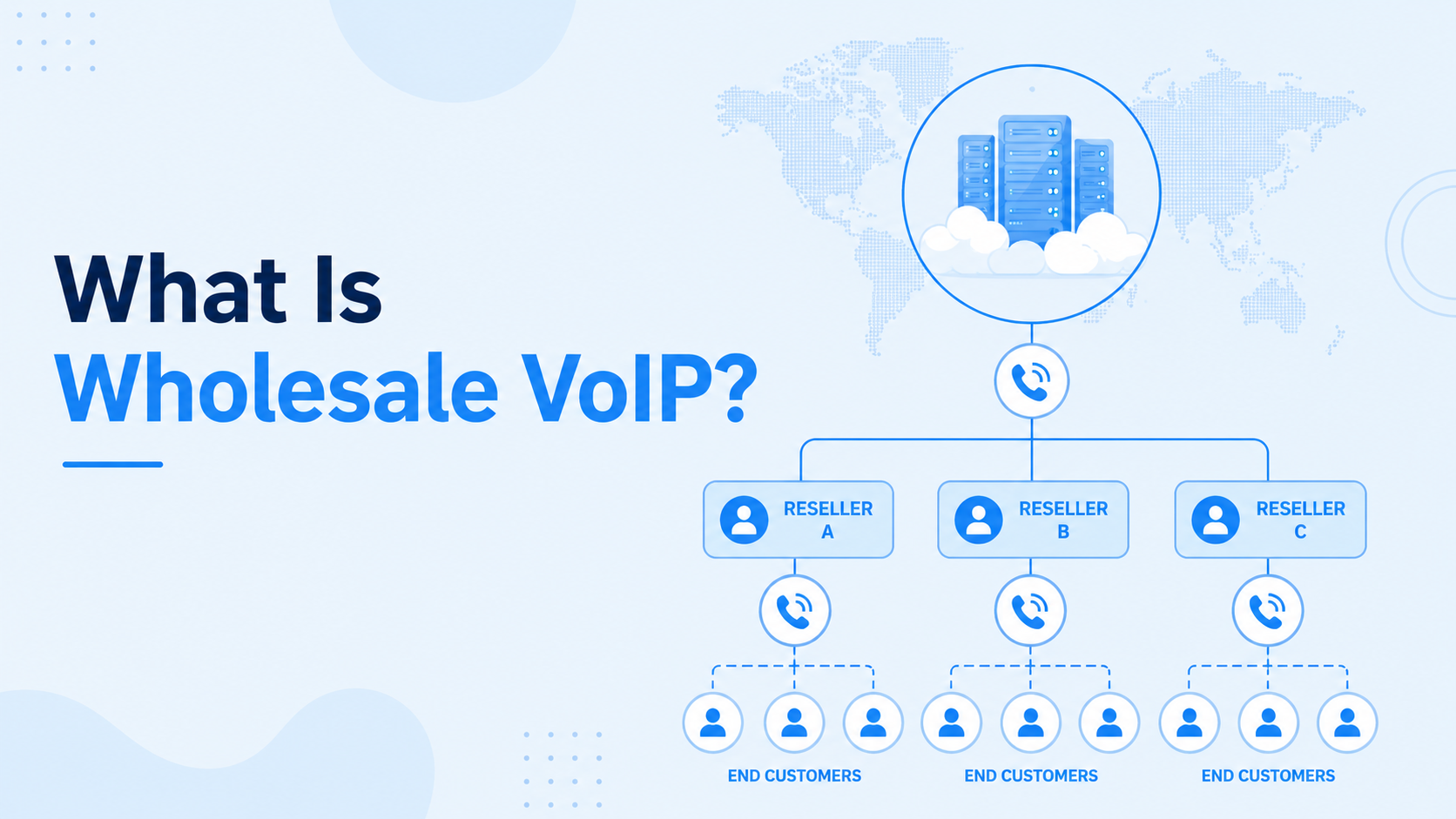
Das Wort „Großhandel“ hat Gewicht. Retail VoIP ist ein Festtarif mit einem Portal und einer Tarifkarte. Der Großhandel ist auf Volumen, Kontrolle und API-Zugriff ausgelegt, wobei die kommerziellen Bedingungen auf starke Nutzung oder Wiederverkauf ausgerichtet sind.
Es dominieren vier Käufertypen: Unternehmen, die Tausende von Anrufen gleichzeitig tätigen, Wiederverkäufer, die Produkte entwickeln, Kontaktzentren, die in großen Mengen anrufen, und Entwickler, die ihre Stimme in Software integrieren.
Großhandel vs. Einzelhandel
Die Lücke besteht nicht nur im Preis. Großhandelskonten erhalten Tarife, die mit steigendem Volumen sinken, eine Carrier-Grade-Infrastruktur über eine API und Kontrolle über Routing und Qualität. Support ist eine Partnerschaft. Einzelhandelskonten erhalten ein Portal und eine Ticketwarteschlange.
So funktioniert Wholesale-VoIP
Wholesale VoIP wandelt Ihre Stimme in Datenpakete um und sendet sie über IP. Um einen Anruf vom Anfang bis zum Ende voranzutreiben, arbeiten einige Teile zusammen. Die Serviceteile sind in unserem Leitfaden aufgeschlüsselt VoIP-Großhandelsdienste.
Sprachkonvertierung
Ihre Stimme wird erfasst und in digitale Daten umgewandelt. Ein Codec komprimiert es – G.711, G.722, G.729 oder Opus, je nach Qualitätsstufe. Die Pakete durchqueren das Netzwerk, werden wieder zusammengesetzt und werden wieder einwandfrei. Auf guten Strecken dauert die gesamte Fahrt mehrere zehn Millisekunden.
SIP- und Sitzungskontrolle
Die meisten Großhandels-VoIP-Dienste basieren auf dem Session Initiation Protocol. SIP baut jeden Anruf auf, ändert ihn bei Bedarf und beendet ihn. SIP-Trunks verbinden Ihre PBX- oder UCaaS-Plattform mit dem Netzwerk des Anbieters. Session Border Controller sitzen am Rand und kümmern sich um Sicherheit, Protokollbereinigung und NAT-Durchquerung, sodass nicht übereinstimmende Systeme weiterhin zusammenarbeiten.
Kündigung und Entstehung
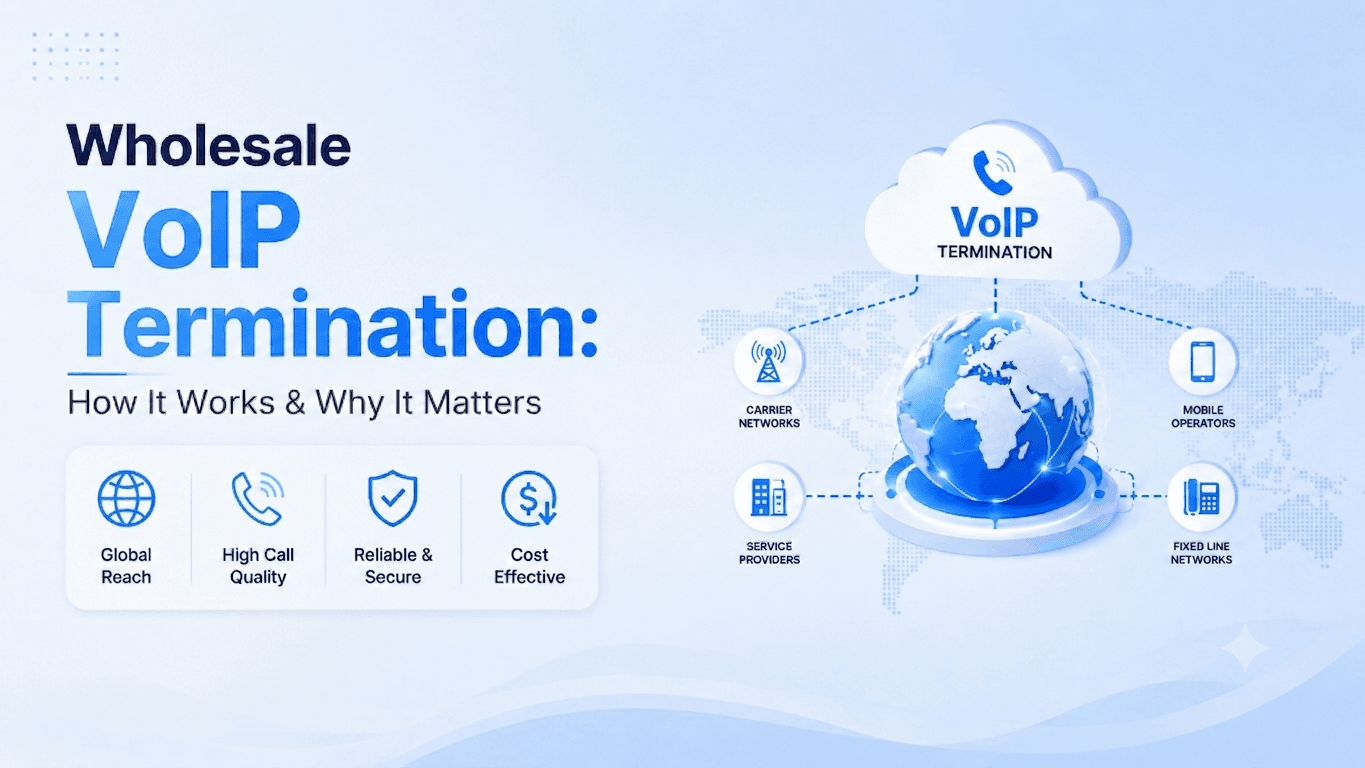
Beendigung leitet Ihre ausgehenden Anrufe über das Netzwerk des Anbieters an die Person weiter, die Sie angerufen haben, unabhängig davon, ob diese über VoIP, Mobilfunk oder Festnetz antwortet. Entstehung bringt eingehende Anrufe über DID-Nummern zu Ihnen. Zusammen bilden sie den vollständigen Inbound- und Outbound-Stack. Weitere Informationen zur ausgehenden Seite finden Sie unter VoIP-Terminierung im Großhandel.
Gehostete Telefonanlage
Viele Anbieter fügen eine Cloud-Telefonanlage hinzu. Sie erhalten automatische Vermittlung, Routing, Voicemail und Anrufaufzeichnung, ohne Hardware kaufen oder unterbringen zu müssen.
Hauptvorteile von Wholesale-VoIP
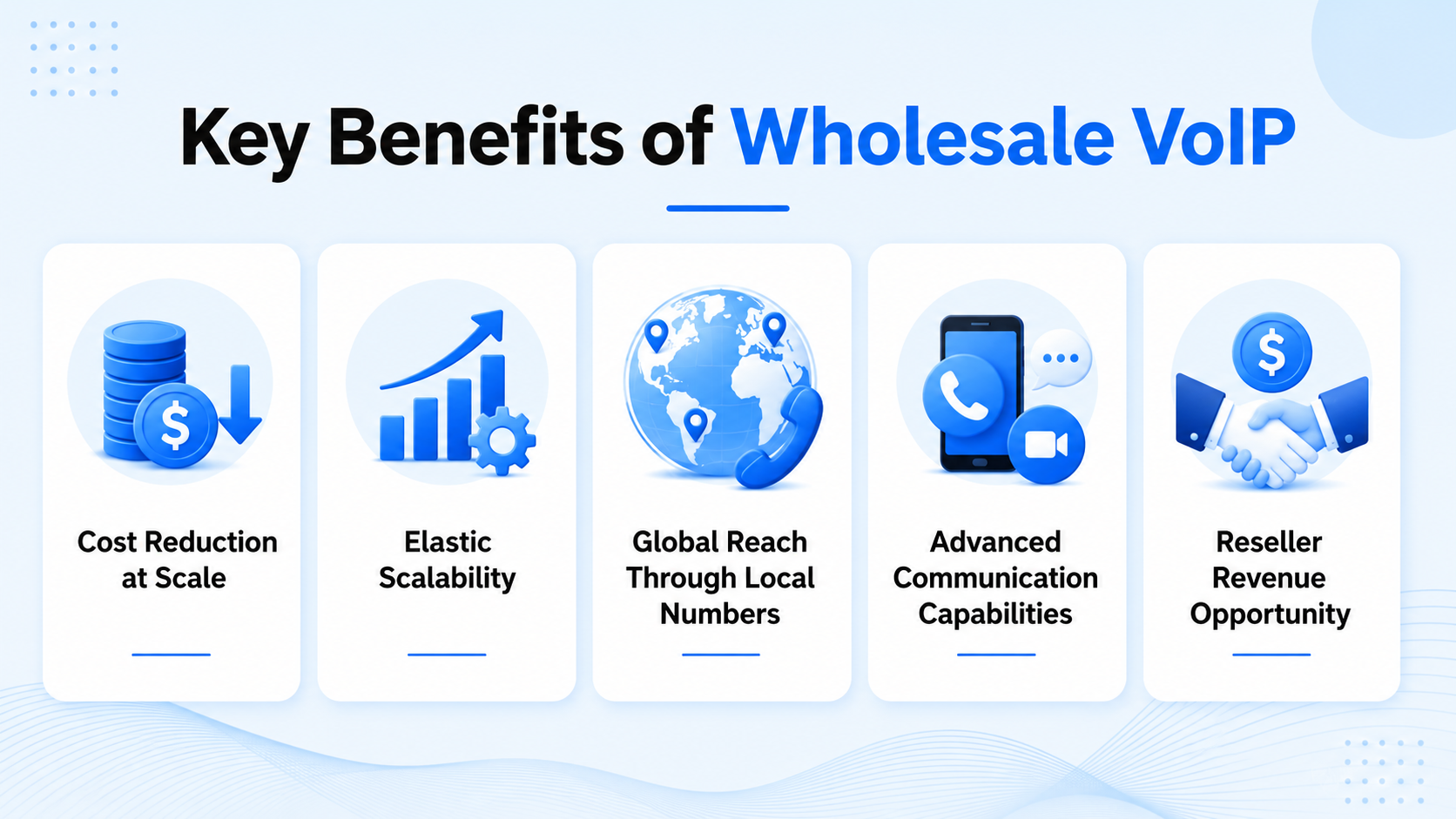
Niedrigere Kosten im großen Maßstab
Bei Wholesale-VoIP entfallen die Leitungsgebühren, der Wartungsaufwand und die hohen internationalen Tarife herkömmlicher Telefondienste. Die meisten Unternehmen senken die Sprachkosten um 30–60 %, wenn sie von älteren Systemen abwandern. Auf internationalen Strecken sparen Sie am meisten – manchmal über 70 % bei einem bestimmten Ziel.
- Günstigere Minuten im In- und Ausland
- Keine dedizierten Schaltkreise, keine zu wartende Hardware
- Tarife, die sich mit zunehmendem Volumen verbessern
Elastische Skala
Das Hinzufügen von Kapazität erfordert keine Hardware und keine Wartezeit. SIP-Kanäle und DID-Nummern werden innerhalb von Minuten über ein Portal oder eine API angezeigt. Das kommt dem Wachstum von Contact Centern, neuen Standorten und saisonalen Spitzen entgegen.
Globale Reichweite, lokale Nummern
In vielen Ländern können Sie mit der DID-Herstellung eine lokale Nummer in den von Ihnen bedienten Märkten angeben. Kunden in London, Sydney oder São Paulo sehen eine ihnen bekannte Nummer und keine ausländische Vorwahl. Dadurch steigen die Antwortquoten.
Erweiterte Anrufbearbeitung
Sie erhalten CLI-basiertes Routing, IVR, Anrufaufzeichnung, Live-Analyse, Voicemail-zu-E-Mail und API-Automatisierung. Diese gehören zum Service und sind keine kostenpflichtigen Extras anderer Anbieter.
Reseller-Umsatz
Mit White-Label-Angeboten können Sie Ihre Stimme unter Ihrer eigenen Marke mit einer Marge von 50–70 % verkaufen. Herkömmliche Maklervereinbarungen zahlen 15–25 %. Diese Lücke ist der gesamte Geschäftsfall.
Wesentliche Funktionen
- Terminierungsroutenebenen. Routen gibt es in Schwierigkeitsgraden. CLI-Routen übermitteln die echte Anrufer-ID und eignen sich für Verkaufs- und Kundenanrufe. Nicht-CLI-Routen eignen sich für Massenverkehr. CC-Routen übernehmen Schnellwahl-Callcenter-Arbeiten.
- DID-Nummern. Eingehende Nummern im lokalen, mobilen und gebührenfreien Format weltweit. Durch die Portierung werden Ihre alten Rufnummern lückenlos übernommen.
- SIP-Trunking. Verbindet Ihr Telefonsystem mit dem Mobilfunknetz. Kanäle flexibel ohne neue Hardware. TLS überwacht die Signalisierung, SRTP überwacht den Ton.
- API-Zugriff. Fügen Sie Nummern hinzu, legen Sie das Routing fest und rufen Sie Anrufdatensätze im Code ab. Im Großen und Ganzen ist dies die Art und Weise, wie der Dienst ausgeführt wird, kein Bonus.
- Schutz vor Betrug. Live-Benachrichtigungen bei Gebührenbetrug, IRSF und Anrufer-ID-Spoofing sowie geografische Sperren und Ausgabenobergrenzen.
- Aufzeichnung und Analyse. Zeichnet Compliance- und Coaching-Aufrufe auf und zeigt Ihnen, was Ihr Datenverkehr bewirkt.
Wer nutzt es und was bekommt man?
- Unternehmen. Unternehmen mit mehreren Standorten tauschen kostspielige Leitungen gegen Großhandelsleitungen ein, senken die Sprachausgaben um 30–60 % und arbeiten weltweit mit einem einzigen Anbieter zusammen.
- Kontaktzentren. Hunderte von Live-Anrufen erfordern einen hohen ASR, einen niedrigen PDD, eine saubere Anrufer-ID und Spielraum für Bursts. Der Großhandel bietet alle vier zu Preisen an, die der Einzelhandel nicht erreichen kann.
- Wiederverkäufer und MSPs. Sie kaufen Kapazitäten und verkaufen sie unter der Marke. White-Label-Tools und Sprach-, SMS- und Videopakete erzielen eine Marge von 50–70 % statt geringer Provisionen.
- Entwickler. Softwareteams fügen Anrufe über APIs hinzu, ohne ein Netzwerk zu besitzen – Click-to-Call in einem CRM, automatisierter Outbound oder ein KI-Voice-Bot. Voice wird wie jede andere Funktion geliefert.
Großhandels-VoIP im Vergleich zu herkömmlichen Telefonsystemen
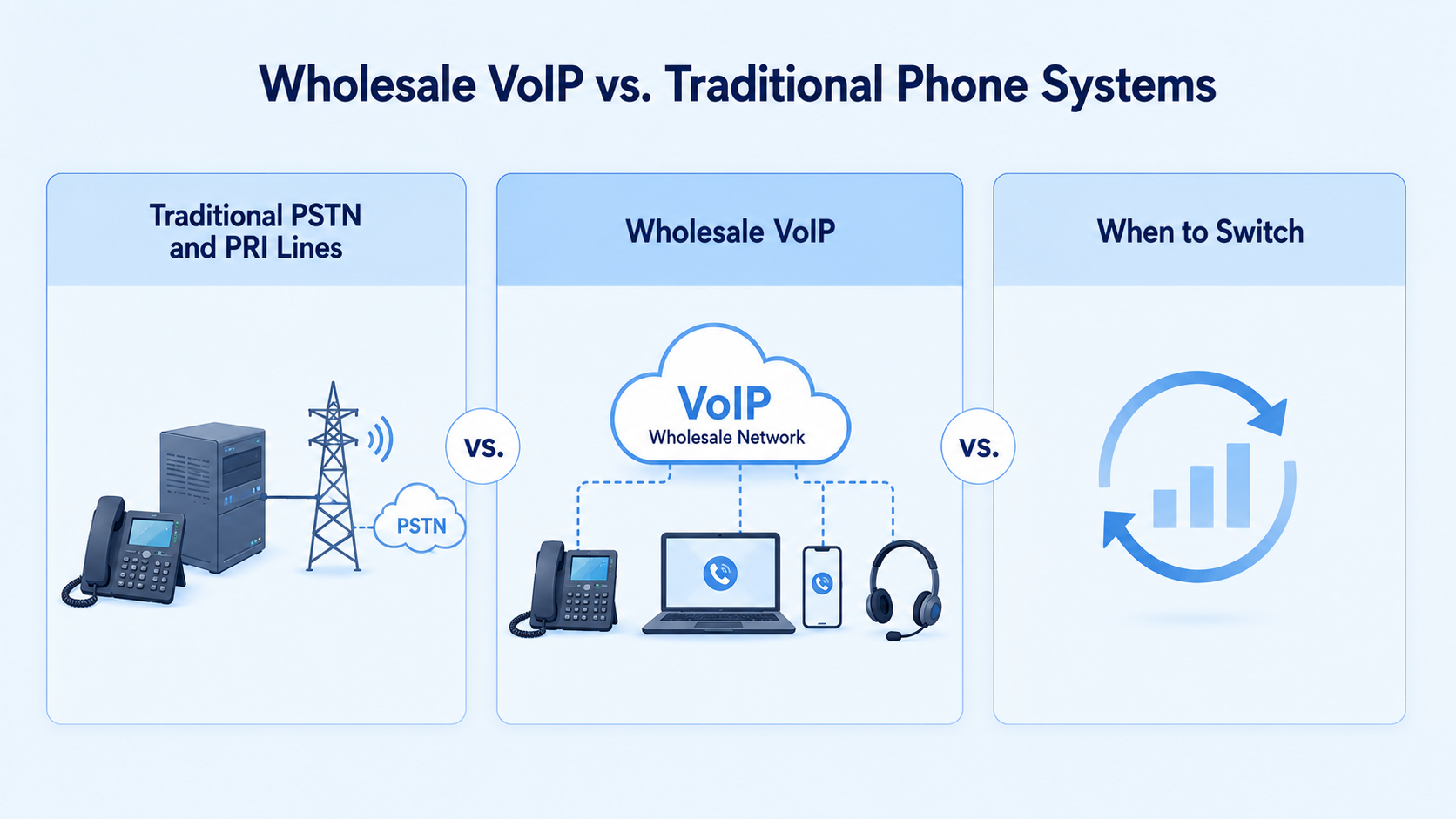
Traditionelles PSTN und PRI auf physischen Strecken laufen. Neue Kapazität bedeutet eine Installation. Internationale Minuten kosten einen Aufpreis. Das Routing ist festgelegt und es gibt keine API. Der Besitz der Ausrüstung ist kostspielig und die Wartung wird immer schwieriger, da ältere Netzwerke aus dem Verkehr gezogen werden.
Großhandels-VoIP läuft über IP mit flexibler Kapazität, Live-Routing und API-Steuerung. Die internationalen Tarife betragen nur noch einen Bruchteil der alten. Die Skalierung erfolgt sofort und die Funktionen werden in der Software festgelegt.
Wann wechseln?
Das Gehäuse wächst mit dem Volumen. Ab ein paar tausend ausgehenden Minuten pro Monat gewinnt der Großhandel bei den Kosten. Die Migration – Portierung, SIP-Einrichtung, Tests – ist ein einmaliges Projekt. Die Ersparnisse kommen immer weiter.
Häufige Herausforderungen und Lösungen
- Hochwertige Schaukeln. Audio hängt von Latenz, Jitter und Paketverlust ab. Wählen Sie einen Anbieter mit direkten Tier-1-Verbindungen auf Ihren Hauptstrecken und nicht eine Kette von Wiederverkäufern. Live-Überwachung und automatische Umleitung erkennen Probleme, bevor es die Kunden tun.
- PBX-Integration. Die SIP-Einstellungen müssen übereinstimmen. Bitten Sie vor der Unterzeichnung um Dokumentation für Ihre genaue Plattform und prüfen Sie, ob sich das Support-Team zuvor darum gekümmert hat.
- Betrugsaufdeckung. Open VoIP lädt zu Mautbetrug und IRSF ein. TLS- und SRTP-Verschlüsselung, Zugangskontrollen am SBC, Live-Betrugswarnungen und geografische Beschränkungen sind die Standardverteidigungsmaßnahmen. Bestätigen Sie, dass sie im Preis inbegriffen sind und nicht extra in Rechnung gestellt werden.
- Einhaltung. In den USA STIR/SHAKEN, E911 und Registrierungsvoraussetzungen alle treffen zu. Ein Anbieter außerhalb dieser Regeln überträgt das Risiko auf Sie. Fragen Sie nach den Unterlagen.
Auswahl eines Anbieters
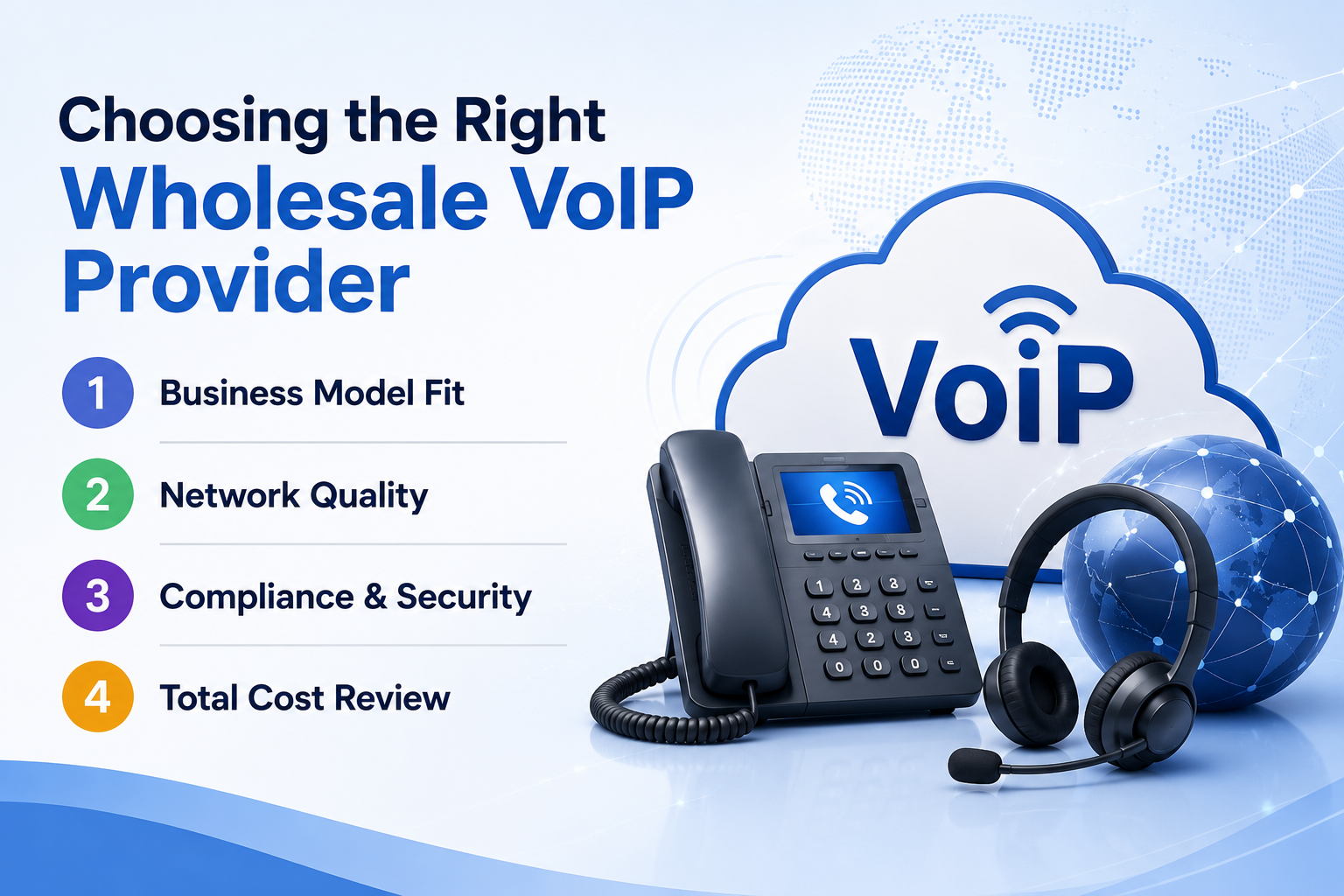
Passen Sie den Anbieter an Ihr Modell an
Unternehmen benötigen umfassende Carrier-Anbindungen und Volumenpreise. Wiederverkäufer benötigen White-Label-Tools, Portale und Abrechnungen. Entwickler benötigen echte APIs und SDKs. Nur wenige Anbieter beherrschen alle drei Aspekte gut, und die Auswahl eines Anbieters, der für jemand anderen gebaut wurde, verschwendet Geld und Zeit.
Testen Sie, bevor Sie sich verpflichten
Führen Sie Live-Verkehr in einem Proof of Concept durch. Überprüfen Sie die Qualität Ihrer Top-Ziele, nutzen Sie die API, planen Sie die Bereitstellung und rufen Sie den Support zu ungeraden Zeiten an. Was Sie im Test sehen, ist das, was Sie in der Produktion erhalten.
Bestätigen Sie Compliance und Sicherheit
Fordern Sie eine STIR/SHAKEN-Bescheinigung, eine E911-Bestätigung und FCC-Registrierungsdetails an. Stellen Sie sicher, dass TLS und SRTP Standard sind. Ein Anbieter, der langsam Dokumente erstellt, ist nicht der richtige Partner für den regulierten Verkehr.
Modellieren Sie die Gesamtkosten
Die Gesamtzinsen verbergen den Rest. Fragen Sie nach allen Gebühren: E911, Portierung, API-Zugriff, Einrichtung und Mindestverpflichtungen. Modellieren Sie es dann anhand Ihres realen Datenverkehrs, bevor Sie es vergleichen.
Rozper ist hier eine Option mit Wholesale-Sprache, SIP-Trunking und Nummern auf einer Plattform.
Abschluss
Wholesale VoIP ist die Ebene, die Sprache kostengünstig, flexibel und funktionsreich macht – für Unternehmen, Wiederverkäufer, Contact Center und Entwickler gleichermaßen. Der von Ihnen gewählte Anbieter beeinflusst Ihre Anrufqualität, Ihre Kosten, Ihre Compliance-Position und, wenn Sie weiterverkaufen, Ihre Marge.
Die Firmen, die am meisten profitieren, gehen von dem gewünschten Ergebnis aus, wählen den passenden Anbietertyp aus und verpflichten diesen Anbieter dann zu strengen Qualitäts- und Compliance-Verpflichtungen, anstatt sich nur auf die Preisliste zu verlassen.
FAQs
Bei welchem Anrufvolumen lohnt sich Großhandels-VoIP?
Es gibt keine feste Grenze, aber die Rechnung ergibt normalerweise etwa 5.000–10.000 ausgehende Minuten pro Monat. An diesem Punkt wird der Tarifunterschied zum Einzelhandel auf der Rechnung angezeigt. Höhere Volumina gewinnen mehr. Wiederverkäufer können dies früher rechtfertigen, da sie die Preise für ihre eigenen Kunden festlegen.
Wie lange dauert die Migration?
Es kommt darauf an, wie viel bewegt wird. Ein SIP-Trunk in eine bestehende IP-PBX-Anlage kann in ein bis drei Tagen live geschaltet werden. Ein Komplettumzug mit Portierung, neuer PBX und mehreren Standorten dauert zwei bis sechs Wochen. Die Inlandsportierung dauert drei bis zehn Werktage; international dauert länger.
Funktioniert es mit meiner aktuellen Telefonanlage?
Mit ziemlicher Sicherheit. Wholesale VoIP ist SIP-basiert und funktioniert mit Asterisk, FreePBX, 3CX, Cisco CUCM und gehostetem UCaaS. Ältere Systeme benötigen möglicherweise ein SIP-zu-PRI-Gateway. Vergleichen Sie Ihr Modell zunächst mit der unterstützten Liste des Anbieters.
Erfolgt die Abrechnung pro Minute oder pro Kanal?
Beide existieren. Pro Minute ist für schwankenden Verkehr geeignet. Pro Kanal fällt eine monatliche Pauschalgebühr pro gleichzeitigem Anruf an und eignet sich für ein stetiges, hohes Volumen. Große Kunden vermischen oft beides: Flat-Kanäle im Inland, gebührenpflichtige Tarife im Ausland.
Was passiert bei einem Netzwerkausfall?
Anbieter mit verteilter Infrastruktur und Live-Routing wechseln in Sekundenschnelle zu einem Backup-Pfad, sodass die Anrufe weiterhin fließen können. Bestätigen Sie, dass dies im SLA und nicht in der Broschüre steht, und fragen Sie nach der maximalen Failover-Zeit.
Kann es sowohl SMS als auch Sprache übertragen?
Oft ja. Viele Großhandelsplattformen verarbeiten neben Sprache auch SMS in beide Richtungen, und einige fügen Video- und Contact-Center-Funktionen hinzu. Eine kanalübergreifende Beziehung bedeutet weniger Anbieterwucherung und in der Regel einen besseren Gesamtpreis.